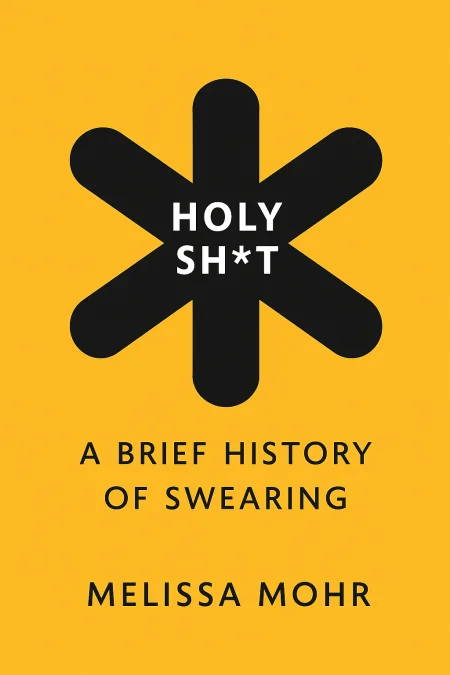
Holy Sh*t
A Brief History of Swearing
Book Edition Details
Summary
Linguistic taboos weave a fascinating tapestry in "Holy Sh*t," where the bold and brash history of swearing unfolds with wit and wisdom. From the ancient streets of Rome to the sanctified rituals of medieval oaths, Melissa Mohr illuminates the dual nature of profanity—both a binding promise and a spontaneous expletive. As she charts this colorful evolution, Mohr navigates the peaks of societal decency and the valleys of linguistic censorship, casting light on the cultural shifts that have shaped our modern-day expressions. The book delves into the post-war surge of racial slurs and explores the visceral, even cathartic, impact of a well-timed curse. Are we truly more foul-mouthed today, or is it just the echoes of history amplified? "Holy Sh*t" offers a captivating and scholarly dive into the words that both scandalize and bind us.
Introduction
Picture this: you're walking through ancient Rome, and the walls around you are covered with graffiti that would make a modern sailor blush. Fast-forward to medieval England, where a monk copying the Bible casually translates Latin into "don't fuck thy neighbor's wife." Jump ahead to Victorian times, where the word "leg" is so scandalous that piano limbs are covered with tiny trousers. This journey through the history of swearing reveals one of humanity's most fascinating linguistic transformations. The story of how we curse illuminates far more than just bad language. It's a window into the deepest anxieties, power structures, and cultural shifts of each era. From Roman soldiers hurling obscenities as weapons of war to medieval Christians believing that certain oaths could literally tear God's body apart, from Renaissance courtiers using profanity to assert political dominance to Victorian ladies fainting at the mention of undergarments, swearing has always reflected what societies hold most sacred and most taboo. This exploration appeals to anyone curious about how language shapes and reflects human experience. Whether you're a history enthusiast, a linguistics lover, or simply someone who's ever wondered why certain words pack such emotional punch, this journey through centuries of cursing offers surprising insights into the forces that have shaped our world and continue to influence how we express our deepest emotions today.
Ancient Foundations: Roman Obscenity and Biblical Sacred Oaths
The foundations of Western swearing were laid in two very different worlds: the bustling streets of ancient Rome and the sacred texts of biblical tradition. These dual origins created a tension between the profane and the holy that would echo through centuries of human expression. Roman obscenity was remarkably similar to our own in its focus on sexual and excremental taboos, yet fascinatingly different in its details. Romans had their own vocabulary of crude terms, including words like "cunnus" and "futuo" that would shock modern ears. But Roman sexual categories were organized around power dynamics rather than gender preferences. What mattered wasn't whether you slept with men or women, but whether you were the penetrator or the penetrated. This created a vocabulary of dominance where sexual insults were really assertions of social hierarchy. The Romans also pioneered the connection between obscenity and religious function. Obscene words weren't just crude expressions but possessed magical power. They could promote fertility, ward off evil, and even protect military commanders during their moments of triumph. When Julius Caesar returned victorious from Gaul, crowds sang obscene songs about his alleged homosexual encounters not to humiliate him, but to protect him from the envy of the gods. Meanwhile, biblical tradition established oath swearing as a sacred act that could literally compel divine attention. When God swore by himself to Abraham, he was demonstrating the ultimate power of oaths to bind even the divine. This tradition created a framework where taking God's name in vain wasn't just impolite but cosmically dangerous. The biblical model of swearing would dominate medieval Europe, setting up the great historical tension between sacred oaths and secular obscenity that defines the evolution of Western cursing.
Medieval Transformation: God's Body as Ultimate Taboo (400-1500)
Medieval England lived under the shadow of the Holy, where the most shocking language had nothing to do with sex or excrement but everything to do with God's sacred body. This was an era when words we consider obscene today appeared everywhere from medical textbooks to children's grammar books without raising an eyebrow, while a casual "by God's bones" could scandalize an entire community. The medieval worldview placed oath swearing at the center of social order. Feudal relationships, legal proceedings, and even marriage contracts depended on sacred promises witnessed by God himself. When someone swore an oath, they weren't just making a promise but literally compelling God to look down from heaven and guarantee their words. This gave oaths tremendous power but also created enormous potential for blasphemy. The most feared oaths were those that invoked parts of Christ's body: "by God's nails," "by his precious blood," "by his sacred wounds." Medieval Christians believed these phrases literally tore apart Christ's resurrected body as it sat in heaven. Religious writers described how habitual swearers left Christ dismembered and bleeding, his limbs scattered by careless oaths. This wasn't metaphorical but physical reality in the medieval imagination. What we find most striking is how words like "cunt," "shit," and "fuck" appeared in religious texts, legal documents, and educational materials without censorship. A priest translating the Bible into English saw nothing wrong with writing "don't fuck thy neighbor's wife." Street names like Gropecuntelane and Pissing Alley appeared on official maps. The shame threshold that governs modern obscenity simply didn't exist for bodily functions, creating a linguistic landscape that would seem impossibly crude to later generations while remaining utterly innocent of what we consider the worst profanity.
Renaissance Revolution: Rise of Sexual Obscenity (1500-1660)
The Renaissance marked a crucial turning point where the balance of linguistic power began shifting from the Holy to the profane. This transformation wasn't sudden but emerged from the collision of religious upheaval, social change, and new ideas about civility that would reshape how people understood offensive language. Protestant Reformation played a pivotal role in weakening oath swearing's sacred power. When Protestants rejected the Catholic doctrine of transubstantiation, they eliminated the possibility of physically touching God's body through the Eucharist or through oaths. If God's body was only spiritually present rather than physically real, then oaths lost their direct line to divine power. Meanwhile, the proliferation of loyalty oaths during religious conflicts cheapened swearing through overuse. When people had to swear contradictory oaths to survive successive regime changes, the sacred formula became mere political theater. As oath swearing declined, a new category of offensive language emerged: obscenity. Renaissance dictionary makers struggled with competing demands to include comprehensive vocabulary while protecting readers from morally corrupting words. Thomas Elyot boasted that his dictionary contained "a thousand more Latin words" than competitors while simultaneously promising to exclude "obscene words" that might "furnish raging Cupid with a torch." This tension revealed growing awareness that certain words possessed dangerous power beyond their literal meanings. The period also witnessed the "rise of civility" as architectural innovations created private spaces where bodily functions could be hidden from public view. What had been performed openly in medieval great halls now retreated behind closed doors, creating new categories of shame. As bodies became more concealed, words referring to them gained transgressive power. The Renaissance court, with its elaborate hierarchies and codes of conduct, became a laboratory for testing the boundaries between acceptable and scandalous language, setting the stage for the great age of euphemism that would follow.
Modern Era: Victorian Euphemism to Contemporary Freedom (1700-Present)
The eighteenth and nineteenth centuries witnessed the complete triumph of secular obscenity over religious oaths, as sexual and excremental words achieved their modern power while religious curses faded into mere expressions of mild annoyance. This transformation coincided with the rise of the middle class, who weaponized linguistic delicacy as a marker of social and moral superiority. Victorian euphemism reached almost comical extremes. Trousers became "inexpressibles," "unmentionables," and "etceteras" because their very existence implied the human body lurked beneath. Piano legs were covered with tiny fabric trousers lest their shape remind viewers of human limbs. The word "leg" itself was replaced with "limb" or "lower extremity." This linguistic prudery created a society where intelligent, well-educated men like Robert Browning could unknowingly publish the word "twat" in a poem because they genuinely didn't recognize it as obscene. The euphemistic explosion served clear class functions. The emerging bourgeoisie needed ways to distinguish themselves from both the aristocracy above and the working classes below. Extreme linguistic delicacy became a badge of respectability, demonstrating both moral purity and social aspiration. Those who said "toilet" instead of "water closet" or "gentlemen" instead of "men" revealed their class origins as surely as their accents or clothing. The twentieth century's two world wars shattered Victorian linguistic barriers as decisively as they shattered political ones. Soldiers returning from the trenches brought with them a vocabulary so saturated with obscenity that "fucking" had become merely "a warning that a noun is coming." Literature, radio, and eventually television gradually normalized what had once been unspeakable. Today's linguistic landscape reflects this complete reversal of medieval priorities, where religious oaths like "damn" and "hell" rank among the mildest swearwords, while racial epithets have emerged as our new forbidden language, carrying the kind of social consequences once reserved for blasphemy.
Summary
The evolution of swearing reveals a fundamental shift in Western civilization's deepest anxieties, from fear of divine retribution to shame about human bodies to contemporary concerns about social equality. For over a millennium, the most offensive language centered on taking God's name in vain, reflecting societies where religious belief provided the primary framework for understanding reality. The gradual secularization of Western culture transferred this linguistic power to words about sex and excrement, creating our modern hierarchy of obscenity. This transformation illuminates how language both reflects and shapes social power structures. Medieval oaths reinforced feudal hierarchies and religious authority. Renaissance obscenity emerged alongside new concepts of individual privacy and social mobility. Victorian euphemism served the class aspirations of an emerging bourgeoisie. Each era's swearing patterns reveal its deepest fears, strongest taboos, and most contested boundaries. Understanding this history offers valuable perspective on contemporary debates about offensive language. Rather than viewing certain words as inherently evil or naturally shocking, we can recognize them as cultural constructs that gain power through social agreement. This knowledge doesn't diminish their impact but helps us make more conscious choices about when and how we deploy language's most emotionally charged weapons. Perhaps most importantly, the history of swearing reminds us that what we find unspeakable today may seem quaint tomorrow, while new taboos we can't yet imagine are likely already forming in the linguistic shadows of our rapidly changing world.
Related Books
Download PDF & EPUB
To save this Black List summary for later, download the free PDF and EPUB. You can print it out, or read offline at your convenience.
By Melissa Mohr
