
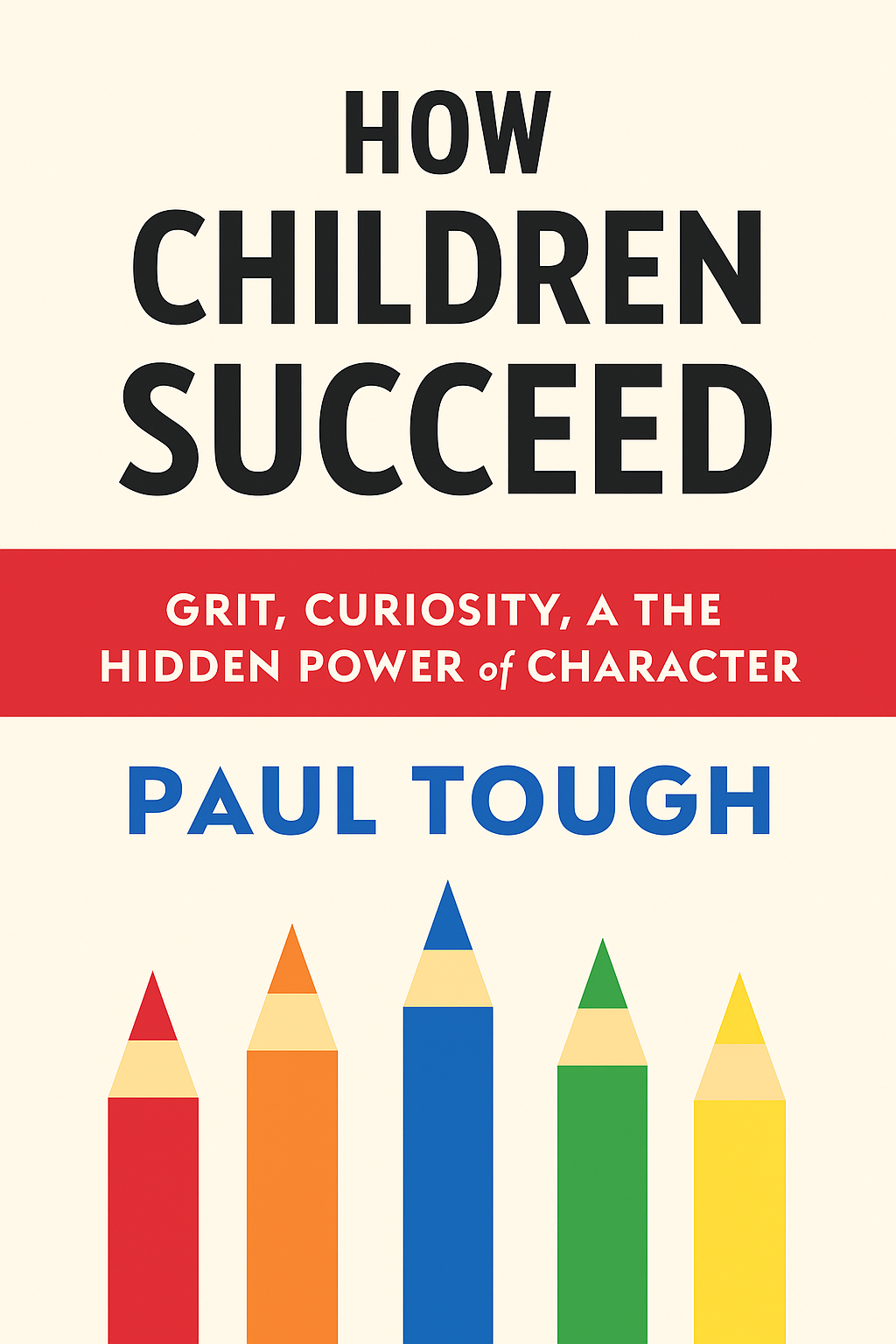
How Children Succeed
Grit, Curiosity, and the Hidden Power of Character
Book Edition Details
Summary
In a world obsessed with test scores and academic prowess, Paul Tough flips the script, revealing a new blueprint for childhood success that sidesteps the conventional IQ narrative. "How Children Succeed" delves into the untapped power of character, spotlighting traits like resilience, curiosity, and optimism as the true engines of achievement. This groundbreaking work draws from cutting-edge research in neuroscience and psychology, weaving together the stories of young people navigating the precarious line between triumph and failure. Tough's compelling narrative introduces visionary educators and scientists who are reshaping our understanding of child development. With a blend of science and storytelling, this book challenges us to rethink how we nurture the next generation, promising to redefine what it means to succeed.
Introduction
Contemporary society operates under a fundamental misconception about the nature of human achievement and success. For decades, educational systems, parenting approaches, and social policies have been constructed around the belief that cognitive abilities—intelligence quotients, standardized test scores, and academic performance—serve as the primary determinants of life outcomes. This cognitive-centric worldview has driven massive investments in early childhood academic programs, intensive test preparation, and merit-based selection systems that prioritize measurable intellectual capabilities above all other human qualities. Yet emerging research from neuroscience, psychology, and longitudinal studies reveals a striking disconnect between this assumption and empirical reality. The evidence points toward a different set of human capacities that prove far more predictive of success, well-being, and life satisfaction than raw intellectual ability. These character strengths—encompassing qualities like perseverance, self-control, optimism, curiosity, and social intelligence—operate through distinct developmental pathways and respond to entirely different environmental influences than cognitive skills. This investigation challenges readers to reconsider their fundamental assumptions about human potential and development. Through systematic examination of research findings, real-world applications, and policy implications, the analysis reveals how character-based approaches to education and child development can address persistent inequalities while unlocking human capabilities that traditional methods consistently overlook. The journey ahead demands careful consideration of evidence that may contradict deeply held beliefs about intelligence, achievement, and the factors that truly matter for human flourishing.
The Cognitive Fallacy: Why Intelligence Alone Fails
The foundation of modern educational policy rests on what researchers have termed the cognitive hypothesis—the assumption that intelligence, as measured by standardized assessments, represents the most reliable predictor of academic and professional achievement. This perspective has dominated American thinking for generations, driving parents to invest heavily in academic enrichment while policymakers focus relentlessly on raising test scores. The approach assumes that cognitive abilities develop early, remain relatively stable throughout life, and determine success across multiple domains. Longitudinal research tracking students over extended periods reveals significant limitations in this cognitive-focused framework. Studies following high-performing students from elementary school through college demonstrate that impressive test scores do not reliably translate into sustained achievement or life satisfaction. Many students with exceptional academic credentials struggle with the transition to higher education, lacking the psychological tools necessary for independent learning and self-direction. Conversely, students with more modest test scores often demonstrate remarkable persistence and ultimately achieve greater success in both academic and professional contexts. The disconnect becomes particularly apparent when examining college completion rates and career trajectories. Students who excel on entrance examinations but lack certain character strengths frequently struggle with the demands of higher education, despite possessing the intellectual capability for academic success. They may have mastered content knowledge and test-taking strategies but lack the resilience to handle setbacks, the self-control to manage competing priorities, or the social intelligence to navigate complex interpersonal relationships that characterize adult environments. These findings suggest that cognitive abilities, while important, represent only one component of a far more complex equation determining life outcomes. The evidence points toward a broader conception of human capability that recognizes intelligence as necessary but insufficient for sustained achievement. This realization demands fundamental reconsideration of how society identifies, develops, and supports human potential across educational and professional contexts.
Character as the True Engine of Achievement
Character strengths encompass a range of psychological attributes that enable individuals to persist through challenges, maintain positive relationships, and pursue long-term goals effectively despite obstacles and setbacks. These qualities include grit, self-control, optimism, curiosity, gratitude, social intelligence, and conscientiousness. Unlike cognitive abilities, which tend to stabilize after early childhood, character strengths remain malleable throughout adolescence and young adulthood, responding to targeted interventions and deliberate practice in ways that can fundamentally alter life trajectories. Research demonstrates that character strengths predict important life outcomes with remarkable consistency across diverse populations and contexts. Students who score high on measures of grit and self-control show significantly higher rates of high school and college graduation, even when controlling for academic ability, socioeconomic background, and other demographic factors. They demonstrate greater persistence when facing difficult tasks, recover more quickly from failures and disappointments, and maintain motivation over extended periods when immediate rewards are absent. The mechanisms through which character strengths influence outcomes operate through both behavioral and psychological pathways that create positive feedback loops. Students with strong character skills develop superior study habits, seek help when needed, and maintain constructive relationships with teachers, mentors, and peers. They also demonstrate enhanced emotional regulation, allowing them to manage stress, anxiety, and frustration more effectively while maintaining focus on long-term objectives rather than immediate gratification. Character development creates cumulative advantages that compound over time, generating what researchers term "success spirals" that enhance overall achievement and well-being. Students who experience success through persistent effort develop greater confidence in their ability to overcome challenges through sustained work rather than innate talent. This increased self-efficacy motivates continued effort and strategic thinking, leading to further success that reinforces the value of character-based approaches to achievement and creates lasting patterns of effective behavior.
Building Resilience Through Strategic Challenge and Support
Contrary to protective instincts that seek to shield children from all difficulties and disappointments, research reveals that appropriate exposure to manageable challenges plays a crucial role in character development and psychological resilience. Students who never experience failure or significant obstacles often struggle when they eventually encounter setbacks, lacking the coping strategies and emotional regulation skills necessary to persevere through adversity. This phenomenon appears particularly pronounced among affluent students who have been consistently protected from disappointment and failure throughout their developmental years. The critical distinction lies between toxic stress that overwhelms developing coping systems and optimal challenges that promote growth and skill development. Toxic stress, often associated with poverty, trauma, or family dysfunction, can impair brain development and undermine emotional regulation in ways that persist throughout life. However, moderate challenges within supportive environments can strengthen resilience, build confidence, and develop the psychological tools necessary for handling future difficulties effectively. Effective character development requires what researchers term "optimal frustration"—experiences that push students beyond their comfort zones while providing adequate scaffolding to prevent overwhelming stress or learned helplessness. These might include academic challenges requiring sustained effort and revision, social situations demanding conflict resolution and compromise, or extracurricular activities testing persistence and teamwork over extended periods. The goal involves creating opportunities for students to experience both struggle and eventual mastery within frameworks that promote learning rather than discouragement. The process of working through difficulties helps students develop metacognitive skills—the ability to monitor and regulate their own thinking and learning processes. When students reflect systematically on their mistakes, analyze what contributed to poor outcomes, and develop specific strategies for improvement, they build self-awareness and problem-solving capabilities that serve them across multiple life domains. This reflective process transforms setbacks from sources of shame or discouragement into valuable opportunities for growth and skill acquisition.
Transforming Education: From Test Scores to Character Development
Educational institutions seeking to develop character strengths must move beyond traditional approaches that rely primarily on behavioral compliance or moral exhortation toward systematic attention to specific skills and deliberate practice opportunities. Effective character development requires both explicit instruction in psychological concepts and the creation of learning environments that naturally promote character growth through authentic challenges and meaningful work that connects to students' intrinsic motivations and long-term goals. Promising approaches involve teaching students metacognitive strategies that help them monitor and regulate their own behavior, learning, and emotional responses. These techniques include goal-setting frameworks that break long-term objectives into manageable steps, self-reflection protocols that promote honest assessment of strengths and weaknesses, and problem-solving strategies that students can apply across various academic and social contexts. When students learn to identify their own patterns of thinking and behavior, they become better equipped to make positive changes and persist through inevitable challenges. Schools can create authentic opportunities for students to practice character strengths through meaningful projects and experiences that require sustained effort over extended periods. Long-term research projects demanding persistence through multiple revisions, collaborative assignments requiring social intelligence and conflict resolution, and community service initiatives developing empathy and social responsibility provide contexts where character development occurs naturally through engagement with challenging, purposeful work rather than artificial exercises or lectures about character traits. Assessment and feedback systems play crucial roles in character development by helping students understand their progress and identify specific areas for improvement. Rather than focusing exclusively on academic outcomes, schools can implement comprehensive evaluation approaches that track growth in character strengths over time while providing concrete goals and benchmarks for development. The ultimate objective involves creating educational cultures where character development receives equal emphasis with academic achievement and where students receive systematic support for developing both intellectual capabilities and the psychological tools necessary for applying those capabilities effectively throughout their lives.
Summary
The evidence reveals a fundamental truth about human development that challenges the cognitive-centric assumptions underlying contemporary educational and social policy: character strengths consistently prove more predictive of life outcomes than raw intellectual ability or academic achievement. While cognitive skills remain important, qualities like perseverance, self-control, optimism, and social intelligence provide the psychological foundation necessary for sustained success, meaningful relationships, and personal well-being across diverse life contexts. This understanding demands comprehensive approaches to human development that address the full spectrum of capabilities rather than focusing exclusively on measurable academic performance. The research offers profound hope by demonstrating that character strengths can be systematically developed through evidence-based interventions, supportive relationships, and carefully designed challenges, suggesting that all individuals possess the potential to develop the psychological tools necessary for flourishing. For educators, parents, policymakers, and anyone committed to unlocking human potential, this framework provides both compelling evidence and practical strategies for fostering complete human development that prepares young people not merely for academic success, but for the complex demands of meaningful, productive lives in an increasingly interconnected world.
Related Books
Download PDF & EPUB
To save this Black List summary for later, download the free PDF and EPUB. You can print it out, or read offline at your convenience.
By Paul Tough
