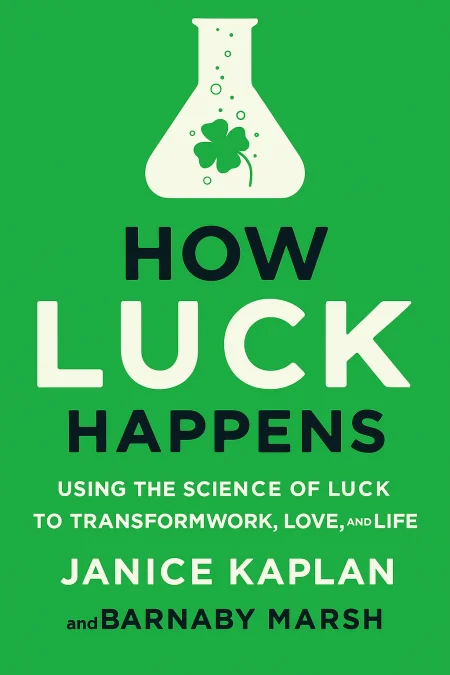
How Luck Happens
Using the Science of Luck to Transform Work, Love and Life
byJanice Kaplan, Barnaby Marsh
Book Edition Details
Summary
Luck isn't a mere roll of the dice—it's an art waiting to be mastered. In "How Luck Happens," Janice Kaplan, a New York Times bestselling author, teams up with the brilliant Dr. Barnaby Marsh to demystify the elusive concept of luck. Through vivid narratives and enlightening interviews with icons like Harrison Ford and Kate Spade, Kaplan and Marsh expose the intricate science behind seizing serendipity. This compelling exploration reveals that luck is not a whimsical force beyond our grasp but a skill that can be cultivated. Whether you're chasing dreams in your career or searching for love, this book offers transformative strategies to harness fortune in your favor, proving that the power to influence destiny lies within us all.
Introduction
Have you ever wondered why some people seem to effortlessly attract opportunities while others struggle despite their best efforts? The answer isn't written in the stars or determined by chance alone. What appears as random fortune is actually the result of specific, learnable strategies that anyone can master. By understanding the intersection of preparation, positioning, and purposeful action, you can transform from someone who waits for luck to someone who creates it. The most successful people throughout history haven't simply been blessed with good fortune—they've developed a systematic approach to generating the circumstances that others call lucky breaks. True luck emerges at a precise convergence point where three essential elements meet: random chance, personal talent, and dedicated effort. This isn't about wishful thinking or passive hoping—it's about understanding that while you cannot control every variable in life, you can strategically position yourself to maximize favorable outcomes.
Position Yourself Where Opportunities Can Find You
Strategic positioning is about more than physical location—it's about placing yourself in the flow of possibilities where meaningful connections and opportunities naturally occur. Like hockey legend Wayne Gretzky, who famously said he skated to where the puck would be rather than where it was, lucky people anticipate where opportunities will emerge and position themselves accordingly. Mother Teresa understood this principle profoundly. Despite her vow of poverty and dedication to serving the poorest communities, she frequently flew first class on international flights. Critics questioned this apparent contradiction, but Teresa recognized that the first-class cabin provided access to wealthy philanthropists who could fund her charitable work. During long flights, she could engage potential donors in meaningful conversations that generated more resources for her missions than any other fundraising method. Teresa's strategic positioning multiplied her impact exponentially. By placing herself where she could connect with people who had both the means and influence to support her cause, she transformed routine travel into powerful fundraising opportunities. Her presence in first class wasn't about personal comfort—it was about maximizing her ability to serve those in need. To implement strategic positioning, first identify where the key players in your field naturally gather. This might be industry conferences, exclusive clubs, certain neighborhoods, or specific online communities. Next, find legitimate reasons to be present in these environments, whether through professional development, volunteering, or social activities. Finally, approach these opportunities with genuine curiosity and value to offer, rather than simply seeking personal gain. Remember that positioning isn't about manipulation or pretense—it's about thoughtfully placing yourself where your skills and passions can intersect with the needs and opportunities that matter most to your goals.
Build Networks That Generate Lucky Breaks
The most powerful luck often comes through other people, particularly through what sociologists call "weak ties"—the acquaintances and distant connections who move in different circles than your close friends and family. These relationships provide access to information, opportunities, and resources that would otherwise remain invisible to you. Sree Sreenivasan discovered this principle's power when he was unexpectedly let go from his dream job as chief digital officer at the Metropolitan Museum of Art. Rather than retreating in disappointment, he leveraged his extensive network by publicly sharing his situation on social media. He invited people to join him on extended walks while he searched for new opportunities, creating a form of "global digital hug" that connected him with over 1,300 supporters. Within weeks, this network helped him secure an even better position as chief digital officer for New York City. Sreenivasan's success stemmed from years of genuine relationship building across diverse professional and personal contexts. When crisis struck, his network rallied not because he had manipulated them, but because he had consistently provided value and support to others throughout his career. His willingness to be vulnerable and ask for help activated dormant connections that proved more powerful than any traditional job search method. To build your luck-generating network, start by identifying people in adjacent fields or different life circumstances who might offer fresh perspectives on your challenges. Attend events outside your usual professional sphere, engage with people during routine activities like commuting or exercising, and maintain contact with former colleagues and classmates. Most importantly, approach networking as an opportunity to help others rather than simply seeking personal benefit. The strength of weak ties lies in their ability to bridge different worlds, providing access to opportunities and insights that your closest connections cannot offer because they share too much of your existing knowledge and experience.
Transform Setbacks Into Strategic Advantages
Your worst moments often contain the seeds of your greatest opportunities, but only if you know how to recognize and cultivate them. The ability to transform apparent disasters into lucky breaks represents one of the most powerful skills you can develop. It requires shifting your perspective from victim to strategist, from "why me?" to "what now?" Lee Child's experience perfectly demonstrates this transformation. After thirteen years in a stable television job in the UK, he was suddenly fired when new management took over. At first, this seemed like devastating bad luck. He had a mortgage, car payments, a daughter to support, and only a few months of savings in the bank. The natural response would have been panic, desperation, and frantic job searching within the same industry. Instead, Child chose to view his termination as an unexpected opportunity to pursue something he'd always dreamed about but never had the courage to attempt: writing novels. He channeled his anger and frustration into creating Jack Reacher, a character who, like Child himself, had been downsized out of his previous life and had to forge a new path. The urgency of his financial situation actually worked in his favor, providing the motivation and deadline pressure that many aspiring writers lack. Child's first Jack Reacher novel became a bestseller, launching a series that would eventually span dozens of books and generate hundreds of millions in revenue. The key to turning bad moments into lucky breaks lies in expanding your time horizon and maintaining faith in your ability to create positive outcomes. When something goes wrong, resist the urge to immediately label it as purely negative. Instead, ask yourself what new possibilities this situation might create. Create a systematic approach for processing setbacks by first allowing yourself to feel the disappointment, then shifting into strategic thinking mode. List everything you can learn from the situation, identify any resources or opportunities that might emerge, and develop a concrete plan for moving forward that incorporates these insights.
Summary
The journey from passive hope to active luck creation represents a fundamental shift in how you engage with uncertainty and opportunity. As Thomas Edison observed, genius is one percent inspiration and ninety-nine percent perspiration—but the same ratio applies to luck. The small percentage of random chance becomes meaningful only when combined with substantial preparation and persistent effort. "You miss 100 percent of the shots you don't take," Wayne Gretzky reminded us, and this truth extends far beyond hockey into every aspect of creating a fortunate life. The most consistently lucky people aren't those blessed by fate, but those who have learned to recognize, create, and capitalize on the opportunities that surround us all. Begin today by identifying one area of your life where you've been waiting for luck to strike, then take a concrete action to position yourself more strategically. Whether that means reaching out to a distant connection, developing a new skill, or simply changing where you spend your time, remember that fortune favors the prepared mind and the active hand.
Related Books
Download PDF & EPUB
To save this Black List summary for later, download the free PDF and EPUB. You can print it out, or read offline at your convenience.
By Janice Kaplan
