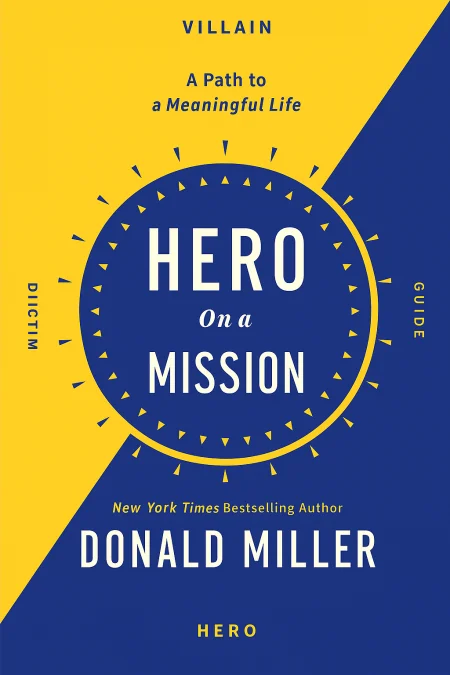
Hero on a Mission
A Path to a Meaningful Life
Book Edition Details
Summary
In "Hero on a Mission," Donald Miller dismantles the complex architecture of human identity through a riveting narrative lens. At the heart of his transformational guide lies a provocative inquiry: which role are you playing in your life's unfolding drama—the victim, the villain, the hero, or the guide? Drawing from his own turbulent experiences, Miller empowers you with dynamic journaling prompts and incisive goal-setting exercises to steer your life's story towards a heroic arc. This isn't just a book; it's a call to self-awareness, a catalyst for profound change. By identifying your current role, you uncover the opportunity to pivot toward a life of purpose and fulfillment. Prepare to redefine your narrative and embrace the hero within.
Introduction
Have you ever found yourself staring at the ceiling at 3 AM, wondering if your life actually matters? You're successful by most measures, yet something feels missing—a nagging sense that you're sleepwalking through your own story. Donald Miller knows this feeling intimately. In his mid-twenties, he was sleeping on a fold-out couch in Portland, selling books to afford pizza, convinced that meaningful lives were reserved for people with British accents or better genetics. This book isn't another productivity manual or self-help guide promising overnight transformation. Instead, it's a profound exploration of how to construct a life that delivers deep meaning through intentional story-living. Miller draws from Viktor Frankl's logotherapy and timeless storytelling principles to show us that we don't have to wait for fate to write our stories—we can take the pen ourselves. You'll discover how to transition from victim mentality to heroic agency, create a practical life plan that generates daily motivation, and ultimately transform into a guide who helps others find their own meaningful paths. Most importantly, you'll learn that meaning isn't found in achievements alone, but in the courage to live each day as if your story truly matters.
From Victim to Hero: Donald's Portland Awakening
Donald Miller's transformation began in the most unlikely place—a cramped room in Portland where he slept on a mattress so low to the ground that getting up required strategic planning. Every morning, he'd lie there studying the carpet fibers, wondering if his housemates had a vacuum cleaner. At twenty-six, his body felt arthritic from the soft mattress, his ambition had withered to nothing, and his primary source of income was selling books to Powell's Bookstore for pizza money. The breaking point came when his roommates staged an intervention. They'd grown tired of his passive-aggressive comments about their girlfriends, their jobs, their weekend soccer watching. Miller had become the walking embodiment of victim energy—someone who believes they're helpless and takes it out on others. "Watching soccer on television is a little like watching fish in an aquarium, don't you think?" he'd sneer. When they made a house rule about dishes in the sink, he retaliated by putting dirty plates in their beds. He was drowning in resentment, convinced that fate had dealt him a losing hand while blessing everyone else. The intervention was brutal but necessary. His roommates weren't wrong—he had become difficult, bitter, and exhausting to be around. But in that moment of painful honesty, Miller faced a choice that divides every story: Would he remain the victim, or would he step into the role of hero? The difference, he realized, wasn't about strength or capability—heroes are often the second weakest characters in any story, right after victims. The crucial difference is agency. Heroes accept responsibility for their lives and respond to challenges with action rather than blame. This shift from victim to hero mentality transformed everything. Instead of waiting for rescue, Miller began asking a different question when faced with difficulties: "What does this make possible?" He started writing daily, not because he felt inspired, but because he decided to become someone who writes. He stopped viewing his circumstances as evidence of cosmic unfairness and began seeing them as raw material for a better story. The same struggles that once paralyzed him—growing up poor, being overweight, feeling invisible—became the foundation of his eventual success as an author who could speak to others feeling lost in their own lives.
Viktor Frankl's Formula: Finding Meaning Through Action
During a cross-country bicycle ride from Los Angeles to Delaware, Miller discovered Viktor Frankl's "Man's Search for Meaning" in a Washington D.C. bookstore. Frankl, a Holocaust survivor and psychiatrist, had developed logotherapy—a therapy of meaning—while imprisoned in Nazi concentration camps. His wife, unborn child, and parents had all been murdered, yet Frankl found a way to experience profound meaning even in the most horrific circumstances. When his manuscript was confiscated on his first day in the camps, he began mentally reconstructing it, turning his survival into a living laboratory for his theories about human resilience. Frankl's formula for meaning consisted of three elements, and Miller realized he had accidentally stumbled upon all three during his bike ride. First, take action creating a work or performing a deed—they had committed to riding from ocean to ocean. Second, experience something or encounter someone that pulls you outside yourself—the landscape, their friendship, the daily beauty of sunrise over Joshua Tree. Third, maintain an optimistic attitude toward inevitable challenges and suffering—every day was painful, but the pain served their larger purpose and was making them stronger. The breakthrough came when Miller understood that meaning isn't a philosophical concept you agree with—it's an emotional state you experience while in motion toward something that matters. You can't think your way into meaning; you have to act your way into it. This explained why so many people sit in church pews hearing lectures about purpose yet return home feeling restless. Even Jesus said "follow me" rather than "figure me out." Meaning requires movement, commitment, and the willingness to engage with life's challenges rather than avoid them. After completing the ride, Miller felt the familiar pull of what Frankl called the "existential vacuum"—that restless emptiness that comes when a story ends and no new story begins. Instead of falling into depression, he immediately threw himself into a presidential campaign, working as a surrogate speaker on fatherlessness issues. The pattern became clear: when one meaningful story ends, you must quickly begin another. Meaning isn't a permanent state you achieve; it's a renewable resource you create by consistently choosing to live with intention and purpose rather than drifting through life waiting for something to happen.
Creating Your Life Plan: The Power of Written Vision
Miller's most practical contribution emerged from his realization that living a meaningful life requires the same intentionality as writing a compelling story—you need an outline before you begin. His Hero on a Mission Life Plan starts with perhaps the most powerful exercise imaginable: writing your own eulogy. Not in a morbid way, but as a creative tool to work backward from the life you want to have lived. When Miller sits down each morning to read his eulogy, he's reminded that he wants to be remembered as someone who provided love, security, and an example to follow for his family, and who helped others discover their own agency to live better stories. The life plan expands from this eulogy into ten-year, five-year, and one-year vision worksheets that serve as stepping stones toward the bigger picture. Miller's ten-year vision has the movie title "Fearless Leader"—a reference to a plaque his mother hung on his bedroom wall as a child. His five-year vision is "Building a Legacy," focused on creating something meaningful to leave behind for his daughter. His one-year vision is "Focused on a Firm Foundation," acknowledging that the next twelve months of concentrated effort will determine the trajectory of the next twenty years. Each vision worksheet breaks life into manageable subplots—career goals, physical health, family relationships, community involvement, and spiritual growth. This prevents the common mistake of trying to transform everything at once, which usually results in transforming nothing. Miller learned this lesson the hard way when his first book sold only thirty-seven copies, mostly to his mother. Instead of giving up, he used the failure as education and kept writing. The vision worksheets ensure that setbacks in one area don't derail progress in others. The daily planner ties everything together with morning ritual that takes just fifteen minutes but creates what Miller calls "narrative traction"—genuine interest in your own life story. By reviewing his eulogy and vision sheets each morning, then planning his primary tasks, Miller stays focused on what actually matters rather than getting pulled into the urgent but unimportant distractions that fill most people's days. The result isn't just productivity; it's the deep satisfaction that comes from knowing your daily actions are building toward something meaningful rather than just keeping you busy.
From Hero to Guide: Becoming Someone Others Follow
The ultimate transformation in Miller's framework isn't becoming a successful hero, but evolving into a guide who helps others find their own meaningful paths. This shift became crystal clear when his daughter Emmeline was born. Suddenly, Miller's greatest sense of importance came not from his accomplishments but from being necessary to someone who depended on him completely. The spotlight turned from "What can I achieve?" to "What kind of example am I setting?" His legacy wasn't the books he'd write or the business he'd build, but the story his daughter would tell about the man who raised her. Guides possess four essential characteristics that heroes develop through their journeys. First is experience—they've walked the path themselves and survived the challenges. Miller's years of victim mentality, failed projects, and gradual transformation give him credibility when helping others navigate similar struggles. Second is wisdom gained through failure. His first book's dismal sales, his financial mistakes, and his relationship failures all became curriculum for helping others avoid similar pitfalls or recover from their own setbacks. Third is empathy, which Miller defines as "shared pain." Having been defeated and climbed back up, guides understand what it feels like to be overwhelmed, misunderstood, or abandoned. They carry some of the hero's burden, allowing them to travel farther and faster. Finally, guides embrace sacrifice—giving up their time, wisdom, and resources so others can succeed, knowing they won't get the glory. Miller now spends significant time mentoring other writers and business owners, understanding that his greatest impact may not be his own achievements but the achievements he makes possible for others. The transition from hero to guide doesn't happen overnight, and Miller warns against trying to skip steps. A person who sees themselves as a guide too early, without having lived as a hero on a mission, lacks the experience and wisdom that make guidance valuable. You can't guide someone up Mount Everest if you've never been to the Himalayas yourself. But for those who persist in living meaningful stories, accepting challenges, and learning from failures, the natural progression leads to becoming someone others seek out for direction. The hero's journey never really ends; it just expands to include helping others begin their own transformative journeys.
Summary
The key takeaway is elegantly simple: meaning isn't found in philosophical understanding but in the daily choice to live as the author of your own story rather than a victim of circumstances. Stop waiting for fate to write your story and start taking deliberate action toward a vision that excites you. Begin immediately by writing your own eulogy—not morbidly, but as a creative exercise to clarify what kind of life you want to have lived. Then work backward, creating one-year, five-year, and ten-year vision worksheets that serve as stepping stones toward that bigger picture. Establish a fifteen-minute morning ritual where you review these plans and identify your three most important tasks for the day. Remember that transformation happens through accepting challenges rather than avoiding them, and that setbacks are education, not judgment. Most importantly, understand that your ultimate goal isn't just to become a successful hero, but to evolve into a guide who helps others discover their own capacity for meaningful living.
Related Books
Download PDF & EPUB
To save this Black List summary for later, download the free PDF and EPUB. You can print it out, or read offline at your convenience.
By Donald Miller
