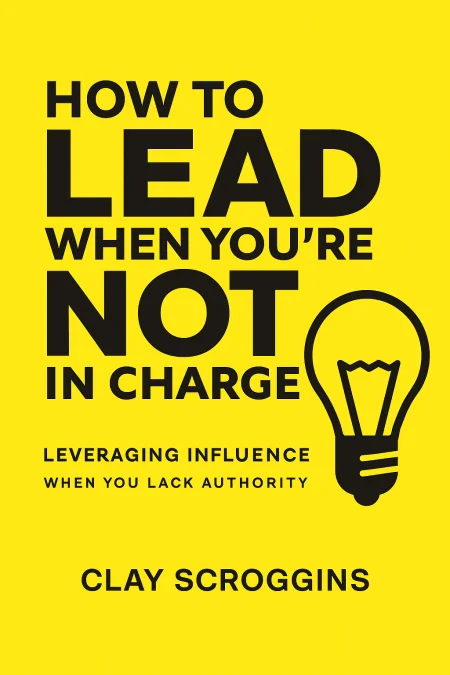
How to Lead When You're Not in Charge
Leveraging Influence When You Lack Authority
Book Edition Details
Summary
Authority isn't a prerequisite for influence. In "How to Lead When You're Not in Charge," Clay Scroggins shatters the myth that leadership demands a title. This insightful guide unveils the art of leading with impact, even when you're not at the helm. Drawing from biblical wisdom and his own pastoral experiences, Scroggins offers a blueprint for nurturing vision and wielding influence with integrity. He champions four transformative behaviors—self-leadership, positivity, critical thinking, and rejecting passivity—as the keystones of effective leadership. Bursting with practical wisdom and engaging humor, this book empowers you to step into your potential and drive change from any position. Get ready to redefine leadership, not through authority, but through presence and purpose.
Introduction
Picture yourself in a meeting where a brilliant idea sparks in your mind—one that could transform your team's approach, solve a persistent problem, or unlock new opportunities. Yet as you sit there, you hesitate. You're not the decision-maker. You don't have the title, the authority, or the corner office. So you stay silent, watching as potential slips away. This scenario plays out in organizations everywhere, where talented individuals believe they must wait for permission to lead. The truth is, real leadership has little to do with titles and everything to do with influence. When we understand that leadership is about serving others and creating positive change regardless of our position, we discover that every seat at the table—and even those standing nearby—holds the potential for profound impact.
Understand Your Challenge and Identity
Leadership without authority begins with a fundamental shift in how we see ourselves and our circumstances. Too often, we fall into the trap of believing that influence requires a title, that meaningful contribution demands a specific position, or that change can only come from the top down. This mindset creates a dangerous passivity where we wait for someone else to grant us permission to make a difference. Consider the story of Clay, a campus pastor who found himself in Andy Stanley's office, frustrated and making excuses for a failed initiative. Instead of taking responsibility, Clay blamed the organization, the timing, and the resources. But in that pivotal moment, Andy's probing questions exposed a crucial truth: Clay had confused having authority with the responsibility of leading. He realized he didn't need more authority; he needed to accept the influence he already possessed and use it wisely. This conversation transformed Clay's understanding of leadership. He stopped waiting for the perfect circumstances or the ideal title and began leading from exactly where he was. The shift wasn't about gaining more power—it was about recognizing the power he already had to create positive change, serve others, and influence outcomes through his daily actions and decisions. To understand your own leadership challenge, start by examining your identity apart from any title. Ask yourself what drives you, what unique perspective you bring, and how your current role—regardless of its level—positions you to serve others. Leadership identity isn't built on what others call you, but on how you choose to show up, contribute, and influence the world around you. Remember that every great leader started somewhere without authority, and their impact came not from their position but from their willingness to lead through service and influence.
Master the Four Essential Behaviors
Leading without formal authority requires mastering four critical behaviors that build influence and create positive change. These aren't techniques to manipulate or shortcut your way to power—they're character-driven practices that develop genuine leadership capacity from any position. The journey begins with leading yourself. Moses understood this principle when he fled Egypt and spent years in the wilderness learning self-discipline and dependence on God before returning to lead Israel. During those decades of obscurity, he wasn't waiting for his moment—he was preparing for it. Leading yourself means taking ownership of your growth, your attitude, and your contribution regardless of external circumstances. It requires creating a personal development plan, seeking feedback, and holding yourself accountable to higher standards than anyone else might demand. Next comes choosing positivity, which isn't about naive optimism but about maintaining hope-filled perspective even in difficult circumstances. The apostle Paul demonstrated this while writing from prison, choosing to see his chains not as limitations but as opportunities to advance the gospel. When you choose positivity, you become someone others want to follow because you bring energy and possibility into every situation. Critical thinking balances optimism with wisdom. Great leaders ask probing questions, notice patterns others miss, and connect dots between seemingly unrelated events. They challenge assumptions not to be difficult, but to find better solutions. Finally, rejecting passivity means taking initiative even when it's not your job. It's picking up responsibilities that need attention, solving problems before they become crises, and contributing beyond your job description because you care about outcomes, not just tasks. These four behaviors work together to build the kind of influence that makes formal authority almost irrelevant. Master them where you are, and you'll discover that leadership was never about the title—it was always about the choice to serve and the courage to act.
Challenge Authority with Wisdom
The most delicate aspect of leading without authority involves knowing when and how to challenge those above you in the organizational hierarchy. This isn't about rebellion or undermining leadership—it's about courageously advocating for better solutions while maintaining respect and relationship. Shane Todd exemplified this principle at Chick-fil-A when he noticed customers consistently requesting milkshakes that corporate deemed too time-consuming to serve. Rather than accepting this limitation, Shane began quietly experimenting in his Athens, Georgia location. He personally purchased ingredients, trained his team, and developed a system that could produce quality milkshakes without slowing service. When Tim Tassopoulos, senior vice president of operations, visited to investigate, Shane was ready with both proof of concept and a compelling demonstration. Shane's approach revealed the essential elements of challenging up effectively. He started with pure motives—serving customers better rather than personal advancement. He understood what his leadership cared about most and positioned his innovation as a solution to their stated priorities. He communicated like a submarine—not silent, but strategic about timing and audience. Most importantly, he did his homework, testing his theory thoroughly before presenting it to decision-makers. The result was transformative. What began as one store owner's initiative became a nationwide menu addition that customers still enjoy today. Shane's willingness to challenge the status quo, combined with his wisdom in how he approached that challenge, created value far beyond his local restaurant. When you need to challenge authority, remember that relationships are your foundation. Build trust through faithful service before you spend it on difficult conversations. Choose your battles wisely, focusing on issues that truly matter rather than personal preferences. Present solutions, not just problems, and always maintain respect for both the person and the position. The goal isn't to prove you're right—it's to advocate for what's best for the organization and the people it serves.
Start Leading Today
The time for leadership is not tomorrow when you receive a promotion, gain a title, or find yourself in charge. The time for leadership is now, exactly where you are, with whatever influence and opportunities currently exist in your sphere. Every great leader throughout history began leading long before anyone officially recognized them as a leader. Your leadership reputation is forming right now through your daily choices, interactions, and responses to challenges. The way you handle criticism, support colleagues, solve problems, and serve others is creating a track record that will either open future doors or close them. People don't suddenly transform when they receive authority—they simply become more visible versions of who they already are. Consider how you want to be remembered as a leader and begin embodying those characteristics today. Do you want to be known as someone who develops others? Start mentoring and encouraging those around you now. Do you aspire to be a visionary leader? Practice seeing beyond current circumstances and articulating possibilities that inspire others. Would you like to be recognized for integrity? Make decisions based on what's right rather than what's easy, even when no one is watching. Leadership isn't about having perfect conditions or unlimited resources—it's about making a positive difference with what you have. Jesus demonstrated this perfectly when he washed his disciples' feet, choosing to serve rather than be served despite possessing ultimate authority. He showed us that true leadership flows from love, humility, and a commitment to others' success. The path forward is clear: stop waiting for permission to lead and start leading through service. Look for problems you can solve, people you can encourage, and improvements you can make. Take initiative on projects others avoid, speak up for those who cannot speak for themselves, and create the kind of environment where everyone can thrive. Your influence will grow not because you demanded it, but because you earned it through consistent, selfless action.
Summary
The greatest misconception about leadership is that it requires authority to be effective. Throughout these pages, we've discovered that real influence comes not from position but from character, service, and the courage to act regardless of title. As one key insight reminds us, "You will never passively find what you do not actively pursue." Leadership is not a reward for reaching a certain level—it's a choice available to anyone willing to serve others and take responsibility for positive change. Begin today by leading yourself with intentionality, choosing positivity even in difficult circumstances, thinking critically about challenges and solutions, and rejecting the passivity that waits for perfect conditions. When you consistently demonstrate these behaviors while building genuine relationships and contributing value, you'll find that formal authority often follows—but more importantly, you'll discover that you never needed it to make a meaningful difference.
Related Books
Download PDF & EPUB
To save this Black List summary for later, download the free PDF and EPUB. You can print it out, or read offline at your convenience.
By Clay Scroggins
