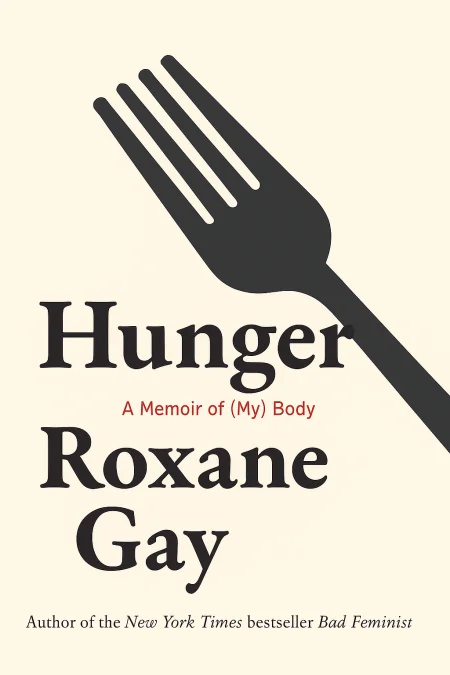
Hunger
A Memoir of (My) Body
Book Edition Details
Summary
In a world where size often dictates worth, Roxane Gay's "Hunger" offers a raw, unflinching glimpse into the complex relationship between body and self-worth. With a voice as poignant as it is powerful, Gay recounts her journey through a landscape of desire, trauma, and resilience. This memoir isn't just about food or weight; it's a profound exploration of survival and the quest for self-acceptance in a society quick to judge and slow to understand. As Gay navigates the shadows of her past, she illuminates the universal struggle to find peace within one's skin. "Hunger" is not merely a story—it's an invitation to witness a woman's fight to reclaim her narrative in a world that often tries to write it for her.
Introduction
In the landscape of contemporary memoir, few voices resonate with such raw honesty and unflinching courage as that of an acclaimed writer who dared to tell the story of her body. This is not merely a chronicle of physical transformation, but a profound exploration of how trauma shapes us, how society judges us, and how we ultimately reclaim our own narratives. Born into a loving Haitian-American family, she was once a bright, curious child who delighted in books and storytelling. But at twelve years old, a devastating assault changed everything, setting in motion a decades-long struggle with her relationship to her own flesh and the world around her. Through her journey, readers will discover the complex interplay between personal trauma and societal expectations, the ways we use our bodies as both fortress and prison, and ultimately, the possibility of healing and self-acceptance. Her story illuminates how one woman transformed her deepest pain into a source of strength and advocacy, becoming a powerful voice for those whose bodies and experiences have been marginalized or misunderstood.
The Girl in the Woods: Trauma and Its Aftermath
At twelve years old, she was still a child who believed in the safety of her suburban world, protected by loving parents and surrounded by the comfort of middle-class stability. She was precocious, already devouring books and dreaming of becoming a writer, her imagination fired by stories of adventure and romance. But that innocence shattered on a single day in the woods behind her neighborhood, when a boy she thought she loved and his friends committed an act of unthinkable violence. The assault left her not just physically violated but psychologically fractured. She carried the secret like a poison, convinced that what happened was somehow her fault, that she was now fundamentally damaged and dirty. The good Catholic girl who had once confided everything to her parents suddenly found herself unable to speak the truth, terrified that revealing what happened would only confirm her worthlessness. The guilt consumed her, made worse by the cruel reality that her attackers faced no consequences while she bore the shame alone. In the aftermath, she became a different person entirely. The confident, happy child disappeared, replaced by someone withdrawn and frightened, someone who no longer trusted the world or her place in it. Sleep became elusive as nightmares plagued her, and the simple act of existing in her body became a daily struggle. She began to see herself as the boys had seen her, not as a human being worthy of respect and kindness, but as something to be used and discarded. The trauma didn't just change how she saw herself; it fundamentally altered her relationship with her body. What had once been a source of joy and capability now felt like a liability, something that had betrayed her by its very vulnerability. This shift would set the stage for decades of struggle, as she sought ways to make her body into something that could never be hurt again.
Building Fortresses: Weight, Protection, and Survival
Food became her refuge and her weapon in the war against vulnerability. In the years following the assault, eating transformed from nourishment into something far more complex, a way of building walls around herself that no one could breach. At thirteen, away at boarding school and suddenly free from parental supervision, she discovered the intoxicating power of unlimited access to food. Pizza deliveries, dining hall binges, and endless trips to convenience stores became her new reality. The weight gain was not accidental but intentional, a calculated strategy born from a twelve-year-old's desperate logic. If she made herself large enough, unattractive enough by society's standards, perhaps she could become invisible to predators. Fat people, she observed, were dismissed and overlooked, and she craved that invisibility. Each pound was armor, each meal a brick in the fortress she was constructing around her damaged psyche. Her family watched in bewilderment and growing alarm as their once-slender daughter expanded rapidly. They saw only the symptom, not the cause, and their well-meaning interventions felt like attacks on her carefully constructed defenses. Summer camps, liquid diets, doctor visits, and constant monitoring only reinforced her sense that her body was a problem to be solved rather than a part of herself to be cherished and protected. The irony was devastating: in trying to make herself safe, she had made herself a target of a different kind of cruelty. The fat jokes, the stares, the casual dehumanization that comes with being visibly overweight added new layers of trauma to the original wound. Yet she persisted because the alternative, being small and vulnerable again, seemed infinitely worse than enduring the world's contempt for her size. The fortress held, but at a cost she was only beginning to understand.
Living in an Unruly Body: Society and Self-Perception
Living at her heaviest weight of 577 pounds meant navigating a world designed to exclude her. Airplane seats became instruments of humiliation, restaurant booths turned into impossible puzzles, and simple activities like walking up stairs became monumental challenges. Every public space felt hostile, every stranger's glance seemed to carry judgment, and the constant physical discomfort served as a reminder of how far she had traveled from the girl she once was. The medical establishment treated her body as a crisis to be solved rather than a person to be healed. Doctors fixated on her weight above all other concerns, reducing her complex humanity to a number on a scale and a cautionary tale about the dangers of obesity. The suggested solution was always the same: lose weight, exercise more, eat less, as if she had never considered these options before. The condescension and barely concealed disgust she encountered in medical settings only deepened her shame and reinforced her sense of being fundamentally flawed. Society's messages about fat bodies were unrelenting and cruel. She became hyperaware of how much space she occupied, constantly apologizing for her existence and trying to minimize her presence. The simple act of eating in public became fraught with anxiety, as she felt the weight of strangers' assumptions about her character, her discipline, and her worth. She learned to shop for clothes in the few stores that carried her size, accepting whatever was available rather than what she actually wanted to wear. Yet within this struggle lay the seeds of a different kind of strength. Her experience of marginalization opened her eyes to the ways society polices all bodies, particularly those of women. She began to understand that her shame was not just personal but political, that the hatred directed at fat bodies served a larger purpose of maintaining hierarchies and controlling behavior. This realization would eventually become crucial to her healing, as she learned to separate her worth from her weight and to challenge the systems that had taught her to hate herself.
Finding Voice and Healing: Writing Toward Freedom
Writing had always been her sanctuary, but it took decades for her to find the courage to write her own story. In the pages of her work, she began to excavate the trauma that had shaped her life, giving voice to experiences that had remained locked in silence for too long. The act of writing became both confession and reclamation, a way of insisting on her right to be seen and heard on her own terms. Through her essays and memoir, she refused to offer the redemptive narrative that society demanded from fat people. This was not a story of triumphant weight loss or simple self-acceptance, but something far more complex and honest. She wrote about the ongoing struggle with her body, the ways trauma continued to echo through her daily life, and the exhausting work of existing in a world that saw her size before it saw her humanity. Her voice grew stronger as she connected with others who shared similar struggles. Online communities of survivors and advocates helped her understand that she was not alone in carrying these burdens. She learned to separate the shame that belonged to her attackers from the shame she had internalized, slowly beginning to believe that what happened to her was not her fault and that her body, however it looked, was not something for which she needed to apologize. The process of writing and sharing her story became an act of radical self-acceptance. By refusing to hide her truth or diminish her experiences, she created space for others to do the same. Her work challenged readers to examine their own assumptions about bodies, trauma, and worth, while offering a model for how to speak difficult truths with both vulnerability and strength. In finding her voice, she had found a path toward healing that was entirely her own.
Summary
This remarkable memoir stands as a testament to the resilience of the human spirit and the power of truth-telling to transform both writer and reader. At its heart lies the profound understanding that healing is not about returning to who we were before trauma, but about integrating our experiences into a fuller, more compassionate understanding of ourselves and others. The author's journey from silence to voice, from self-hatred to self-advocacy, offers valuable insights for anyone who has struggled with body image, trauma, or the weight of societal expectations. Her work reminds us that our bodies are not our enemies, even when they have been the sites of pain, and that there is profound courage in refusing to shrink ourselves to make others comfortable. This book will resonate deeply with survivors of trauma, advocates for body positivity, and anyone seeking to understand the complex relationship between personal experience and social justice. It stands as both memoir and manifesto, challenging us to create a world where all bodies are treated with dignity and where healing can happen in its own time and on its own terms.
Related Books
Download PDF & EPUB
To save this Black List summary for later, download the free PDF and EPUB. You can print it out, or read offline at your convenience.
By Roxane Gay
