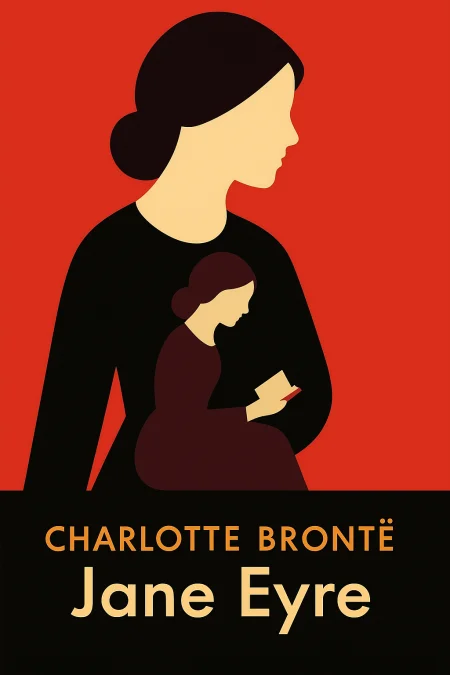
Jane Eyre
A Victorian Heroine’s Struggle for Self-Realization
byCharlotte Brontë, Michael Mason
Book Edition Details
Summary
In the shadowed corridors of Thornfield Hall, a tale of fierce independence and forbidden love unfolds. Charlotte Brontë's "Jane Eyre" is a gothic tapestry woven with the tumultuous threads of a young woman's quest for selfhood against a backdrop of mystery and societal restraint. Orphaned and cast aside, Jane Eyre emerges from her harsh upbringing with an unyielding spirit that catches fire in the presence of the enigmatic Mr. Rochester. But beneath Thornfield's grandeur lies a chilling secret, one that threatens to shatter the delicate balance of passion and principle Jane has fought so hard to achieve. Caught between the pull of her heart and the call of her convictions, Jane must navigate a world where love demands sacrifice and freedom comes at a price. Brontë's timeless narrative pulses with emotional intensity, capturing the essence of a woman's struggle to forge her own path in a world determined to constrain her.
Introduction
In the windswept Yorkshire moors of Victorian England, a small, plain governess stands before her employer, declaring with quiet fire that she possesses a soul equal to his own. This moment of revolutionary self-assertion would echo through literary history, challenging every assumption about women's place in society and the nature of human dignity itself. Jane Eyre emerged from circumstances that seemed designed to crush the spirit—orphaned, impoverished, and dismissed by a world that valued beauty, wealth, and social position above all else. Yet from these harsh beginnings arose a woman whose unwavering moral compass and fierce independence would redefine what it meant to live with integrity in a compromising world. Her journey unfolds against the rigid social hierarchies of nineteenth-century England, where women were expected to accept their lot with grateful submission and where love was often a transaction rather than a meeting of equals. Through Jane's experiences, readers discover the transformative power of education as a pathway to freedom, the courage required to choose principle over comfort when the stakes are highest, and the revolutionary idea that true love can only exist between partners who respect each other as equals. Her story illuminates how an individual's refusal to compromise their fundamental values can challenge societal expectations and create new possibilities for authentic human connection, proving that the greatest strength often lies not in conforming to others' expectations, but in remaining true to one's deepest convictions regardless of the cost.
Forging Character: Early Trials and Educational Awakening
Jane's character was forged in the crucible of childhood rejection and institutional hardship, experiences that could have broken her spirit but instead crystallized her unshakeable sense of personal worth. At Gateshead Hall, she endured the cruel favoritism of her Aunt Reed, who lavished affection on her own children while treating Jane as an unwelcome burden. The famous red room incident became a turning point, not because it traumatized her into submission, but because it awakened her fierce sense of justice. When she finally confronted her aunt with accusations of cruelty, declaring she would tell anyone who asked exactly how she had been treated, Jane discovered the intoxicating power of speaking truth to authority. Her years at Lowood School presented new challenges but also precious opportunities for growth. The harsh conditions and religious extremism could have crushed her spirit, yet Jane found something invaluable there: education and genuine friendship. Under the influence of the saintly Helen Burns, she learned that suffering could be endured with grace and that forgiveness was a form of strength rather than weakness. Helen's patient acceptance of injustice provided a counterpoint to Jane's more rebellious nature, teaching her to temper passionate responses with reason and self-control. Miss Temple's mentorship proved equally transformative, demonstrating that a woman could combine intellectual achievement with moral authority and feminine grace. Through this relationship, Jane learned that education was not merely about acquiring knowledge, but about developing the capacity for independent thought and moral reasoning. Her academic achievements earned her respect from teachers and peers alike, proving that merit could triumph over circumstance when given the opportunity. The contrast between her treatment at Gateshead and the respect she eventually earned at Lowood taught Jane a crucial lesson about human worth. She discovered that dignity came not from birth or wealth, but from one's actions and character. When she finally left Lowood as a qualified governess, she carried with her the hard-won knowledge that she could support herself through her own efforts and that no external circumstances could diminish her essential value as a human being.
Testing Love: Thornfield's Passion and Moral Dilemma
At Thornfield Hall, Jane encountered her greatest challenge and most profound opportunity for growth. Her position as governess placed her in the complex social territory between servant and family member, a liminal space that would prove perfect for her unconventional relationship with Edward Rochester. Their first meeting, when his horse threw him on the icy lane, established the equality of spirit that would define their connection. Jane offered help to this stranger without knowing his identity, treating him simply as a fellow human being in need, setting their relationship apart from typical master-servant dynamics. As their evening conversations by the fire became cherished routines, Jane discovered in Rochester a mind that matched her own in complexity and depth. He challenged her intellectually, drew out her opinions, and treated her thoughts with respect despite their difference in social station. For Jane, who had spent her life being dismissed or ignored, this attention was transformative. She found herself falling in love not just with Rochester's passionate nature, but with the person she became in his presence—someone whose intelligence and spirit were valued and celebrated. The mysterious atmosphere of Thornfield, with its hidden secrets and strange occurrences, created an environment where Jane's courage and quick thinking could shine. Her response to the fire in Rochester's room demonstrated her capacity for decisive action and personal sacrifice, while her discretion about the incident showed her understanding of loyalty and appropriate boundaries. These qualities earned Rochester's respect in ways that mere beauty or social position never could. The revelation of Rochester's apparent courtship of the beautiful Blanche Ingram served as a crucible for Jane's emotions, forcing her to confront the pain of unrequited love while maintaining her composure. This trial revealed both her capacity for deep feeling and her strength in concealing suffering. When Rochester finally declared his love and proposed marriage, Jane's joy was tempered by her insistence on maintaining her independence, refusing his attempts to shower her with gifts and understanding instinctively that true partnership required equality, not patronage.
Choosing Independence: Moral Courage Over Compromise
The wedding day catastrophe that revealed Rochester's existing marriage to Bertha Mason presented Jane with the ultimate test of her principles. Standing at the altar, moments from becoming Mrs. Rochester, she learned that the man she loved was already bound to another—a woman whose madness had been hidden in Thornfield's third floor. The revelation shattered not only her dreams but her trust in the man who had deceived her, however well-intentioned his motives. Rochester's passionate pleas for her to remain as his mistress presented the most difficult choice of Jane's life. His arguments were compelling: his wife was mad, their marriage a trap, and their love genuine and pure. Society would never know, he insisted, and no one would be harmed by their union. For a woman who had known so little happiness, the temptation to accept this compromise was overwhelming. Yet Jane understood that to do so would be to betray everything she believed about herself and her worth. Her famous declaration that she cared for herself and would hold to the laws given by God represented not cold calculation but the deepest expression of her character. She recognized that true love could not be built on deception or inequality, and that to compromise her principles, even for love, would destroy the very self that Rochester claimed to cherish. The agony of her decision was compounded by her genuine love for Rochester and her understanding of the suffering her departure would cause him. Jane's midnight flight from Thornfield, leaving behind not only the man she loved but also security and comfort, represented the triumph of principle over passion. Her subsequent wandering across the moors, where she nearly died of exposure and starvation, proved that her sense of self-worth was not dependent on external circumstances but came from an unshakeable inner conviction. When rescued by the Rivers family, she faced a different temptation in St. John Rivers' proposal of missionary marriage—duty without love—which she also refused, understanding that authentic happiness required both moral purpose and genuine affection.
Achieving Equality: Union Based on Mutual Respect
Jane's unexpected inheritance from her uncle in Madeira transformed her circumstances in ways that transcended mere financial security. The twenty thousand pounds represented the key to true independence, allowing her to make choices based on desire rather than necessity. Her decision to share the inheritance equally with her newly discovered cousins revealed the generosity of spirit that had always defined her, but now she could express it from a position of strength rather than dependence. The news of Thornfield's destruction and Rochester's injuries reached Jane through carefully orchestrated revelation. Learning that Bertha Mason had perished in the fire and that Rochester had been blinded and maimed in his heroic attempts to save her, Jane understood that fate had removed the obstacles to their union while testing them both through suffering and separation. Her return to Rochester was not motivated by pity but by the recognition that they could now meet as equals. When Jane found Rochester at Ferndean, his remote dwelling, she discovered a man transformed by adversity. The proud master of Thornfield had been humbled by his losses, yet his essential character remained unchanged. His joy at her return was matched by his concern that she, now wealthy and independent, might find him a burden rather than a partner. Jane's response revealed the depth of her growth—she had returned not as a dependent seeking security, but as an equal choosing love freely. Their marriage represented the fulfillment of Jane's long journey toward self-actualization. She had achieved the seemingly impossible in Victorian society: a union based on mutual respect, intellectual compatibility, and genuine equality. Rochester's physical dependence on her created a balance their earlier relationship had lacked, while Jane's financial independence ensured her choice was made without coercion. In caring for Rochester and eventually bearing his children, Jane found not the diminishment that Victorian marriage often brought women, but the completion of her identity as both an independent individual and a loving partner.
Summary
Jane Eyre's journey from powerless orphan to independent woman of principle illuminates the transformative power of unwavering self-respect and the courage to demand equality in all relationships. Her story demonstrates that true strength comes not from external circumstances but from an unshakeable belief in one's own worth and dignity, proving that circumstances of birth or social position need not define one's ultimate destiny. Through every trial, from childhood cruelty to the temptations of passionate love, Jane showed that genuine happiness requires the courage to choose principle over convenience, even when the cost seems unbearable. Her example offers profound lessons for anyone struggling to balance personal desires with moral convictions, revealing that authentic love can only flourish between equals and that no relationship, however passionate, can survive when built on deception or inequality. Jane's refusal to compromise her fundamental values, whether facing Rochester's passionate pleas or St. John's dutiful proposals, demonstrates that integrity is not a luxury for the privileged but a necessity for anyone seeking genuine fulfillment. Her story reminds us that the greatest victories are often won not through compromise but through the patient insistence on being valued for who we truly are, and that independence is not about isolation but about having the strength to choose connection from a position of wholeness rather than need.
Related Books
Download PDF & EPUB
To save this Black List summary for later, download the free PDF and EPUB. You can print it out, or read offline at your convenience.
By Charlotte Brontë
