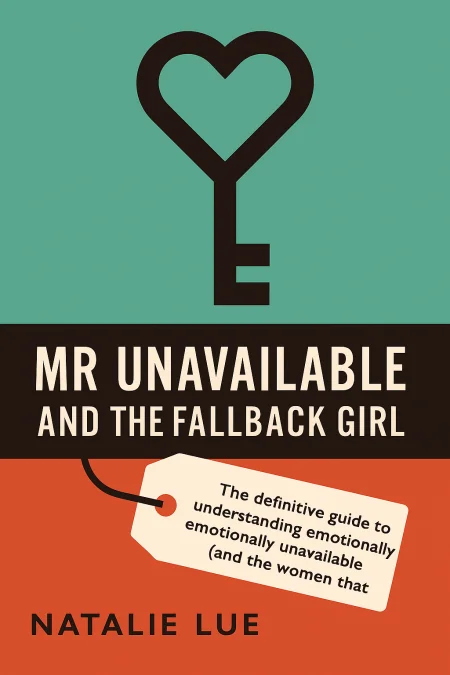
Mr Unavailable & the Fallback Girl
The Definitive Guide to Understanding Emotionally Unavailable Men and the Women that Love Them
Book Edition Details
Summary
Love is a battlefield, and for those entangled with emotionally elusive partners, it's a warzone of confusion and heartache. In "Mr Unavailable & the Fallback Girl," readers are handed a map to navigate the treacherous terrain of relationships with men who just can't commit. Are you tired of the hot-and-cold routines, the broken promises, and the endless cycles of unfulfilling 'almost' relationships? This book is your rallying cry. With a bold blend of humor and hard truths, it dissects why you might be drawn into these relationships and how to break free from the chains of unavailability. This is not just a guide; it's a lifeline for those ready to reclaim their hearts and find genuine love.
Introduction
Contemporary romantic relationships reveal a disturbing pattern where individuals consistently gravitate toward partners who cannot provide genuine emotional intimacy, creating cycles of dysfunction that masquerade as passionate love. This phenomenon transcends demographics and personal achievements, suggesting that emotional unavailability operates as a magnetic force drawing together complementary forms of psychological dysfunction. The analysis challenges the conventional victim-perpetrator narrative by demonstrating how both parties unconsciously collaborate to maintain familiar patterns of disappointment and drama. The examination employs a systematic approach that combines psychological insight with behavioral observation, revealing how childhood conditioning, cultural messaging, and unconscious fears shape adult relationship choices. Rather than attributing these patterns to mere bad luck or poor judgment, the framework exposes the sophisticated defense mechanisms that protect individuals from genuine vulnerability while providing the illusion of romantic engagement. The methodology involves deconstructing common relationship dynamics to reveal the underlying psychological architecture that sustains them. Understanding these patterns requires confronting uncomfortable truths about the difference between authentic love and emotional addiction, examining how intensity becomes confused with intimacy, and recognizing how the pursuit of unavailable partners serves as its own form of unavailability. The investigation provides tools for recognizing these unconscious patterns and developing the emotional resilience necessary to choose differently when faced with the seductive pull of familiar dysfunction.
The Behavioral Architecture of Emotional Unavailability
Emotionally unavailable individuals operate through remarkably consistent behavioral patterns designed to maintain maximum benefit while minimizing emotional investment. The hot-and-cold dynamic serves as their primary tool, alternating between intense pursuit and sudden withdrawal to create artificial scarcity that increases their perceived value. This intermittent reinforcement pattern mirrors addiction mechanisms, where unpredictable rewards generate stronger psychological bonds than consistent affection ever could. The architecture relies on ambiguity as a control mechanism, with unavailable partners refusing to define relationships clearly or make concrete future commitments. They master the art of future-faking, creating elaborate visions of potential partnership while consistently failing to align their actions with their words. This approach allows them to enjoy companionship and intimacy benefits without accepting the responsibilities that come with genuine partnership, maintaining multiple options while committing to none. Control mechanisms extend beyond simple withdrawal tactics to include sophisticated manipulation techniques like pressing the reset button after conflicts, using timing as a management tool, and maintaining footholds in former partners' lives. These behaviors reflect deep-seated fears about emotional exposure and loss of autonomy rather than malicious intent, yet they create devastating effects on partners who mistake these patterns for evidence of complex emotional depth. The perfectionist mindset common among unavailable individuals serves both as motivation and justification for their behavior. By maintaining impossibly high standards and constantly seeking flaws in partners, they create rationales for avoiding deeper commitment while positioning themselves as discerning rather than fearful. This pattern reveals how ego protection mechanisms can masquerade as legitimate relationship concerns, allowing them to maintain the moral high ground while inflicting emotional damage on those who attempt to love them.
How Fallback Girls Enable and Perpetuate Toxic Dynamics
Women who consistently attract emotionally unavailable partners possess complementary patterns of unavailability that make dysfunctional relationships feel familiar and comfortable. The fallback girl role emerges from a combination of low self-esteem, fear of abandonment, and unconscious beliefs that love requires struggle and drama to be authentic. These women often mistake intensity for intimacy, interpreting the emotional rollercoaster of unavailable relationships as evidence of deep connection rather than recognizing it as a symptom of dysfunction. The pursuit dynamic reveals how fallback girls inadvertently reinforce the very behaviors they claim to dislike. By chasing partners who withdraw, accepting minimal attention as meaningful gestures, and maintaining hope despite consistent disappointment, these women signal that decreased investment will be rewarded with increased devotion. This creates a feedback loop where the partner learns that less effort generates more attention, establishing a power imbalance that becomes increasingly difficult to correct. Drama-seeking behaviors often mask deeper fears about genuine intimacy and stability. Many fallback girls have learned to associate emotional turbulence with passion, mistaking the anxiety generated by uncertain relationships for excitement and authentic feeling. This pattern typically reflects childhood conditioning where love was conditional, unpredictable, or required constant effort to maintain, making the familiar stress of pursuing unavailable love feel more real than the unfamiliar calm of secure attachment. The enabling process extends to sexual dynamics, where fallback girls either overvalue physical connection as evidence of emotional bond or accept sexual rejection as confirmation of their inadequacy. The tendency to use intimacy as a tool for gaining commitment or proving worthiness reflects deeper confusion about personal value and the nature of healthy relationships. This pattern often leads to accepting increasingly degrading arrangements in hopes of eventual upgrade to genuine partnership, creating a downward spiral of self-respect and standards.
Breaking Destructive Patterns Through Self-Awareness and Boundary Setting
Recognition represents the crucial first step in breaking free from patterns of emotional unavailability, requiring honest assessment of relationship history and acknowledgment of personal contributions to dysfunctional dynamics. This process demands distinguishing between what individuals claim to want in relationships and what their actual choices reveal about their unconscious preferences and comfort zones. The recognition phase often proves painful as it challenges cherished narratives about being victimized by unavailable partners. Implementing no-contact policies becomes essential for breaking the addictive cycle of intermittent reinforcement that characterizes these relationships. The difficulty many experience in maintaining boundaries reveals the depth of their emotional dependence and the extent to which their identity has become intertwined with the unavailable partner. True healing requires developing the capacity to tolerate discomfort and uncertainty without seeking relief through familiar but destructive relationship patterns. Self-esteem development forms the foundation for attracting and maintaining healthier relationships, involving learning to validate oneself internally rather than seeking external confirmation through romantic conquest. This process requires developing clear boundaries based on personal values rather than fear of abandonment, cultivating interests and relationships that exist independently of romantic partnerships, and learning to receive love as readily as giving it. The transformation demands patience and persistence, as old patterns often resurface during times of stress or vulnerability. Addressing underlying trauma and childhood conditioning often requires professional support to identify and heal the root causes of unavailable relationship patterns. Many individuals discover that their romantic difficulties stem from unresolved issues with parents, early experiences of abandonment or abuse, or cultural messages about gender roles and relationship dynamics. Healing these deeper wounds creates space for genuine intimacy and authentic connection to develop, replacing the familiar drama of unavailable love with the unfamiliar stability of mutual respect and reciprocity.
From Emotional Addiction to Authentic Intimacy
The transition from emotional addiction to authentic intimacy requires fundamental rewiring of beliefs about love, worth, and what constitutes a relationship worthy of investment. This transformation involves learning to distinguish between the chemical high of intermittent reinforcement and the steady warmth of consistent affection, recognizing that healthy love feels fundamentally different from the intensity that characterizes unavailable relationships. The process demands developing comfort with the unfamiliar sensation of being genuinely chosen and valued. Authentic intimacy operates on principles of reciprocity rather than rescue, communication rather than assumption, and partnership rather than project management. This involves learning to maintain individual identity within connection, choosing partners based on their demonstrated actions rather than their potential, and developing the capacity for genuine vulnerability without losing oneself in the process. The shift requires abandoning the fantasy of transforming others through love and accepting people as they actually are. The development of new relationship skills includes learning to recognize green flags rather than just red flags, understanding that healthy partners enhance rather than diminish one's sense of self, and developing the ability to receive love without suspicion or sabotage. This process often feels foreign to those accustomed to earning affection through sacrifice, as it requires trusting that they are worthy of love simply for who they are rather than what they provide. Recovery involves grieving the loss of familiar patterns and the fantasy relationships that never materialized, while simultaneously celebrating the freedom that comes from no longer being trapped in cycles of hope and disappointment. The journey requires developing new neural pathways that support healthy attachment, learning to tolerate the vulnerability required for genuine connection, and trusting that self-love creates the foundation for attracting partners capable of authentic intimacy. This transformation ultimately reveals that real love enhances rather than diminishes both parties, creating expansion rather than contraction in their individual lives.
Summary
The psychology of emotional unavailability reveals itself as a sophisticated defense system where individuals unconsciously collaborate to create familiar patterns of dysfunction while avoiding the genuine vulnerability required for authentic intimacy. Both parties in these relationships serve complementary functions, with unavailable partners providing the illusion of romantic engagement without emotional risk, while fallback girls maintain the fantasy of love through pursuit and sacrifice, protecting themselves from the uncertainty of mutual, reciprocal relationships. The various behavioral patterns, from hot-and-cold dynamics to enabling responses, all serve the same unconscious purpose of maintaining control over outcomes that cannot actually be controlled while providing the chemical rewards associated with intermittent reinforcement. Breaking free from these cycles requires the courage to examine uncomfortable truths about personal motivations, develop authentic self-worth independent of romantic validation, and learn to recognize that healthy love feels fundamentally different from the addictive intensity that characterizes unavailable relationships. The journey from emotional addiction to authentic intimacy demands nothing less than a complete reconstruction of beliefs about love, worth, and partnership, ultimately revealing that genuine connection requires the willingness to be truly seen and chosen rather than constantly proving one's worthiness through endless pursuit and accommodation.
Related Books
Download PDF & EPUB
To save this Black List summary for later, download the free PDF and EPUB. You can print it out, or read offline at your convenience.
By Natalie Lue
