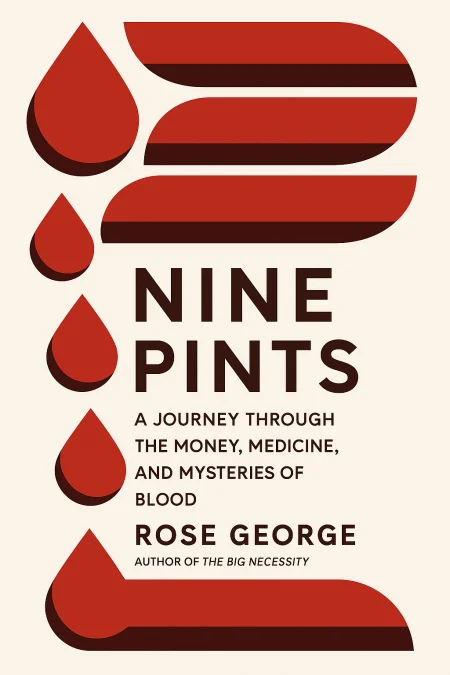
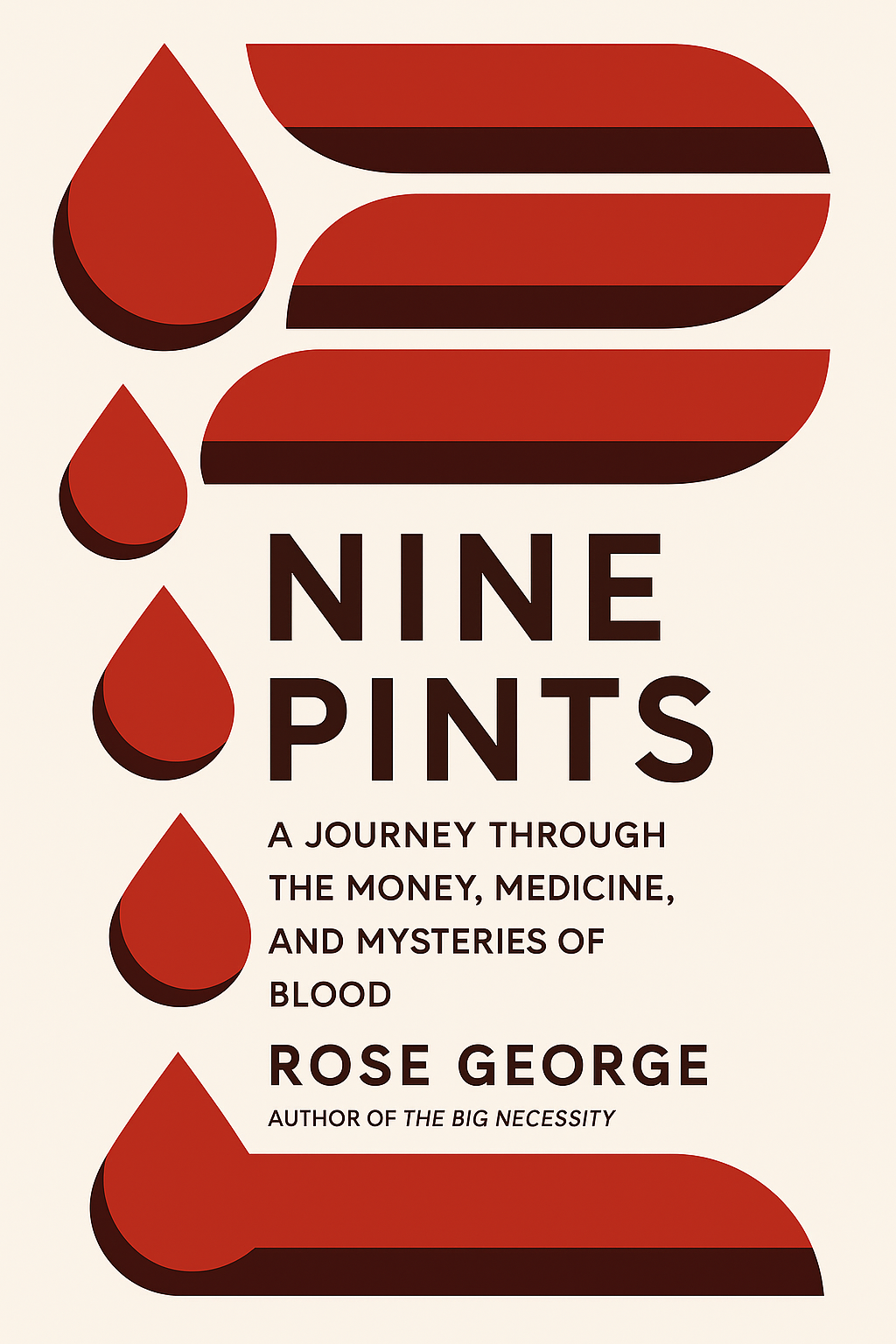
Nine Pints
A Journey Through the Money, Medicine, and Mysteries of Blood
Book Edition Details
Summary
In the vibrant, pulsating narrative of "Nine Pints," Rose George unravels the enigmatic world of blood—a fluid as commonplace as it is extraordinary. This lifeline connects ancient rituals to cutting-edge medical advances, while simultaneously serving as a symbol of both taboo and triumph. George, celebrated for her fearless explorations of the unseen, invites readers to journey from medieval bloodletting chambers to the modern hustle of plasma markets, revealing tales of pioneers like Janet Vaughan and innovators like the "Menstrual Man." As science strides towards synthetic alternatives, George’s chronicle delves into the paradoxes and promises of this vital liquid, painting a compelling portrait of blood’s unmatched power and profound significance in our lives.
Introduction
Every three seconds, somewhere in the world, someone receives a blood transfusion that could save their life. Yet for most of us, this remarkable red fluid remains mysteriously hidden beneath our skin, noticed only when we see it where it shouldn't be. Blood is simultaneously the most familiar and most foreign substance in our bodies—we know it's there keeping us alive, but few truly understand what it does or how it works. This vital liquid carries far more than just oxygen and nutrients through our veins. It holds the entire story of human medical progress, from ancient bloodletting practices that often killed patients to modern life-saving procedures that can replace a person's entire blood supply in hours. Through exploring blood's hidden networks, you'll discover how this nine-pint river flowing through your body connects you to breakthrough medical discoveries involving everything from medieval leeches to cutting-edge trauma care, reveals persistent global health inequalities where geography determines whether blood diseases are manageable or fatal, and drives the frontiers of modern medicine where scientists are learning to grow blood cells in laboratories and potentially reverse aging itself. The story of blood is ultimately the story of human ingenuity, compassion, and our ongoing battle against disease and death.
The Science of Life: How Blood Works in Your Body
Blood is your body's most sophisticated transportation network, but calling it simply a delivery system vastly understates its remarkable complexity. This crimson liquid makes up about eight percent of your body weight and contains more than twenty-five trillion red blood cells, each one a microscopic marvel shaped like a tiny donut without a hole. This unique design maximizes surface area for oxygen exchange while allowing cells to squeeze through the narrowest capillaries, some so small that red blood cells must fold themselves in half to pass through. Your blood serves as far more than an oxygen carrier. It functions as your body's communication highway, transporting hormones that coordinate everything from growth spurts to emotional responses. Blood acts as your internal thermostat, distributing heat from your core to your extremities to maintain stable body temperature. It's also your body's cleanup crew, hauling away carbon dioxide and metabolic waste products that would poison your cells if allowed to accumulate. The liquid portion, called plasma, contains hundreds of specialized proteins that perform jobs ranging from clotting blood when you're injured to fighting infections when you're sick. Perhaps most fascinating is blood's role as a living historical record of your health. Every drop contains your complete DNA, antibodies that remember every infection you've ever fought, and chemical markers that reveal everything from your stress levels to your risk of developing certain diseases. This is why a simple blood test can diagnose conditions ranging from diabetes to cancer, often before you experience any symptoms. Your blood literally tells the story of your body's ongoing battles, victories, and maintenance work. The discovery of blood circulation by William Harvey in 1628 revolutionized medicine, but scientists continue uncovering blood's secrets. Modern research reveals that blood cells can actually communicate with each other through chemical signals, coordinating responses to injury or infection in ways that resemble a biological internet. This ancient fluid, which humans have both revered and feared throughout history, continues to surprise researchers with its sophistication and adaptability, reminding us that some of nature's most elegant solutions have been flowing through our veins all along.
From Bloodletting to Transfusion: Medicine's Greatest Reversal
For over two thousand years, bloodletting dominated medical practice based on the belief that removing "bad blood" could cure virtually any disease. Physicians used everything from sharp knives to hungry leeches, deliberately draining patients of pints of blood to treat ailments ranging from headaches to plague. This practice, though often weakening or killing patients, reflected an intuitive understanding that blood and health were intimately connected. The medicinal leech became so central to healing that the word "leech" itself originally meant physician, and 19th-century France imported over forty million leeches annually for medical use. The transition from bloodletting to blood transfusion represents one of medicine's most dramatic reversals. Early transfusion experiments in the 1600s were crude and dangerous, with physicians attempting to transfer blood directly from animals to humans or connecting blood vessels between people. These procedures usually ended in death, leading to bans that lasted nearly two centuries. The breakthrough came with Karl Landsteiner's discovery of blood types in 1901, which finally explained why some transfusions miraculously saved lives while others killed patients through violent immune reactions. World War I and II transformed blood transfusion from experimental procedure to life-saving standard practice. Military surgeons discovered that soldiers who received blood transfusions had dramatically better survival rates than those treated with salt water or other fluid substitutes. The urgent needs of warfare drove rapid innovations in blood collection, storage, and transportation. Volunteer donor networks emerged based on the revolutionary idea that healthy people could safely give blood to save complete strangers, creating systems that could deliver the right blood type to wounded soldiers within hours. Remarkably, leeches have made a surprising comeback in modern medicine, though for very different reasons than their medieval use. Today's plastic surgeons use medicinal leeches in microsurgery to help reattach severed fingers, ears, and other body parts. The leeches' saliva contains powerful anticoagulants that prevent blood clots in tiny vessels, something that pharmaceutical companies still cannot replicate artificially. This evolution from bloodletting to blood giving, with leeches finding new purpose along the way, illustrates how medical understanding can completely reverse while sometimes rediscovering forgotten wisdom in unexpected forms.
The Global Blood Economy: Commerce, Safety, and Inequality
Blood has evolved into a global commodity worth billions of dollars, creating a complex marketplace where the plasma of economically disadvantaged Americans helps treat wealthy patients worldwide. The United States supplies approximately seventy percent of the world's plasma through a network of collection centers concentrated in poor communities, where donors can sell their plasma twice weekly for modest payments of thirty to fifty dollars. This system creates a troubling dynamic where the biological resources of the poor literally flow upward to benefit those who can afford expensive plasma-derived treatments costing thousands of dollars. The economics of blood reveal stark inequalities in global health access. While wealthy countries maintain abundant, safe blood supplies through well-organized voluntary donation systems, many developing nations struggle with chronic shortages and contamination risks. In some regions, families must find replacement donors before their loved ones can receive transfusions, creating desperate situations where people sell blood to survive or patients die waiting for compatible donors. The contrast is striking: plasma that American donors sell for fifty dollars might become part of treatments that cost patients or insurance companies thousands. This global blood trade carries dark historical chapters, particularly the contaminated blood scandals of the 1980s when HIV and hepatitis spread through blood products to thousands of patients worldwide. Many victims were hemophiliacs who required regular infusions of clotting factors made from donated plasma. Companies continued selling products they knew were contaminated rather than destroying expensive inventory, and much of this plasma came from high-risk populations including prisoners and drug users. The tragedy highlighted how profit motives and regulatory failures could transform life-saving medicine into vectors for deadly diseases. Modern blood systems continue reflecting these inequities despite improved safety measures. Wealthy nations import plasma-derived medicines while exporting their safety standards, creating a two-tier system where treatment quality depends on ability to pay. Some countries have banned paid plasma donation entirely, viewing blood as a sacred gift that shouldn't be commercialized, while others embrace market-based collection. These different approaches reflect deeper philosophical questions about whether blood represents a commodity to be bought and sold or a shared community resource that embodies our mutual interdependence and responsibility for each other's wellbeing.
Blood's Future: Medical Frontiers and Emerging Challenges
Trauma medicine represents the cutting edge of blood science, where minutes and milliliters determine who lives and who dies. When someone suffers massive trauma from accidents, violence, or natural disasters, their body can lose blood faster than it can be replaced, triggering cascading physiological failures that quickly become irreversible. Modern trauma care has revolutionized bleeding treatment through damage control resuscitation, which focuses on stopping hemorrhage immediately rather than simply replacing lost volume with fluids that can't carry oxygen or help blood clot properly. Military medicine has driven many recent innovations that now save civilian lives. Combat medics developed tourniquets that can be applied single-handedly, hemostatic bandages that promote rapid clotting, and blood products that can be carried into battle zones and administered without refrigeration. These advances have dramatically improved survival rates for severe injuries, with techniques pioneered on battlefields now standard practice in emergency rooms worldwide. The concept of bringing blood products directly to patients via helicopter or ambulance, rather than waiting to reach hospitals, has revolutionized emergency care. The future of blood medicine promises even more dramatic transformations. Scientists are learning to grow red blood cells in laboratories, potentially creating unlimited supplies of perfectly matched blood for transfusions without relying on human donors. Researchers are investigating whether young blood contains factors that can reverse aging processes, opening possibilities for treating age-related diseases through blood-based therapies. Gene therapy is beginning to cure inherited blood disorders like sickle cell disease by editing patients' DNA to produce healthy blood cells, offering hope for conditions that have plagued families for generations. Artificial blood substitutes remain an elusive goal that could eliminate shortages, contamination risks, and compatibility issues entirely. While several products have reached clinical trials, none have successfully replicated blood's complex functions well enough for widespread use. The challenge lies not just in carrying oxygen, but in supporting the intricate biochemical processes that make blood a living tissue rather than simply a transport fluid. As we stand on the brink of potentially revolutionary advances, the ancient substance flowing through our veins continues to guard its secrets while promising new frontiers in healing and human enhancement.
Summary
Blood serves as a remarkable lens through which we can examine the entire arc of human medical progress, revealing how scientific breakthroughs, cultural beliefs, and economic systems intersect in the most fundamental aspects of health and survival. This vital fluid connects us across time and geography, from ancient physicians draining patients with leeches to modern scientists growing blood cells in laboratories, from local donation centers staffed by volunteers to global plasma markets worth billions of dollars. The story of blood illuminates both humanity's greatest medical triumphs and our persistent failures to ensure equitable access to life-saving treatments, showing how the same substance that unites us biologically can divide us economically and socially. As we advance toward potentially revolutionary innovations in blood medicine—from artificial substitutes to anti-aging therapies—we face profound questions about how to harness these discoveries for the benefit of all humanity rather than just the wealthy few. What new ethical dilemmas will emerge as we gain unprecedented control over this most fundamental aspect of human biology, and how can we ensure that future breakthroughs in blood science serve to heal rather than deepen the inequalities that already divide our world?
Related Books
Download PDF & EPUB
To save this Black List summary for later, download the free PDF and EPUB. You can print it out, or read offline at your convenience.
By Rose George
