
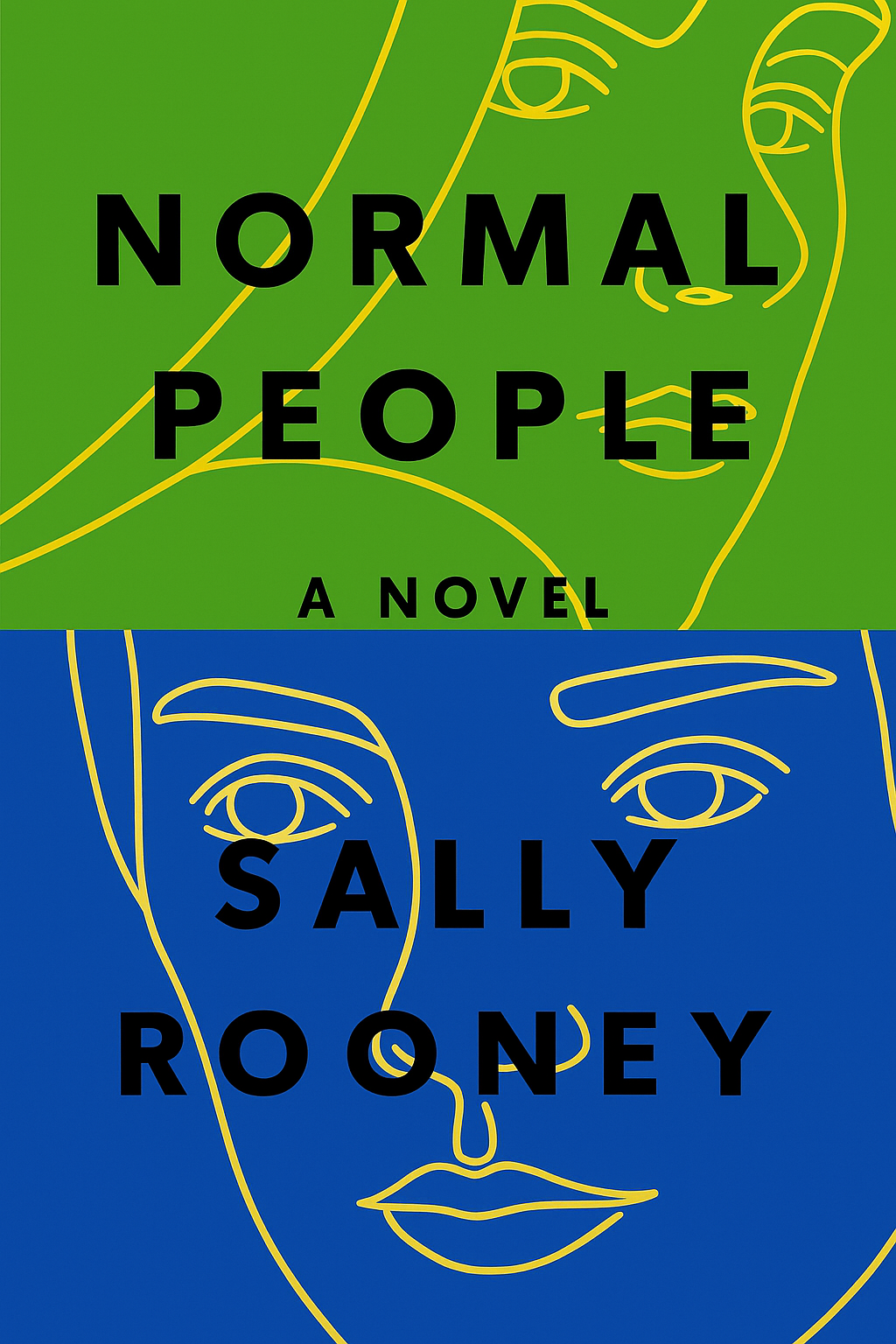
Normal People
A Novel
Book Edition Details
Summary
In the quiet corridors of high school, Connell and Marianne pass each other by, their eyes averted, their secrets shared. He basks in the spotlight as a football star, while she embraces solitude and mystery. Yet, an unexpected bond forms in the shadows of her family home, a bond they fiercely guard. Fast forward to Trinity College, Dublin—Marianne blooms within her new social circle, while Connell grapples with uncertainty, an outsider peering in. Their connection, a dance of proximity and distance, endures through college life’s twists. As Marianne edges toward self-destruction and Connell seeks purpose, they face a pivotal choice: how much of themselves are they willing to risk to save each other? "Normal People" weaves a poignant tale of love, identity, and the profound impact of seemingly ordinary connections.
Introduction
Picture two teenagers standing at opposite ends of a school hallway, worlds apart despite growing up in the same small Irish town. One carries the weight of popularity and social expectations, while the other bears the invisible scars of family trauma and isolation. They orbit each other like distant planets, drawn by an inexplicable gravitational pull yet separated by the vast space of unspoken truths and social barriers. This is where their story begins, and where we discover that the most profound connections often emerge from the most unlikely circumstances. The journey from adolescence to adulthood is rarely linear, especially when it involves navigating the complex terrain of love, friendship, and self-discovery. Through the intertwined lives of two young people, we explore how relationships can simultaneously wound and heal, how communication failures can be as devastating as acts of cruelty, and how the courage to be vulnerable becomes the foundation for genuine intimacy. This exploration reveals not just the mechanics of human connection, but the profound ways we shape and reshape each other through our presence, our absence, and our willingness to truly see one another. Their story becomes a mirror for our own struggles with belonging, understanding, and the eternal question of whether we are worthy of love.
The Weight of Unspoken Words: High School Secrets
In the suffocating atmosphere of a small-town secondary school, Connell and Marianne exist in parallel universes that occasionally, secretly intersect. Connell moves through the hallways with the easy confidence that comes from athletic achievement and social acceptance, while Marianne endures the daily cruelties of isolation, her sharp intellect making her a target rather than an asset among her peers. Their only connection exists through circumstance: Connell's mother works as a cleaner in Marianne's family home, creating a bridge between their vastly different worlds. When they begin meeting in the afternoons at her house, something remarkable unfolds. Away from the watchful eyes of classmates and the rigid social hierarchies that define their school experience, they discover an intimacy that feels both natural and revolutionary. Their conversations range from literature to politics, their physical connection grows intense and meaningful, yet when morning comes, they return to their assigned roles. Connell nods politely when he encounters Marianne in the corridors, maintaining the facade that they are strangers, while she accepts this public dismissal as the price of their private connection. The weight of this secret relationship becomes unbearable as graduation approaches. When Connell takes another girl to the school formal rather than risk the social consequences of acknowledging Marianne publicly, the betrayal cuts deeper than any adolescent heartbreak. It reveals the corrosive power of shame and the ways we sacrifice authentic connection for social acceptance. This pattern of intimacy followed by rejection establishes a dynamic that will haunt them both for years to come, demonstrating how the wounds we inflict in youth can echo through every subsequent relationship, shaping our capacity for trust and our belief in our own worthiness of love.
Finding and Losing Ourselves: College Transformations
Trinity College Dublin offers both young people the possibility of reinvention, but they discover that escaping the past requires more than simply changing locations. Marianne blossoms in the university environment, her intellectual gifts finally finding appreciation among sophisticated peers who value her insights and worldliness. She cultivates friendships, attends parties, and begins dating, crafting a new identity that seems to erase the lonely, scorned teenager she once was. Meanwhile, Connell struggles with the transition, his rural background and lack of financial resources making him feel like an outsider among the privileged students who populate his courses. When they encounter each other at a college party, the old patterns reassert themselves with surprising force. This time, however, the power dynamic has shifted. Marianne's confidence and social connections contrast sharply with Connell's isolation and uncertainty. They tentatively rebuild their relationship, but now as equals, or so it seems. Their renewed connection brings joy and stability to both their lives. They spend evenings in Marianne's apartment, cooking dinner together, discussing literature, and rediscovering the profound comfort they find in each other's presence. Yet financial pressures and unspoken assumptions threaten this fragile happiness. When Connell faces the prospect of being unable to afford his Dublin accommodation over the summer, he assumes Marianne wouldn't want him to stay with her permanently, while she assumes he wants to end their relationship. Neither has the courage to voice their true feelings directly, and so another separation occurs, built on misunderstanding and fear. Their story reveals how even the closest relationships can be derailed by our inability to ask for what we need, our tendency to assume the worst about others' intentions, and our failure to recognize that love requires not just feeling but also the courage to communicate those feelings clearly and honestly.
The Patterns We Cannot Break: Love and Self-Worth
The cycle of coming together and falling apart becomes the defining characteristic of their relationship as they mature into young adults. Each reunion brings hope that this time will be different, that they have finally learned to communicate effectively, to trust each other completely. Yet each separation reveals new layers of the fundamental issues that keep them trapped in this pattern. For Marianne, relationships become a venue for exploring her deepest fears about her own worthiness, leading her into increasingly destructive dynamics with partners who confirm her worst beliefs about herself. During a year abroad in Sweden, Marianne becomes involved with Lukas, an artist who introduces her to forms of intimacy that blur the line between pleasure and punishment. She finds herself craving experiences that diminish her sense of self, as if the physical pain could somehow address the emotional wounds she carries. When she describes these experiences to Connell, his horror and concern force her to confront the difference between love that heals and attachment that harms. Their conversation becomes a turning point, revealing how trauma can distort our understanding of care and connection. Meanwhile, Connell navigates his own struggles with mental health, experiencing depression that leaves him feeling disconnected from his former sense of purpose and identity. Through counseling and the support of friends, particularly Marianne, he begins to understand the ways his upbringing and social pressures have shaped his emotional responses. Their friendship during this period demonstrates the profound healing that becomes possible when one person commits to truly seeing and accepting another without judgment. Yet even as they provide crucial support for each other's growth, the question remains whether they can transform their dynamic from one of dependence and crisis to one of genuine partnership built on mutual respect and clear communication.
Coming Home: The Long Journey to Acceptance
The return to their hometown brings both characters face to face with the sources of their deepest wounds and their most persistent patterns. For Marianne, confronting her family's dysfunction and abuse requires her to finally recognize that her acceptance of mistreatment is not noble self-sacrifice but a learned response that she can choose to change. When her brother's violence escalates, Connell's intervention represents not just protection but a clear statement about what behavior is and isn't acceptable in relationships that claim to be loving. Their physical reunion carries all the intensity of their shared history, but it also reveals how much they have both changed through their separate journeys of self-discovery. The intimacy they share is deeper than ever, yet it also highlights the fundamental differences in their needs and desires. When Marianne asks Connell to hurt her during their lovemaking, his refusal creates a crisis that forces them both to examine what they truly want from each other and from love itself. The final test of their relationship comes when Connell receives an opportunity to study creative writing in New York. The offer represents everything he has worked toward, yet it would require leaving Marianne behind just as they have found their way back to each other. Their conversation about this choice becomes the most honest communication they have ever shared, stripping away the assumptions and fears that have so often derailed their connection. Marianne's insistence that he must go, combined with her promise that she will always be there, represents a new kind of love entirely—one based on supporting each other's growth rather than clinging to security, one that trusts in connection that transcends physical presence.
Summary
Through the intertwined journeys of two young people learning to love themselves and each other, we discover that the most transformative relationships are often the most complicated ones. Their story reveals how the patterns we establish in youth continue to shape us unless we develop the awareness and courage to change them consciously. The dance between intimacy and independence, between holding on and letting go, requires a maturity that comes not from age alone but from the willingness to see ourselves clearly and to communicate our truth even when it feels risky. The greatest gift we can offer another person is not our constant presence but our genuine support for their growth and happiness, even when that growth takes them away from us temporarily. Love at its highest expression becomes an act of faith—trusting that connections forged in authenticity and mutual care can survive separation, change, and the inevitable challenges of individual development. Their story reminds us that transformation is always possible, that the wounds we carry need not define us permanently, and that the courage to be vulnerable with another person remains our greatest tool for healing both ourselves and our relationships. In learning to love well, we discover not just how to be with another person, but how to be fully ourselves.
Related Books
Download PDF & EPUB
To save this Black List summary for later, download the free PDF and EPUB. You can print it out, or read offline at your convenience.
By Sally Rooney
