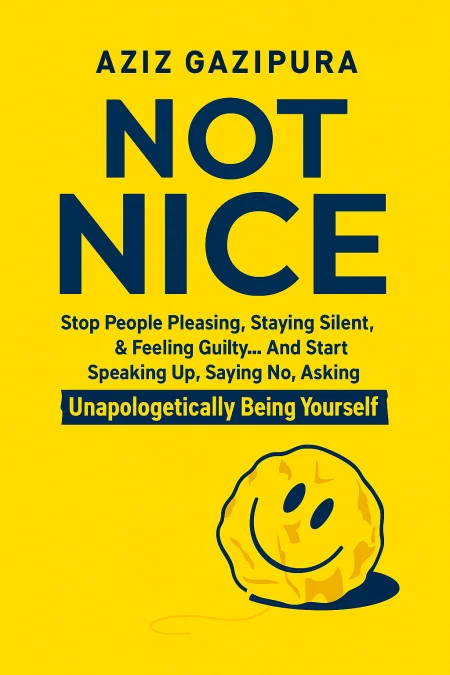
Not Nice
Stop People Pleasing, Staying Silent, and Feeling Guilty... . and Start Speaking Up, Saying No, and Unapologetically Being Yourself
Book Edition Details
Summary
Ever felt trapped by your own kindness, unable to assert your true self? In "Not Nice," Dr. Aziz Gazipura shatters the illusion of niceness with a fearless examination of the chains that bind the overly accommodating. This isn't just a guide; it's a liberation manifesto for the authentically you. With his trademark blend of humor, engaging anecdotes, and raw vulnerability, Dr. Aziz empowers you to dismantle the guilt, anxiety, and fear that keep you silent. Learn to say "no" with confidence, articulate your desires without hesitation, and break free from the exhausting cycle of people-pleasing. This transformative journey invites you to reclaim your voice, set your boundaries, and embrace the bold authenticity waiting within.
Introduction
Have you ever found yourself saying yes when every fiber of your being screamed no? Do you walk through life constantly adjusting your words, your actions, even your dreams to fit what you think others want from you? You're not alone in this exhausting dance of people-pleasing. Millions of well-intentioned souls have trapped themselves in a prison of niceness, believing that endless accommodation is the key to love and acceptance. Yet this very strategy often leads to anxiety, resentment, and a heartbreaking disconnection from your true self. The journey toward authentic power begins with a radical realization: being genuinely kind is worlds apart from being compulsively nice. Your path to freedom doesn't lie in perfecting your people-pleasing performance, but in courageously embracing who you really are, complete with boundaries, desires, and the absolute right to take up space in this world.
Break Free from the People-Pleasing Prison
The people-pleasing prison is a sophisticated cage built from fear, wrapped in the illusion of virtue. At its core lies the devastating belief that your worth depends entirely on how well you can anticipate and meet everyone else's needs while completely abandoning your own. This isn't kindness or generosity; it's self-betrayal disguised as goodness. Consider Glenn's powerful observation during a men's group session when he confronted Aziz about his constant focus on others: "Where's Aziz in all this? I hear about your mom, and your brother, and your dad. I hear about everyone else and what they want. But I don't hear much of you in the story. It's like you're a minor character, and your needs and wants don't really count for much." This moment shattered Aziz's carefully constructed worldview and revealed the hollow core of his people-pleasing existence. For years, Aziz had entered every interaction focused entirely on managing other people's reactions, needs, and potential disappointments. He had become so skilled at reading others that he had completely lost touch with his own inner compass. The breakthrough came when he began asking himself a simple but revolutionary question: "What do I want?" This wasn't about becoming selfish or inconsiderate, but about finally acknowledging that his own needs and preferences held equal value to everyone else's. Breaking free requires recognizing that chronic niceness often stems from terror rather than love. Fear of rejection, fear of conflict, fear of being seen as difficult or demanding. Start by creating small moments of honesty throughout your day. Before automatically agreeing to requests or suggestions, pause and genuinely ask yourself what you actually want in that situation. Practice expressing these preferences in low-stakes scenarios first, then gradually work toward more challenging conversations. Remember, you're not responsible for managing other people's emotional reactions to your authentic choices.
Build Unshakeable Boundaries and Own Your Truth
Boundaries are the invisible lines that define where you end and others begin, yet most people live their entire lives without clearly understanding what they want or need. When you lack boundaries, you become a chameleon, constantly shifting to match what you believe others expect from you, leaving you exhausted, resentful, and fundamentally disconnected from your own truth. Aziz discovered this during his relationship with Candace when she was moving out of her previous home. Initially, he agreed to help with the move, but then realized he felt uncomfortable being so involved in her divorce proceedings. Despite his terror that she would be hurt or angry, he honestly told her he needed to step back from the situation. His old pattern would have been to suffer in silence, helping while building internal resentment. Rather than damaging their relationship, this act of boundary-setting actually strengthened it. Candace respected his honesty, and they found alternative solutions that worked for both of them. This experience taught Aziz that speaking his truth, even when it felt scary, created space for genuine intimacy rather than the false harmony of people-pleasing accommodation. To establish healthy boundaries, begin by regularly checking in with yourself throughout the day. Ask what you want in each situation, what feels right to you, and what you need to feel comfortable and authentic. Practice the "Energy Bubble" technique: imagine a protective sphere around yourself that allows love and genuine connection to flow freely while filtering out others' emotional demands and expectations. Start expressing your preferences in small ways, whether it's choosing a restaurant, suggesting a different movie, or simply sharing your actual opinion in conversations. Remember that having boundaries doesn't make you difficult; it makes you honest and trustworthy. When you know where you stand, others can relate to the real you rather than a carefully constructed facade designed to please everyone.
Master the Art of Speaking Up with Confidence
Your voice matters, but you can't share it if you're constantly paralyzed by worry about how others will react. Speaking up isn't about being aggressive or dominating conversations; it's about showing up authentically and contributing your unique perspective to the world around you. Aziz learned this lesson through a seemingly simple interaction with a blood draw service. When the technician called to cancel his appointment at the last minute, his old pattern would have been to accommodate graciously, even though he had already fasted and prepared for the procedure. Instead, he calmly but firmly explained the inconvenience this caused and requested that they find an alternative solution. His tone wasn't angry or demanding, just clear and direct about his needs and expectations. The technician immediately offered to reschedule for later that same day, demonstrating that speaking up often leads to better outcomes for everyone involved. Most people actually respect directness and clarity far more than they appreciate excessive accommodation and people-pleasing. This experience showed Aziz that his voice had power and value when he chose to use it authentically. To develop your ability to speak up, start by practicing in low-risk situations. Express preferences about where to eat, what activities to pursue, or how to spend your free time. Notice when you have different opinions from others and practice sharing them respectfully. Pay attention to your body language and tone of voice, ensuring they match your words with confidence and authenticity. Before important conversations, get clear on your main points and practice expressing them with conviction. Remember that your perspective has value precisely because it's yours. Stop apologizing for taking up space and start viewing your contributions as gifts to the people around you. The key isn't to win arguments or prove you're right, but to honor your own voice and allow others to truly know and connect with the real you.
Transform Your Life Through Authentic Action
The journey from compulsive niceness to authentic power isn't about becoming harsh, selfish, or inconsiderate. It's about reclaiming your fundamental right to exist fully in the world, complete with your own needs, desires, boundaries, and perspectives. When you stop trying to be what you think others want you to be, you create space for genuine connections based on who you actually are rather than who you pretend to be. Aziz's transformation accelerated when he began acknowledging his shadow emotions, particularly his anger and frustration that he had spent years suppressing. He started keeping a private journal where he could express all his "unacceptable" feelings without censorship. In one particularly revealing session, he wrote about his frustration with his children's demands, his anger at various life responsibilities, and his desire for complete freedom from adult obligations. Rather than making him a worse person, this honest acknowledgment actually made him more patient, loving, and present with his family. The breakthrough came when he realized that denying his shadow didn't eliminate these feelings; it simply drove them underground where they manifested as anxiety, physical pain, and chronic exhaustion. By owning his full humanity, including the messy parts, he became more authentic, powerful, and paradoxically more loving toward others. His relationships deepened because people could finally connect with the real Aziz rather than his carefully maintained facade. Your transformation begins today with one simple commitment: identify one area of your life where you've been people-pleasing or avoiding authentic expression, and take one small step toward honesty. This might mean having a difficult conversation about your needs, saying no to an unwanted commitment, or simply expressing your actual opinion instead of what you think others want to hear. Remember that discomfort is simply the price of admission to a life of genuine freedom and connection. You have everything within you to break free from the cage of compulsive niceness and step into the powerful, authentic person you were meant to be.
Summary
The path from people-pleasing to authentic power requires courage, but it leads to relationships and a life built on genuine connection rather than fearful performance. As this transformative journey reveals, "You can be the ripest, juiciest peach in the world, and there's still going to be someone who hates peaches." This truth liberates you from the impossible task of trying to please everyone and allows you to focus on being authentically yourself. The people who resonate with your authentic self will be drawn to you more powerfully than ever before, while those who only valued your compliance were never truly connecting with you anyway. Your worth isn't contingent on how much you sacrifice for others or how perfectly you avoid conflict. You are inherently valuable, and your authentic self, complete with preferences, boundaries, and occasional disagreements, is not only acceptable but necessary for creating the genuine connections you truly desire. Start today by choosing one small area where you can be more honest about your needs or feelings, and take that first courageous step toward reclaiming your authentic power.
Related Books
Download PDF & EPUB
To save this Black List summary for later, download the free PDF and EPUB. You can print it out, or read offline at your convenience.
By Aziz Gazipura
