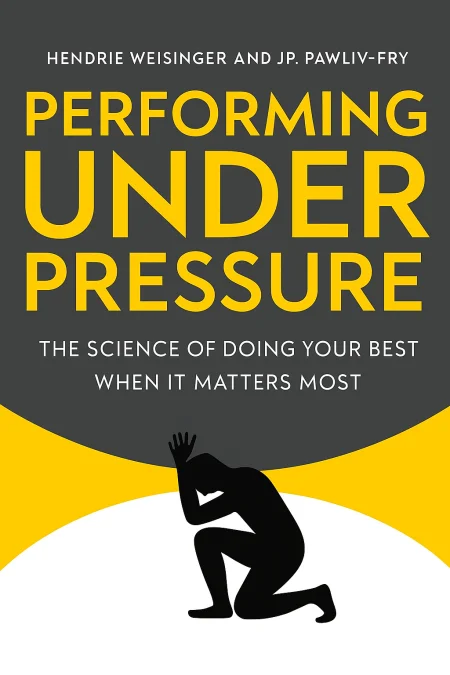
Performing Under Pressure
The Science of Doing Your Best When It Matters Most
byHendrie Weisinger, J.P. Pawliw-Fry
Book Edition Details
Summary
Pressure is a relentless thief, stealing away our sharpness and skill just when we need them most. In "Performing Under Pressure," Drs. Hendrie Weisinger and J.P. Pawliw-Fry dismantle the myth that anyone thrives under intense stress. Instead, they unveil a treasure trove of scientifically-backed strategies to combat its crippling effects. Drawing wisdom from a vast tapestry of research—including insights from elite athletes, Fortune 500 stalwarts, and even Navy SEALs—this book is a beacon for those navigating the treacherous waters of high-stakes environments. Whether you're commanding a boardroom, perfecting your swing on the green, or tackling an exam, these 22 potent tactics are your keys to transforming pressure from a foe to a manageable force. This essential guide empowers you to reclaim your potential, ensuring you shine when it truly counts.
Introduction
Pressure moments define our lives in ways we rarely acknowledge. From the boardroom presentation that could make or break a career to the student facing college entrance exams, from the surgeon's critical decision to the parent navigating a difficult conversation with their child, these high-stakes situations reveal fundamental truths about human performance. The conventional wisdom suggests that some people naturally thrive under pressure while others crumble, but this perspective misses a crucial reality: pressure systematically undermines everyone's performance, regardless of talent or preparation. The distinction between pressure and ordinary stress lies not merely in intensity but in consequence. Pressure emerges when outcomes truly matter, when uncertainty looms large, and when we feel accountable for results that others will judge. This creates a perfect storm of psychological and physiological responses that can derail even the most capable individuals. Rather than accepting pressure as an inevitable performance killer, we can understand its mechanisms and develop systematic approaches to neutralize its effects. The path forward requires abandoning myths about rising to occasions and instead focusing on evidence-based strategies that allow our natural capabilities to function despite pressure's interference.
The Neuroscience of Pressure: How High-Stakes Situations Sabotage Performance
The human brain under pressure undergoes predictable and measurable changes that systematically undermine performance. When we perceive high stakes, the anterior cingulate cortex triggers a cascade of neurochemical responses designed for physical survival rather than cognitive excellence. This evolutionary mismatch between our ancient threat-detection systems and modern performance demands creates the foundation for what we commonly call choking. Working memory, the cognitive workspace where we manipulate information and execute complex tasks, becomes severely compromised under pressure. Research demonstrates that anxiety literally hijacks the prefrontal cortex, reducing our mental bandwidth by up to forty percent. This explains why students who know material perfectly during practice suddenly draw blanks during exams, or why experienced surgeons make uncharacteristic errors during high-profile operations. The brain's resources are diverted from task execution to threat monitoring, leaving insufficient capacity for optimal performance. The phenomenon extends beyond simple distraction. Pressure triggers a shift from automatic, fluid execution to conscious, step-by-step monitoring of our actions. This paralysis by analysis disrupts the neural efficiency that underlies expert performance. A professional golfer who has made thousands of putts suddenly becomes acutely aware of their grip, stance, and swing mechanics, conscious attention that interferes with the unconscious competence developed through years of practice. Two distinct memory systems become compromised under pressure. Working memory manages conscious thinking tasks like problem-solving and decision-making, while procedural memory controls automatic behaviors mastered through practice. Pressure can cause either system to malfunction, creating the performance decrements we observe in high-stakes situations. Understanding these neurological realities provides the foundation for effective intervention, transforming pressure management from wishful thinking into evidence-based practice.
Twenty-Two Evidence-Based Solutions: Immediate Techniques for Pressure Management
Effective pressure management requires a toolkit of specific, research-validated techniques that can be deployed in real-time when stakes are high. These solutions target the precise mechanisms through which pressure undermines performance, offering practical interventions that restore cognitive function and emotional regulation within moments of implementation. Physiological regulation forms the foundation of immediate pressure management. Simple breathing techniques can rapidly shift the nervous system from hyperarousal to optimal performance readiness. The 4-4-4-4 breathing pattern activates the parasympathetic nervous system within sixty seconds, reducing cortisol levels and restoring working memory capacity. Similarly, adopting expansive physical postures for just two minutes before high-pressure situations increases testosterone by twenty percent while decreasing stress hormones, creating the neurochemical profile associated with confident, decisive action. Cognitive reframing techniques redirect attention from threat-focused to opportunity-focused thinking. The simple act of labeling anxiety as excitement leverages the physiological similarity between these states while shifting their psychological interpretation. Instead of trying to calm down, which fights against the body's natural arousal, reframing harnesses that energy for enhanced performance. Writing about specific concerns before high-pressure events creates similar benefits by offloading worry from working memory onto paper, freeing cognitive resources for task execution. Attentional control strategies prevent the inward focus that disrupts automatic performance. Focusing on external cues rather than internal sensations maintains the unconscious competence that characterizes expert performance. A basketball player concentrates on the back rim rather than their shooting form; a presenter focuses on their message rather than their nervousness. These techniques work by preserving the neural pathways that support fluid, automatic execution while preventing the conscious interference that creates choking.
Building Your COTE of Armor: Long-Term Development of Pressure Resilience
Sustainable pressure performance requires more than tactical responses to immediate stress, it demands the cultivation of four foundational psychological attributes that create lasting resilience. Confidence, Optimism, Tenacity, and Enthusiasm form an interconnected system of mental resources that, when developed systematically, provide robust protection against pressure's undermining effects. Confidence represents the bedrock belief in one's ability to execute required actions successfully. This differs fundamentally from general self-esteem, focusing instead on specific competence in relevant domains. True confidence emerges from accurate self-assessment combined with progressive skill development. It requires honest evaluation of current capabilities, identification of improvement areas, and systematic practice that builds genuine competence. Confidence acts as a neurochemical buffer against pressure, maintaining access to learned skills even when stakes are high. Optimism encompasses both positive expectations about future outcomes and constructive explanations of past events. This dual nature creates psychological resilience that sustains effort through inevitable difficulties. Optimistic thinking patterns can be developed through deliberate practice, learning to attribute failures to specific, temporary, and changeable factors rather than global, permanent, and fixed characteristics. This explanatory style maintains motivation and persistence even after disappointing outcomes. Tenacity involves the sustained pursuit of meaningful goals despite obstacles, setbacks, and competing demands. It requires clear goal definition, focused attention, adaptive problem-solving, and effective coping strategies. Tenacious individuals develop multiple pathways toward their objectives, viewing obstacles as puzzles to solve rather than barriers to success. They maintain hope through difficult periods by connecting daily actions to larger purposes, finding meaning that sustains effort when immediate rewards are absent. Enthusiasm provides the emotional fuel that energizes sustained high performance, emerging from genuine engagement with meaningful work and positive connections with others.
From Theory to Practice: Implementing Pressure Management in Real-World Contexts
The gap between understanding pressure management principles and applying them effectively in real situations requires systematic implementation strategies that account for the complexity of actual performance environments. Successful application demands careful attention to context, timing, and individual differences while maintaining the scientific rigor that makes these approaches effective. Implementation begins with accurate pressure assessment, identifying specific situations, triggers, and response patterns that characterize individual pressure experiences. This requires honest self-evaluation combined with feedback from trusted observers who can provide objective perspectives on performance under stress. Many people lack accurate awareness of their pressure responses, making external input crucial for developing effective interventions. Regular assessment using validated tools helps track progress and adjust strategies based on real-world results rather than subjective impressions. Environmental design plays a crucial role in pressure management success. Creating practice conditions that simulate actual pressure situations allows for skill development in realistic contexts. This might involve practicing presentations with hostile audiences, rehearsing difficult conversations with role-playing partners, or training under artificial time constraints and performance monitoring. The key principle is progressive exposure, gradually increasing pressure levels while maintaining skill development focus, building tolerance and competence simultaneously. Integration with existing routines ensures that pressure management becomes automatic rather than requiring additional conscious effort during high-stakes moments. The most effective approaches embed pressure management techniques into regular daily practices, making them available when needed without requiring complex decision-making under stress. This might involve incorporating breathing techniques into morning routines, using visualization during commute time, or building confidence-enhancing activities into weekly schedules. Long-term development requires patience and systematic progression, with the goal not to eliminate pressure but to perform effectively despite its presence.
Summary
The mastery of pressure represents one of the most practical and transformative skills available to modern professionals, students, and anyone seeking to perform at their best when it matters most. By understanding pressure as a predictable neurological and psychological phenomenon rather than a mysterious force, we gain the power to respond strategically rather than reactively to high-stakes situations. The combination of immediate tactical responses and long-term resilience building creates a comprehensive approach that addresses both the urgent need for in-the-moment performance and the deeper requirement for sustained excellence under stress. This scientific approach to pressure management offers hope and practical direction for anyone seeking to close the gap between their capabilities and their performance when stakes are highest, transforming pressure from an enemy of performance into a manageable aspect of human experience that need not determine our outcomes.
Related Books
Download PDF & EPUB
To save this Black List summary for later, download the free PDF and EPUB. You can print it out, or read offline at your convenience.
By Hendrie Weisinger
