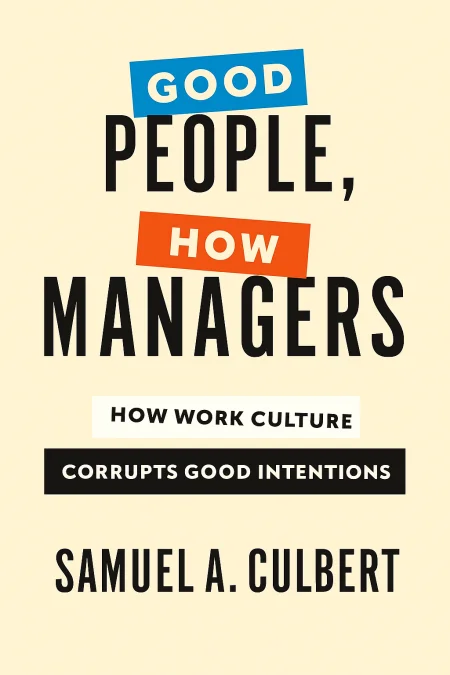
Good People, Bad Managers
How Work Culture Corrupts Good Intentions
Book Edition Details
Summary
In the intricate dance of corporate culture, where well-meaning intentions often go awry, Samuel A. Culbert's "Good People, Bad Managers" shines a spotlight on the silent saboteur lurking in our workplaces. This provocative exploration reveals how today's management is unknowingly entrenched in self-preservation, breeding environments that stifle morale and dampen productivity. With a sharp eye, Culbert dissects the veneer of "good enough" management, urging leaders to awaken to the subtle missteps that derail their teams. Through eye-opening case studies, this book offers a roadmap to revolutionizing the work environment, advocating for a shift from complacency to conscious leadership. For those who sense the dissonance in office dynamics, Culbert's insights promise a path to not just surviving, but thriving, with purpose and integrity.
Introduction
Most people enter management positions with genuine intentions to support their teams and contribute meaningfully to their organizations. Yet across corporate America, employees consistently report feeling undervalued, misunderstood, and poorly managed by individuals who seem well-meaning in their personal interactions. This paradox reveals a deeper systemic issue: the prevailing work culture systematically corrupts good intentions, transforming caring individuals into managers who inadvertently harm the very people they aim to help. The problem lies not in individual character flaws but in cultural expectations that demand objectivity while rewarding subjectivity, promote collaboration while incentivizing competition, and claim to value authenticity while punishing vulnerability. These contradictions create a force field of pressures that distort managerial behavior, leading good people to act in ways that contradict their values and damage their relationships with employees. Through detailed examination of workplace dynamics, psychological analysis of managerial behavior, and exploration of cultural forces at play, we can understand how well-intentioned managers become trapped in cycles of self-protective behavior that ultimately serves no one well. This analysis offers both managers and employees a clearer understanding of the systemic nature of workplace dysfunction and pathways toward more authentic, effective management relationships.
The Cultural Forces Behind Managerial Bad Behavior
American work culture operates on a foundation of individualistic achievement that celebrates personal success above collective well-being. This cultural programming begins early, with business schools teaching students to compete rather than collaborate, to present themselves as objective decision-makers rather than acknowledge their inherent subjectivity. The result is a generation of managers who believe they must appear infallible, hide their uncertainties, and make decisions based on supposedly neutral analysis while actually pursuing deeply personal agendas. The culture's obsession with immediate results creates additional pressure for managers to focus on short-term accomplishments rather than long-term relationship building. Quarterly earnings expectations, performance metrics, and promotion cycles all reward managers for producing tangible outcomes that can be measured and attributed to their individual efforts. This system makes it nearly impossible for managers to invest the time and energy required for genuine employee development, as such investments rarely produce immediate, measurable returns. Furthermore, the cultural mythology around leadership emphasizes vision, decisiveness, and control over empathy, listening, and vulnerability. Managers learn to project confidence even when uncertain, to make swift decisions even with incomplete information, and to maintain authority even when collaboration might produce better outcomes. These cultural expectations create a performance of management that prioritizes appearance over substance, leaving employees feeling manipulated and managers feeling isolated. The American dream narrative that anyone can achieve anything through hard work and determination creates unrealistic expectations about human capability and change. Managers begin to believe they can motivate anyone to improve any behavior through the right combination of incentives and pressure, ignoring fundamental aspects of human nature and individual limitations that cannot be simply overcome through willpower.
Why Well-Intentioned Managers Fail Their Employees
The transition from individual contributor to manager represents a fundamental shift that most people are unprepared to navigate successfully. New managers typically receive their positions based on technical competence or individual achievement rather than interpersonal skills or genuine interest in developing others. Once promoted, they face enormous pressure to prove themselves worthy of their new role while simultaneously learning to manage relationships, delegate effectively, and navigate organizational politics. The skills that made someone successful as an individual contributor often work against them as managers. The focus, determination, and self-reliance that drove their promotion now prevent them from stepping back to provide the space and support their employees need to succeed independently. Instead of asking what employees need from them, managers default to telling people what to do, believing this approach demonstrates competence and control. Most managers struggle with the fundamental tension between achieving their own goals and facilitating others' success. The organizational reward system typically gives managers credit for their team's accomplishments while holding them accountable for failures, creating a zero-sum dynamic where employee success feels threatening rather than rewarding. This leads to micromanagement, credit-taking, and other behaviors that undermine trust and employee autonomy. The lack of training in human psychology and interpersonal dynamics leaves managers unprepared to understand how their words and actions affect others. They may genuinely believe they are being helpful when providing critical feedback, unaware that their delivery style or timing creates defensiveness and resentment. Without understanding basic principles of motivation, learning, and behavior change, even well-intentioned guidance often backfires, creating the opposite of the desired effect while leaving managers frustrated and confused about why their efforts are not appreciated.
The Pretense and Self-Protection That Perpetuate Problems
Workplace culture demands that managers maintain an appearance of objectivity and rationality that no human being can actually achieve. Every decision involves personal judgment, subjective interpretation, and self-interested considerations, yet managers must present their choices as neutral, fact-based, and purely in the company's interest. This pretense creates a fundamental dishonesty in workplace relationships that prevents authentic communication and problem-solving. The fear of appearing incompetent or biased drives managers to develop elaborate self-protective routines. They learn to speak in carefully crafted language that deflects responsibility, to form alliances with colleagues to mutual protection, and to avoid taking risks that might expose their limitations. These behaviors become so habitual that managers often lose touch with their genuine thoughts and feelings, operating from a place of chronic defensiveness rather than authentic leadership. The performance review system exemplifies this dysfunction, giving managers power to rate and judge employees while pretending these assessments are objective measures rather than personal opinions. This one-sided accountability creates an inherently unequal relationship where employees must defer to managerial judgments they may disagree with, while managers avoid examination of their own contributions to employee performance problems. The emphasis on team collaboration exists alongside reward systems that pit managers against each other in competition for advancement, resources, and recognition. This contradiction forces managers to engage in political maneuvering while maintaining a facade of cooperation, leading to the kind of superficial relationships that characterize many workplace interactions. Trust becomes impossible when everyone is simultaneously collaborating and competing, creating an atmosphere of perpetual suspicion and strategic communication rather than honest dialogue.
Breaking Free: Transforming Management Through Cultural Change
Real transformation requires acknowledging that current management problems stem from systemic cultural issues rather than individual failings. Organizations must recognize that demanding objectivity while rewarding subjectivity, promoting collaboration while incentivizing competition, and claiming to value authenticity while punishing vulnerability creates impossible conditions for good management. Change begins with leadership admitting these contradictions exist and committing to resolving them rather than simply demanding better behavior from managers. Successful transformation involves replacing the myth of objectivity with an acceptance of human subjectivity, bias, and self-interest as natural and manageable aspects of workplace relationships. When managers can acknowledge their limitations and personal motivations openly, it becomes possible to have honest conversations about decisions, priorities, and conflicts of interest. This transparency allows for better problem-solving and more authentic relationships between managers and employees. Organizations must also restructure incentive systems to align managerial self-interest with employee development and success. This might involve measuring managers based on their direct reports' advancement, satisfaction, and retention rather than just bottom-line results attributed to the manager's leadership. When managers' success depends genuinely on their employees' success, the competitive dynamic shifts toward collaboration and mutual support. The change process requires creating safe spaces for managers to admit uncertainty, ask for help, and learn from mistakes without facing career damage. This involves implementing lessons-learned accountability rather than punitive measures for failures, encouraging experimentation and risk-taking, and providing ongoing support for managers to develop genuine interpersonal skills rather than just tactical management techniques. Real change happens when the culture supports vulnerability and learning over the performance of competence and control.
Summary
The epidemic of poor management in American organizations stems not from individual character defects but from cultural expectations that make authentic, supportive leadership nearly impossible to practice. When workplace culture demands objectivity while rewarding subjectivity, promotes teamwork while incentivizing competition, and claims to value honesty while punishing vulnerability, even well-intentioned people inevitably develop self-protective behaviors that harm their relationships with employees and colleagues. Breaking free from these patterns requires systemic change that acknowledges human nature, aligns incentives properly, and creates safe spaces for the kind of authentic communication and mutual accountability that effective management relationships require. Only by transforming the cultural context in which managers operate can organizations hope to unleash the genuine good intentions that most people bring to their leadership roles.
Related Books
Download PDF & EPUB
To save this Black List summary for later, download the free PDF and EPUB. You can print it out, or read offline at your convenience.
By Samuel A Culbert
