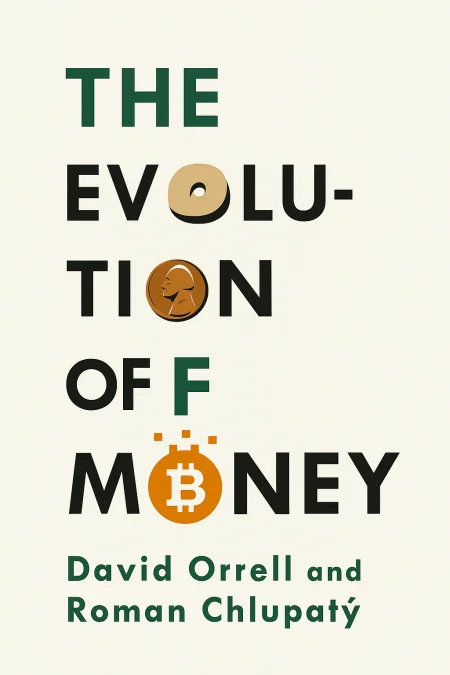
The Evolution of Money
From ancient Greece to the digital era
byDavid Orrell, Roman Chlupatý
Book Edition Details
Summary
What if the essence of money transcended mere numbers and minted coins? "The Evolution of Money" invites you to reimagine currency as a living, breathing force that has danced through history, shaping civilizations and economies alike. From the cryptic debts of ancient Mesopotamia to the digital whispers of Bitcoin, this riveting narrative traces the metamorphosis of money, highlighting its dual nature as both tangible and intangible. As we stand on the brink of a monetary revolution led by giants like Uber and Airbnb, the book unravels the invisible threads connecting past to future. Experience the art of currency as a catalyst for innovation and power, and glimpse the seismic shifts poised to redefine our financial world. In this tapestry of time and trade, discover how belief and trust are the true currencies that propel societies forward.
Introduction
Picture a Mesopotamian priest in 3000 BCE carefully inscribing marks on a clay tablet, recording grain deposits that would become humanity's first banking transaction. Fast-forward to today, where a teenager can transfer digital currency across continents with a smartphone tap. Between these moments lies one of history's most fascinating yet misunderstood stories—the evolution of money itself. This journey reveals profound truths that challenge everything we think we know about economics and power. Money didn't emerge from simple barter inconvenience as textbooks suggest, but was imposed by governments to fund armies and collect taxes. The tension between money's virtual nature and physical reality has driven boom-bust cycles for millennia, from Roman coin debasement to modern financial crises. Perhaps most importantly, whoever controls money creation wields extraordinary power over society—a power that has shifted between temples, monarchs, private banks, and now potentially to decentralized networks. These insights matter more than ever as we stand at another monetary crossroads. Traditional currencies face challenges from cryptocurrencies, while mounting debt levels echo historical patterns that preceded major upheavals. Whether you're a curious citizen wondering why prices keep rising, an investor seeking to understand market dynamics, or simply someone fascinated by the hidden forces shaping civilization, this exploration offers a fresh lens through which to view both past and present. Understanding money's true nature isn't just academic curiosity—it's essential for navigating our financial future.
Ancient Foundations: From Temple Credits to Imperial Coins (3000 BCE - 1000 CE)
Long before coins clinked in ancient marketplaces, sophisticated credit systems flourished in the temples of Mesopotamia. Around 3000 BCE, Sumerian accountants developed the world's first monetary unit—the shekel—not as physical silver, but as an abstract measure of value. This virtual currency recorded everything from barley rations to legal penalties, with transactions inscribed on clay tablets that circulated as early IOUs. The system worked because it was backed by the ultimate authority: state-controlled temples that dominated economic life. The transition to physical coinage around 650 BCE in the kingdom of Lydia marked a revolutionary shift. These first coins, made from naturally occurring electrum, weren't created for merchants' convenience but to pay soldiers and collect taxes. Each coin bore the royal seal, transforming mere metal into a guarantee of value backed by state power. As Alexander the Great's conquests spread coinage across the known world, a pattern emerged that would repeat throughout history: military power imposed monetary systems, which then created their own markets and social structures. The Roman Empire perfected this model, using silver denarii not just as currency but as instruments of imperial propaganda. Roman coins carried the emperor's image to the farthest corners of the empire, spreading Roman values and authority with every transaction. When the empire began debasing its currency to fund endless wars and bureaucracy, it wasn't just an economic decision but a symptom of deeper decay. As silver content dropped from 90% to virtually nothing, hyperinflation ravaged the empire, contributing to its eventual collapse. This ancient dynamic reveals money's dual nature—part abstract accounting system, part tangible wealth. The tension between these aspects would drive monetary evolution for millennia, as societies oscillated between virtual credit systems and metal-backed currencies, each phase reflecting deeper changes in power structures and social organization that continue to shape our world today.
Medieval Innovation: Virtual Banking and New World Gold (1000-1800)
As the Roman Empire crumbled, so did its supply of precious metals, forcing medieval Europe to rediscover money's virtual potential. With gold and silver locked away in monasteries or exported to pay for Eastern luxuries, commerce increasingly relied on credit instruments that would seem familiar to modern bankers. The period's most ingenious innovation was the bill of exchange—essentially medieval wire transfers that allowed merchants to conduct international business without moving heavy, theft-prone coins. Italian banking houses like the Medicis created a parallel financial system that operated in virtual units of account, enabling trade fairs where massive transactions occurred with minimal physical money. These bankers wielded power that rivaled kings, financing everything from cathedral construction to military campaigns. Medieval innovations like England's wooden tally sticks and the development of double-entry bookkeeping by Luca Pacioli provided the accounting framework that made complex credit relationships manageable across vast distances and time periods. The discovery of the Americas in 1492 shattered this delicate medieval balance. Spanish conquistadors unleashed the largest monetary shock in human history, flooding Europe with unprecedented quantities of gold and silver extracted at horrific human cost. Yet this windfall became Spain's curse, demonstrating that money's value lies not in its material substance but in the productive capacity it represents. As Voltaire observed, most of the treasure "entered the pockets of the French, English, and Dutch," while Spain itself descended into chronic debt and decline. The real winners were nations like England that learned to harness money's virtual power through institutional innovation. The Bank of England, founded in 1694 as a public-private partnership, pioneered the model of central banking that would dominate the modern world. By issuing paper notes backed by government debt rather than precious metal reserves, it created a more flexible monetary system that could expand with economic needs, setting the stage for the industrial revolution and modern capitalism.
Modern Transformation: Central Banks to Fiat Currency (1800-2000)
The nineteenth century witnessed money's gradual liberation from physical constraints through a series of spectacular crises and innovations. The gold standard emerged as the first truly global monetary system, linking economies from London to Shanghai through the discipline of precious metal. This system facilitated unprecedented international trade and investment, helping to fund railways, telegraphs, and steamships that knit the world together. Yet it also created deflationary pressures that sparked political upheavals across continents. The system's inherent rigidity became apparent during World War I, when nations abandoned gold convertibility to finance massive military expenditures. The interwar period's attempts to restore the gold standard proved disastrous, contributing to the Great Depression's severity and duration. Central banks, despite their imposing names and gold-filled vaults, discovered they could exercise only limited control over money supply when constrained by metal reserves, leading to a fundamental rethinking of monetary policy. The Bretton Woods agreement of 1944 established a compromise system with the dollar as the world's reserve currency, backed by gold at thirty-five dollars per ounce. This arrangement gave the United States enormous economic advantages, essentially allowing it to print the world's money. However, the costs of the Vietnam War and Great Society programs strained this system beyond its limits, forcing President Nixon to make a fateful decision that would reshape the global economy. On August 15, 1971, Nixon announced the "temporary" suspension of dollar convertibility to gold, effectively ending the gold standard forever. This "Nixon Shock" transformed every major currency into fiat money, backed by nothing more than government promises and public confidence. The change was disguised by keeping all the old institutions and procedures in place, but money's fundamental nature had shifted from scarce commodity to unlimited government creation, unleashing decades of credit expansion and periodic crises that continue to shape our world.
Digital Revolution: Cryptocurrencies and Monetary Redesign (2000-Present)
The 2008 financial crisis shattered public confidence in traditional banking and government monetary management, revealing that most "money" exists only as electronic entries in bank computers. Into this chaos stepped the mysterious Satoshi Nakamoto, who proposed a radical solution: a completely decentralized digital currency that required no banks, governments, or trusted intermediaries. Bitcoin, launched on January 3, 2009, represented the most significant monetary innovation since the invention of coinage itself. Bitcoin's genius lay not in its digital nature, but in solving the fundamental problem of virtual money: preventing counterfeiting and double-spending without central authority. The blockchain technology underlying Bitcoin creates an immutable public ledger maintained by a network of computers competing to validate transactions. This system transforms money from a centralized institution into a distributed protocol, potentially democratizing monetary creation while introducing new technical and social challenges. The emergence of thousands of alternative cryptocurrencies signals a return to the monetary diversity that characterized earlier historical periods. Just as medieval Europe operated with multiple overlapping currency zones, the digital age is witnessing an explosion of specialized moneys designed for specific purposes and communities. Some focus on privacy, others on environmental sustainability, and still others on enabling new forms of economic organization that blur traditional boundaries. This digital transformation coincides with growing recognition that our current monetary system, designed for an era of scarcity and physical constraints, may be fundamentally incompatible with an information-based economy. As artificial intelligence and robotics eliminate traditional jobs, and environmental limits constrain physical growth, we may need entirely new approaches to creating and distributing value. The cryptocurrency revolution represents humanity's attempt to reinvent money for a post-industrial world where old rules no longer apply.
Summary
The story of money reveals a central paradox that has driven human civilization for millennia: our most powerful social technology exists in the tension between abstract mathematics and physical reality. From Sumerian shekels to Bitcoin, monetary systems have oscillated between virtual and material forms, each transition reflecting deeper shifts in power structures, technological capabilities, and social organization. This historical journey illuminates three crucial insights that remain relevant today. First, money has always been a political creation, imposed by authorities to organize society rather than emerging naturally from market needs. The tension between money's numerical precision and real-world value remains inherently unstable, generating the boom-bust cycles that punctuate economic history. Second, whoever controls money creation wields extraordinary power over society—a power that has shifted between temples, monarchs, private banks, and potentially now to decentralized networks. Understanding this dynamic is essential for recognizing how monetary changes can reshape entire civilizations. Third, rather than seeking perfect monetary systems, we might focus on creating institutions that acknowledge money's inherent contradictions while channeling its power toward socially beneficial ends. As traditional currencies face challenges from cryptocurrencies and mounting debt levels threaten financial stability, the lessons of history suggest that the future belongs not to those who can eliminate money's paradoxes, but to those who can harness them wisely. The key lies in balancing competing demands for stability, flexibility, and legitimacy while ensuring that new monetary tools serve human flourishing rather than merely concentrating power in different hands.
Related Books
Download PDF & EPUB
To save this Black List summary for later, download the free PDF and EPUB. You can print it out, or read offline at your convenience.
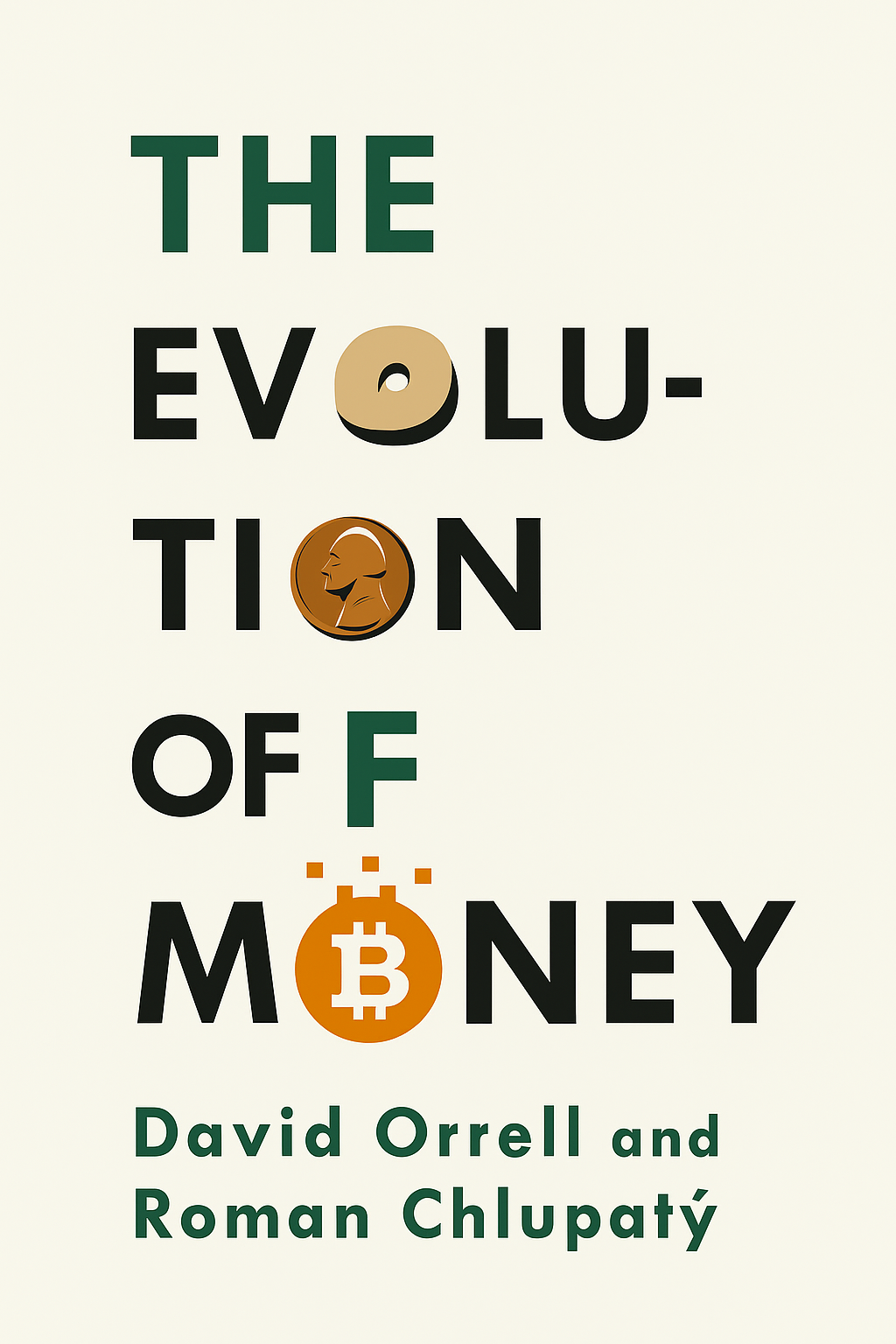
By David Orrell
