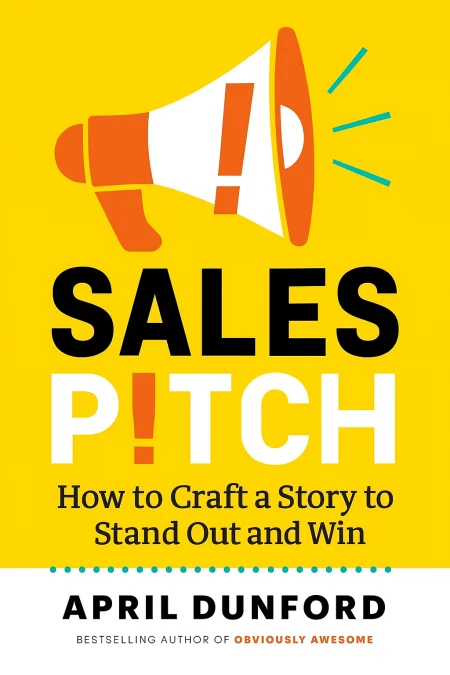
Sales Pitch
How to Craft a Story to Stand Out and Win
Book Edition Details
Summary
Striding boldly into the chaos of the modern marketplace, "Sales Pitch" by April Dunford dismantles the mundane and redefines how you captivate an audience. This isn't just a guide—it's your secret weapon in a world teeming with noise. Dunford, a luminary in product positioning, arms entrepreneurs, marketers, and business leaders with an arsenal of narrative strategies designed to transform their sales approach. Through gripping case studies and a refreshingly simple methodology, she illuminates the art of crafting pitches that speak volumes—whispering secrets of irresistible value and undeniable differentiation. Venture beyond the ordinary and seize the power to inspire decisive "yeses" with each encounter. Dive into the heart of a book that doesn't just tell you how to pitch—it shows you how to conquer.
Introduction
In today's overwhelming marketplace, customers face an unprecedented challenge: not just finding the right solution, but confidently choosing between seemingly endless alternatives. The digital age has flooded buyers with information, yet paradoxically left them more uncertain than ever about making the right decision. This uncertainty creates a profound opportunity for sales professionals who understand that their role isn't simply to sell products, but to guide customers through the complex journey of making informed, confident purchase decisions. The companies that master this approach don't just win more deals—they build lasting relationships based on trust and genuine value creation. The path to sales success lies not in perfecting your pitch about features and benefits, but in developing the ability to help customers navigate their choices with clarity and confidence.
Build Your Market-First Foundation
Great sales conversations begin long before you mention your product. They start with establishing yourself as a knowledgeable guide who understands the broader landscape your customers navigate. This foundation rests on recognizing that buyers aren't just looking for solutions—they're seeking wisdom about how to make the right choice. Consider the story of April buying a toilet, a seemingly simple purchase that became overwhelmingly complex. Standing in the store surrounded by countless options with bewildering technical specifications, she quickly realized she lacked the framework to make an informed decision. The first salesperson simply directed her to browse the inventory, leaving her to decode terms like "gravity assist" and "MaP scores" on her own. After weeks of frustrating research, she nearly chose to keep her old toilet rather than risk making the wrong choice. The transformation came when a second salesperson approached the situation differently. Instead of overwhelming her with features, he taught her how to think about toilet purchases through three simple categories: quality needs based on usage, aesthetic preferences, and space constraints. Within fifteen minutes, April confidently selected a toilet and completed her purchase. The difference wasn't in the products available—it was in receiving guidance on how to evaluate her options. This same principle applies to B2B sales, where the stakes are much higher. Your prospects need you to be their knowledgeable guide, helping them understand not just what you offer, but how to think about their entire range of alternatives. Start every sales conversation by establishing your expertise in the market landscape. Share insights about trends you've observed, common approaches companies take, and the trade-offs inherent in different solutions. Remember that your unique perspective on the market is what positions you as more than just another vendor. When you begin with market insight rather than product features, you immediately establish credibility and create a framework that naturally leads prospects toward understanding why your particular approach matters. This foundation makes everything that follows more meaningful and actionable.
Master the Eight-Step Pitch Structure
Effective sales conversations follow a predictable structure that mirrors how buyers naturally want to process information. This structure moves systematically from market context to specific value, creating a logical flow that builds confidence and clarity. The most successful sales professionals understand that this isn't about manipulation—it's about creating a respectful, educational experience that serves the buyer's genuine needs. The journey begins with insight that frames the conversation around what truly matters. LevelJump, a sales enablement company, discovered this when they shifted from talking about training features to discussing how great onboarding impacts revenue metrics. Their insight—that sales enablement should be measured by improvement in time-to-quota rather than just training completion—immediately differentiated their approach and positioned them uniquely in the market. When LevelJump representatives began conversations by asking prospects about the metrics they used to track enablement impact, they discovered most companies had never considered connecting training data with sales performance data. This insight naturally led to discussions about alternatives in the market: basic shared drives, learning management systems focused on compliance training, and traditional help desk solutions designed for cost reduction rather than revenue improvement. The eight-step structure guides prospects through understanding their current situation, exploring their options, defining ideal solution characteristics, and then demonstrating how your specific approach delivers unique value. Each step builds on the previous one, creating momentum toward a confident buying decision. The key to mastering this structure lies in recognizing that it's fundamentally conversational, not presentational. Discovery happens throughout the process, not just at the beginning. You're simultaneously teaching prospects how to think about their choices while learning about their specific situation and needs. Practice this structure until it becomes natural, allowing for flexibility in timing and emphasis while maintaining the logical flow. When you master this approach, you'll find that prospects begin selling themselves on your solution because they understand both why change is necessary and why your approach is uniquely suited to their situation.
Deliver Differentiated Value That Wins
The heart of any compelling sales pitch lies in clearly articulating the value that only your solution can deliver. This isn't about having the most features or the lowest price—it's about demonstrating capabilities that create meaningful business outcomes your competitors simply cannot match. Customers don't buy products; they buy the results those products enable for their specific situation. Help Scout learned this lesson when competing against established players like Zendesk in the customer service software market. Rather than trying to match every feature offered by larger competitors, they focused on articulating their unique approach to customer service. Their differentiated value centered on treating customer support as a growth driver rather than a cost center, particularly for online businesses where support interactions represent crucial touchpoints for building customer loyalty. When Help Scout representatives met with prospects, they didn't lead with feature comparisons. Instead, they established that great customer service could decrease acquisition costs and drive referrals for digital brands. They then walked prospects through the market landscape: shared inboxes that were easy but didn't scale, and traditional help desk software that offered advanced features but prioritized cost reduction over customer experience. This setup naturally led to defining the perfect solution: something as easy as a shared inbox, with advanced scalability features, but designed specifically to deliver exceptional customer experiences. Only then did they demonstrate how their platform uniquely delivered this combination of capabilities. The demonstration itself was organized around three value themes rather than a feature walkthrough: ease of use comparable to familiar email interfaces, advanced workflow capabilities for growing teams, and specific design elements that prioritized customer experience over efficiency metrics. Each demo section reinforced why these capabilities mattered and how they worked together to deliver results no alternative could match. Your differentiated value must be genuinely unique and important to your target customers. It should emerge naturally from your company's particular approach to solving problems, your technology choices, or your deep understanding of specific customer segments. Most importantly, it should be something prospects can't get anywhere else, even if they could theoretically combine multiple solutions or invest significant time and resources in custom development.
Summary
The most successful sales professionals understand a fundamental truth: "Stop selling. Start helping." When you shift from pushing products to guiding purchase decisions, you transform from a vendor into a trusted advisor. This transformation happens when you master the discipline of helping customers understand their complete range of options, the trade-offs inherent in different approaches, and the specific value that only your solution can deliver. The companies that embrace this philosophy don't just close more deals—they build stronger relationships, serve better-fit customers, and create sustainable competitive advantages that persist long after any individual transaction. Your next conversation with a prospect is an opportunity to demonstrate this approach. Begin by asking yourself not "How can I sell my product?" but rather "How can I help this buyer make the most confident decision possible?" When you consistently choose to be helpful rather than merely persuasive, you'll discover that customers naturally choose to work with guides they trust over vendors they merely tolerate.
Related Books
Download PDF & EPUB
To save this Black List summary for later, download the free PDF and EPUB. You can print it out, or read offline at your convenience.
By April Dunford
