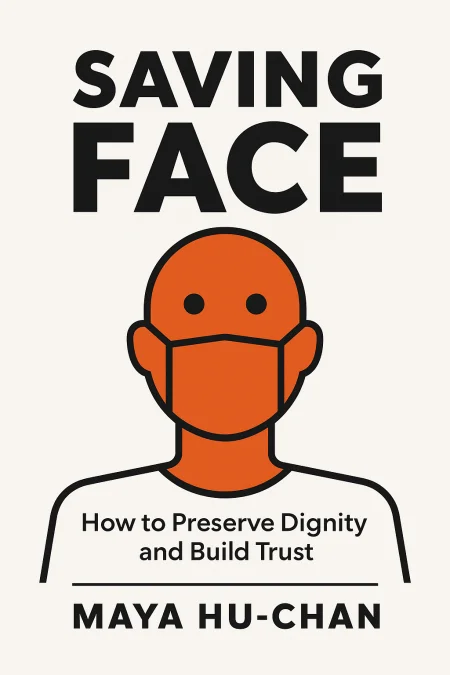
Saving Face
How to Preserve Dignity and Build Trust
Book Edition Details
Summary
In the tangled web of global work environments, where cultural nuances dance across continents, Maya Hu-Chan unveils the art of "saving face" as the secret to leadership that transcends boundaries. This riveting guide introduces the transformative power of preserving dignity and fostering genuine connections, even when oceans apart. "Face" is not merely a mask but a mosaic of self-worth and reputation, a cornerstone for trust and harmony. With Hu-Chan's captivating anecdotes and her B.U.I.L.D. model—Benevolence, Understanding, Interacting, Learning, Delivery—you'll navigate the delicate art of honoring identities, avoiding unintended affronts, and crafting enduring alliances. Here, the heartbeat of success is empathy, and the language of leadership is respect. Embrace this compelling narrative to not only build bridges but to strengthen them across the ever-shifting cultural landscapes of today's workplace.
Introduction
Picture this: You're in a bustling conference room in Shanghai, watching as your most experienced Chinese engineer sits silently through an entire technical presentation. Despite having twenty years of expertise, he asks no questions, offers no insights, and simply nods politely when asked if everything is clear. Later, you discover he understood less than half of what was discussed, but admitting confusion would have meant losing something far more valuable than time or money. It would have meant losing face. This scenario plays out in boardrooms, factory floors, and virtual meetings across the globe every single day. While we've become masters at managing budgets, timelines, and technical challenges, we often overlook one of the most powerful forces shaping human behavior in our interconnected world. Face represents far more than simple embarrassment or pride. It's the invisible currency of dignity, respect, and social worth that determines whether our relationships flourish or fracture, whether our teams innovate or stagnate, and whether our global partnerships succeed or fail. In our rush to optimize processes and maximize efficiency, we've forgotten that behind every email, every decision, and every interaction stands a human being whose sense of worth and belonging hangs in the balance. The ability to honor, preserve, and restore face isn't just a nice-to-have skill for leaders working across cultures. It's the secret ingredient that transforms ordinary managers into extraordinary leaders who can build trust, inspire loyalty, and create psychological safety in even the most diverse teams. When we master this ancient wisdom and apply it with modern intentionality, we unlock the potential for deeper connections, better solutions, and more meaningful success in both our professional and personal lives.
The Social Currency That Builds Trust
Maya Hu-Chan recalls a story that perfectly illustrates how the concept of face operates like a sophisticated banking system in our daily interactions. When her husband Wayne borrowed a friend's truck for their wedding preparations, he wanted to show appreciation for the generous favor. After using the vehicle, he carefully taped an envelope to the steering wheel containing a heartfelt thank-you note and ten dollars to cover the gas he'd used. His intentions were pure, his gratitude genuine, yet within days he learned through family members that Daniel, the truck's owner, was deeply offended. What Wayne didn't realize was that by leaving money, he had inadvertently transformed a gift of friendship into a commercial transaction. Daniel hadn't lent his truck as a business service requiring compensation. He had offered it as an act of care between friends, and the money suggested that Wayne viewed their relationship through a purely transactional lens. In trying to be considerate, Wayne had unknowingly devalued the emotional currency of their friendship and caused Daniel to lose face. This story reveals something profound about how respect and dignity function as social currency in our relationships. Just as we make deposits and withdrawals from financial accounts, we constantly engage in exchanges of face with everyone around us. When we express genuine appreciation, listen attentively to someone's ideas, or acknowledge their contributions in front of others, we're making deposits into their account of dignity and self-worth. These deposits accumulate over time, building trust and strengthening our relationships in ways that far exceed the impact of monetary transactions. However, when we accidentally slight someone, dismiss their input, or make them feel invisible or inadequate, we create withdrawals that can damage relationships for years. The key insight is that face operates on an emotional rather than logical level. Daniel's reaction wasn't about the ten dollars themselves, but about what that money represented in terms of how Wayne viewed their friendship. Understanding this invisible currency allows us to navigate relationships with greater sensitivity, building stronger connections that can weather the inevitable misunderstandings and conflicts that arise in any meaningful relationship.
Cultural Agility and the Art of Understanding
The concept of face becomes even more complex when we step into the world of cross-cultural interactions, where different societies have vastly different rules about respect, hierarchy, and communication. Consider the experience of a senior executive at a global telecommunications company who found himself struggling to lead design teams spanning three continents. Sam had been wildly successful managing Chinese teams, where his hierarchical leadership style and decision-making authority were respected and expected. However, when promoted to oversee American and Japanese teams alongside his Chinese colleagues, his approach began creating serious friction. During conference calls, Sam would listen as the American team members enthusiastically shared their design concepts and asked for feedback from their international colleagues. Uncomfortable with this egalitarian approach and unsure how to respond to ideas that challenged his assumptions, Sam would simply say "That's fine" and end the discussion. He would then revert to his familiar pattern of meeting separately with his Chinese team to develop entirely different solutions, which he would subsequently send to the other teams without explanation or consultation. The American team members felt confused and disrespected. They couldn't understand why Sam solicited their input if he planned to disregard it entirely. Meanwhile, Sam felt overwhelmed by what he perceived as insubordination and lack of respect from team members who dared to question his expertise. Both sides were operating from their cultural comfort zones, but neither understood the invisible rules governing the other's behavior. This breakdown illustrates why cultural agility requires more than good intentions or technical competence. It demands what the author calls developing a "human antenna" that can detect the subtle signals and unspoken expectations that vary dramatically across cultures. In Sam's case, his American colleagues valued creativity, collaboration, and merit-based decision-making, while his own cultural background emphasized relationship-based authority and deference to seniority. Neither approach was inherently right or wrong, but the collision between these different systems created a situation where everyone lost face and the project suffered accordingly. True cultural agility means learning to shift our leadership style based on our audience while maintaining our core values and objectives.
Leadership Through Dignity in Diverse Teams
The most powerful demonstration of face-saving leadership often emerges during moments of crisis, when the natural instinct might be to assign blame or assert control. Maya Hu-Chan shares the story of a chief operating officer who faced exactly such a moment when one of his managers discovered that an employee had stolen over $100,000 through a security loophole in the cash management system. The financial director, who had designed the flawed system, was consumed with shame and anxiety, convinced that his career was over and dreading the inevitable confrontation with senior leadership. When the meeting finally arrived, the COO surprised everyone by immediately shifting the focus away from blame and toward solutions. Rather than dwelling on the theft or questioning the manager's competence, he calmly explained that theft was an unavoidable risk in any business, that insurance would cover the losses, and that his only concern was ensuring they learned from the experience and strengthened their systems going forward. He acknowledged the work the financial director was already doing to address the security gaps and expressed confidence in his ability to solve the problem. This response transformed what could have been a devastating career setback into a learning opportunity that actually strengthened the relationship between the COO and his team member. By treating the situation as a systems failure rather than a personal failing, the COO preserved everyone's dignity while still ensuring accountability and improvement. The financial director returned to work with renewed energy and loyalty, and the company emerged with stronger security measures and a more resilient team culture. This story illustrates how the most effective leaders understand that preserving face doesn't mean avoiding difficult conversations or lowering standards. Instead, it means approaching challenges with empathy, focusing on solutions rather than blame, and treating people with the respect and dignity that allows them to learn, grow, and contribute their best work. When leaders master this delicate balance between accountability and compassion, they create environments where people feel safe to take risks, admit mistakes, and collaborate authentically toward shared goals.
Summary
The wisdom contained in these stories reveals a fundamental truth about human nature that transcends cultural boundaries and organizational hierarchies. Whether we're managing a team in Silicon Valley, negotiating a partnership in Shanghai, or simply trying to build stronger relationships with our neighbors, the principle remains constant: people's sense of dignity and worth profoundly shapes their willingness to trust, collaborate, and contribute their best efforts. The concept of face teaches us that respect isn't just a nice gesture or cultural courtesy, it's the foundation upon which all meaningful relationships are built. When we learn to see interactions through this lens, we begin to understand why a simple thank-you note can transform a workplace culture, why the tone of feedback matters more than its accuracy, and why preserving someone's dignity during a mistake often leads to better outcomes than public criticism or punishment. Perhaps most importantly, these insights remind us that leadership in our interconnected world requires emotional intelligence, cultural sensitivity, and genuine care for the people we work with. The leaders who will thrive in the coming decades aren't just those who can analyze data, optimize processes, or develop innovative products. They're the ones who can navigate the complex emotional and cultural dynamics that emerge when diverse groups of people come together to solve problems and create value. By mastering the art of preserving and honoring face, we can build the trust, psychological safety, and authentic connections that turn ordinary teams into extraordinary ones, transforming not just our organizations but the very fabric of how we relate to one another as human beings.
Related Books
Download PDF & EPUB
To save this Black List summary for later, download the free PDF and EPUB. You can print it out, or read offline at your convenience.
By Maya Hu-Chan
