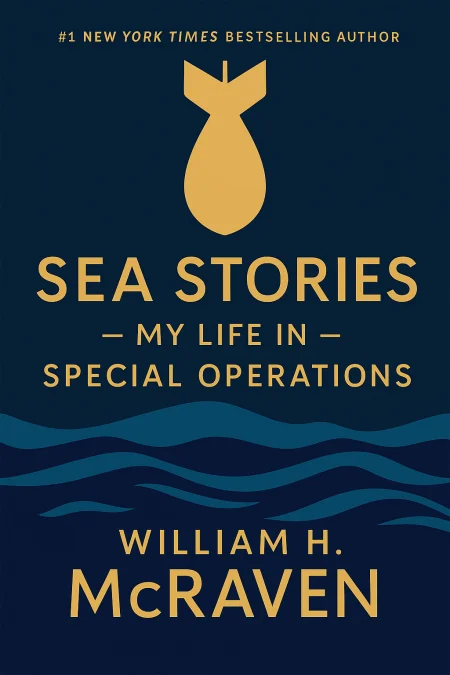
Sea Stories
My Life in Special Operations
Book Edition Details
Summary
Whisked away to a world where valor and storytelling weave together, Admiral William H. McRaven's "Sea Stories" is a riveting tapestry of one man's journey from adventurous youth to legendary commander. Born amidst the echoes of World War II tales, McRaven's life unfolds in thrilling episodes—sneaking into military zones as a child to orchestrating high-stakes operations that shaped history. With gripping narratives of the capture of Saddam Hussein and the daring raid that ended Osama bin Laden's reign, this collection offers a visceral glimpse into the heart of a warrior's life. More than a memoir, it's a testament to the indomitable spirit of those who dare to shape the course of events.
Introduction
In the unforgiving waters off Coronado Beach, where countless military dreams have been shattered against the reality of Navy SEAL training, William McRaven discovered the foundational truth that would guide his remarkable four-decade career: true leadership emerges not from individual brilliance, but from the crucible of shared adversity and unwavering commitment to others. From those brutal early days as a young officer candidate to his eventual command of the operation that eliminated Osama bin Laden, McRaven's journey represents one of the most compelling leadership stories in modern military history. His path from small-town Texas roots to the pinnacle of special operations command offers profound insights into how character is forged under extreme pressure. Through the lens of his experiences, we witness the evolution of American military leadership during some of the nation's most challenging decades, from the Cold War's final chapters through the complex counterterrorism campaigns that defined the early 21st century. McRaven's story reveals how the principles learned in basic training, the bonds forged in combat, and the wisdom gained through both triumph and failure can shape not just military effectiveness, but the very essence of principled leadership. His journey illuminates the transformative power of service to something greater than oneself, the critical importance of developing others, and the profound responsibility that comes with commanding America's most elite warriors in an increasingly dangerous world.
Forging Character: From Small-Town Dreams to Elite Warrior
Growing up in the military communities of Texas and abroad during the 1960s, young Bill McRaven was surrounded by the towering figures of World War II veterans who populated his father's social circle. These men, with their easy confidence and war stories shared over evening gatherings, painted military service in romantic hues that captured the imagination of a boy seeking his own path to significance. His father, a decorated Air Force pilot who had flown dangerous missions over Nazi-occupied Europe, rarely spoke of his own wartime experiences, but the legacy of service and sacrifice permeated the household atmosphere. The transition from childhood dreams to military reality proved far more challenging than McRaven had anticipated. Despite his athletic background as a collegiate track runner, he initially struggled to find his footing in the Navy's rigid hierarchical structure. A pivotal moment came during his senior year when his high school track coach made an unexpected phone call, encouraging him to attempt breaking the school's mile record. That simple act of belief from a coach who barely knew him provided the confidence boost that would sustain McRaven through his most difficult trials ahead. The crucible of Basic Underwater Demolition/SEAL training at Coronado represented the ultimate test of his commitment to military excellence. Of the 155 men who began Class 95, only 33 would survive the six-month gauntlet of physical punishment, mental harassment, and emotional exhaustion designed to identify those with the rare combination of toughness and teamwork required for special operations. The infamous Hell Week, with its relentless cycle of freezing surf, sleep deprivation, and seemingly impossible physical challenges, became the defining experience that would shape McRaven's understanding of leadership under extreme duress. What distinguished McRaven during this formative period was not exceptional physical prowess, but rather an unshakeable mental resilience and deep loyalty to his teammates. When faced with the constant temptation to "ring the bell" and quit, he drew strength from the bonds formed with fellow trainees and embraced the philosophy of confronting overwhelming challenges "one evolution at a time." This approach of breaking down insurmountable obstacles into manageable components would become a cornerstone of his leadership philosophy, proving applicable far beyond the training grounds and into the highest levels of strategic command.
Combat Leadership: Operations Under Fire and Strategic Growth
McRaven's baptism by fire came during Operation Desert Shield in 1990, when his SEAL platoon was tasked with enforcing the United Nations maritime blockade against Iraqi vessels attempting to breach coalition lines. The mission to board and search the massive Iraqi oil tanker Amuriyah marked his transition from training scenarios to life-and-death decision-making in a volatile international incident. Leading a combined force of Navy SEALs and Marine Force Reconnaissance operators, he had to balance delicate diplomatic considerations with tactical necessities while managing the unpredictable dynamics of an armed confrontation on the high seas. The operation revealed crucial insights about leadership under pressure that would influence his command philosophy for decades. When the Iraqi crew violently resisted the boarding party with makeshift weapons and desperate fury, McRaven was forced to make split-second decisions about the appropriate use of force while simultaneously coordinating helicopter gunships, multiple assault teams, and an increasingly hostile crew of merchant sailors. The mission's successful completion without loss of American life demonstrated his ability to maintain calm decisiveness when carefully laid plans dissolved into chaos. These early combat experiences taught McRaven profound lessons about the weight of command responsibility that extended far beyond tactical considerations. Every decision carried potential consequences not just for mission success, but for the lives and families of the men under his leadership. He learned to balance aggressive action with prudent risk assessment, understanding that authentic leadership required the moral courage to make difficult choices while accepting complete accountability for all outcomes, both successful and tragic. The bonds forged in combat created a brotherhood that transcended traditional military hierarchy and service branch rivalries, reinforcing McRaven's growing belief that effective leadership was fundamentally built on mutual trust and shared sacrifice. His systematic approach to mission planning and execution began taking shape during this period, emphasizing thorough preparation, clear communication channels, and the empowerment of subordinate leaders to make critical decisions within their areas of responsibility when circumstances demanded immediate action.
Command Excellence: High-Stakes Missions and Global Impact
McRaven's assignment to the White House following the September 11th attacks thrust him into an entirely different arena of leadership, where military precision encountered political complexity and bureaucratic inertia. As Director of Strategy and Military Affairs in the Office of Combating Terrorism, he found himself navigating the intricate world of interagency coordination, where success required building consensus among competing bureaucracies rather than commanding through traditional military authority. The transition from tactical operations to strategic policy-making demanded entirely new skills in diplomacy, negotiation, and long-term institutional thinking. One of his most challenging assignments involved coordinating the rescue effort for American missionaries Martin and Gracia Burnham, who had been held hostage by the Abu Sayyaf terrorist group in the remote Philippines for over a year. The case required delicate coordination between the CIA, FBI, State Department, and Pentagon, each organization bringing its own priorities, constraints, and institutional culture to the problem. McRaven's military background proved invaluable in cutting through bureaucratic paralysis and focusing attention on actionable solutions, though the ultimate tragedy of Martin Burnham's death during the rescue attempt served as a sobering reminder of the limits of American power and the cruel unpredictability of combat operations. The White House experience provided McRaven unprecedented exposure to the highest levels of national security decision-making, including direct interactions with President Bush and his senior advisors during some of the most consequential moments in modern American history. He observed how strategic leaders processed complex, often contradictory information under intense public scrutiny, balanced competing national priorities, and made decisions with far-reaching consequences based on incomplete intelligence and uncertain outcomes. Working at the critical intersection of military operations and national policy deepened McRaven's understanding of how tactical actions connected to broader strategic objectives in an interconnected world. Every special operations mission had to be evaluated not merely for its immediate military value, but for its potential political, diplomatic, and psychological effects on allies, enemies, and neutral observers. This systems thinking approach would prove crucial in his later roles commanding global special operations forces, where the strategic implications of tactical decisions became increasingly important in shaping international perceptions and long-term security outcomes.
Legacy of Service: Leadership Principles for Future Generations
The culmination of McRaven's extraordinary career came with his command of the Joint Special Operations Command, where he oversaw some of the most sensitive and strategically important military operations of the modern era. His leadership during the meticulously planned raid that eliminated Osama bin Laden demonstrated the synthesis of all his accumulated experience: exhaustive preparation, decisive execution under extreme pressure, and the ability to manage complex, multi-faceted operations under intense global scrutiny. The mission's flawless success reflected not just tactical proficiency, but the organizational culture of excellence he had cultivated over years of developing elite units capable of performing at the highest levels when failure was not an option. Throughout his decades of service in increasingly demanding positions, McRaven consistently emphasized that authentic leadership was fundamentally about serving others rather than advancing personal ambitions or accumulating institutional power. He understood intuitively that genuine authority derived not from rank insignia or organizational position, but from the trust and respect earned through consistent demonstration of competence, uncompromising integrity, and genuine concern for the welfare and development of subordinates. His approach to command emphasized developing the next generation of leaders, creating robust systems that could function effectively in his absence, and maintaining the highest possible standards of professional and ethical conduct even under extreme operational pressure. The physical and emotional toll of decades in special operations took its inevitable price, including a near-fatal parachuting accident that could have ended both his career and his life. His remarkable recovery and determined return to full operational duty exemplified the resilience and unwavering determination that had characterized his entire approach to military service and personal challenges. Rather than allowing setbacks to define his limitations, McRaven consistently used them as opportunities for personal growth and deeper understanding of human nature under stress. Perhaps most significantly, McRaven's career demonstrated the transformative power of maintaining proper perspective and genuine humility even while achieving the highest levels of professional success and public recognition. He never forgot the coaches, mentors, and teammates who had contributed to his development during his formative years, and he made paying that invaluable investment forward to future generations a central organizing principle of his leadership philosophy. His remarkable story illustrates how individual excellence, when combined with authentic service to others and unwavering commitment to ideals larger than personal achievement, can create a lasting legacy that extends far beyond any single accomplishment or moment of recognition.
Summary
Admiral McRaven's extraordinary transformation from small-town dreamer to elite military commander offers a masterclass in how character, perseverance, and principled leadership can overcome seemingly insurmountable obstacles and achieve remarkable results in service to others. His story powerfully demonstrates that authentic leadership emerges not from commanding others through authority or intimidation, but from serving them with unwavering integrity, moral courage, and relentless commitment to excellence in all endeavors. The profound lessons embedded throughout his diverse experiences transcend military service, offering valuable insights and practical guidance for anyone seeking to make a meaningful, lasting difference in their chosen field of endeavor. Two fundamental principles emerge from McRaven's remarkable career that can guide anyone facing significant personal or professional challenges. First, the transformative power of approaching overwhelming problems by taking them "one evolution at a time," systematically breaking down seemingly impossible tasks into manageable, actionable steps while maintaining unwavering focus on the ultimate objective and never losing sight of the larger purpose. Second, the critical importance of building and maintaining relationships based on mutual trust, genuine respect, and shared commitment to something greater than individual success or personal advancement. These relationships inevitably become the unshakeable foundation for achieving extraordinary results when facing the most difficult and demanding circumstances. McRaven's inspiring story will particularly resonate with current and aspiring leaders in high-pressure environments, military personnel and veterans seeking to translate their service experience into civilian success, and anyone looking for genuine inspiration and practical guidance for overcoming significant personal or professional setbacks. His powerful example demonstrates that with thorough preparation, unwavering moral courage, and authentic concern for the welfare and development of others, it becomes possible to achieve remarkable success while maintaining complete integrity and essential humanity throughout the journey.
Related Books
Download PDF & EPUB
To save this Black List summary for later, download the free PDF and EPUB. You can print it out, or read offline at your convenience.
By William H. McRaven
