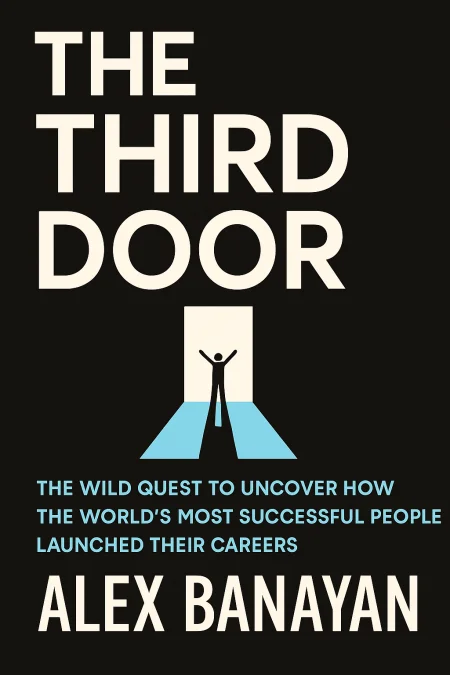
The Third Door
The Wild Quest to Uncover How the World’s Most Successful People Launched Their Careers
Book Edition Details
Summary
At 18, Alex Banayan wasn't content with waiting in line for life’s opportunities. Armed with audacity and a heart full of questions, he embarked on an astonishing quest from his college dorm to the inner circles of the world's most iconic figures—Bill Gates, Lady Gaga, and Maya Angelou, to name a few. "The Third Door" chronicles this exhilarating odyssey, revealing that true success isn’t about joining the crowd at the velvet rope or slipping through with the elite. It's about the daring, often unconventional paths one must forge. Through riveting encounters—from sneaking into Warren Buffett’s shareholder meeting to an impromptu grocery store chat with Larry King—Banayan deciphers a universal secret: the existence of a Third Door. This gateway is not obvious, yet it's accessible to those willing to climb, crawl, and creatively navigate life’s obstacles. A captivating read for anyone seeking the blueprint to breaking barriers and seizing dreams.
Introduction
Picture this: you're standing outside the hottest nightclub in town, watching the endless line of people hoping to get in through the main entrance. Most will wait for hours, many will be turned away. Meanwhile, VIPs glide past to their special entrance, bypassing the crowd entirely. But what if there was a third option? What if you could run down the alley, climb through a window, or find another way in altogether? This is the story of a young man who refused to accept that there were only two ways to reach the world's most successful people. Feeling lost and directionless in college, he embarked on an extraordinary quest to interview icons like Bill Gates, Lady Gaga, and Steven Spielberg. What began as a desperate attempt to find his own path became a blueprint for breaking through barriers and creating opportunities where none seemed to exist. Through years of rejections, failures, and unexpected breakthroughs, he discovered that every successful person he met had one thing in common: they had all found their own "third door." Whether it was Gates selling his first piece of software or Spielberg becoming Hollywood's youngest studio director, they all took unconventional routes to success. This journey reveals not just how the world's most accomplished individuals got their start, but more importantly, how anyone can learn to see possibilities where others see only obstacles.
From Game Show Victory to Cold-Calling Legends
The adventure began with what seemed like an impossible idea: fund an ambitious interview project by winning on The Price Is Right. Most people would have dismissed this as a fantasy, but sometimes the most outrageous plans are the ones that work. After pulling an all-nighter to research the show's casting process, the author discovered it wasn't random at all. Producers interviewed every audience member and selected the most energetic ones. Armed with this knowledge, he transformed himself into the perfect contestant: bright red shirt, puffy jacket, neon sunglasses, and enough enthusiasm to power a small city. When his carefully choreographed interactions with the producers paid off and his name was called, he found himself on stage facing prizes he'd never imagined owning. The key wasn't luck—it was treating the show like a system that could be understood and navigated. But winning a sailboat was only the beginning. The real challenge lay ahead: how do you convince busy, successful people to share their time with someone they've never heard of? The first lesson emerged immediately: traditional approaches rarely work when you're starting from zero. Cold emails disappeared into inboxes, formal requests were politely declined, and conventional networking felt like shouting into the void. The breakthrough came from studying how Steven Spielberg had launched his own career decades earlier. As a teenager, Spielberg had jumped off a Universal Studios tour bus, found an insider willing to help him, and essentially created his own internship. This wasn't just persistence—it was strategic creativity. Success required finding someone on the inside who believed in the mission enough to open doors that would otherwise remain closed forever.
Building Networks and Learning from Mentors
The most valuable education often happens outside classrooms, in unexpected places with unlikely teachers. At a TED conference breakfast table, surrounded by tech executives and media moguls, profound lessons unfolded over coffee and conversation. One mentor shared the importance of asking the right questions, while another demonstrated how genuine curiosity could unlock doors that aggressive networking never could. These relationships weren't built through calculated moves or strategic planning. Instead, they emerged from authentic interactions—sharing stories, offering help without expecting anything in return, and showing genuine interest in others' journeys. The most successful people, it turned out, were often the most generous with their time when approached with sincerity rather than ambition. One particularly transformative relationship began with a chance encounter at a music festival. What started as a casual conversation about entrepreneurship evolved into a mentorship that opened doors to Silicon Valley networks, media opportunities, and insights into how successful people actually think and operate. The lesson was clear: the best connections happen when you're not actively trying to connect. But perhaps the most important discovery was learning to recognize when mentorship was happening in real-time. Sometimes the greatest teachers don't announce themselves with credentials or titles. They're the people who challenge your assumptions, push you beyond your comfort zone, and help you see possibilities you never knew existed.
Facing Rejection and Finding Alternative Routes
Rejection became a constant companion on this journey, arriving in forms both gentle and brutal. Polite declines from assistants, ignored emails that disappeared into digital voids, and the soul-crushing experience of being told "no" by people whose approval had been desperately sought. Each rejection felt personal, even when logic suggested otherwise. The lowest point came during a freezing night in a rundown motel, questioning every decision that had led to that moment. After months of pursuing one particular interview through increasingly desperate means—including sending a single shoe with a note about "getting a foot in the door"—the reality hit hard: sometimes persistence crosses the line into pestering. This painful lesson revealed an important truth about the difference between productive persistence and destructive obsession. Successful people aren't just determined; they're also strategic about where they invest their energy. They know when to push harder and when to pivot to a different approach entirely. The breakthrough came from reframing the problem altogether. Instead of asking "How can I get this specific person to say yes?" the question became "How can I create value that makes saying yes feel natural?" This shift from taking to giving, from demanding to contributing, transformed not just the approach but the entire relationship dynamic. Sometimes the third door isn't hidden—it's built through genuine service to others.
Breakthrough Moments and Hard-Won Wisdom
The most profound conversations often happened when the formal interview structure dissolved entirely. Sitting in a legendary music producer's living room, surrounded by artifacts from decades of cultural influence, the real wisdom emerged not from prepared questions but from genuine human connection. Stories of childhood trauma transformed into artistic triumph, of business betrayals that taught essential lessons about contracts and creativity. These breakthrough moments shared a common element: they happened when both parties forgot about the interview and simply talked as fellow human beings navigating life's complexities. The most successful people, it became clear, had developed an unusual relationship with failure. Rather than avoiding mistakes, they had learned to extract maximum learning from each setback. One particularly powerful conversation revealed how truly successful individuals think about risk and opportunity. They don't see doors as either open or closed, but as puzzles to be solved creatively. When traditional approaches fail, they don't give up—they get inventive. They understand that every "no" contains information about how to craft a better approach. The ultimate realization was that the third door isn't really about finding hidden entrances or secret shortcuts. It's about developing the mindset that there's always another way, always another angle to try, always another relationship to build. Success isn't about having special access or privileged connections—it's about refusing to accept that obstacles are permanent and developing the creativity to find solutions others miss.
Summary
The journey to interview the world's most successful people revealed a fundamental truth: there are always more options than we initially see. While most people wait in the obvious line or assume they need special privileges to succeed, a third path always exists for those willing to look for it. This path requires courage to try unconventional approaches, resilience to withstand inevitable rejections, and the wisdom to learn from every interaction along the way. The most important lesson isn't about meeting famous people or gaining access to exclusive circles. It's about developing the mindset that sees possibilities where others see barriers. Whether launching a career, building relationships, or pursuing any ambitious goal, success comes to those who refuse to accept that there are only two ways forward. The third door is always there, waiting for someone creative and persistent enough to find it and brave enough to walk through it.
Related Books
Download PDF & EPUB
To save this Black List summary for later, download the free PDF and EPUB. You can print it out, or read offline at your convenience.
By Alex Banayan
