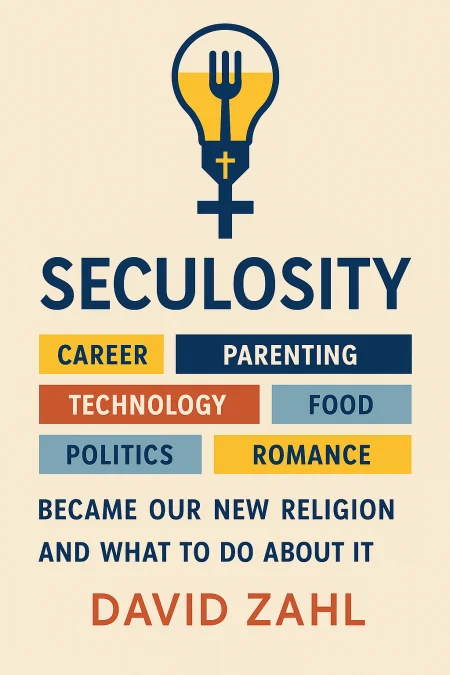
Seculosity
How Modern Life Became Our New Religion
Book Edition Details
Summary
In a world where the pews may be emptying, the altars of modern life are bustling with worshippers. David Zahl's "Seculosity" provocatively unveils our frenetic devotion to the cult of busyness and achievement, as we desperately seek to fill the void left by traditional religion. This isn’t your typical sermon on faith; it’s a savvy exploration of our cultural obsession with being “enough,” where even leisure morphs into an exhausting quest for perfection. Zahl's sharp insights reveal how this relentless pursuit entangles us in anxiety and guilt, urging us to reconsider the true meaning of grace. With wit and wisdom, "Seculosity" offers a mirror to our striving souls, inviting us to pause, reflect, and perhaps find contentment in the chaos.
Introduction
Modern Western society presents a curious paradox: while traditional religious observance continues to decline, the human drive for transcendence, meaning, and righteousness has not disappeared but merely relocated. The sacred impulses that once found expression in churches, temples, and mosques now manifest in gyms, boardrooms, kitchens, and smartphones. What emerges is a landscape of secular pieties that operate with all the fervor, ritual, and moral certainty of traditional faith systems, yet offer none of the mercy or forgiveness that might sustain weary souls. This phenomenon represents more than simple cultural shift—it reveals the fundamentally religious nature of human existence. The quest for enough-ness, for justification, for a sense that our lives matter, drives us to construct elaborate hierarchies of righteousness around career advancement, parenting excellence, dietary purity, and political correctness. These new orthodoxies promise salvation through performance while delivering anxiety, exhaustion, and isolation. By examining how ordinary activities transform into vehicles of self-justification, we can begin to understand why contemporary life feels simultaneously more connected and more lonely, more informed yet more confused, more liberated yet more oppressed than previous generations experienced.
The Rise of Seculosity: From Sacred to Secular Religion
The transformation of secular activities into religious substitutes represents one of the most significant cultural developments of our time. Where previous generations looked to established faiths for meaning, belonging, and moral framework, contemporary society has unconsciously transferred these spiritual needs onto everyday pursuits. This shift manifests most clearly in how we discuss food, relationships, work, and leisure—not as mere activities but as expressions of our deepest values and sources of our fundamental worth. The mechanics of this transformation follow predictable patterns. Activities that begin as simple preferences or practical necessities gradually acquire moral dimensions, complete with orthodox positions, heretical deviations, and communities of true believers. Consider how dietary choices have evolved from matters of taste or health into elaborate moral systems complete with their own prophets, conversion narratives, and excommunication rituals. The yoga studio becomes a sanctuary, the farmer's market a pilgrimage site, the meditation app a prayer book. This migration of religious energy occurs not because people have abandoned their need for transcendence, but because traditional religious institutions have failed to address these needs convincingly. The result is a proliferation of replacement religions that maintain all the psychological pressure and social policing of traditional faith while offering none of the grace or forgiveness that might make such systems sustainable. These secular orthodoxies prove particularly insidious because they masquerade as lifestyle choices rather than revealing themselves as the demanding spiritual systems they have become. The consequence is a culture that has never been more religious in its fundamental orientation, yet lacks the vocabulary or framework to recognize its own piety. This creates a society of unconscious believers whose devotion to their chosen orthodoxies often exceeds that of traditional religious adherents, while remaining convinced they have transcended such primitive concerns entirely.
Performance Culture and the Quest for Enoughness
Central to all forms of secular religiosity lies the doctrine of performancism—the belief that human worth correlates directly with measurable achievement. This ideology transforms every aspect of life into an opportunity for evaluation, comparison, and potential failure. Under its influence, parenting becomes a competitive sport, exercise routines become moral imperatives, and career advancement becomes a measure of existential value. The psychological appeal of performancism stems from its promise of control. Unlike traditional religious systems that often emphasize divine mystery or human limitation, performance-based spirituality suggests that success remains within individual grasp. Work harder, eat better, love more skillfully, parent more intentionally, and the rewards of righteousness will follow. This message resonates particularly strongly in cultures that emphasize individual agency and material progress. Yet performancism systematically undermines its own promises. The more intensely individuals pursue enough-ness through achievement, the more elusive that goal becomes. Success breeds not satisfaction but heightened expectations. Excellence generates not peace but pressure to maintain impossible standards. The resulting anxiety creates a feedback loop where increasing effort produces diminishing psychological returns, driving adherents deeper into systems that promise relief while delivering exhaustion. The social dimensions of performancism prove equally destructive. When personal worth depends on comparative achievement, relationships become vehicles for competition rather than connection. Parents unconsciously burden children with the weight of their own unmet aspirations. Professionals sacrifice collegiality for advancement. Even intimate partnerships suffer when love becomes conditional on meeting ever-escalating expectations of romantic perfection. The promise of individual fulfillment through performance thus systematically undermines the communal bonds that might provide genuine sustenance.
The Failure of Law-Based Religion in All Forms
All systems that promise righteousness through adherence to prescribed behaviors—whether traditionally religious or thoroughly secular—share a fundamental flaw: they cannot provide the motivation necessary to fulfill their own requirements. This limitation applies equally to ancient moral codes and contemporary lifestyle philosophies. The problem lies not in the content of various laws but in the human heart's persistent tendency toward rebellion, rationalization, and eventual burnout. Traditional religious communities have long recognized this dynamic, though they have not always responded constructively. The history of organized religion is littered with movements that began with grace and devolved into legalism, communities that started with mercy and hardened into moralistic systems indistinguishable from their secular counterparts. When churches become institutions focused primarily on behavior modification rather than spiritual refuge, they reproduce the same anxiety-inducing dynamics found in any performance-based system. Secular law-based religions prove even more merciless because they lack theological frameworks for forgiveness or redemption. The perfectionist foodie who succumbs to pizza, the mindful meditator who loses their temper, the environmental activist who takes a long-distance flight—these failures have no clear path to absolution within their chosen systems. Instead, they must either rationalize their behavior, hide their failures, or abandon their commitments entirely. The psychological toll of law-based systems becomes most apparent in their treatment of failure. Rather than viewing setbacks as opportunities for learning or growth, these systems interpret failure as evidence of inadequate commitment or moral weakness. This interpretation creates shame spirals that either drive people deeper into unsustainable perfectionism or cause them to abandon their aspirations entirely. Neither response addresses the underlying human need for acceptance that originally motivated participation in these systems.
Grace as the Only Antidote to Modern Spiritual Exhaustion
The antidote to law-based religion, whether traditional or secular, cannot be found in better laws or stronger willpower. Instead, it requires a fundamental reorientation away from performance-based worth toward acceptance-based identity. This shift represents what theological traditions call grace—unconditional love that precedes and transcends human achievement or failure. Grace operates on entirely different principles than law-based systems. Rather than demanding proof of worthiness, it assumes inherent value. Instead of threatening punishment for failure, it promises continued acceptance regardless of performance. Rather than creating hierarchies of righteousness, it establishes communities of mutual weakness and support. This approach directly addresses the psychological needs that drive people toward performancist substitutes in the first place. The practical implications of grace-based thinking extend far beyond religious contexts. Parents who truly believe their children's worth is not contingent on achievement create environments where learning can flourish without crushing anxiety. Spouses who love each other regardless of performance foster intimacy that transcends scorekeeping. Communities that welcome failure as well as success develop resilience that law-based systems cannot match. Grace proves particularly powerful in addressing the modern epidemic of spiritual exhaustion because it interrupts the cycle of striving that characterizes secular religiosity. When worth is a gift rather than an achievement, rest becomes possible. When acceptance is unconditional, vulnerability becomes safe. When failure is expected rather than catastrophic, risk-taking and growth become feasible. These conditions create psychological space for the very changes that performancist systems demand but cannot inspire.
Summary
Contemporary culture's migration from traditional religion to secular substitutes reveals the essentially religious nature of human existence while demonstrating the superior sustainability of grace-based rather than performance-based spiritual systems. The fundamental insight emerging from this analysis is that all attempts to construct meaning through achievement ultimately collapse under the weight of human limitation and need, while acceptance-based approaches create the psychological conditions necessary for genuine flourishing. This recognition offers hope for individuals and communities exhausted by the relentless demands of secular orthodoxies, pointing toward ancient wisdom that remains startlingly relevant to contemporary spiritual crisis.
Related Books
Download PDF & EPUB
To save this Black List summary for later, download the free PDF and EPUB. You can print it out, or read offline at your convenience.
By David Zahl
