
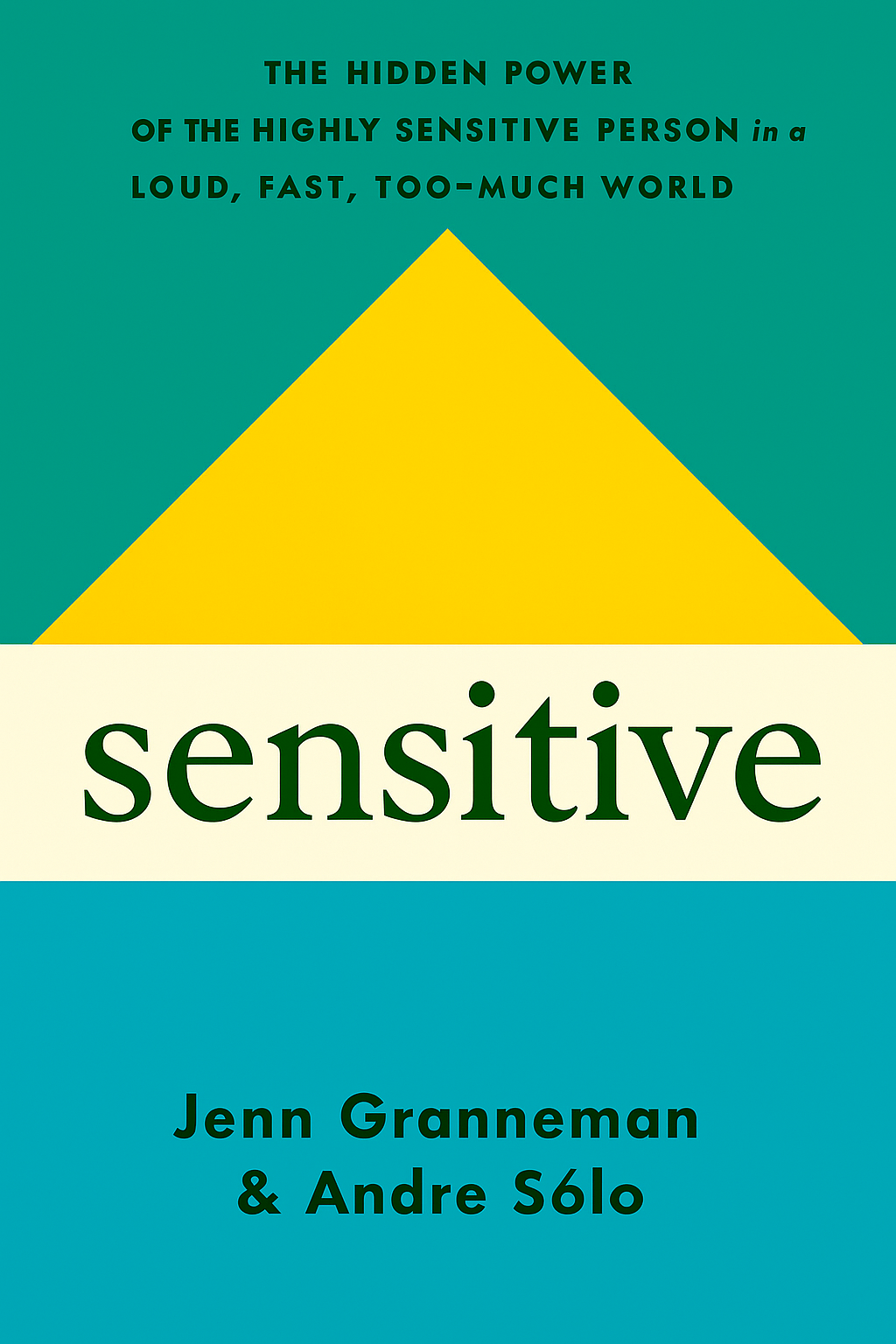
Sensitive
The Hidden Power of the Highly Sensitive Person in a Loud, Fast, Too-Much World
Book Edition Details
Summary
In a world that often values noise over nuance, "Sensitive" emerges as a clarion call for the quietly powerful. Jenn Granneman and Andre Sólo redefine what it means to be attuned to the subtleties of life, championing those who feel deeply and think profoundly. One in three people possess this heightened sensitivity, a trait that society mistakenly views as a weakness. But in this transformative narrative, it is celebrated as a unique strength. Through a rich tapestry of scientific insights and personal stories, the authors illuminate how embracing sensitivity can unlock unparalleled creativity and empathy. This book becomes a beacon, showing highly sensitive individuals how to flourish in relationships, careers, and self-discovery. "Sensitive" isn't just a guide; it's a movement that reshapes how we perceive the deeply intuitive among us, offering them—and the world—the gift of acceptance and empowerment.
Introduction
There's a boy who hides in a storm sewer pipe during recess, finding solace in the quiet darkness while his classmates play loudly on the playground. There's a girl who can orchestrate elaborate neighborhood carnivals but retreats to the edges when her own events become too overwhelming. These children aren't broken or defective—they're sensitive. And they represent roughly one in three people walking among us every day. For too long, sensitivity has been treated as a flaw to be fixed, a weakness to overcome. We tell sensitive children to "toughen up" and dismiss sensitive adults as "overreacting." But groundbreaking research reveals a different truth: sensitivity is a superpower, an evolutionary advantage that has shaped our greatest leaders, artists, and innovators throughout history. The sensitive mind processes information more deeply, feels emotions more intensely, and perceives subtleties that others miss entirely. This exploration takes us into the hidden world of highly sensitive people, revealing how their unique neurological wiring creates both extraordinary gifts and daily challenges. Through scientific discoveries and personal stories, we'll uncover why sensitivity evolved, how it manifests in different ways, and most importantly, how sensitive individuals can transform what they've been taught to see as a burden into their greatest strength. The journey ahead offers not just understanding, but a complete reframing of what it means to be sensitive in our loud, fast, overwhelming world.
From Stigma to Superpower: Understanding Sensitivity
In 1903, sociologist Georg Simmel stood before an audience in Dresden and delivered a warning that would prove prophetic. As the city celebrated technological progress and urban advancement, Simmel described how the constant bombardment of stimuli in modern life was exhausting the human soul. People were becoming "blasé," he observed, shutting down emotionally to cope with information overload. What Simmel didn't know was that some people feel this overwhelming world more deeply than others. More than a century later, researcher Jerome Kagan made a simple but revolutionary observation about babies. Some infants reacted intensely to new sights, sounds, and smells, while others remained calm. Following these children into adulthood, Kagan discovered that the highly reactive babies grew up to be highly reactive adults—not damaged or dysfunctional, but different. They possessed what we now call environmental sensitivity: the ability to perceive, process, and respond more deeply to their surroundings. This trait isn't rare or abnormal. Approximately 30 percent of people are born with heightened sensitivity, a characteristic found across more than one hundred species. It's an evolutionary advantage that helped our ancestors survive by noticing subtle dangers and opportunities others missed. Today's sensitive individuals are the descendants of those keen observers, the ones who could predict weather patterns, sense social tensions, and make connections that kept entire communities safe. Modern neuroscience reveals how the sensitive brain works differently. Using fMRI scans, researchers have shown that highly sensitive people display greater activity in areas associated with deep processing, attention to detail, and empathy. Their brains don't just take in more information—they work harder to understand it, creating richer mental models of the world around them. This isn't sensitivity as weakness; it's sensitivity as sophisticated intelligence, a finely tuned instrument capable of extraordinary perception and insight.
The Gifts and Challenges of Deep Processing
When Anne, a Canadian intensive care nurse, couldn't shake the feeling that something was wrong with her post-surgery patient, logic told her to move on. The doctor had declared the woman stable, and twenty years of experience should have been enough to trust the medical assessment. But Anne's sensitive intuition kept nagging at her. The patient preferred lying on her right side, which seemed unusual. Small details others overlooked created a growing sense of unease that Anne couldn't dismiss. Despite her fear of contradicting the surgical team and potentially facing professional consequences, Anne spoke up. She requested an ultrasound scan that revealed a massive blood clot around the patient's heart. Within minutes, the woman was rushed back to surgery. Later, Anne learned that without her intervention, the patient would have died. Her sensitivity—her ability to pick up on subtle cues and trust her deep processing—had literally saved a life. This story illustrates the profound gifts that come with sensitivity: heightened empathy that allows for deeper human connections, creativity that springs from making unexpected associations, sensory intelligence that notices what others miss, and an ability to process information so thoroughly that it leads to breakthrough insights. Sensitive people are natural pattern recognizers, able to synthesize complex information and see solutions that escape less observant minds. Yet these gifts come with a cost. The same brain that processes deeply also becomes overwhelmed more easily. Sensitive people experience what researchers call the "bucket effect"—everyone has a metaphorical bucket for handling stimulation, but sensitive people have smaller buckets that fill up faster. When the bucket overflows, the result is overstimulation: feelings of being frazzled, exhausted, or emotionally flooded that can make even simple tasks feel insurmountable. Understanding this trade-off is crucial for sensitive individuals. Their deep processing abilities are not flaws to be corrected but sophisticated cognitive tools that require proper care and management. Like high-performance engines, sensitive minds need appropriate fuel, regular maintenance, and respect for their operational limits.
Building Meaningful Relationships as a Sensitive Person
Brian and Sarah's marriage nearly ended because neither understood how Brian's sensitivity affected their relationship. When conflicts arose, Sarah wanted to resolve issues immediately through direct confrontation. Brian, overwhelmed by the emotional intensity, would withdraw for days, leaving Sarah feeling rejected and confused. She interpreted his need for processing time as drama and self-absorption, while he experienced her directness as emotionally devastating. Their different nervous systems were speaking different languages, creating a cycle of misunderstanding and hurt. Many sensitive people struggle with relationships, not because they lack social skills, but because they experience connection more intensely than others. They absorb their partner's emotions, feel criticism more deeply, and need more downtime to process social interactions. This can create challenges when paired with less sensitive partners who don't understand why someone needs so much time alone or reacts so strongly to casual comments. The breakthrough for Brian and Sarah came when Brian learned about high sensitivity and began advocating for his needs while also meeting Sarah halfway. Instead of seeing his withdrawal as rejection, they reframed it as necessary processing time. They developed strategies for handling conflict more gently, created boundaries around Brian's recovery periods, and learned to appreciate how his sensitivity enriched their relationship through deeper emotional attunement and care. Research shows that sensitive people don't want less from their relationships—they want more. They crave depth, meaning, and authentic connection in ways that can seem demanding to others but actually represent a profound gift. When relationships adapt to honor sensitive people's needs for deeper processing, gentler communication, and emotional safety, they often become stronger and more fulfilling than conventional partnerships. The key lies in understanding that sensitivity in relationships isn't about being difficult or high-maintenance. It's about recognizing that some people process social and emotional information more thoroughly, and when this processing is respected and accommodated, it creates space for extraordinary intimacy and understanding.
Leading the Sensitive Revolution
Frances Perkins arrived at her 1933 appointment as Secretary of Labor with a radical proposal. As the first woman to hold a U.S. cabinet position, she could have played it safe, but instead she presented President Roosevelt with an ambitious list of demands: abolish child labor, establish a minimum wage and forty-hour work week, create social security, and build a comprehensive safety net for American workers. These policies, which became the New Deal, represented a fundamentally different approach to economic crisis—one based on empathy, protection of the vulnerable, and recognition that society's strength comes from caring for all its members. Perkins embodied the kind of leadership our world desperately needs: sensitive leadership. While traditional models prize dominance and emotional detachment, sensitive leaders bring empathy, deep processing abilities, and genuine concern for others' wellbeing. They read rooms intuitively, anticipate problems before they become crises, and create environments where people feel valued and understood. Research consistently shows that empathetic leaders generate higher levels of innovation, engagement, and loyalty in their organizations. Yet many sensitive people resist stepping into leadership roles, having internalized messages that their emotional responsiveness makes them weak or unsuitable for authority. They've learned to apologize for needing downtime, to hide their reactions to criticism, and to downplay their intuitive insights. This represents a tremendous loss for organizations and communities that desperately need the perspective that sensitive individuals offer. The sensitive revolution begins when highly sensitive people stop seeing their traits as flaws and start recognizing them as leadership strengths. It happens when workplaces value emotional intelligence alongside technical skills, when schools teach children that all emotions are valid, and when society embraces the idea that caring deeply is a sign of strength, not weakness. This shift requires sensitive people to step forward, speak up, and trust that their way of seeing and being in the world has immense value. The stakes couldn't be higher. In our increasingly divided, fast-paced, and environmentally threatened world, we need leaders who can perceive subtle warning signs, who genuinely care about long-term consequences, and who have the emotional intelligence to bring people together rather than drive them apart.
Summary
In a world that moves too fast, demands too much, and often seems to prize toughness above all else, sensitive people carry a profound secret: they represent humanity's early warning system, its conscience, and its hope for deeper connection. Their nervous systems, far from being flawed, are sophisticated instruments calibrated to perceive what others miss and to care about what others might dismiss. The same traits that have been labeled as weaknesses—the tendency to feel deeply, process thoroughly, and need time for reflection—are actually evolutionary advantages that have shaped our greatest leaders, artists, and innovators throughout history. The transformation from shame to strength requires both understanding and action. Sensitive individuals must learn to see their traits not as burdens to bear but as gifts to cultivate and share. This means creating lives that honor their need for processing time while still engaging fully with the world. It means speaking up when their intuition detects problems others have missed, advocating for gentler approaches in harsh environments, and refusing to apologize for experiencing life more deeply than others. Perhaps most importantly, the sensitive revolution offers hope for addressing our world's greatest challenges. Climate change, social inequality, and human conflict all require the kind of long-term thinking, empathetic understanding, and deep processing that sensitive people naturally possess. When we stop trying to fix sensitive individuals and start learning from them, we discover pathways toward a more thoughtful, compassionate, and ultimately more sustainable way of being human. The future belongs not to those who can endure the most, but to those who can feel the most and transform that feeling into wisdom, connection, and positive change.
Related Books
Download PDF & EPUB
To save this Black List summary for later, download the free PDF and EPUB. You can print it out, or read offline at your convenience.
By Jenn Granneman
