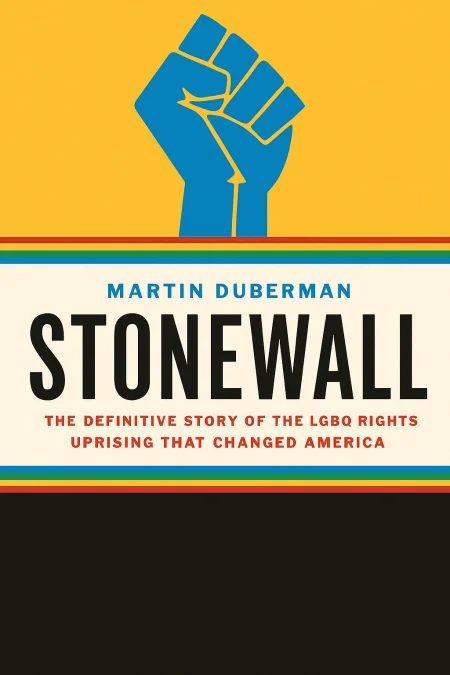
Stonewall
The Definitive Story of the LGBTQ Rights Uprising that Changed America
Book Edition Details
Summary
June 28, 1969: a night that lit the spark of a revolution. When police raided the Stonewall Inn in New York’s vibrant Greenwich Village, they expected submission. Instead, defiance filled the air as a fierce resistance erupted, marking the dawn of the LGBTQ rights movement. In his compelling chronicle, "Stonewall," Martin Duberman masterfully brings to life this epoch-defining moment. Through the intertwined stories of six individuals drawn into this fiery struggle, Duberman paints a vivid tapestry of courage and camaraderie against systemic oppression. Celebrated for its human touch and historical insight, this narrative remains a touchstone for understanding the relentless quest for equality that reshaped society.
Introduction
In the sweltering heat of June 1969, a routine police raid on a Greenwich Village bar called the Stonewall Inn sparked something unprecedented in American history. For the first time, gay men, lesbians, and transgender individuals fought back against police harassment with fierce determination, turning Christopher Street into a battleground that would echo through decades of social change. But this moment of rebellion didn't emerge from nowhere—it was the culmination of two decades of quiet organizing, personal courage, and gradual awakening that had been building across America. This transformation reveals how marginalized communities evolve from invisible survival to visible resistance, illuminating the complex interplay between individual courage and collective action. The story demonstrates how a handful of determined activists in conservative suits and careful language laid the groundwork for a revolution they could barely imagine. It also shows how social movements must navigate the eternal tension between respectability and radicalism, between working within existing systems and challenging them entirely. This narrative offers crucial insights for anyone seeking to understand how social change actually happens—not through sudden eruptions, but through the patient accumulation of small acts of defiance, the gradual building of networks, and the eventual convergence of the right people, circumstances, and moment in history. For contemporary activists, community organizers, and anyone interested in the mechanics of social transformation, these lessons remain profoundly relevant.
Hidden Lives and Early Resistance (1950s-1960s)
The 1950s painted America in broad strokes of suburban prosperity and nuclear family ideals, but beneath this veneer of conformity lay a hidden world of gay and lesbian Americans living in constant fear of discovery. Homosexuality was not merely stigmatized but criminalized in every state, classified as mental illness by psychiatrists, and condemned as sin by religious authorities. Those who dared to live authentically faced arrest, imprisonment, job loss, and complete social ostracism. In this suffocating environment, gay people developed elaborate strategies for survival. They created coded language, secret meeting places, and underground networks that allowed them to find each other while avoiding detection. The few gay bars that existed operated under constant threat of police raids, often controlled by organized crime figures who exploited their vulnerable clientele. Many lived double lives of exhausting complexity, maintaining heterosexual facades while desperately seeking connection and community in the shadows. Yet even in this era of enforced invisibility, seeds of resistance were taking root. Small homophile organizations like the Mattachine Society and Daughters of Bilitis emerged in the early 1950s, initially focused on helping gay people "adjust" to society's expectations but gradually evolving toward more assertive positions. These early activists, though few in number and often conservative in approach, began the crucial work of challenging psychiatric orthodoxy and legal discrimination through careful education and behind-the-scenes lobbying. The psychological toll of this hidden existence was immense, but it also forged a generation of individuals with extraordinary resilience and determination. The movement's early publications, including The Ladder and ONE magazine, served as lifelines for isolated individuals across the country, proving that homosexuals existed as a community rather than merely as scattered individuals struggling with private shame. When the dam finally burst at Stonewall, it released not just one night's frustration but decades of accumulated anger, hope, and longing for dignity that had been building in the shadows of American society.
The Stonewall Uprising: Catalyst for Revolution (1969)
On the humid night of June 27, 1969, police raided the Stonewall Inn expecting the usual routine of arrests and dispersal, but instead encountered unprecedented resistance from the bar's diverse clientele of drag queens, street youth, and working-class patrons. What began as standard harassment escalated into three nights of fierce street fighting as gay people, for the first time in American history, fought back against police oppression with bottles, bricks, and righteous fury. The uprising was spontaneous but not accidental. Years of mounting frustration with police raids, Mafia exploitation, and social persecution had created a powder keg waiting for a spark. The particular mix of people at Stonewall that night—many of them already marginalized within the gay community itself—had less to lose and more experience with street confrontation than the respectable homophile activists who had previously led the movement. Drag queens like Sylvia Rivera and Marsha P. Johnson became unlikely heroes, transforming traditional masculine combat into theatrical resistance that challenged fundamental assumptions about power, gender, and respectability. The rebellion's most radical aspect was not just its violence but its joyful defiance of gender norms and social expectations. Participants formed chorus lines to mock police formations, turning confrontation into carnival and demonstrating new forms of political expression that would distinguish gay liberation from other social movements. This carnivalesque quality pointed toward a more expansive vision of human freedom that went beyond simple legal equality. News of the riots spread rapidly through gay networks and mainstream media, inspiring similar confrontations in other cities and galvanizing a generation of activists who had been waiting for their moment. The uprising demonstrated that gay people could fight back successfully and that their oppression was a political rather than personal problem requiring collective action. Within months, Gay Liberation Front chapters were forming across the country, marking the birth of a new movement that would transform not just gay life but American society's understanding of sexuality, gender, and human rights.
Birth of Gay Liberation Movement (1969-1970)
The year following Stonewall witnessed an explosion of gay organizing that transformed scattered riots into a sustained liberation movement. New organizations proliferated rapidly, from the radical Gay Liberation Front to the more focused Gay Activists Alliance, each representing different visions of how to build on the momentum of the uprising. These groups abandoned the careful respectability of earlier homophile organizations, instead embracing confrontational tactics, colorful demonstrations, and unapologetic pride in gay identity. The Gay Liberation Front embraced radical politics that linked gay oppression to broader systems of inequality, drawing connections between sexual liberation and anti-war activism, feminism, and racial justice movements. Their revolutionary vision didn't just seek tolerance or legal equality—they wanted to challenge the entire system of sexual and gender norms that oppressed anyone who didn't conform to rigid social expectations. This expansive analysis attracted young activists but also created tensions with more pragmatic organizers who preferred focused campaigns for specific legal reforms. The movement's diversity became both its strength and its challenge. Women formed separate lesbian organizations to address both sexism within gay male groups and homophobia within the women's movement. People of color created their own caucuses to combat racism in predominantly white gay organizations. Transgender individuals, who had been central to the Stonewall riots, found themselves marginalized by activists seeking mainstream acceptance. These internal tensions reflected broader struggles over who would define the movement's priorities and strategies. The first Christopher Street Liberation Day march on June 28, 1970, demonstrated the movement's growing confidence and visibility. Thousands of participants marched from Greenwich Village to Central Park, transforming what organizers had hoped would be a modest commemoration into a powerful display of gay pride and political strength. The march established a template for annual pride celebrations that would spread across the country and eventually around the world, creating lasting institutions that would sustain the movement through future challenges and victories.
Summary
The journey from the quiet homophile organizations of the 1950s to the explosive gay liberation movement of 1970 reveals the complex dynamics of how marginalized communities build power and create lasting change. The central tension throughout this period was between strategies of accommodation and confrontation—between proving worthiness for acceptance and demanding recognition as equals. This struggle illuminates a fundamental challenge facing all social movements: how to balance the need for respectability with the transformative power of radical action. The transformation also demonstrates how social change requires both patient groundwork and catalytic moments. The careful organizing of the 1950s and 1960s created the networks, publications, and leadership that made it possible to capitalize on the spontaneous rebellion at Stonewall. Without the foundation laid by earlier activists, the riots might have remained an isolated incident rather than sparking a sustained movement. This suggests that lasting social change emerges from the intersection of long-term organizing and moments of crisis that create opportunities for breakthrough. For contemporary movements, this history offers several crucial insights. First, the most marginalized members of a community often possess the clearest understanding of oppression and the greatest willingness to take risks for change—their leadership should be centered rather than sidelined. Second, internal diversity and conflict, while challenging, can strengthen movements by ensuring that multiple perspectives and constituencies are represented. Finally, movements must remain adaptable, willing to evolve their strategies and rhetoric as circumstances change and new opportunities emerge. The path from silence to revolution is never linear, but it becomes possible when courage, organization, and opportunity converge at the right historical moment.
Related Books
Download PDF & EPUB
To save this Black List summary for later, download the free PDF and EPUB. You can print it out, or read offline at your convenience.
By Martin Duberman
