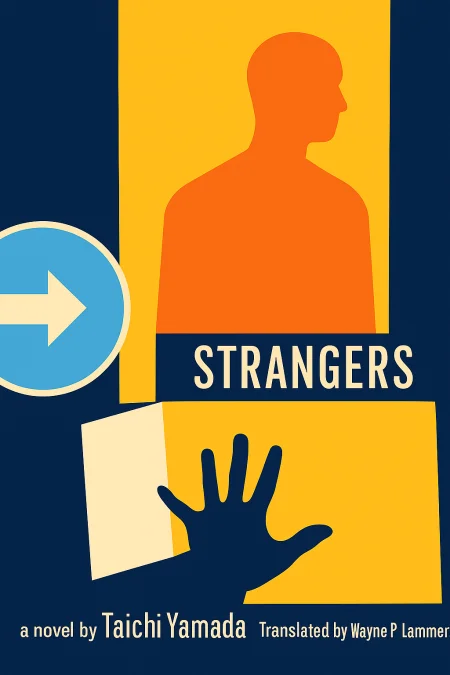
Strangers
Uncover a Haunting World Amid Tokyo’s Mysterious Shadows
byTaichi Yamada, Wayne P. Lammers
Book Edition Details
Summary
In the haunting shadows of Tokyo, a solitary scriptwriter returns to the echoes of his past, stepping back into the hushed corridors of his childhood abode. There, he encounters a couple whose likeness to his deceased parents is nothing short of spectral. As these apparitions weave themselves into his reality, he is drawn into an enigmatic dance between worlds—a place where the line between the living and the departed blurs into haunting whispers. "Strangers" masterfully intertwines the visceral yearnings for family and connection with a chilling exploration of the unseen. For readers who relish the psychological depth of Henry James and the poignant warmth of Stephen King, this tale promises a spectral reverie that lingers long after the final page.
Introduction
In the sweltering heat of Tokyo's summer, where concrete and steel trap exhaust and dreams alike, a middle-aged television writer discovers that divorce has stripped away more than just his marriage. What begins as simple loneliness in an eerily quiet apartment building soon transforms into something far more unsettling. This haunting exploration reveals how grief can manifest in the most unexpected ways, challenging our understanding of what it means to truly let go of the past. The story delves into three profound questions that resonate across cultures and generations: How do unresolved childhood losses shape our adult relationships? What price do we pay when we refuse to face our deepest emotional wounds? And perhaps most troubling of all, can love itself become a form of haunting when it refuses to acknowledge the boundaries between life and death? This psychological journey will particularly captivate readers who have grappled with loss, those fascinated by the intersection of memory and reality, and anyone who has ever wondered whether our most powerful emotional experiences might exist beyond the realm of rational explanation.
The Solitary Present: Divorce and Modern Isolation
The story opens in the aftermath of personal dissolution, where a forty-seven-year-old scriptwriter finds himself inhabiting the hollow shell of what was once merely his office. The divorce proceedings have concluded, the financial settlements divided, and suddenly the protagonist confronts a silence so profound it seems unnatural. His building, a seven-story structure overlooking Tokyo's perpetually busy Route 8, should be alive with the sounds of modern urban existence. Instead, each evening reveals a ghostly emptiness, with only his own lit window piercing the darkness. This initial isolation serves as more than mere plot device. It represents the peculiar loneliness of contemporary urban life, where hundreds of people can occupy the same building yet remain completely unknown to one another. The protagonist's ex-wife has already found solace in the arms of his former colleague Mamiya, while his college-age son remains distant and disapproving. The systematic severing of familial bonds leaves him suspended in a void that modern society seems particularly adept at creating. The divorce itself unfolds with businesslike efficiency, both parties eventually embracing the separation as liberation from a marriage drained of genuine connection. Yet this civilized dissolution carries its own weight of emptiness. There are no dramatic confrontations or passionate reconciliations, only the quiet acknowledgment that years of shared life have accumulated nothing more substantial than property to be divided and arrangements to be finalized. This sterile conclusion to decades of relationship establishes the emotional groundwork for what follows, creating a psychic vacuum that demands to be filled by something, anything, that might restore a sense of human connection and purpose.
Encounters with the Past: When Memory Takes Physical Form
The transformation begins during a solitary visit to Asakusa, the protagonist's childhood neighborhood, on his forty-eighth birthday. What starts as nostalgic tourism quickly becomes something far stranger when he encounters a couple at a variety hall who bear an impossible resemblance to his parents, dead these thirty-six years. The man and woman appear exactly as his parents did at the time of their deaths, frozen in their thirties while he has aged into middle life. These figures invite him into their modest apartment with the casual warmth of family, sharing beer and conversation as if no time had passed since his childhood. The woman fusses over him with maternal concern, while the man teaches him card games with paternal authority. Their reality feels absolutely tangible, from the taste of the beer they serve to the texture of their hands when they shake his. Yet their very existence violates every natural law, creating a cognitive dissonance that the protagonist initially chooses to ignore. The apartments they inhabit, the food they prepare, even their casual references to contemporary life, all suggest a world that accommodates impossibility with disturbing ease. They possess memories of his childhood, knowledge of his current circumstances, and genuine parental affection that he has hungered for across decades of orphaned existence. Their presence offers him something he never realized he still desperately needed: the chance to be someone's beloved child again. Each visit strengthens this supernatural bond while simultaneously draining him of vitality in ways he cannot perceive but others increasingly notice. The psychological comfort they provide comes at a physical cost that remains invisible to his own eyes, creating a terrible symmetry between emotional nourishment and bodily decay.
Love and Death Intertwined: The Price of Nostalgia
Parallel to his encounters with these parental figures, the protagonist develops an intense relationship with Kei, a neighbor who shares his building's nocturnal emptiness. She appears to offer the possibility of genuine romantic connection, complete with her own vulnerabilities and need for discretion about a disfiguring burn on her chest. Their relationship develops with the passionate intensity of two lonely people finding unexpected solace in each other's company. Kei becomes increasingly alarmed by his deteriorating appearance, though he remains unable to see the physical toll his supernatural encounters are exacting. Her growing concern manifests as desperate attempts to prevent his return to Asakusa, sensing correctly that these visits are literally killing him. Her pleas carry the weight of genuine love, making her opposition to his parents feel like a cruel choice between different forms of essential human connection. The revelation that Kei herself belongs to the realm of the dead transforms their entire relationship into another manifestation of his inability to distinguish between life and death, between healing love and destructive obsession. Her suicide, triggered by his initial coldness on the night they first met, has bound her to him through supernatural logic that mirrors his connection to his parents. Both relationships offer profound emotional satisfaction while demanding a terrible price. The interweaving of these two supernatural relationships creates a complex web where love itself becomes suspect, where the deepest human connections prove to be literally deadly, and where the protagonist's emotional needs consistently draw him toward destruction. The line between nurturing love and consuming obsession dissolves entirely, revealing how grief and longing can create their own distorted reality.
Resolution and Release: Accepting Life's Impermanence
The climax arrives when both sets of supernatural relationships reach their inevitable conclusion during a final meal at a sukiyaki restaurant. The protagonist's parents, sensing their time together must end, fade away during their farewell dinner, disappearing gradually until only empty cushions and half-finished food remain. This dissolution occurs with heartbreaking gentleness, their final words expressing pride in their son and gratitude for the time they shared. Kei's departure proves more confrontational, revealing the vengeful anger that has sustained her supernatural existence. Her final appearance exposes the full horror of her death, blood streaming from the seven stab wounds she inflicted on herself, while her words reveal that her entire relationship with him was motivated by hatred rather than love. Yet even in this revelation, the protagonist glimpses something resembling genuine sorrow in her final moments, suggesting that even supernatural revenge cannot entirely extinguish the human capacity for connection. The physical and psychological toll of these encounters leaves him hospitalized for weeks, aged and damaged but finally freed from the supernatural bonds that were consuming him. His recovery, though incomplete, represents a return to the world of the living and the possibility of genuine human relationships. The support shown by Mamiya, despite their personal complications, and the tentative reconciliation with his son suggest that real healing may be possible. His final visit to the empty lot where his parents' apartment building once stood provides closure through acknowledgment rather than reunion. The placement of incense and flowers on the spot where their supernatural home existed allows him to honor both the reality of his loss and the gift of their impossible return. This ritual acceptance of impermanence marks his transition from someone haunted by the past to someone capable of facing an uncertain but genuinely alive future.
Summary
This haunting narrative reveals how unresolved grief can create its own supernatural reality, one that offers profound comfort while exacting a terrible price. The central tension between the need for human connection and the danger of seeking that connection in impossible places drives every element of the story. The protagonist's supernatural encounters serve as elaborate metaphors for the ways people sometimes prefer comforting illusions to challenging realities, particularly when those illusions involve the people they have lost. The story suggests that true healing requires accepting the finality of loss rather than seeking to undo it, no matter how appealing the alternative might appear. For contemporary readers, this tale offers several crucial insights: first, that genuine human connection requires engaging with living people in all their complexity rather than retreating into idealized memories of the dead; second, that loneliness, however profound, should not drive us to accept relationships that fundamentally diminish our vitality; and third, that the process of grieving, though painful, ultimately serves to restore us to life rather than trap us in death. The protagonist's journey from supernatural obsession to human possibility suggests that acknowledging our losses, however devastating, remains the only path toward authentic healing and renewed connection with the living world.
Related Books
Download PDF & EPUB
To save this Black List summary for later, download the free PDF and EPUB. You can print it out, or read offline at your convenience.
By Taichi Yamada
