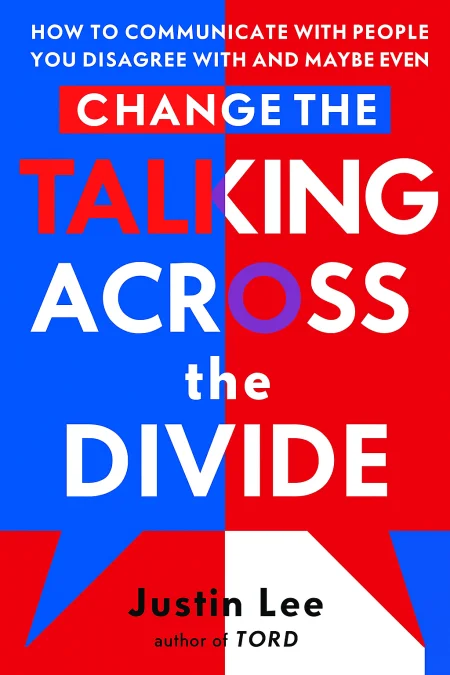
Talking Across the Divide
How to Communicate with People You Disagree with and Maybe Even Change the World
Book Edition Details
Summary
In an era where the chasm between opposing viewpoints seems insurmountable, "Talking Across the Divide" by Justin Lee emerges as a beacon of hope for meaningful conversation. Lee, a seasoned social justice activist, deftly navigates the turbulent waters of today's polarized society, offering readers a lifeline in the form of empathy and understanding. Through a compelling blend of psychological insight, pop-culture references, and captivating anecdotes, this guide dissects the five critical barriers that hinder open dialogue. Here, you'll find the tools to dismantle echo chambers and build bridges, transforming discord into dialogue. Whether you're confronting "fake news" or simply seeking common ground, Lee equips you with the strategies to not just speak, but truly connect, across the divide.
Introduction
America finds itself trapped in an echo chamber crisis where meaningful dialogue has given way to partisan warfare. Citizens retreat into ideological bubbles, consuming information that merely reinforces their existing beliefs while dismissing opposing viewpoints as dangerous propaganda. This polarization has paralyzed democratic institutions and fractured communities, leaving families divided and progress stalled on critical issues. The traditional tools of debate and argument have proven inadequate, often deepening divisions rather than bridging them. A fundamentally different approach is required—one that recognizes the psychological barriers preventing genuine communication and develops systematic methods to overcome them. Strategic dialogue offers a pathway through this impasse by employing specific techniques designed to lower defenses, build understanding, and create conditions where minds can actually change. Rather than treating opponents as enemies to be defeated, this methodology views them as fellow humans whose perspectives, however misguided they may seem, emerged from comprehensible experiences and values. The process involves careful preparation, strategic listening, thoughtful storytelling, and precise requests for action that respect the other person's worldview while gently challenging their assumptions.
The Polarization Problem and Strategic Dialogue Solution
Modern society suffers from unprecedented levels of political and social polarization that threaten the foundation of democratic discourse. Traditional methods of resolving disagreements—fighting, avoiding, or compromising—prove inadequate when addressing deeply held beliefs about fundamental issues. Fighting through argument and debate typically triggers defensive responses that cause people to dig deeper into their positions rather than reconsider them. Avoidance may preserve relationships in the short term but allows harmful misconceptions to persist and spread unchallenged. Compromise works well for transactional disputes but fails when dealing with moral convictions or factual disagreements where splitting the difference makes no logical sense. Strategic dialogue emerges as a fourth approach that transcends these limitations by focusing on changing attitudes rather than winning arguments. This methodology recognizes that everyone believes themselves to be correct and that effective persuasion requires understanding why opponents hold their views rather than simply proving them wrong. Unlike debate, which aims for victory, strategic dialogue seeks mutual understanding as a pathway to genuine attitude change. The process operates through careful preparation, skilled listening, strategic storytelling, and thoughtful requests that respect the other person's need to maintain dignity while encouraging growth. Success depends not on superior argumentation but on creating psychological safety that allows people to examine their beliefs without feeling attacked or manipulated. Strategic dialogue complements rather than replaces necessary action. When immediate intervention is required to prevent harm, swift action takes precedence. However, dialogue can enhance the effectiveness of such interventions by building understanding that makes changes more sustainable and less likely to provoke backlash.
Breaking Down Five Barriers to Productive Communication
Productive dialogue faces five primary psychological barriers that prevent people from hearing and accepting new information, even when presented with compelling evidence. Ego protection represents the first barrier, as nobody wants to appear foolish or admit they have been wrong about important matters. When challenged, people instinctively defend their self-image by rejecting information that threatens their competence or judgment. Team loyalty creates the second barrier through tribal allegiances that cause people to automatically dismiss ideas associated with opposing groups. Research demonstrates that party affiliation can override individual reasoning, leading people to adopt positions they would normally reject simply because their perceived team endorses them. This loyalty operates so powerfully that people will defend policies that contradict their stated values when told their political party supports those policies. The comfort barrier emerges from human inertia and our natural preference for maintaining familiar beliefs rather than undertaking the difficult work of reconsidering fundamental assumptions. Change requires mental energy and emotional risk, making the status quo appealing even when it may be harmful or incorrect. Misinformation represents the fourth barrier, as false beliefs can persist even after being thoroughly debunked. People often encounter simplified lies that seem more credible than complex truths, and confirmation bias leads them to accept evidence supporting their existing views while scrutinizing contradictory information more harshly. The worldview protection barrier proves most formidable, as core beliefs form interconnected systems where challenging one element threatens to destabilize everything else. People will fight desperately to protect foundational assumptions about religion, morality, or identity because changing these beliefs would require reconstructing their entire understanding of themselves and the world.
Strategic Listening and Storytelling Techniques
Strategic listening forms the foundation of effective dialogue by gathering crucial information about the other person's motivations, beliefs, sources, and concerns. This process involves asking open-ended questions that encourage people to share their stories and explain their reasoning without feeling interrogated or judged. Effective listeners pay attention not just to stated positions but to underlying interests and values that drive those positions. The listening must be genuine rather than manipulative, demonstrating sincere curiosity about how the other person sees the world. This approach serves multiple purposes: it provides valuable intelligence about their perspective, it models respectful communication that encourages reciprocation, and it helps defuse defensive emotions by showing that their views will be heard rather than immediately attacked. Strategic storytelling complements listening by offering new narratives that challenge existing assumptions without triggering defensive responses. Personal stories prove particularly powerful because they cannot be easily dismissed as biased statistics or propaganda. When sharing experiences that contradict someone's preconceptions, storytellers must focus on emotional truth rather than abstract argument. Effective stories emphasize commonalities between the storyteller and audience before introducing differences, making it easier for listeners to identify with unfamiliar experiences. The narrative should highlight genuine emotions and personal stakes while avoiding portrayals that cast the audience as villains. Instead of directly challenging their beliefs, stories allow people to draw their own conclusions about inconsistencies between their assumptions and lived reality. The combination of strategic listening and storytelling creates conditions where people feel understood rather than attacked, making them more receptive to considering alternative perspectives. This emotional foundation proves essential for overcoming the psychological barriers that otherwise prevent genuine dialogue.
Making the Ask and Sustaining Dialogue
Effective dialogue culminates in specific, reasonable requests that move the conversation toward concrete action while respecting the other person's existing worldview. The "ask" must be carefully calibrated to avoid triggering worldview protection responses that cause people to retreat into defensive positions. Successful requests focus on incremental steps that feel achievable rather than demanding wholesale ideological conversions. The worldview protection barrier operates like a tree structure where core beliefs form deep roots that support everything else. Attempting to uproot fundamental assumptions typically fails because too much psychological investment depends on maintaining those foundational elements. Instead, effective requests target smaller branches that can change without threatening the entire belief system. Strategic asks consider both parties' interests rather than focusing solely on one side's demands. The most persuasive requests demonstrate how the proposed action serves values and goals the other person already holds, making compliance feel like natural extension of their existing commitments rather than capitulation to opposing forces. When people object to requests, skilled dialogue practitioners return to listening mode to understand the specific concerns driving resistance. These objections often reveal important information about underlying interests that can inform modified approaches. Flexibility in adjusting asks based on feedback increases the likelihood of finding mutually acceptable solutions. Sustaining dialogue requires ongoing relationship maintenance and follow-up conversations that build on initial progress. Single interactions rarely produce dramatic conversions, but consistent engagement over time can gradually shift attitudes and build trust. The process demands patience and persistence, recognizing that meaningful change often occurs slowly and requires multiple touchpoints to achieve lasting results.
Summary
Strategic dialogue offers a systematic methodology for bridging ideological divides by addressing the psychological barriers that prevent genuine communication between opposing groups. Rather than relying on superior arguments or emotional appeals, this approach creates conditions where people feel safe enough to examine their beliefs honestly and consider alternative perspectives without fear of humiliation or loss of identity. The process succeeds by combining empathetic listening with strategic storytelling to build understanding and trust before making carefully calibrated requests for change. This framework provides hope for overcoming the polarization crisis that threatens democratic discourse, offering practical tools for anyone committed to the patient work of building bridges across cultural and political divides.
Related Books
Download PDF & EPUB
To save this Black List summary for later, download the free PDF and EPUB. You can print it out, or read offline at your convenience.
By Justin Lee
