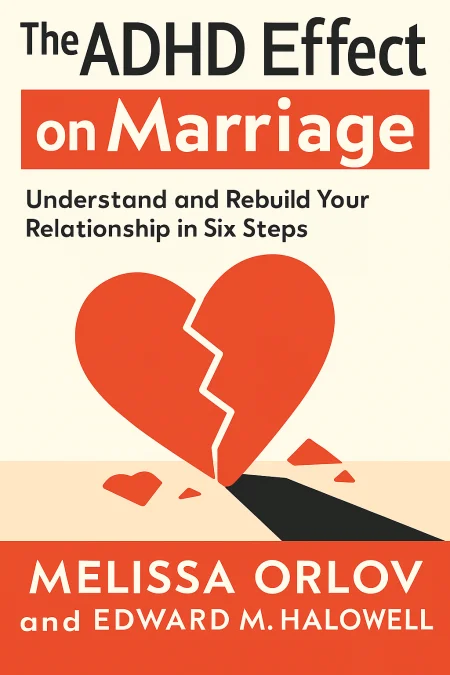
The ADHD Effect on Marriage
Understand and Rebuild Your Relationship in Six Steps
byMelissa Orlov, Edward M. Hallowell
Book Edition Details
Summary
When love collides with the whirlwind of ADHD, relationships often find themselves caught in a tempest of misunderstandings and miscommunications. This groundbreaking book, hailed as a must-read by ForeWord Reviews, offers a lifeline to couples navigating these choppy waters. Through heartfelt anecdotes and relatable vignettes, it paints a vivid picture of how ADHD shapes the dynamics of marriage, revealing hidden patterns that might sabotage intimacy and harmony. Eschewing conventional counseling that overlooks the nuances of ADHD, the author—drawing from personal experience and in-depth research—provides practical strategies for healing and growth. Included are customizable worksheets and conversation techniques, empowering partners to forge stronger connections and transform challenges into triumphs. Here lies a beacon of hope for those yearning to rediscover the love that first brought them together, turning potential chaos into a symphony of understanding and support.
Introduction
Sarah sat in her car after another explosive argument with her husband, tears streaming down her face. After ten years of marriage, she felt more like a mother than a wife, constantly reminding, organizing, and cleaning up after someone who seemed to live in a completely different world. Meanwhile, her husband felt like nothing he did was ever good enough, walking on eggshells around someone who had transformed from his loving partner into what felt like a constant critic. What they didn't know was that ADHD was silently orchestrating much of their pain. This invisible force affects millions of marriages, creating predictable patterns of conflict that couples mistake for fundamental incompatibility or lack of love. The distractibility, impulsiveness, and time blindness that characterize ADHD don't just impact the person who has it—they reshape entire relationships, often in ways that feel bewildering and heartbreaking. Yet when couples finally understand what they're truly facing, transformation becomes possible. This exploration reveals how ADHD symptoms create specific relationship dynamics, why traditional marriage advice often fails these couples, and most importantly, how understanding and targeted strategies can restore connection, rebuild trust, and reignite the love that brought partners together in the first place.
The Hidden Patterns That Destroy ADHD Marriages
Maria had fallen deeply in love with Dan's spontaneity and intense focus on her during their whirlwind courtship. He would surprise her with impromptu trips, remember every detail of their conversations, and make her feel like the center of his universe. But within months of their wedding, everything changed. Dan seemed to forget she existed, becoming absorbed in work, hobbies, or whatever caught his immediate attention. When Maria tried to reconnect through romantic dinners or heartfelt conversations, Dan would get distracted by his phone or suddenly remember an urgent task. Her attempts to regain his attention escalated from gentle reminders to tearful pleas to angry confrontations. Dan, bewildered by his wife's transformation from supportive partner to demanding critic, began retreating further into activities that felt safer than navigating her disappointment. What Maria and Dan were experiencing wasn't a loss of love, but rather the predictable aftermath of what experts call hyperfocus courtship. During their dating phase, the excitement and novelty of new romance had triggered Dan's ADHD brain to hyperfocus intensely on Maria, creating an unsustainable level of attention that felt magical but couldn't last. When his brain naturally shifted to its typical scattered pattern after marriage, Maria interpreted this as rejection rather than recognizing it as a neurological shift. Their subsequent dynamic became a classic pursuit-and-withdrawal cycle: the more Maria chased connection, the more Dan felt criticized and pulled away. This pattern, repeated in countless ADHD marriages, transforms loving partners into adversaries, each desperately trying to meet their own needs while inadvertently triggering their spouse's deepest fears of inadequacy or abandonment.
Breaking Free from Anger, Denial and Fear
After years of escalating conflicts, Jennifer found herself becoming someone she didn't recognize. The patient, optimistic woman who had married her husband seemed to have been replaced by an angry stranger who snapped at every forgotten task and criticized every impulsive decision. Her husband David, meanwhile, had retreated into a defensive shell, either exploding in rage when cornered or shutting down completely when faced with another list of his failings. Their home had become a battlefield where love struggled to survive beneath layers of resentment, shame, and fear. The breakthrough came when Jennifer realized that her anger, while justified, had become a prison for them both. Every interaction was filtered through her accumulated frustration, making it impossible for David to succeed even when he tried. She began to understand that her husband's inconsistency wasn't deliberate cruelty but the result of an ADHD brain that couldn't reliably predict its own performance. Meanwhile, David had to confront his own denial about how his symptoms affected their daily life. His fear of failure had become so overwhelming that he often avoided trying at all, which only confirmed Jennifer's belief that he didn't care. When they both acknowledged their respective roles in their destructive dance, they could finally step out of the cycle that had trapped them. This required Jennifer to channel her anger into clear, non-blaming communications about her needs, while David faced the courage to address his ADHD symptoms rather than hoping they would somehow disappear on their own.
Rebuilding Connection Through Treatment and Understanding
Michael had resisted the idea that his ADHD needed treatment for years. He'd managed fine in his career and felt that medication would somehow diminish his creativity and spontaneity. But when his wife Linda gave him an ultimatum, explaining through tears that she couldn't continue feeling invisible in their marriage, he finally agreed to see a specialist. The results were transformative, but not in the way either of them expected. The medication didn't turn Michael into a different person, but it did quiet the constant noise in his brain enough that he could choose where to direct his attention rather than being pulled in every direction at once. However, Michael's treatment revealed that successful ADHD management in marriage requires three essential components, like a three-legged stool. The first leg, physical treatment through medication and exercise, helped Michael's brain function more consistently. The second leg involved developing new habits and systems, like setting timers for transitions and creating visual reminders for important tasks. The third and most crucial leg was learning new ways to interact with Linda that acknowledged his ADHD while meeting her emotional needs. This meant scheduling regular check-ins, learning to pause and truly listen when she spoke, and creating rituals that ensured she felt valued and prioritized. Linda, meanwhile, had to learn to celebrate Michael's efforts rather than focusing only on remaining shortcomings, and to communicate her needs in ways that didn't trigger his shame. The transformation didn't happen overnight, but as both partners committed to their respective roles in change, they began to rediscover the friendship and partnership that had been buried under years of frustration.
Reigniting Romance and Creating Lasting Change
Two years into their recovery journey, Elena and James decided to take tango lessons together. Neither had danced before, and Elena worried that James's ADHD would make it impossible for him to learn the intricate steps and timing required. But something magical happened on that dance floor. James's medication helped him stay focused on the lesson, while his natural creativity and Elena's patience created a learning partnership that felt entirely different from their old dynamic. When James missed a step, instead of criticism, Elena would simply guide him back into the rhythm. When Elena felt overwhelmed by a complex sequence, James would make her laugh with an improvised flourish that broke the tension. What Elena and James discovered echoes what relationship research reveals about maintaining long-term love: couples thrive when they regularly engage in novel, challenging activities together. The tango lessons became a metaphor for their new relationship. They had learned to move together despite their different natural rhythms, to recover gracefully from missteps, and to find joy in the process rather than demanding perfection. Their success wasn't measured by flawless performance but by their growing ability to stay connected through difficulty, to communicate without words, and to create something beautiful together despite their individual limitations. The confidence they built on the dance floor translated into every area of their marriage, as they learned to approach challenges with curiosity rather than criticism, and to celebrate their unique partnership rather than mourning what they couldn't be.
Summary
The journey of ADHD-affected marriages reveals a profound truth about human connection: our greatest struggles often contain the seeds of our deepest transformation. Through countless stories of couples who moved from desperation to joy, we see that ADHD doesn't have to be a relationship destroyer but can become a catalyst for developing unprecedented levels of understanding, patience, and creative problem-solving. The path requires both partners to release old assumptions about how marriage should work and embrace new ways of connecting that honor their neurological differences while meeting their fundamental needs for love, respect, and partnership. Most importantly, these stories teach us that change is always possible when we stop trying harder with failing strategies and begin trying differently with approaches that acknowledge our authentic selves. The couples who thrive don't eliminate ADHD from their lives but learn to dance with it, creating relationships that are stronger, more compassionate, and more deeply connected than they ever imagined possible when they first said "I do."
Related Books
Download PDF & EPUB
To save this Black List summary for later, download the free PDF and EPUB. You can print it out, or read offline at your convenience.
By Melissa Orlov
