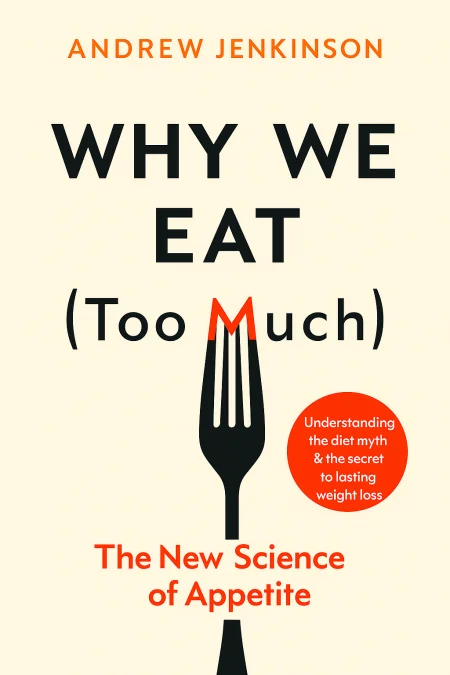
Why We Eat (Too Much)
The New Science of Appetite
Book Edition Details
Summary
Amid the cacophony of diet fads and weight loss myths, Dr. Andrew Jenkinson's "Why We Eat (Too Much)" emerges as a beacon of truth and clarity. Drawing from two decades of surgical experience and groundbreaking scientific insights, Jenkinson dismantles the misconceptions that have long shackled our understanding of metabolism and appetite. Through vivid case studies and a journey across disciplines—from anthropology to pharmacology—this book reveals the intricate dance between our genes, hormones, and food. Forget starving your way to health; Jenkinson offers a revolutionary perspective that empowers readers to nourish their bodies intelligently, breaking free from the relentless dieting cycle. For anyone seeking a transformative understanding of weight loss, this is not just a book—it's a revelation.
Introduction
Have you ever wondered why some people seem to effortlessly maintain their weight while others battle constant hunger and cravings, despite their best efforts to eat less and exercise more? The conventional wisdom tells us that weight control is simply a matter of willpower - eat less, move more, and the pounds will disappear. Yet millions find themselves trapped in cycles of dieting, temporary weight loss, and inevitable weight regain, often ending up heavier than when they started. This puzzling phenomenon suggests our understanding of appetite and weight regulation might be fundamentally flawed. Recent breakthroughs in metabolic science reveal that our bodies operate sophisticated systems to defend our weight, much like a thermostat maintains room temperature. These discoveries challenge everything we thought we knew about obesity and hunger, showing that what we've labeled as lack of willpower might actually be our biology working exactly as it evolved to do. Through exploring the hidden mechanisms of appetite control, metabolic adaptation, and environmental triggers, we'll uncover why modern eating advice often backfires and discover how corporate interests have shaped our food environment in ways that work against our natural regulatory systems.
Your Body's Weight Thermostat: The Biology of Set-Point Defense
Your body operates like a sophisticated biological machine with built-in weight regulation systems that work tirelessly behind the scenes, much like a thermostat controlling room temperature. At the heart of this system lies what scientists call your "weight set-point" - a predetermined weight range that your brain believes is optimal for your survival. This set-point acts as your body's internal weight target, and it will fight vigorously to maintain this weight through powerful biological mechanisms that operate largely outside your conscious control. When you try to lose weight through dieting, your body interprets this as a potential threat to survival, similar to how it would respond to a famine. In response, it activates two primary defense mechanisms. First, your metabolism slows down dramatically - sometimes by as much as 40% - meaning you burn far fewer calories at rest than would be expected for someone of your size. This metabolic adaptation can persist for years after dieting ends, making weight maintenance extremely difficult. Second, your body ramps up production of hunger hormones while simultaneously reducing satiety signals, creating an almost irresistible drive to seek food and eat more. These responses aren't character flaws or signs of weakness - they're sophisticated survival mechanisms that evolved over millions of years to protect our ancestors from starvation. The problem is that our modern environment, filled with processed foods and constant eating opportunities, triggers these ancient systems in ways they were never designed to handle. Understanding that your body has a biological imperative to defend its weight helps explain why traditional dieting approaches fail so consistently and why sustainable weight management requires working with your biology rather than against it.
Environmental Food Triggers: How Modern Diets Hijack Ancient Survival Systems
The dramatic rise in obesity rates since the 1980s cannot be explained by sudden changes in human genetics or a collective loss of willpower. Instead, it reflects profound shifts in our food environment that have triggered ancient biological responses designed to help us survive periods of scarcity. Our ancestors evolved in environments where food was often unpredictable, and those who could efficiently store energy during times of abundance were more likely to survive famines and harsh winters. The modern Western diet has created an unprecedented situation in human history. We've replaced traditional whole foods with highly processed alternatives that contain specific combinations of ingredients our bodies interpret as signals of environmental change. The dramatic increase in vegetable oils, refined grains, and added sugars sends powerful messages to our weight regulation systems, essentially convincing our bodies that we need to store more energy for an uncertain future. These foods didn't exist in meaningful quantities until very recently in human evolutionary history, yet they now comprise the majority of calories consumed in developed nations. Perhaps most significantly, our food environment has become dominated by what could be called "pseudo-seasonal" signals. In nature, certain food types would only be available at specific times of year - nuts and seeds in autumn, fresh greens in spring. Our bodies evolved to respond to these seasonal cues by adjusting metabolism and appetite accordingly. Today's processed foods contain concentrated versions of these seasonal signals year-round, potentially keeping our bodies in a perpetual state of preparation for winter scarcity. This environmental mismatch helps explain why obesity rates vary so dramatically between populations consuming traditional diets versus those eating Western processed foods, even when total calorie intake appears similar.
Essential Fatty Acids: The Hidden Controllers of Appetite and Metabolism
Hidden within the fats we eat lies a crucial piece of the obesity puzzle that most people have never heard of. Not all fats are created equal, and two specific types - omega-3 and omega-6 fatty acids - play starring roles in determining whether your body wants to be lean or store excess weight. These essential fatty acids literally become part of every cell membrane in your body, where they act like molecular switches that control inflammation, metabolism, and appetite regulation. The ratio between these two types of fats in your diet directly influences your body's weight set-point through multiple pathways. Omega-6 fats, found abundantly in vegetable oils and processed foods, promote inflammation and can trigger the same brain receptors activated by cannabis, leading to increased appetite and enhanced food pleasure. Meanwhile, omega-3 fats, found in fish, grass-fed animals, and leafy greens, have anti-inflammatory properties and support healthy metabolic function. The modern Western diet has shifted this ratio from the natural balance of roughly 1:1 to as high as 50:1 in favor of omega-6 fats. This dramatic shift in fatty acid ratios may represent one of the most significant but overlooked changes in human nutrition over the past century. When your cell membranes become dominated by omega-6 fats, they become less responsive to important hormones like insulin and leptin, leading to metabolic dysfunction and weight gain. Interestingly, this same mechanism appears to trigger hibernation responses in animals, suggesting that our bodies may be interpreting the high omega-6 environment as a signal to prepare for winter by storing extra fat. Understanding this hidden influence of dietary fats provides crucial insights into why some populations remain naturally lean while others struggle with obesity, even when consuming similar amounts of total calories.
The Sugar Industry Deception: How Corporate Interests Corrupted Nutrition Science
For decades, we've been told that fat makes us fat and causes heart disease, while sugar was largely ignored as a health concern. This narrative didn't emerge from unbiased scientific research but from a deliberate campaign by the sugar industry to shift blame away from their product. In 1967, three Harvard scientists published a landmark review concluding that dietary fat, not sugar, was the primary cause of heart disease. What the public didn't know was that the Sugar Research Foundation had secretly paid these researchers the equivalent of $50,000 in today's money to reach this conclusion. The sugar industry had been watching with growing alarm as evidence mounted against their product. Rather than accept these findings, industry executives decided to fight back using the same playbook that tobacco companies had perfected: fund research that would muddy the waters and shift blame elsewhere. They identified saturated fat as the perfect scapegoat. The strategy worked brilliantly, with the Harvard review becoming one of the most influential papers in nutrition science, cited thousands of times and forming the foundation for decades of dietary advice. This corruption of the scientific process had profound consequences that extended far beyond academic research. When government guidelines recommended reducing saturated fat, food manufacturers responded by creating thousands of low-fat products. But removing fat from food creates a taste problem, which was solved by adding sugar - lots of it. The sugar industry had not only escaped scrutiny but had actually created new markets for their product. The result was a food supply dominated by processed, sugar-laden products marketed as healthy alternatives to natural foods. The legacy of this deception continues to shape our understanding of nutrition today. Despite mounting evidence that sugar, not saturated fat, is the primary driver of metabolic disease, changing established dietary guidelines proves remarkably difficult. Too many careers, institutions, and industries have invested in the current paradigm. The true tragedy is not just the immediate health consequences, but how this manipulation of science undermined public trust and made it nearly impossible to have honest conversations about nutrition.
Summary
The revolutionary insight at the heart of modern appetite science is that obesity is not a failure of willpower but rather a normal biological response to an abnormal food environment created by corporate manipulation and flawed science. Our bodies possess sophisticated weight regulation systems that evolved to protect us from starvation, but these same systems can be hijacked by modern processed foods engineered to override our natural appetite controls. The sugar industry's successful campaign to shift blame from sugar to saturated fat fundamentally altered our food supply, creating an environment where the very foods promoted as healthy are precisely those driving epidemics of obesity and metabolic disease. By understanding how factors like essential fatty acid ratios, environmental food cues, and set-point defense mechanisms influence our weight regulation, we can begin to work with our biology rather than against it. This paradigm shift moves us away from the futile cycle of restrictive dieting toward sustainable approaches that address the root causes of metabolic disruption. How might this new understanding change the way we think about food policy and medical treatment of obesity? What would our food system look like if it were designed to support rather than undermine our natural weight regulation mechanisms?
Related Books
Download PDF & EPUB
To save this Black List summary for later, download the free PDF and EPUB. You can print it out, or read offline at your convenience.
By Andrew Jenkinson
