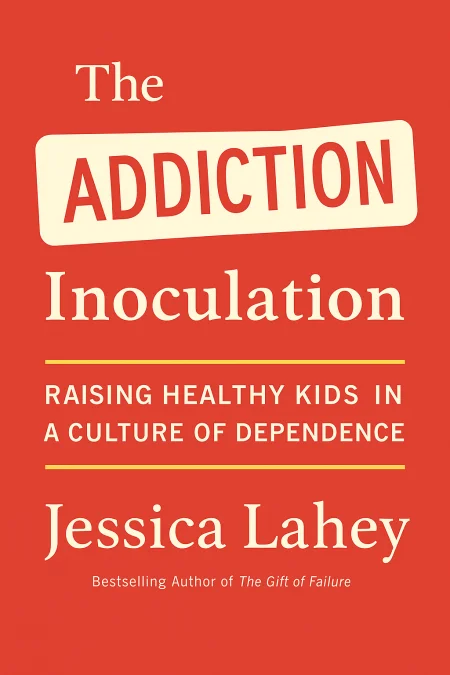
The Addiction Inoculation
Raising Healthy Kids in a Culture of Dependence
Book Edition Details
Summary
In "The Addiction Inoculation," Jessica Lahey offers a beacon of hope and practicality for those navigating the stormy seas of parenting in a world shadowed by substance abuse. Drawing from her personal journey through alcoholism and her expertise as an educator, Lahey crafts a narrative that is both a cautionary tale and an empowering guide. This book delves into the stark reality that addiction can touch any family, yet it equips parents and educators with the knowledge and tools to cultivate resilience and resistance in children. With insights grounded in developmental neuroscience and psychology, it presents actionable strategies to tackle risk factors, recognize early warning signs, and engage in meaningful conversations with kids. This indispensable resource aims to arm readers with the wisdom needed to foster a new generation of healthy, confident, and addiction-free youth.
Introduction
The phone call came at 2 AM, the kind that makes every parent's heart stop. Sarah's seventeen-year-old daughter Emma was in the emergency room, unconscious from alcohol poisoning after what should have been a normal Friday night with friends. As Sarah raced through empty streets toward the hospital, her mind reeled with questions that had no easy answers. How had she missed the signs? Where had she gone wrong as a mother? Most haunting of all, how could she protect her child from a danger that seemed to lurk in every social gathering, every moment of teenage independence? This crisis moment illuminates a reality that millions of families face today: addiction doesn't discriminate, and the traditional approaches to prevention often fall short when confronted with the complex realities of adolescent brain development, peer pressure, and family dynamics. The journey from crisis to prevention requires more than good intentions or stern warnings. It demands a deep understanding of how young minds work, why some children are more vulnerable than others, and how families can build genuine protection through connection, communication, and evidence-based strategies. The path forward isn't found in fear or denial, but in the courage to face uncomfortable truths about addiction while building environments where children feel safe, valued, and equipped with the tools they need to navigate life's challenges. Through stories of struggle and triumph, scientific insights about the developing brain, and practical strategies that actually work, we discover that the most powerful prevention begins not with what we tell our children, but with how we connect with them and the communities we build together.
Finding Bottom: A Mother's Descent into Alcoholism
The morning Jessica Lahey's father looked her in the eye and said, "I know what an alcoholic looks like, and you are an alcoholic," she felt something she hadn't experienced in years: relief. For months, she had been living a carefully orchestrated double life, hiding wine bottles in increasingly creative places throughout her house, calculating exactly how much she could drink without appearing intoxicated, and crafting elaborate stories to explain away the empty bottles that seemed to multiply despite her best efforts at concealment. What had started as an evening glass of wine to unwind from her demanding job as a teacher had gradually evolved into something much more sinister. The progression was so subtle that Lahey barely noticed when one glass became two, then three, then an entire bottle consumed in secret after her family had gone to bed. She told herself she was managing stress, that she deserved this small pleasure after long days of caring for others. The wine helped quiet the anxiety that seemed to follow her everywhere, the constant worry about whether she was good enough as a mother, teacher, and wife. The elaborate rituals of hiding her drinking became almost as consuming as the alcohol itself. She would purchase multiple bottles at different stores to avoid suspicion, hide them in her car trunk or basement, and develop increasingly sophisticated methods of disposal. The frozen mason jar filled with wine, consumed like a slushie in the privacy of her bedroom, became a symbol of how far she had drifted from the person she thought she was. Each morning brought crushing shame and firm resolutions to stop, followed inevitably by the 3 PM craving that seemed to override every rational thought. Her father's confrontation shattered the illusion of control she had maintained for so long. In that moment of devastating honesty, Lahey realized that her attempts to manage her drinking had become more exhausting than the drinking itself. The relief she felt wasn't just about being caught, but about finally being able to stop pretending that she could handle this alone. Her journey to sobriety would become more than personal salvation; it would open her eyes to the genetic legacy she was potentially passing to her children and transform her understanding of what true protection looks like.
Understanding the Teenage Brain: Why Kids Are Wired for Risk
Fifteen-year-old Brian entered the wilderness therapy program in Utah as the only participant who had never used drugs or alcohol. Surrounded by peers whose shared experiences revolved around substance use, he found himself desperately trying to belong to a group whose common language he didn't speak. Despite strict rules against glorifying drug use, the other teens constantly shared stories of their exploits, and Brian absorbed every detail with the intensity of someone studying for the most important test of his life. His counselors watched with growing concern as this previously substance-free teenager seemed to catalog every piece of information about drugs and alcohol he encountered. When Brian returned to his boarding school, his brain had been primed for exactly the experiences his peers had described in such vivid detail. The adolescent reward system, driven by dopamine and constantly seeking novelty and connection, made him particularly vulnerable to substances that promised instant belonging and relief from social anxiety. His first cigarette led quickly to alcohol, then marijuana, then harder drugs, not because he lacked willpower or moral guidance, but because his developing brain was wired to seek exactly the experiences these substances provided. The tragic irony of Brian's story reveals fundamental truths about adolescent neurodevelopment that every parent needs to understand. The teenage brain is in a state of intense reconstruction, with emotional centers developing much faster than the areas responsible for judgment and impulse control. This creates a neurological perfect storm where young people are naturally drawn to risk-taking and sensation-seeking behaviors while simultaneously lacking the cognitive tools to fully evaluate consequences. The very plasticity that makes teenage brains capable of extraordinary learning also makes them exquisitely vulnerable to the rewiring effects of addictive substances. Understanding this biological reality transforms how we approach prevention and respond to teenage risk-taking. Rather than viewing poor choices as moral failures or character defects, we can recognize them as predictable consequences of normal brain development occurring in environments filled with unprecedented risks. This knowledge doesn't excuse dangerous behavior, but it does provide a framework for protecting young people during their most vulnerable years, when the substances they encounter can literally reshape their developing minds in ways that may influence them for decades to come.
Building Protective Walls: Family Strategies That Actually Work
When the Lahey family moved from New Hampshire to Vermont, fourteen-year-old Finn lost more than just his hometown. The transition stripped away many of the protective factors that had surrounded him: longtime friends whose parents shared similar values, coaches who knew his family history, and the intricate web of community connections that had helped raise him. As his mother watched him struggle with loneliness and anger about the move, she realized she had inadvertently created a perfect storm of risk factors during one of his most vulnerable developmental periods. The family's response centered on radical honesty about their genetic legacy and family history with addiction. Rather than speaking in euphemisms or hiding uncomfortable truths, they discussed specific ways alcohol had affected their extended family and how genetics might influence Finn's own risk. These weren't one-time conversations but ongoing discussions that evolved as he matured, always emphasizing that knowledge was power and that understanding his vulnerabilities could help him make informed choices about his future. Building genuine self-efficacy became the cornerstone of their prevention strategy. Instead of simply telling Finn what not to do, they focused on helping him develop confidence in his ability to navigate difficult situations independently. They practiced scenarios he might encounter, developed scripts for declining substances that didn't make him sound preachy or different, and established an ironclad promise that he could call for help at any time without fear of punishment or judgment. Most importantly, they worked to ensure he had positive outlets for the risk-taking and novelty-seeking that are natural parts of adolescent development. The family's prevention efforts extended far beyond conversations to encompass their entire lifestyle and community connections. They prioritized sleep and nutrition, maintained regular family dinners despite increasingly busy schedules, and ensured Finn had access to healthcare providers who understood the importance of screening for substance use and mental health issues. They also worked deliberately to build relationships with other families in their new community, recognizing that prevention is most effective when it's supported by a network of adults who share similar values and maintain consistent expectations across different environments.
Beyond the Family: Schools, Friends, and Community Prevention
Georgia's descent into alcoholism began during a school assembly specifically designed to prevent exactly what happened to her. The recovering alcoholic who spoke to her eighth-grade class intended to warn students about the dangers of addiction, but Georgia, overwhelmed by anxiety and desperate for relief, heard something entirely different. She focused intently on his descriptions of how alcohol could numb emotional pain, completely ignoring the cautionary tale that followed. That very afternoon, she stole Wild Turkey from her parents' liquor cabinet and discovered the relief she had been unconsciously seeking her entire young life. The failure of Georgia's school prevention program illustrates a broader crisis in how institutions approach substance abuse education. Traditional programs like DARE, which relied heavily on scare tactics and simplistic messaging, have been shown through rigorous research to be not just ineffective but sometimes counterproductive. Students who participated in these fear-based programs were actually more likely to experiment with substances than those who received no prevention education at all, partly because the programs failed to address the underlying reasons why young people turn to drugs and alcohol in the first place. Modern evidence-based prevention programs take a radically different approach, focusing on social-emotional learning and building the practical skills young people need to navigate life's challenges without turning to substances for relief. These comprehensive programs help students understand and manage their emotions, develop empathy and communication skills, set meaningful personal goals, and make thoughtful decisions under pressure. Rather than simply telling students what not to do, they provide tools for building the kind of life that makes substance use unnecessary or unappealing. The most effective prevention efforts recognize that substance abuse doesn't occur in isolation but emerges from a complex interplay of individual vulnerabilities, family dynamics, peer influences, school climate, and community factors. When schools, families, and communities work together to create environments that support healthy development and provide multiple pathways to belonging and success, young people are far less likely to seek relief through substances. The goal isn't to eliminate all risk from young people's lives, but to ensure that the protective factors surrounding them consistently outweigh the risk factors they inevitably encounter.
Summary
The journey from active addiction to effective prevention reveals a profound truth that challenges many of our assumptions about protecting young people: the same vulnerability that makes some individuals susceptible to substance abuse can become their greatest strength in safeguarding others. Through raw honesty about personal struggles, deep understanding of adolescent brain development, and commitment to evidence-based strategies, families can transform their darkest experiences into powerful tools for building genuine protection around the next generation. The science consistently shows that addiction prevention works best when it begins early, continues consistently throughout adolescence, and addresses the whole child rather than focusing solely on substances. Young people don't become addicted because they lack information about the dangers of drugs and alcohol; they turn to substances because they're seeking relief from pain, anxiety, trauma, or simply the ordinary challenges of growing up with brains that won't be fully developed for another decade. Effective prevention acknowledges these realities and provides alternative pathways to the connection, belonging, and emotional regulation that substances falsely promise to deliver. Perhaps most importantly, this work reminds us that prevention isn't about creating perfect children or eliminating all risk from their lives, but about building resilience, fostering authentic communication, and creating communities where young people feel genuinely valued and supported as they navigate the inevitable challenges of adolescence. When we approach prevention with both scientific rigor and deep compassion, recognizing that every family's journey will be unique, we give our children the greatest gift possible: the tools and relationships they need to build lives so rich and meaningful that substances become unnecessary diversions rather than essential escapes from unbearable realities.
Related Books
Download PDF & EPUB
To save this Black List summary for later, download the free PDF and EPUB. You can print it out, or read offline at your convenience.
By Jessica Lahey
