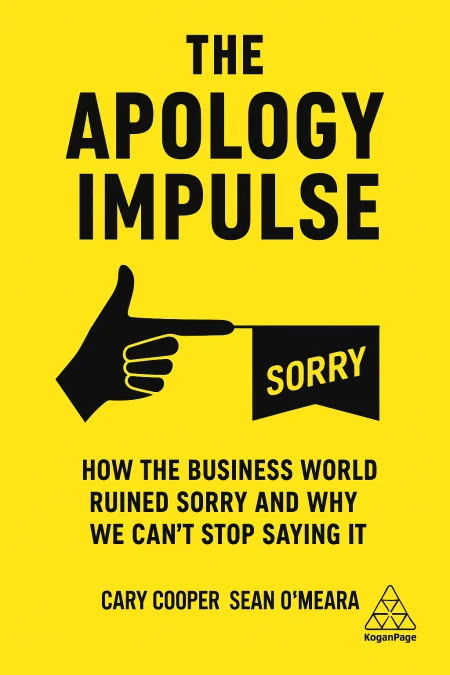
The Apology Impulse
How the Business World Ruined Sorry and Why We Can’t Stop Saying It
Book Edition Details
Summary
When the world is drowning in a sea of hollow "sorrys," authenticity gasps for air. "The Apology Impulse" delves into the epidemic of perfunctory contrition sweeping across the corporate landscape. Apologies, once a sincere act of atonement, have morphed into empty rituals of public relations. This incisive exploration peels back the layers of modern apology culture, revealing how companies like Facebook and United Airlines flood us with empty words, while sidestepping true accountability. Unmasking the tactics behind evasive "fauxpologies," it serves as a blueprint for genuine communication. Whether you're a CEO, influencer, or social media strategist, discover when to voice a heartfelt apology and when silence speaks louder than words.
Introduction
Corporate apologies have become so commonplace in modern business that they risk losing all meaning, transforming from genuine expressions of remorse into reflexive public relations maneuvers deployed at the first hint of criticism. This phenomenon reveals a deeper crisis in how organizations understand accountability, responsibility, and the authentic purpose of contrition in an age where viral outrage can emerge from the smallest perceived misstep. The current landscape rewards performative apologies while punishing principled stands, creating a system where the word "sorry" has been systematically devalued through overuse and strategic manipulation. The economic incentives driving this transformation are powerful and perverse. Media outlets profit from manufactured controversies, social media platforms amplify trivial complaints into corporate crises, and organizations find themselves trapped in cycles of hollow contrition that satisfy no stakeholder while undermining their own credibility. When genuine accountability becomes necessary—when real harm has occurred and meaningful responsibility must be acknowledged—the currency of apology has been so debased that it carries little weight or trust. Through systematic examination of corporate crisis management patterns, media dynamics, and stakeholder behavior, a troubling reality emerges: organizations that apologize reflexively often suffer greater reputational damage than those that maintain principled positions, while the constant stream of meaningless apologies creates a culture where authentic accountability becomes increasingly difficult to achieve. Understanding these dynamics becomes essential for navigating the complex relationship between corporate responsibility and public expectations in an environment where outrage has become a commodity and contrition a performance.
The Mechanics of Modern Corporate Apologies
Corporate apologies follow predictable formulas that reveal their true function as damage control rather than genuine accountability. The most prevalent patterns include quantum apologies that simultaneously claim innocence while expressing regret, technical apologies that obscure responsibility through jargon and passive voice, and deflection apologies that shift blame to those who took offense rather than accepting fault for the original action. These structures allow organizations to appear contrite while avoiding meaningful admission of wrongdoing. The linguistic architecture of corporate apologies systematically removes human agency from harmful actions. Passive voice constructions transform "we made serious errors" into "mistakes were made," while indefinite articles distance organizations from their decisions and modal verbs question whether harm actually occurred. This grammatical sleight-of-hand may provide legal protection, but it fundamentally undermines the credibility of the apology by prioritizing liability concerns over genuine accountability to those who were harmed. Most corporate apologies begin with moral licensing—statements about the organization's commitment to high standards or deeply held values—followed by vague acknowledgments of falling short without specifying how or why. This approach allows companies to maintain their self-image while appearing responsive to criticism, but it misunderstands what effective apologies accomplish. Rather than centering the experience of those harmed, these apologies prioritize the reputation and comfort of the apologizer. The proliferation of these formulaic responses has created a crisis of credibility that extends beyond individual organizations. Consumers and stakeholders have learned to recognize the templates and linguistic tricks, making them increasingly skeptical of all corporate apologies, including those that might represent sincere attempts at accountability. This erosion of trust makes meaningful repair more difficult and perpetuates cycles of cynicism that ultimately serve no one's interests.
How Outrage Culture Creates Performative Contrition
The economics of digital media have created powerful incentives for manufacturing outrage around corporate behavior, transforming minor complaints into major controversies that demand immediate organizational response. Online publishers operating on advertising revenue models require high-volume traffic to survive, and anger represents one of the most shareable emotions on social media platforms. This dynamic has given rise to what can be termed "outrage capitalism"—a system where media outlets profit by amplifying grievances and then covering the inevitable corporate apologies that follow. The hero-villain narrative structure that drives viral content positions consumers as righteous underdogs fighting against powerful corporations, encouraging people to seek reasons for offense while rewarding those who successfully extract public apologies with social media attention and validation. This feedback loop incentivizes the discovery of new grievances while teaching critics that outrage generates results, creating an environment where trivial complaints receive disproportionate attention while genuine issues may be overlooked in the noise. Organizations caught in manufactured controversies face impossible strategic choices. Standing firm risks prolonged negative coverage and potential boycotts organized through social media, while apologizing validates the criticism and signals to future critics that public pressure works. The speed of modern communication cycles compounds this problem, as organizations must respond within hours or risk appearing unresponsive, leading to hasty apologies that create new problems while failing to resolve the original complaint. The result is a communications environment where thoughtful response becomes nearly impossible and reactive apologizing emerges as the default strategy. Companies develop hair-trigger sensitivity to criticism, issuing apologies before fully investigating whether their actions were inappropriate or whether the criticism represents broader stakeholder concerns. This reactive approach prevents organizations from making principled stands on legitimate business practices while teaching vocal minorities that corporate behavior can be modified through strategic outrage.
The True Costs of Reflexive Apologizing
Unnecessary apologies carry hidden costs that extend far beyond immediate reputational concerns, creating long-term strategic disadvantages that many organizations fail to recognize until the damage becomes irreversible. When companies apologize for actions they don't genuinely regret, they establish impossible standards for future behavior while creating stakeholder expectations they cannot consistently meet. Each reflexive apology devalues the currency of contrition and makes it harder for organizations to credibly express remorse when circumstances actually warrant it. The financial implications of constant apologizing include direct costs such as crisis management expenses, advertising campaigns to rebuild reputation, charitable donations to demonstrate commitment, and legal settlements to resolve disputes. More significantly, research demonstrates that organizations apologizing when not directly responsible for problems suffer measurable decreases in shareholder value, while those that apologize appropriately often see their stock prices recover or improve, suggesting that markets reward authentic accountability while punishing performative contrition. Frontline employees bear disproportionate burdens when organizations make public commitments they cannot operationally fulfill. Social media managers, customer service representatives, and retail workers find themselves held to impossible standards of corporate morality while dealing with increased scrutiny from customers who expect perfect adherence to executive promises. The gap between leadership commitments and operational reality creates stress, confusion, and turnover among those responsible for implementing new policies without adequate resources or training. The creative and strategic costs may prove most damaging over time. Organizations that become hypersensitive to potential criticism begin avoiding risks and sanitizing their communications to prevent offense, leading to bland, forgettable messaging that fails to connect with audiences. This defensive posture stifles the innovation and authentic voice that drive business success, while the fear of having to apologize constrains creative expression and reduces diversity of perspectives in public discourse.
When Not Apologizing Becomes Strategic Advantage
Some organizations have discovered that refusing to apologize, even when facing intense public criticism, can strengthen their market position and build deeper customer loyalty among audiences that appreciate authentic communication over performative contrition. Companies that stand firm on their principles often find that controversy generates valuable publicity while attracting customers who respect their willingness to maintain consistent positions despite external pressure. This approach recognizes that attempting to satisfy every critic often results in satisfying no one. The key to successful non-apologizing lies in understanding the fundamental difference between genuine customer concerns that deserve attention and manufactured outrage designed to extract concessions. Organizations that develop this discernment can respond appropriately to each type of criticism, addressing real problems with solutions while refusing to validate artificial controversies through unnecessary apologies. This strategic approach requires confidence in organizational values and willingness to accept that some criticism is inevitable and even healthy. Market dynamics play a crucial role in determining whether organizations can afford to maintain firm positions. Companies operating in low-friction markets where customers can easily switch to competitors face greater pressure to apologize than those in high-friction markets where switching costs are substantial. Understanding these competitive realities helps organizations assess the genuine risks of not apologizing versus the long-term costs of unnecessary contrition and compromised principles. The most resilient organizations develop clear value propositions and communicate them consistently, even when facing criticism from vocal minorities. They recognize that their reputation depends on their actions over time rather than their ability to satisfy every critic, focusing on serving their actual customers rather than appeasing those who may never become customers regardless of how many apologies they receive. This approach often generates stronger brand loyalty and superior financial performance compared to organizations that constantly apologize.
Summary
The transformation of corporate apologies from meaningful expressions of accountability into routine public relations exercises represents a fundamental corruption of responsibility in modern organizational life. Companies have learned to weaponize the language of contrition while avoiding genuine accountability, creating a system where "sorry" simultaneously means everything and nothing. This devaluation makes authentic accountability more difficult to achieve while eroding the trust between organizations and stakeholders that effective apologies are meant to rebuild. The most successful organizations recognize that genuine accountability requires courage—the courage to accept responsibility when wrong, explain actions when misunderstood, and stand firm on principles when facing criticism, understanding that meaningful relationships are built on authenticity rather than appeasement.
Related Books
Download PDF & EPUB
To save this Black List summary for later, download the free PDF and EPUB. You can print it out, or read offline at your convenience.
By Cary Cooper
