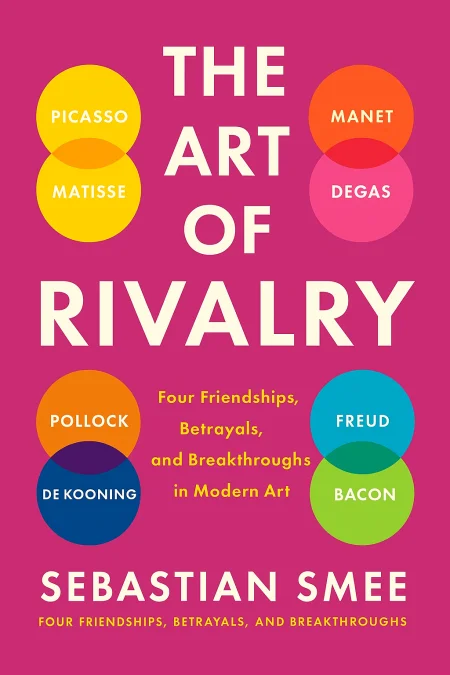
The Art of Rivalry
Four Friendships, Betrayals, and Breakthroughs in Modern Art
Book Edition Details
Summary
In the electric tension of artistic rivalry, genius finds its crucible. Sebastian Smee’s "The Art of Rivalry" unfurls the dramatic interplay between eight legendary artists whose friendships and rivalries shaped the very contours of modern art. Imagine Manet clashing with Degas, or the tempestuous exchanges between Picasso and Matisse, each pairing a volatile mix of admiration and envy. When Pollock’s raw energy confronted de Kooning’s mastery, or as Freud’s nuanced strokes met Bacon’s raw intensity, the creative sparks flew. These stories are not just about art but about the fiery human connections that fueled innovation and defied expectation. Smee's narrative is a vibrant tapestry of ambition and betrayal, underscoring how the fiercest of competitions can lead to the most profound breakthroughs. Here, rivalries become the unsung muses, compelling artists to shatter boundaries and redefine their creative identities.
Introduction
In the smoky cafés of 1860s Paris, two young painters sat across from each other, their friendship crackling with unspoken competition. This scene, repeated countless times across different eras and cities, reveals a fundamental truth about artistic creation: the most transformative breakthroughs often emerge not from solitary genius, but from the electric tension between rivals who push each other beyond their perceived limits. The story of modern art is typically told as a succession of individual masters, but this narrative misses the crucial role of intimate rivalry in shaping artistic destiny. When we examine the relationships between creative titans across different periods, we discover three essential questions about artistic progress: How does competition between artists accelerate innovation and push boundaries beyond what either could achieve alone? What role do personal relationships, betrayals, and reconciliations play in shaping entire artistic movements? And how do these intimate battles between individuals ultimately transform cultural landscapes? These confrontations reveal that artistic greatness rarely emerges as a solo performance, but rather from a complex dance of attraction and repulsion, admiration and jealousy, influence and resistance. This exploration appeals to art lovers seeking to understand the personalities behind masterpieces, creative professionals navigating competitive relationships, and anyone intrigued by how genius actually develops through human connection and conflict. These stories demonstrate that behind every revolutionary artistic movement lies a deeply human drama of ambition, friendship, and the relentless pursuit of greatness through competition.
Freud and Bacon: Post-War London's Intimate Brutality (1940s-1990s)
In the bomb-scarred landscape of postwar London, two unlikely figures found each other in the shadowy corners of Soho's drinking establishments. Lucian Freud, grandson of the famous psychoanalyst, was a beautiful young man with an anarchic streak and obsessive dedication to painting. Francis Bacon, thirteen years his senior, had emerged from a traumatic childhood to become the most electrifying painter of his generation, creating works that seemed to capture the psychological devastation of the war years. Their meeting in 1945 at the Colony Room, a cramped first-floor drinking club, would prove to be one of the most consequential artistic relationships of the twentieth century. Bacon's influence on the younger Freud was immediate and transformative. Where Freud had been producing careful, linear works that bordered on the precious, Bacon showed him the possibilities of risk, of embracing accident and chance in the creative process. Bacon's approach to paint was visceral and urgent, his subjects distorted by what he called "the brutality of fact." He worked from photographs and memory rather than direct observation, believing that the presence of a model inhibited the psychological injury he needed to inflict on his subjects to capture their essential truth. For Freud, this was both liberation and challenge. Bacon's example freed him from his tight, fastidious style, encouraging him to use thicker brushes and more viscous paint. But it also forced him to defend his core conviction that painting must emerge from prolonged, intimate observation of the living subject. This tension between their approaches created productive friction that pushed both artists toward their greatest achievements. As Freud once observed, "The longer you look at an object, the more abstract it becomes, and, ironically, the more real." The relationship was complicated by Bacon's generosity and Freud's dependence on it, both financial and emotional. This dynamic shifted as Freud's career eventually eclipsed Bacon's, leading to resentment and an eventual falling out that lasted decades. Yet their rivalry had established a new vocabulary for figurative art that rejected both abstract expressionism and traditional portraiture in favor of something more psychologically penetrating and emotionally honest.
Manet and Degas: Parisian Modernism's Fractured Brotherhood (1860s-1880s)
The friendship between Édouard Manet and Edgar Degas began with a chance encounter in the Louvre in 1861, when the older, more socially adept Manet offered advice to the struggling younger artist who was botching an etching of a Velázquez painting. This seemingly minor act of generosity would blossom into one of the most complex and influential relationships in art history, culminating in an act of violence that revealed the dangerous undercurrents of artistic rivalry. The salons of Second Empire Paris buzzed with revolutionary fervor as these two young artists began their complex dance of friendship and competition. Manet was the golden boy of Parisian avant-garde circles, charming and convivial, the unofficial leader of the Batignolles group that gathered at the Café Guerbois. His paintings, while controversial with critics and the public, had an insouciant brilliance that seemed to capture the spirit of Second Empire Paris. Degas, by contrast, was morose and exacting, a perfectionist who struggled with the gap between his classical training and his desire to be modern. Manet's example showed him a way forward, inspiring him to abandon historical subjects and turn his penetrating gaze on contemporary Parisian life. The relationship reached its crisis point around 1868-69, when Degas painted a double portrait of Manet and his wife Suzanne in their home. The painting captured something uncomfortably truthful about the couple's relationship, showing Suzanne absorbed in her music while Manet appeared distant and distracted. When Degas presented the finished work to Manet, the older artist's response was shocking: he took a knife to the canvas, slashing through Suzanne's figure. This violent act of censorship revealed the tension between artistic truth-telling and personal loyalty that would haunt both men for years. Despite this rupture, their rivalry continued to fuel their artistic development. Degas had developed an almost predatory approach to truth-telling in his art, believing that his job was to pierce through social facades and reveal hidden realities. For Manet, who had built his life around carefully maintained secrets, this intrusion was intolerable. Their fractured brotherhood became a template for the complex relationships that would define the Impressionist movement, proving that artistic progress often emerges from the wreckage of personal relationships.
Matisse and Picasso: The Great Duel for Artistic Leadership (1906-1917)
When Henri Matisse first visited Pablo Picasso's ramshackle studio in Montmartre in early 1906, he was already the acknowledged leader of the avant-garde, twelve years older than the struggling Spanish artist and riding high on the scandal of his Fauve paintings. Picasso, still mired in the melancholy of his Blue Period, seemed an unlikely challenger to Matisse's supremacy. Yet this meeting, orchestrated by American collectors Leo and Gertrude Stein, would ignite the most consequential artistic rivalry of the modern era, a dialogue that would reshape the very foundations of Western art. The initial dynamic seemed clear: Matisse was the established master, generous with advice and encouragement to the younger artist. But Picasso, despite his youth and poverty, possessed an almost supernatural confidence in his own abilities and an inability to accept a subordinate role to anyone. When Matisse exhibited his revolutionary "Joy of Life" at the 1906 Salon des Indépendants, Picasso realized he had been outflanked by Matisse's radical use of color and form. Abandoning his own planned Arcadian painting, Picasso embarked on what would become "Les Demoiselles d'Avignon," a work so radical that it seemed to break with five hundred years of Western artistic tradition. What followed was an eighteen-month period of intense creative rivalry that would produce two of the most important paintings in art history. Picasso's angular, mask-like faces and fractured forms opened the door to Cubism and established him as Matisse's equal in revolutionary audacity. The competition intensified as both artists pushed each other toward increasingly extreme innovations. Matisse once observed, "I have never avoided the influence of others. I would have considered this a cowardice and a lack of sincerity toward myself. I believe that the personality of the artist develops and asserts itself through the struggles it has to go through when pitted against other personalities." By 1917, their duel had fundamentally altered the landscape of modern art. The relationship between the two men evolved from rivalry to mutual respect and even affection, though it remained charged with competitive tension throughout their lives. Their rivalry demonstrated that artistic revolution often emerges not from isolated genius, but from the friction between competing visions, each artist pushing the other toward uncharted territory that neither could have reached alone.
Pollock and de Kooning: American Abstract Expressionism's Tragic Heroes (1940s-1950s)
In the smoky taverns and cramped studios of 1940s New York, American art was finally coming of age. At the center of this transformation were two immigrants' sons who would become the most celebrated American artists of the twentieth century: Jackson Pollock, the tortured cowboy from Wyoming, and Willem de Kooning, the smooth-talking Dutchman who had arrived in America as a stowaway. Their relationship would define the emergence of Abstract Expressionism and establish New York as the new center of the art world, though it would ultimately illustrate how artistic rivalry can both elevate and destroy. Pollock was the first to achieve breakthrough success with his revolutionary drip paintings, created by dancing around canvases laid flat on the floor of his Long Island studio. These works seemed to capture something essentially American in their scale, energy, and rejection of European traditions. Life magazine's famous 1949 article asking "Is he the greatest living painter in the United States?" brought sudden fame that proved as destructive as it was validating. De Kooning, meanwhile, struggled to find his own path, torn between abstraction and figuration, admiring Pollock's achievement while searching for a way to assert his own artistic identity. The dynamic between them was complicated by their fundamentally different personalities and approaches to art. Pollock was intuitive and emotional, channeling his psychological turmoil directly into his paintings through a process that seemed almost shamanic. De Kooning was intellectual and deliberate, a master draftsman who approached each painting as a problem to be solved through careful consideration and endless revision. As critic Harold Rosenberg observed, "The canvas began to appear to one American painter after another as an arena in which to act rather than as a space in which to reproduce, re-design, analyze or express an object." The tragic dimension of their rivalry emerged as fame and alcohol took their toll. Pollock's creative block in his final years was exacerbated by his sense that de Kooning was surpassing him, while de Kooning struggled with the burden of being seen as Pollock's successor after the younger artist's death in 1956. Their story was cut short by Pollock's death in a car crash, but their influence on each other had already established the visual language that would define American abstract art for decades to come.
Summary
These four rivalries reveal a fundamental truth about artistic innovation that challenges our romantic notions of solitary genius: the greatest breakthroughs rarely emerge from peaceful contemplation but from the electric tension between minds that recognize each other's power and potential. Whether in bombed-out London pubs or avant-garde Parisian salons, transformative art emerged when talented individuals challenged each other's assumptions and forced one another beyond their comfort zones. Each relationship followed a similar pattern of initial attraction and mutual recognition, followed by intense creative exchange, then growing competition as each artist fought to establish his unique identity. What makes these relationships compelling is their combination of deep affection and ruthless ambition. These were not casual friendships but profound connections between individuals who understood that their art was literally a matter of life and death. The violence that sometimes erupted between them was the inevitable result of such high stakes and intense intimacy. Their stories demonstrate that progress in any creative field requires not just individual talent, but the dynamic tension between competing visions, each pushing the other toward uncharted territory. For anyone navigating competitive relationships in creative or professional life, these accounts offer both inspiration and warning. They suggest that our greatest growth comes from engaging with those who challenge us most deeply, even when uncomfortable or threatening. They remind us that influence flows both ways, that even apparently one-sided relationships involve complex exchanges of power and inspiration. Most importantly, they show that rivalry, properly understood, is not about defeating others but about discovering the fullest expression of our unique gifts through meaningful competition. The greatest artists understood that their rivals were not obstacles to overcome, but essential catalysts for their own transformation.
Related Books
Download PDF & EPUB
To save this Black List summary for later, download the free PDF and EPUB. You can print it out, or read offline at your convenience.
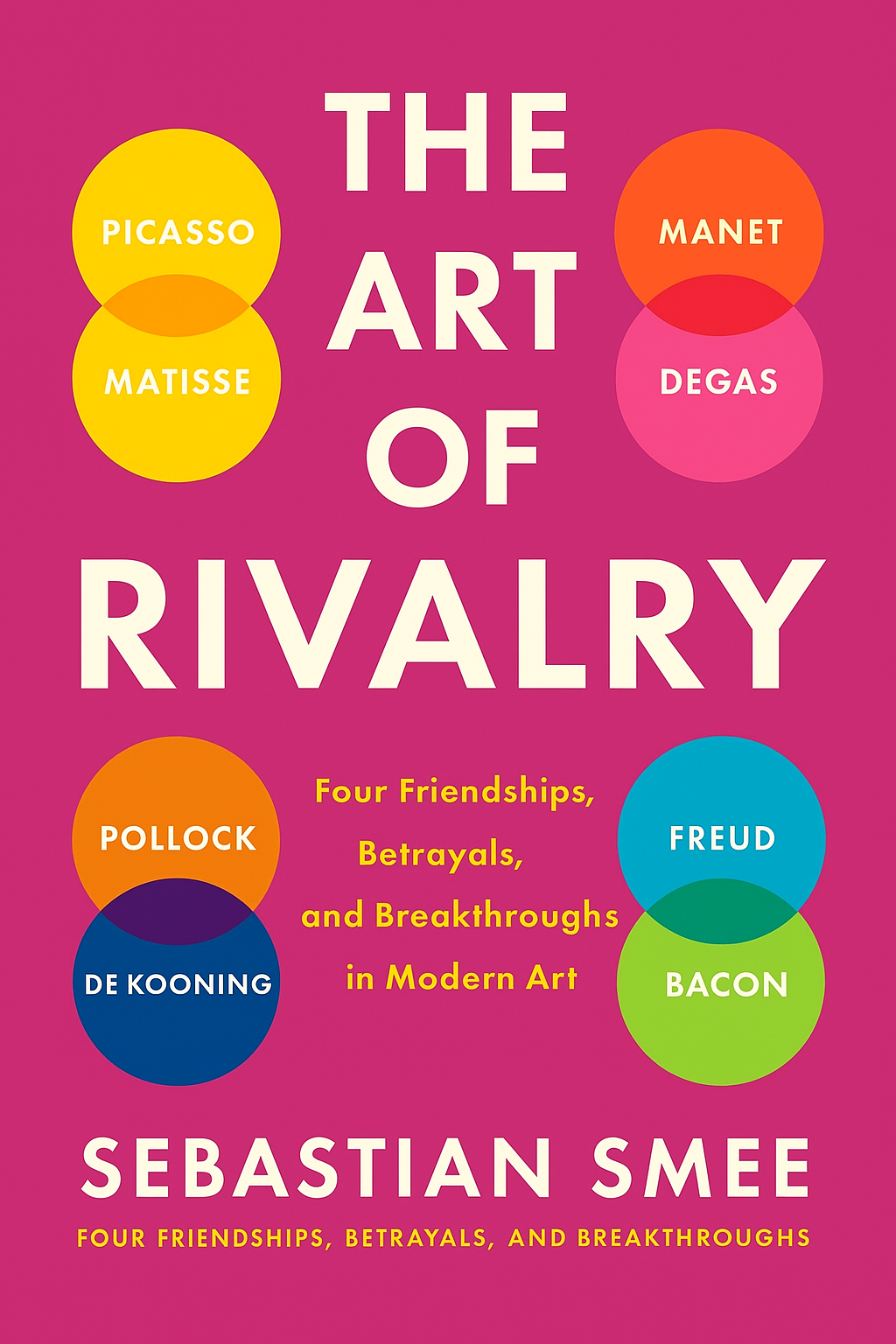
By Sebastian Smee
