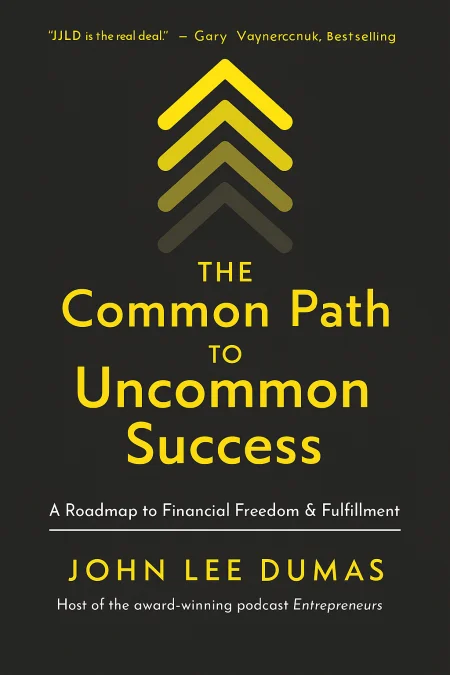
The Common Path to Uncommon Success
A Roadmap to Financial Freedom and Fulfillment
Book Edition Details
Summary
Unleash the power of your entrepreneurial spirit with a guide that transcends the ordinary. In "The Common Path to Uncommon Success," John Lee Dumas distills the wisdom of over 3,000 successful business leaders into an actionable 17-step blueprint designed to transform your dreams into tangible achievements. This isn't just a roadmap—it's your compass to financial independence, location freedom, and a life of fulfillment. Through the voices of seasoned trailblazers from his acclaimed podcast, Entrepreneurs on Fire, Dumas offers a fresh perspective on turning ambitious ideas into thriving enterprises. Arm yourself with the strategies to channel hard work and persistence into a lucrative venture. Embrace your potential, and redefine success on your own terms.
Introduction
Have you ever felt like success belongs to a select few who seem to have cracked some mysterious code? The truth is, there's nothing mysterious about achieving extraordinary results in life and business. While most people chase shiny objects and quick fixes, believing that success requires some secret formula or insider knowledge, the reality is far simpler and more accessible than you might imagine. The path to uncommon success isn't reserved for the lucky few—it's a common, proven route that anyone can follow. This journey begins with a fundamental shift in thinking: moving from being a person who chases success to becoming someone who provides genuine value to others. When you focus on solving real problems for real people, success becomes not just possible, but inevitable. The question isn't whether you can achieve financial freedom and fulfillment—it's whether you're ready to commit to the proven steps that will get you there.
Discover Your Big Idea and Niche
Your journey to uncommon success begins with identifying your big idea—the intersection where your passion meets your expertise. This isn't about choosing between what you love and what you're good at; it's about finding where these two powerful forces converge. Your big idea emerges from your "zone of fire," that sweet spot where your genuine enthusiasm aligns with your ability to provide real value to the world. Consider the story of John Lee Dumas, who spent years drifting through various careers, never quite finding his footing. After serving as an Army officer in Iraq, he tried law school, corporate finance, and real estate, always feeling like something was missing. The breakthrough came during a simple walk when he heard Albert Einstein's quote: "Try not to become a person of success, but rather a person of value." That moment sparked a realization that changed everything. Instead of chasing success, he would focus on providing value. Dumas identified his passion for learning from successful entrepreneurs and combined it with his experience in facilitating conversations from his military background. This convergence led to his big idea: creating the first daily podcast interviewing inspiring entrepreneurs. He didn't just find any niche—he discovered an underserved market desperate for consistent, valuable content. By going daily when everyone else published weekly, he owned a space that no one else was willing to occupy. To discover your big idea, conduct the zone of fire exercise. Draw a line down the middle of a piece of paper. On one side, spend five minutes listing everything that genuinely excites you. On the other side, write down all your skills and expertise. Then draw arrows connecting your passions with your capabilities. These connections reveal your potential zones of fire. Once you've identified your big idea, niche down until it hurts—until you're nervous your market might be too small. That's when you know you've found a space you can dominate. Remember, when you try to resonate with everyone, you resonate with no one. Choose your niche with confidence, serve it better than anyone else, and watch as your focused approach creates the traction that broader strategies never could.
Build Your Platform and Create Content
Your platform is how you'll share your voice with the world, and choosing the right one requires understanding where your ideal audience consumes content. The three main platforms—written, audio, and video—each offer unique advantages, but success comes from mastering one before expanding to others. Your platform choice should align perfectly with how your target audience prefers to consume information. Leslie Samuel discovered this principle while struggling as a high school teacher earning minimal income. Desperate for additional revenue, he dove into affiliate marketing and found himself repeatedly answering the same questions in online forums. His breakthrough came when he realized he was spending enormous time and energy re-explaining concepts daily. Instead of continuing this inefficient cycle, Samuel created a blog where he could craft comprehensive, high-quality articles answering these recurring questions once and for all. This strategic shift transformed his business entirely. Rather than constantly recreating the wheel in forum discussions, Samuel directed people to his detailed blog posts. Google began ranking his content highly, driving organic traffic to his site. His audience could access the best possible answers to their questions while discovering additional valuable content. Samuel added an email newsletter, expanded to podcasting and YouTube, but always drove traffic back to his blog as the central hub. To choose your platform effectively, start by understanding your avatar's consumption preferences. Ask yourself: How does my ideal customer prefer to consume content? Are they commuters who could listen to audio? Visual learners who need video demonstrations? Readers who want in-depth written analysis? Create a content production plan with specific frequencies and formats. Whether it's once weekly or daily, consistency matters more than perfection. Set up systems that keep you ahead of your publishing schedule. Create content in batches to build a buffer against unexpected challenges. Most importantly, engage with your audience regularly to gather feedback and adjust your approach based on what resonates most effectively.
Develop Revenue Streams and Scale
Transforming your platform and content into sustainable revenue requires understanding your audience's biggest struggles and creating solutions they're willing to pay for. Revenue streams emerge naturally when you've built trust through consistent value delivery, but the key is proving demand before investing significant time and resources into product creation. The story of Podcasters' Paradise illustrates this principle perfectly. After building an audience through daily podcast interviews, Dumas noticed a recurring request: people wanted to learn how to start their own podcasts. His first attempt, PodPlatform, failed spectacularly because he built the entire service before validating demand. Only two people purchased, and both cancelled quickly. This failure taught him a crucial lesson about proving concepts before building solutions. For his second attempt, Dumas took a different approach. Instead of assuming what people wanted, he outlined the concept for Podcasters' Paradise and asked his audience to prepay if they were genuinely interested. He needed twenty commitments by a specific deadline to proceed. Within hours, he had his twenty sales, and by the deadline, thirty-five people had invested. This validation gave him confidence to create the actual product, knowing real buyers were waiting. To develop your revenue streams, start by surveying your audience about their biggest challenges. Look for patterns in their responses—groups of at least five people struggling with similar issues. Before building anything, present your solution concept and ask for financial commitment. This separates genuine buyers from well-meaning cheerleaders who encourage but never purchase. Consider multiple revenue stream options: one-on-one coaching for premium pricing, group programs for scalability, affiliate partnerships for products you don't create, or physical products that provide tangible value. The key is proving each concept with real money before full development. Your audience will tell you what they need; your job is listening and responding with valuable solutions they'll invest in.
Implement Systems for Lasting Success
Sustainable success requires building systems and teams that can operate without your constant involvement, but this only works after you thoroughly understand every aspect of your business. Like Henry Ford mastering car construction before implementing assembly lines, you must know your processes intimately before systematizing and delegating them. Amy Porterfield learned this lesson while growing her online education business from a solo operation to an eighteen-person team generating millions in revenue. Initially resistant to building a large team after leaving corporate life, she eventually realized that serving thousands of students at the highest level required systematic delegation. Her approach focused on creating clear departmental structures with dedicated directors managing specific functions rather than trying to oversee everything personally. Porterfield's system success came from two critical principles: clear communication channels and systematic onboarding processes. Her team uses Slack for general communication and announcements, while all business activities happen exclusively in Asana for project tracking and task management. This separation prevents the chaos that destroys entrepreneurial productivity. New hires go through detailed ninety-day onboarding programs with weekly expectations clearly outlined, preventing the overwhelming "drinking from a firehose" experience that causes talented people to fail. To implement your own systems, start by documenting everything you do over a full week. Separate recurring tasks from one-time activities, then rank recurring tasks by time consumption. Create step-by-step video tutorials for your most time-intensive processes using tools like Loom. Build a comprehensive training library before hiring anyone, so systems are ready when team members arrive. Focus on creating systems that remove decisions from your daily routine. The goal isn't just delegation—it's building processes so refined that quality remains consistent regardless of who executes them. Start small, systematize thoroughly, and scale gradually to maintain the standards that created your initial success.
Summary
The path to uncommon success isn't mysterious or exclusive—it's a proven sequence of deliberate actions that anyone can follow. By identifying your big idea at the intersection of passion and expertise, choosing the right platform for your audience, creating valuable content consistently, developing revenue streams that solve real problems, and implementing systems for sustainable growth, you create the foundation for both financial freedom and personal fulfillment. As the journey shows us, "Try not to become a person of success, but rather a person of value"—this mindset shift from chasing success to providing genuine value transforms everything. When you focus on solving real problems for real people, success becomes not just possible, but inevitable. Your next step is simple: choose one area from this path where you can take immediate action today. The common path to uncommon success begins with that first committed step, and every day you delay is another day your potential impact remains unrealized.
Related Books
Download PDF & EPUB
To save this Black List summary for later, download the free PDF and EPUB. You can print it out, or read offline at your convenience.
By John Lee Dumas
