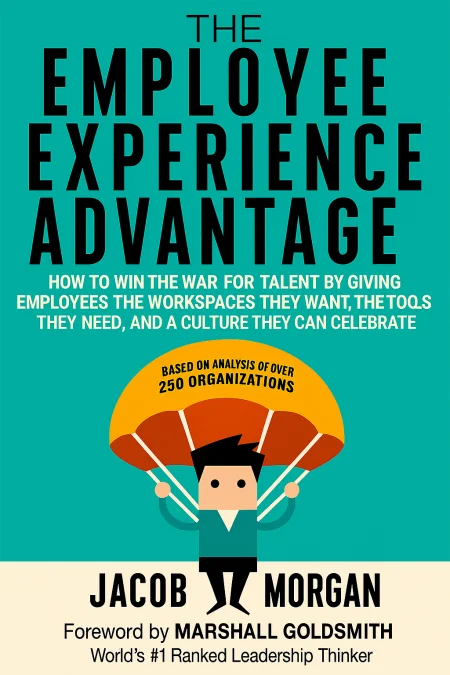
The Employee Experience Advantage
How to Win the War for Talent by Giving Employees the Workspaces They Want, the Tools They Need, and a Culture They Can Celebrate
byMarshall Goldsmith, Jacob Morgan
Book Edition Details
Summary
Amid the shifting sands of modern business, a revolution brews that places the employee at its heart. "The Employee Experience Advantage" unveils a transformative blueprint for leaders eager to cultivate workplaces where passion, innovation, and satisfaction flourish. Through rigorous research and exclusive insights from 250 top organizations, this groundbreaking guide dissects the cultural, technological, and physical dimensions that define a truly engaging employee experience. Forget short-lived engagement metrics; this book empowers you to craft environments where employees thrive naturally. Dive into pioneering frameworks, learn from trailblazing case studies, and arm yourself with the tools to design vibrant, people-centric workplaces. Ready to turn the tide on disengagement and unlock your organization’s true potential? This is your playbook for success.
Introduction
Imagine walking into your workplace each morning not because you have to, but because you genuinely want to. Picture an environment where your contributions matter, where technology empowers rather than frustrates you, and where the physical space energizes your creativity. This isn't a utopian fantasy—it's the reality for employees at organizations that have mastered the art of employee experience design. The modern workplace stands at a crossroads. While companies invest billions in employee engagement initiatives, satisfaction scores remain stubbornly low worldwide. The traditional approach of treating employees as resources to be managed has reached its limits. Today's most successful organizations recognize that creating exceptional employee experiences isn't just about perks or ping-pong tables—it's about fundamentally redesigning how work gets done, where it happens, and what it feels like to be part of something meaningful. The organizations that thrive in the coming decades will be those that shift from creating places where people need to work to environments where people want to work. This transformation requires understanding three critical environments that shape every employee's daily reality: the cultural atmosphere they breathe, the technology tools they use, and the physical spaces they inhabit.
The Three Pillars of Employee Experience
Employee experience rests on three fundamental pillars that work together to create either magic or misery in the workplace. These environments—cultural, technological, and physical—don't operate in isolation but multiply each other's impact exponentially. The cultural environment represents the invisible forces that guide daily interactions. At companies like Facebook, this manifests in their core values of "Be Bold, Focus on Impact, Move Fast, Be Open, and Build Social Value." These aren't just words on walls—they're lived principles that shape how employees collaborate, make decisions, and treat one another. When Marc Benioff at Salesforce implemented the V2MOM framework—Vision, Values, Methods, Obstacles, and Measures—he created a cultural DNA that flows from the CEO's desk to every individual contributor's daily priorities. Consider the story of the San Diego Zoo, where employees selling popcorn at concession stands don't see themselves as food service workers but as champions in the fight to end extinction. Through their "Spark" training program, staff members understand that every upgraded drink or additional purchase directly funds conservation efforts around the world. This sense of purpose transforms routine transactions into meaningful contributions to wildlife preservation. The transformation happens when organizations move beyond surface-level culture initiatives to create genuine connection between individual work and organizational impact. Leaders must help employees see the golden thread that connects their daily tasks to the larger mission. Start by mapping your organization's current cultural reality—not what you hope it is, but what employees actually experience. Then identify the gap between your stated values and lived practices, focusing on closing this divide through consistent leadership behavior and transparent communication about how individual contributions drive organizational success.
Building Your Experiential Organization Framework
The most successful organizations follow a systematic approach to designing employee experiences, moving beyond random perks and programs to create intentional, integrated environments. This framework rests on having a compelling Reason for Being that transcends profit motives and speaks to human aspirations. Google's Reason for Being exemplifies this approach: "To organize the world's information and make it universally accessible and useful." This mission gives individual work moral rather than merely commercial meaning. When software engineers at Google access the company's entire codebase on their first day—including Search, YouTube, and AdWords—they're not just getting tools, they're being trusted with the building blocks of humanity's information ecosystem. The framework operates like an equation where Culture × Technology × Physical Space = Employee Experience. Unlike addition, multiplication means that weakness in any single area dramatically reduces the overall impact. Adobe discovered this when they realized their beautiful offices and cutting-edge technology meant little if managers weren't equipped to coach and develop their people effectively. At Cisco, this integrated approach comes alive through their "Our People Deal"—an employee-created concept that identifies eleven key moments that matter most to their workforce. From "First Impression" during the interview process to "My Lasting Impression" when employees transition out, each moment is designed with careful attention to all three experiential environments. The magic happens when these elements work in concert rather than competition. Physical spaces that reflect cultural values, combined with technology that enables rather than hinders work, create experiences that employees want to share with friends and family. Begin by auditing your current state across all three environments simultaneously. Identify where disconnects exist between your cultural aspirations, technological capabilities, and physical realities, then prioritize improvements that strengthen the multiplicative effect rather than addressing elements in isolation.
The Design Loop and Implementation Strategy
Creating exceptional employee experiences requires moving from a "design for" mentality to a "design with" approach, where employees become co-creators of their own workplace reality. This shift transforms static programs into dynamic, evolving ecosystems that respond to changing needs and circumstances. The employee experience design loop consists of six interconnected phases: Respond, Analyze, Design, Launch, Participate, and back to Respond. This continuous cycle ensures that employee voices directly influence organizational decisions. General Electric exemplified this approach when they dismantled their 40-year-old Employee Management System in favor of Performance Development—a real-time feedback platform that emerged directly from employee frustrations with slow, bureaucratic processes. At GE, employees consistently reported that getting things done took too long, with too many checks and balances stifling innovation. Through their FastWorks methodology, leadership didn't just acknowledge this feedback—they used it to redesign fundamental organizational processes. The transformation involved testing minimum viable products with 6,000 employees before scaling to their entire 170,000-person workforce, demonstrating how employee input can drive enterprise-wide change. Airbnb applies this same design loop principle to something as seemingly simple as food service. Their approach to workplace dining, guided by the Spanish concept of "Sobremesa"—the time spent at the table after eating—creates community and conversation. Employee feedback collected through meal surveys and direct communication channels continuously shapes menu offerings, cooking classes, and pop-up food experiences that bring people together. The key insight is that employee experience design never ends. Like software that requires constant updates and improvements, workplace experiences must evolve based on real-time feedback and changing employee needs. Implement feedback mechanisms that operate at multiple frequencies—weekly pulse checks, monthly conversations, quarterly deep dives, and annual comprehensive reviews. Create clear pathways for employee input to influence decisions, and always close the feedback loop by showing how employee voices shaped organizational changes.
Leading the Transformation Forward
Leading an employee experience transformation requires courage, commitment, and a fundamental shift in how leaders view their role in the organization. The most successful transformations are led by executives who genuinely care about their people—not as human resources, but as whole human beings with aspirations, fears, and dreams that extend far beyond the workplace. Bob Chapman, CEO of Barry-Wehmiller, demonstrated this principle during the 2008 recession when faced with the traditional choice of layoffs to preserve profits. Instead of sacrificing people for the organization's survival, Chapman asked what a family would do if one member was struggling. His solution was revolutionary: rather than lay off employees, everyone took a month of unpaid leave, with some volunteering for additional time off because they were more financially secure. This decision emerged from genuine care for employee wellbeing rather than cold financial calculation. The transformation starts with acknowledging that traditional organizational structures were designed for industrial-age work, where humans essentially functioned as biological robots. Today's organizations must be redesigned around human potential, creativity, and emotional needs. This means moving from command-and-control hierarchies to coaching-and-mentoring relationships, from rigid processes to flexible frameworks, and from standardized experiences to personalized interactions. At T-Mobile, CEO John Legere embodies this new leadership approach through his unconventional style and genuine connection with employees. His directive to "listen to your frontline, shut up, and do what they say" reflects a fundamental power shift from executive omniscience to employee expertise. This approach recognizes that those closest to customers and operations often have the best insights for organizational improvement. The transformation requires viewing your organization as a laboratory rather than a factory—a place of experimentation, learning, and continuous improvement rather than standardized production and rigid compliance. Start your transformation by examining your own leadership beliefs and behaviors. Commit to regular, honest conversations with employees at all levels, and be prepared to change long-held assumptions about how work should be organized and experienced. Most importantly, make employee experience a genuine priority backed by resources, attention, and personal involvement from the top of the organization.
Summary
The future belongs to organizations that recognize people as their greatest competitive advantage and design every aspect of the workplace experience around this truth. As one executive noted in the research, "If organizations really want to focus on people and make it a priority, then make it a real priority." This means moving beyond lip service to create environments where the intersection of employee needs and organizational design produces extraordinary results. The transformation from traditional workplace structures to experiential organizations requires commitment to three fundamental environments—cultural, technological, and physical—working together as a multiplying force rather than isolated initiatives. When organizations truly know their people and design experiences with rather than for them, they create places where employees don't just show up because they need to, but because they genuinely want to contribute to something meaningful. Your journey toward becoming an experiential organization starts with a single step: having honest conversations with your people about what they need to do their best work and feel genuinely valued. The organizations that take this step today will not only win the war for talent but will also create the kind of workplace legacy that extends far beyond quarterly results to touch the lives of everyone who walks through their doors.
Related Books
Download PDF & EPUB
To save this Black List summary for later, download the free PDF and EPUB. You can print it out, or read offline at your convenience.
By Marshall Goldsmith
