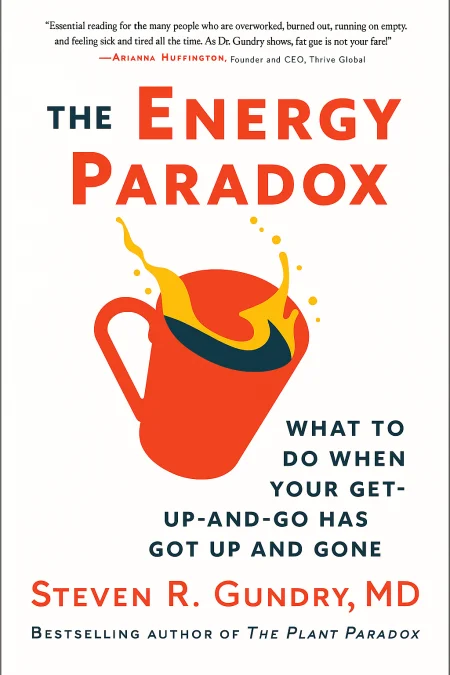
The Energy Paradox
What to Do When Your Get-Up-and-Go Has Got Up and Gone
Book Edition Details
Summary
Feeling perpetually drained isn't just a side effect of modern life—it's a warning signal from your body, insists Dr. Steven R. Gundry in his groundbreaking work, The Energy Paradox. Known for his transformative insights in The Plant Paradox and The Longevity Paradox, Dr. Gundry now turns his attention to the pervasive issue of fatigue, revealing its roots in immune dysfunction and gut health. This enlightening guide decodes the intricate connection between your energy levels and the invisible battles raging within. With practical strategies to enhance mitochondrial function and rebalance the microbiome, along with enticing recipes and energy-boosting food tips, Dr. Gundry empowers you to reclaim your vitality. Step away from exhaustion and embrace a future of boundless energy, sharpened focus, and vibrant health with a plan as revolutionary as it is restorative.
Introduction
Picture this: you wake up after eight hours of sleep, grab a healthy breakfast, and yet by mid-morning you're already reaching for your second cup of coffee, wondering why you feel so drained. Despite living in an era of unprecedented convenience and having access to more food variety than any generation before us, millions of people struggle with persistent fatigue that seems to have no clear cause. This isn't the satisfying tiredness that comes after a productive day of physical work, but rather a mysterious energy deficit that leaves us feeling like our internal batteries are constantly running low. The answer to this modern energy crisis lies hidden within the microscopic world of our cells, where an intricate dance between our gut bacteria, cellular powerhouses called mitochondria, and our eating patterns determines whether we feel vibrant or exhausted. What makes this particularly fascinating is that our fatigue often stems not from eating too little, but from eating too much at the wrong times and in ways that overwhelm our cellular energy systems. You'll discover how the trillions of bacteria living in your intestines act as energy brokers, negotiating with your cellular power plants to either boost or drain your vitality. Perhaps most surprisingly, you'll learn why strategically not eating for certain periods can actually increase your energy levels more effectively than any superfood or supplement ever could.
The Hidden Epidemic: How Chronic Inflammation Steals Your Energy
Chronic inflammation represents one of the most insidious energy thieves in modern life, operating like a hidden tax on every cellular transaction in your body. Unlike the obvious inflammation you see when you cut your finger, this systemic inflammation simmers quietly beneath the surface, redirecting enormous amounts of energy away from daily activities toward maintaining a constant state of biological alert. Think of your immune system as an overzealous security force that never gets the all-clear signal, continuously patrolling and consuming resources that should be powering your thoughts, movements, and cellular repair processes. This inflammatory cascade often begins in the gut, where the intestinal barrier acts as a sophisticated checkpoint between the outside world and your bloodstream. When this barrier becomes compromised through processed foods, stress, or environmental toxins, it develops what scientists call increased permeability, allowing harmful substances to leak into circulation. Your immune system, encountering these foreign invaders in places they shouldn't be, launches a defensive response that can persist for months or years, creating a state of chronic low-grade warfare within your own body. The energy cost of maintaining this inflammatory response is staggering. Your immune cells are among the most metabolically active in your body, and when they're constantly activated, they consume glucose and oxygen at rates that can rival your brain or heart. This explains why people with inflammatory conditions often feel exhausted even when they haven't engaged in physically demanding activities. The fatigue isn't laziness or weakness, it's the natural consequence of your body's energy being systematically diverted toward fighting perceived threats rather than fueling normal daily functions. What makes this particularly relevant for modern life is that many foods we consider healthy can actually trigger inflammatory responses in susceptible individuals. Certain plant compounds evolved as natural pesticides to protect plants from being eaten, and while they're generally safe in small amounts, our modern diet often concentrates these compounds in ways that can overwhelm our digestive systems. Understanding inflammation as an energy drain rather than just a health concern opens up new possibilities for addressing chronic fatigue through targeted dietary and lifestyle interventions that calm the immune system and redirect energy back to where it belongs.
Gut Microbiome and Mitochondria: Your Body's Energy Partnership
The relationship between your gut bacteria and cellular energy production represents one of biology's most elegant partnerships, yet it's a collaboration that most people never realize is happening. Your intestinal tract houses approximately 100 trillion microorganisms that collectively weigh about three pounds and function as a sophisticated biochemical factory, working around the clock to extract energy from food and manufacture compounds essential for cellular function. These microscopic partners don't just help digest your meals, they actively participate in energy production by creating molecular messengers that directly communicate with mitochondria throughout your body. When beneficial bacteria break down dietary fiber that human enzymes cannot process, they produce short-chain fatty acids, particularly butyrate, which serves as premium fuel for both intestinal cells and mitochondria. Butyrate burns cleaner than glucose, producing more energy per molecule while generating fewer harmful byproducts. Additionally, healthy gut bacteria manufacture gaseous signaling molecules including hydrogen sulfide and nitric oxide that act like cellular text messages, instructing mitochondria when to ramp up energy production and when to focus on repair and maintenance functions. However, modern lifestyle factors have created what scientists describe as a microbial extinction event within our guts. Antibiotics, while lifesaving when necessary, can wipe out beneficial bacteria indiscriminately. Processed foods lack the fiber needed to feed helpful microbes while often containing preservatives and artificial compounds that actively harm them. Chronic stress, inadequate sleep, and environmental toxins further disrupt this delicate ecosystem, allowing harmful bacteria to flourish while beneficial species decline. When this microbial balance shifts toward pathogenic species, the consequences for energy production are immediate and profound. Harmful bacteria produce inflammatory compounds called lipopolysaccharides that leak through the intestinal barrier and trigger immune responses throughout the body. They also compete with beneficial species for resources while failing to produce the energy-supporting compounds that healthy gut bacteria manufacture. Restoring this microbial partnership through targeted nutrition, particularly prebiotic fibers that feed beneficial bacteria, represents one of the most powerful interventions for addressing chronic fatigue and optimizing cellular energy production.
Chrono Consumption: Timing Meals for Optimal Cellular Function
The timing of when you eat may be even more crucial for energy production than what you eat, a concept that challenges conventional nutritional wisdom and reveals the profound importance of circadian rhythms in cellular function. Your body operates according to internal clocks that exist not only in your brain but in every cell, including your gut bacteria and mitochondria, all synchronized to expect periods of feeding alternated with periods of fasting. These biological rhythms evolved over millions of years to optimize energy production and cellular repair according to natural cycles of abundance and scarcity. Modern eating patterns, where food is available and consumed for sixteen or more hours daily, create a state of constant metabolic processing that prevents your cells from entering the fasted state necessary for optimal function. During eating periods, your cellular machinery focuses on processing incoming nutrients and storing excess energy. However, it's during fasting periods that the real magic happens, cellular repair mechanisms activate, inflammation decreases, and your energy-producing systems undergo essential maintenance and regeneration processes that can only occur when not actively digesting food. When you compress your daily eating into a smaller window, typically six to eight hours, your body shifts from primarily burning glucose to accessing stored fats and producing ketones, molecules that serve as both alternative fuel and powerful cellular signaling compounds. Ketones burn more efficiently than glucose and actually stimulate the creation of new mitochondria through a process called mitogenesis. Think of ketones as both premium fuel and molecular messengers that instruct your cells to enhance their protective mechanisms and optimize energy production pathways. Time-restricted eating also allows your gut bacteria to undergo their own circadian rhythms, with different bacterial species becoming active during fed and fasted states. This microbial cycling is essential for maintaining a healthy balance of species and optimizing the production of beneficial compounds like butyrate. The practice works by synchronizing your eating patterns with your biological clocks, creating the conditions your cells need to function at peak capacity while providing regular opportunities for the restoration and renewal processes that constant eating prevents. This approach offers a sustainable way to enhance energy levels without restrictive dieting or complex meal planning.
Summary
The modern energy crisis stems from a fundamental mismatch between our ancient cellular biology and contemporary lifestyle patterns, where constant food availability and inflammatory triggers have disrupted the delicate partnerships between our gut microbiome, mitochondria, and circadian rhythms that evolved to optimize energy production. The solution lies not in consuming more stimulants or supplements, but in understanding that sustainable vitality depends on reducing chronic inflammation that diverts energy toward immune responses, nurturing beneficial gut bacteria that manufacture energy-supporting compounds, and aligning our eating patterns with natural biological clocks that expect periods of both feeding and fasting. By implementing time-restricted eating, choosing foods that support rather than inflame our cellular systems, and recognizing that strategic periods without food can actually enhance rather than diminish our energy levels, we can restore the metabolic flexibility and cellular efficiency that modern constant consumption has compromised. How might your own daily rhythms and food choices be either supporting or sabotaging these ancient energy partnerships, and what would it feel like to experience the natural vitality that comes from working with rather than against your cellular biology? For those fascinated by the intersection of nutrition, cellular biology, and circadian science, this emerging field offers profound insights into optimizing human performance through surprisingly simple but precisely timed interventions.
Related Books
Download PDF & EPUB
To save this Black List summary for later, download the free PDF and EPUB. You can print it out, or read offline at your convenience.
By Steven R. Gundry
