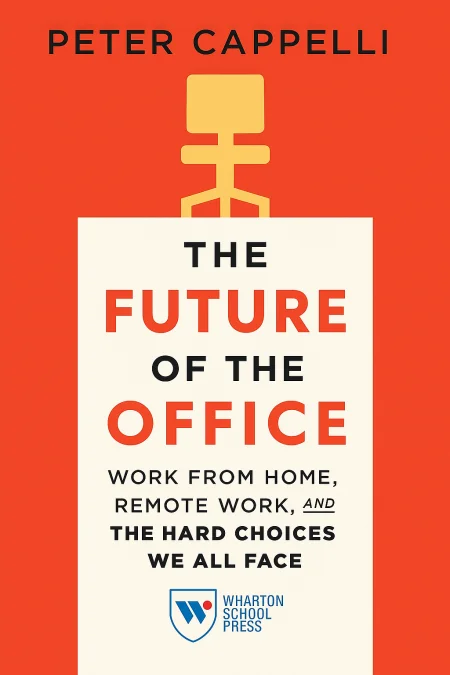
The Future of the Office
Work from Home, Remote Work, and the Hard Choices We All Face
Book Edition Details
Summary
Caught in the whirlwind of a global transformation, Peter Cappelli's "The Future of the Office" navigates the uncharted waters of post-pandemic work life with a clarity and foresight that is both riveting and essential. As the dust settles, employees cling to the freedom of remote work, while employers grapple with its implications. Cappelli, a Wharton authority, dissects this complex dynamic with precision, offering a roadmap to a future where the office's role is redefined. Through vivid research and insightful case studies, he unveils the challenging choices and unforeseen trade-offs that lie ahead. Will the office become obsolete, or will it evolve into something new? As leaders from tech giants to traditional titans diverge in their strategies, this book is a critical exploration of the path forward, urging a timely reckoning with the choices that shape the workplace of tomorrow.
Introduction
In the space of a few weeks in March 2020, something unprecedented happened in the history of white-collar work. Millions of office workers around the world suddenly found themselves working from kitchen tables, spare bedrooms, and makeshift home offices. What began as a temporary emergency measure during the COVID-19 pandemic evolved into the largest workplace experiment in modern history. This transformation raises profound questions that business leaders, employees, and policymakers are still grappling with today. The story of remote work is not just about technology or convenience—it's about power, culture, and the fundamental nature of work itself. How did we arrive at a moment where Google, once famous for keeping employees in the office with gourmet meals and nap pods, announced that a significant portion of its workforce could work remotely? What can we learn from the surprisingly successful transition to home-based work during the pandemic? And perhaps most importantly, what does this mean for the future of organizations, cities, and society as a whole? This examination is essential for anyone trying to navigate the new world of work, whether you're a CEO deciding company policy, a manager learning to lead distributed teams, or an employee weighing the trade-offs of working from home. The decisions made in this pivotal moment will reshape how we work for generations to come.
Pre-Pandemic Foundations: The Rise and Fall of Telecommuting (1990s-2019)
The dream of working from anywhere is far from new. In 1969, a Washington Post headline boldly declared, "You'll Never Have to Go to Work Again," describing how technological innovations would liberate workers from their physical offices. The concept gained real traction in the 1970s during Los Angeles' smog crisis, when air pollution concerns forced many to work from home, coining the term "telecommuting." By the 1990s, telecommuting had become corporate America's next big thing. IBM claimed to have cut real estate costs by 75% in one division by moving consultants to remote work. AT&T moved 10,000 account executives to virtual status, while Ernst & Young slashed its New York office space by 40%. The business case seemed ironclad: why maintain expensive office space when technology could enable work from anywhere? Yet the reality proved more complex than the promise. Research from this era revealed a troubling pattern. Remote workers, while often more productive in raw output, found themselves professionally marginalized. They missed informal conversations that led to opportunities, struggled with "out of sight, out of mind" dynamics with management, and were significantly less likely to be promoted. The isolation wasn't just professional—it was personal, as remote workers reported weaker relationships with colleagues and reduced engagement with their organizations. The most dramatic cautionary tale came from the Chiat advertising agency, where CEO Jay Chiat eliminated offices entirely, giving employees laptops and cell phones with complete flexibility. The experiment, initially celebrated by critics, ultimately failed as employees hoarded supplies, used their cars as filing cabinets, and struggled to collaborate effectively. The telecommuting boom faded as companies like Google pioneered the opposite approach: elaborate campuses designed to keep employees in the office longer, fostering the face-to-face interactions that seemed essential for innovation and culture.
Crisis as Catalyst: The COVID-19 Forced Transformation (2020-2021)
When COVID-19 struck, there was no time for gradual transitions or careful planning. Within weeks, 35% of the American workforce was working entirely from home—not by choice, but by necessity. What had taken telecommuting advocates decades to achieve partially was accomplished universally in a matter of days. The speed and scale of this transformation was unprecedented in business history. The early expectations were modest at best. Most organizations treated the shift as an extended snow day, preparing for a temporary disruption of perhaps two weeks to "stop the spread." As weeks turned to months, then over a year, employers and employees alike had to adapt to a reality no one had anticipated. Microsoft shocked the business world by announcing it wouldn't reopen offices until summer 2021, nearly a year away—a timeline that seemed unimaginable in those early days. What emerged defied conventional wisdom. Survey after survey revealed that both employees and employers found the experience surprisingly positive. The Adecco survey of 8,000 office workers reported improved quality of work and life. PwC found 83% of employers calling the work-from-home experiment a success. Performance metrics, where available, showed productivity holding steady or even improving, though this came with longer working hours as the boundaries between home and office blurred completely. The unique conditions of the pandemic created a perfect storm for remote work success. Employees, grateful to keep their jobs during massive unemployment, demonstrated extraordinary commitment. Employers, forced to trust their workforce without traditional oversight, discovered the power of empowerment. The shared crisis created bonds of solidarity that transcended physical distance. Yet questions lingered about whether these extraordinary circumstances could be replicated in normal times, when employees weren't facing a global health crisis and employers weren't choosing between remote work and business failure.
The New Normal Emerges: Hybrid Models and Corporate Adaptation
As vaccines rolled out and restrictions lifted, a new challenge emerged: what comes next? The answer, for most organizations, was neither a complete return to the old office model nor permanent remote work, but something in between—the hybrid approach. Yet this seemingly simple concept masked extraordinary complexity in execution and widely varying outcomes for different stakeholders. Two distinct hybrid models emerged from corporate America's experimentation. The first was a two-tier system where some employees worked permanently from home while others remained office-based. Companies like Dropbox worried this would create second-class citizens among remote workers, who research showed were less likely to be promoted and more likely to be laid off. The cost savings were clear—less office space, fewer overhead expenses—but the human costs were significant. The second model gave employees choice over when to work from home, typically allowing two or three days per week of remote work. While more appealing to employees, this approach created logistical nightmares. How do you coordinate team meetings when everyone has different schedules? What happens when everyone wants to work from home on Fridays? Apple tried mandating specific office days, but this eliminated the flexibility that made the arrangement attractive in the first place. The real estate implications alone were staggering. Some companies, like REI, sold their new headquarters before moving in. Others, like Facebook, bought additional office space while simultaneously promoting remote work. The contradiction revealed the uncertainty at the heart of corporate strategy. CFOs saw work-from-home as a path to significant cost savings, while CEOs worried about losing the collaborative spark that drove innovation. The result was a patchwork of policies across industries and companies, each attempting to balance competing demands from employees who wanted flexibility, managers who wanted control, and shareholders who wanted results.
Future Implications: Reshaping Work Culture and Society
The remote work revolution extends far beyond individual companies or employee preferences—it represents a fundamental shift that could reshape the economic and social fabric of modern society. The implications ripple through labor markets, real estate, urban planning, and the very nature of professional relationships. Consider the labor market transformation already underway. If employees can work from anywhere, companies can hire from anywhere—but this sword cuts both ways. While employers gain access to global talent pools, employees face competition from workers worldwide. Facebook's Mark Zuckerberg noted this opportunity to hire beyond traditional tech hubs, but the logical extension is that a programmer in Kansas might compete with one in Bangalore. The geographic constraints that once protected local labor markets are dissolving. The urban landscape faces equally dramatic changes. The decline isn't just in downtown cores—suburban office parks may suffer more severely, as their primary appeal was proximity to work. If that advantage disappears, why live in Tysons Corner or Route 128 when you could choose the cultural richness of a city center or the natural beauty of rural areas? The $1.7 trillion office real estate industry and the $600 billion construction sector that supports it face an existential reckoning. Perhaps most profoundly, remote work challenges fundamental assumptions about organizational culture and human connection. The informal mentoring, spontaneous collaboration, and cultural transmission that happened naturally in office environments require intentional design in distributed organizations. Companies must choose between accepting weaker cultures or investing heavily in new forms of connection and engagement. Early evidence suggests that many organizations are choosing the former, treating remote workers more like independent contractors than traditional employees. The societal implications extend to family life, community engagement, and social cohesion. While remote work can solve some work-life balance challenges, it can also blur boundaries in ways that make true disconnection impossible. The pandemic showed both the promise and the peril—employees gained flexibility but often worked longer hours, had more control over their schedules but struggled with isolation and burnout.
Summary
The great remote work experiment reveals a fundamental tension between individual flexibility and organizational effectiveness that will define the future of professional work. What began as a crisis response has become a permanent feature of the employment landscape, forcing a reckoning with assumptions about productivity, culture, and human connection that have guided management practice for over a century. The evidence suggests that remote work can succeed under specific conditions—when employees are trusted and empowered, when organizations invest in intentional culture-building, and when the work itself is suited to distributed execution. However, the unique circumstances of the pandemic—shared purpose, gratitude for employment, and universal participation—may not easily transfer to normal business conditions. The hybrid models emerging as the preferred compromise bring their own challenges, potentially creating two-tiered workforces and complex coordination problems. For leaders navigating this transition, three principles emerge as essential. First, clarity about purpose—remote work arrangements should serve specific organizational goals, not simply respond to employee preferences. Second, intentionality about culture—the informal learning and relationship-building that happened naturally in offices requires deliberate design in distributed organizations. Third, equity in opportunity—remote workers cannot become second-class citizens if organizations hope to maintain engagement and performance over the long term. The companies that master these challenges will gain competitive advantage in talent markets, while those that fail may find themselves with disengaged workforces and weakened cultures. The next decade will determine whether the remote work revolution represents liberation or fragmentation for the modern workplace.
Related Books
Download PDF & EPUB
To save this Black List summary for later, download the free PDF and EPUB. You can print it out, or read offline at your convenience.
By Peter Cappelli
