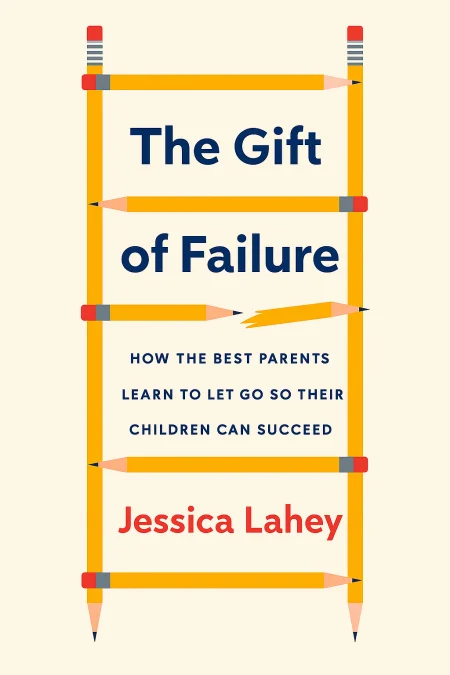
The Gift of Failure
How the Best Parents Learn to Let Go So Their Children Can Succeed
Book Edition Details
Summary
In a world where parenting often equates to hovering, Jessica Lahey's "The Gift of Failure" challenges this instinct with an empowering proposition: let children stumble and find their footing. As parents scramble to rescue their offspring from every pitfall, Lahey argues for a revolutionary approach—embracing failure as a vital teacher. With insightful warmth, she unveils how missteps can cultivate independence, resilience, and genuine self-confidence. This manifesto is a call to liberate the next generation from the shackles of perfectionism, encouraging them to face life’s hurdles head-on. Essential reading for those eager to nurture truly capable and self-reliant young adults, this book is a beacon for parents and educators ready to swap control for courage.
Introduction
Modern parenting has taken a troubling turn toward excessive protection, creating a generation of children who lack the resilience and problem-solving skills necessary for genuine success. The prevailing belief that shielding children from disappointment, mistakes, and setbacks demonstrates good parenting fundamentally misunderstands how young people develop competence and confidence. Contemporary parents, driven by fear and competitive pressure, have inadvertently created what amounts to learned helplessness in their children by constantly intervening to prevent failure. This protective instinct, while rooted in love, produces the opposite of its intended effect. Children who never experience failure never learn to recover from it. They never develop the internal resources needed to navigate challenges independently, nor do they experience the deep satisfaction that comes from overcoming obstacles through their own effort. The current educational and social environment compounds this problem, as parents and schools alike prioritize short-term emotional comfort over long-term character development. The path forward requires examining how failure functions as a teacher, how autonomy builds genuine self-esteem, and how parents can create environments where children feel safe to struggle, fail, and ultimately succeed on their own terms. This represents not abandonment of parental responsibility, but rather a more sophisticated understanding of what children actually need to thrive.
The Overparenting Crisis: How Fear of Failure Destroys Intrinsic Motivation
Fear has fundamentally altered the parent-child relationship, transforming what should be a gradual release toward independence into an extended period of dependence. Parents today operate from a baseline of anxiety about their children's futures, convinced that any setback or failure will permanently damage their prospects. This fear manifests in constant intervention, from doing homework alongside children to calling teachers about minor conflicts to arranging their social interactions. The psychological research reveals that this approach systematically undermines intrinsic motivation. When children consistently receive external intervention, they learn to expect rescue rather than developing internal problem-solving capabilities. They begin to see challenges not as opportunities for growth, but as threats requiring adult intervention. The natural curiosity and determination that characterize early childhood gradually disappear, replaced by learned helplessness and anxiety about making mistakes. This protective approach also sends a subtle but powerful message to children about their capabilities. Every intervention communicates that adults believe the child cannot handle the situation independently. Over time, children internalize this assessment and begin to doubt their own competence. They become increasingly reluctant to take risks or attempt challenging tasks, knowing that failure will bring adult scrutiny and intervention. The competitive pressure surrounding college admissions and academic achievement has intensified these dynamics. Parents view each grade, each extracurricular activity, and each social interaction through the lens of future college applications. This transforms childhood into a high-stakes performance where failure feels catastrophic rather than educational.
The Science of Autonomy: Why Children Need to Experience Failure
Research in developmental psychology demonstrates that autonomy serves as a fundamental human need, alongside competence and relatedness, in fostering intrinsic motivation and psychological well-being. Children possess an innate drive to master their environment and solve problems independently. When this drive encounters appropriate challenges and occasional failures, it strengthens and develops. When it meets constant adult intervention, it atrophies. Studies comparing children raised with different levels of parental control reveal striking differences in motivation and resilience. Children given age-appropriate autonomy demonstrate higher levels of engagement with challenging tasks, greater persistence in the face of setbacks, and more creative problem-solving abilities. They also report higher levels of satisfaction with their accomplishments because they experience genuine ownership of their successes. Failure serves multiple crucial functions in child development. It provides immediate feedback about the effectiveness of different strategies, forcing children to adjust their approach and think creatively about alternatives. It builds tolerance for frustration and uncertainty, qualities essential for tackling complex problems later in life. Most importantly, it creates opportunities for children to experience their own resilience and recovery, building confidence based on actual experience rather than empty praise. The process of working through failure also develops executive function skills including planning, organization, and emotional regulation. When children must figure out how to recover from a mistake or remedy a problem they created, they engage multiple cognitive systems simultaneously. This integrated learning proves far more durable and transferable than lessons delivered through adult instruction or intervention.
From Home to School: Practical Applications of Failure-Based Learning
The transition from protective parenting to autonomy-supportive parenting requires concrete changes in daily interactions and expectations. In the home environment, this means allowing children to experience the natural consequences of their choices while providing emotional support and guidance when requested. Instead of waking children for school, parents can teach them to use alarm clocks and experience the consequences of oversleeping. Instead of completing forgotten assignments, parents can allow children to face their teachers' disappointment and develop better organizational systems. Household responsibilities provide ideal opportunities for children to experience manageable failures and develop competence. When children take on age-appropriate chores, they inevitably make mistakes. A poorly loaded dishwasher might leave dishes dirty, requiring the child to reload it correctly. A hastily folded load of laundry might result in wrinkled clothes, teaching the value of care and attention. These small failures carry minimal stakes while providing valuable learning experiences. Academic settings require similar shifts in approach. Rather than ensuring children never struggle with homework, parents can establish supportive environments where struggle is expected and valued. This means resisting the urge to provide answers or complete assignments, instead offering encouragement and strategic guidance when children request help. The goal becomes supporting children through the learning process rather than ensuring perfect outcomes. Extracurricular activities and social situations offer additional venues for practicing resilience. Sports teams, music ensembles, and social groups all provide opportunities for disappointment, conflict, and recovery. When parents allow these experiences to unfold naturally while offering emotional support and perspective afterward, children develop crucial life skills in managing relationships and pursuing goals despite setbacks.
Breaking the Cycle: Transforming Parent-Teacher-Student Relationships
The educational environment has become increasingly complicated by conflicting expectations between homes and schools regarding failure and struggle. Many teachers report pressure from parents to eliminate challenging assignments or provide excessive support, while simultaneously being expected to prepare students for increasingly demanding academic standards. This dynamic creates tension that ultimately serves no one's interests, particularly not the students caught in the middle. Effective partnerships between parents and teachers require shared understanding about the role of struggle in learning. When parents communicate to teachers that they support appropriate challenges and are prepared to help their children work through difficulties rather than avoid them, teachers can design more meaningful learning experiences. This might mean allowing students to struggle with complex problems, revise unsuccessful first attempts, or experience the consequences of poor preparation. The relationship between parent, teacher, and student shifts dramatically when failure becomes acceptable and educational rather than something to be avoided at all costs. Students feel free to take intellectual risks, attempt challenging problems, and engage authentically with difficult material. Teachers can focus on facilitating learning rather than managing parental anxiety about grades. Parents can concentrate on supporting their children's growth and character development rather than micromanaging academic outcomes. Creating this dynamic requires explicit conversation and agreement about expectations and goals. All parties must understand that short-term struggles serve long-term development, and that protecting children from appropriate challenges ultimately undermines their education. The ultimate measure of success becomes not perfect grades or seamless experiences, but rather the development of resilient, curious, capable young people prepared for adult challenges.
Summary
The fundamental insight emerging from careful examination of child development and learning is that failure serves as an irreplaceable teacher, one that cannot be bypassed without significant cost to children's long-term success and well-being. Contemporary parenting practices, despite being motivated by love and concern, have systematically deprived children of opportunities to develop the resilience, problem-solving abilities, and intrinsic motivation necessary for genuine achievement. The path forward requires parents to embrace discomfort in service of their children's growth, teachers to maintain appropriately high expectations despite pressure to lower them, and society to recognize that true preparation for adult success cannot occur without authentic childhood challenges and failures.
Related Books
Download PDF & EPUB
To save this Black List summary for later, download the free PDF and EPUB. You can print it out, or read offline at your convenience.
By Jessica Lahey
