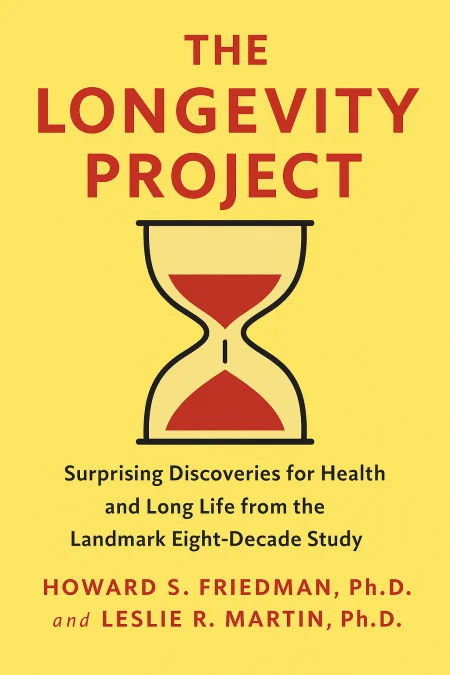
The Longevity Project
Surprising Discoveries for Health and Long Life from the Landmark Eight-Decade Study
byHoward S. Friedman, Leslie R. Martin
Book Edition Details
Summary
What if everything you thought about living longer was wrong? In "The Longevity Project," Dr. Howard Friedman and Dr. Leslie Martin shatter conventional wisdom with revelations from the most comprehensive longevity study ever conducted. Forget calorie counting and stress avoidance; it's the strength of your social ties, the richness of your personality, and the nature of your work that truly dictate your lifespan. Journey through eight decades of human behavior as myths crumble under the weight of groundbreaking data. Learn why the hardest workers often live longest and why marital bliss isn't a guaranteed elixir for women. Rich with insights and practical tools, this book challenges you to rethink your path to a vibrant, enduring life.
Introduction
In 1921, a brilliant Stanford psychologist named Lewis Terman embarked on what would become one of the most extraordinary scientific endeavors of the 20th century. He gathered over 1,500 of California's brightest children, believing that by following their lives from childhood through old age, he could unlock the secrets of human potential. What began as a study of intelligence evolved into something far more profound: a comprehensive examination of what truly makes for a long, healthy, and meaningful life. For eight decades, researchers meticulously tracked these individuals through every phase of their existence, documenting their triumphs, failures, relationships, careers, and health outcomes. The result is an unprecedented window into the human experience, revealing surprising truths about longevity that challenge conventional wisdom. The findings overturn many popular health myths while illuminating authentic pathways to well-being that extend far beyond simple dietary advice or exercise routines. This remarkable study offers readers insights into three crucial dimensions of human flourishing. First, it reveals the personality patterns and childhood experiences that lay the foundation for lifelong health and happiness. Second, it explores how our social connections, marriages, and community ties profoundly shape our physical and mental well-being throughout the decades. Finally, it demonstrates how our career choices, sense of purpose, and individual approaches to life's challenges determine not just our success, but our very survival. These lessons, drawn from real lives lived across nearly a century, provide invaluable guidance for anyone seeking to understand the true ingredients of a life well-lived.
Personality Patterns: The Foundation of Long Life
The most startling discovery to emerge from eight decades of research was the profound impact of childhood personality on adult longevity. When researchers examined which traits most strongly predicted who would live into their eighties and nineties, the answer surprised everyone involved. It wasn't cheerfulness, optimism, or even sociability that mattered most. Instead, the children who displayed conscientiousness, persistence, and prudence were the ones most likely to enjoy remarkably long lives. This finding challenged deeply held assumptions about what makes people healthy. The conscientious children grew into adults who naturally took better care of themselves, not through forced discipline, but as an expression of their fundamental nature. They were more likely to wear seatbelts, follow medical advice, avoid excessive drinking, and maintain stable relationships. More intriguingly, their careful approach to life seemed to steer them away from dangerous situations and toward healthier environments throughout their lifespans. The research revealed that personality traits aren't simply fixed characteristics but represent pathways that guide our choices across decades. Those who developed greater conscientiousness over time, even if they started as impulsive children, could still gain significant health benefits. The key was not perfection, but rather the cultivation of persistence, attention to detail, and a sense of responsibility that naturally led to better life outcomes. Perhaps most remarkably, these conscientious individuals didn't live longer by avoiding stress or challenges. Instead, they thrived precisely because they approached difficulties with careful planning and determination. Their longevity came not from an easy life, but from a life lived with intention, responsibility, and the wisdom to make choices that compounded positively over time. This fundamental insight revolutionizes our understanding of what it truly means to live a healthy life.
Social Connections: Marriage, Divorce, and Relationships
The conventional wisdom that marriage automatically leads to longer life proved to be a dangerous oversimplification. While the research confirmed that social relationships profoundly impact health and longevity, the reality was far more nuanced than popular advice suggested. For men, stable marriages did indeed provide significant protection, but for women, the picture was surprisingly different. Many divorced women who remained single actually thrived, often living as long as their continuously married counterparts. The quality of relationships mattered far more than their mere existence. Men in unhappy marriages or those who experienced divorce faced considerably higher mortality risks, partly because they often lacked the social skills to build alternative support networks. Women, by contrast, typically proved more adept at cultivating friendships and family connections that could sustain them through life's transitions. The research revealed that it wasn't marriage itself that promoted health, but rather the social support, companionship, and mutual care that good relationships provide. The study's most powerful finding concerned the importance of helping others and maintaining active social networks. Those who served as confidants to friends, volunteered in their communities, or regularly assisted neighbors enjoyed remarkable longevity benefits. This wasn't about feeling loved or appreciated, though those emotions certainly brought happiness. Instead, the act of giving support to others created a web of meaningful connections that proved extraordinarily protective of physical health. Religious participation emerged as particularly beneficial, especially for women, but not for the reasons many might expect. The longevity advantages came not from prayer or spiritual practices themselves, but from the social engagement that religious communities fostered. Those who gradually withdrew from such communities, particularly after major life changes like divorce, often saw their health decline accordingly. The lesson was clear: human beings are fundamentally social creatures, and our physical well-being depends heavily on maintaining rich, supportive connections with others throughout our lives.
Life Pathways: Career Success and Meaningful Living
One of the most counterintuitive discoveries challenged the modern obsession with work-life balance and stress avoidance. The individuals who worked hardest, achieved the most career success, and took on the greatest responsibilities were actually the ones most likely to live longest. This wasn't because successful people had better access to healthcare or lived in safer neighborhoods, though those factors played some role. Instead, the pursuit of meaningful accomplishment seemed to provide a kind of life force that sustained people well into old age. The research revealed that those who found deep satisfaction in their work, regardless of their specific occupation, enjoyed remarkable health benefits. This satisfaction didn't require perfect job matches or dream careers. Many participants thrived in roles they had drifted into, provided they approached their work with dedication and found ways to contribute meaningfully. The key was maintaining a sense of productivity and purpose that extended well into the traditional retirement years. Physical activity emerged as another crucial pathway to longevity, but not in the way fitness enthusiasts might expect. The study participants lived most of their lives before modern gyms, running shoes, and exercise programs existed, yet many maintained excellent health through naturally active lifestyles. Those who stayed physically engaged through work, hobbies, and daily activities throughout their lives far outperformed those who exercised intensively in youth but became sedentary later. The most successful approach to both career and physical health involved finding sustainable patterns rather than following rigid prescriptions. Those who built careers around their strengths and interests, who found ways to stay naturally active, and who continued growing and contributing as they aged created virtuous cycles of engagement that supported both their sense of purpose and their physical vitality. The lesson was profound: meaningful work and purposeful activity aren't stressful burdens to be minimized, but rather essential ingredients for a long and healthy life.
Individual Roads to Health and Longevity
The eight-decade study's most valuable insight was that there is no single formula for longevity, but rather multiple pathways that different individuals can follow based on their unique personalities, circumstances, and life experiences. Some participants thrived through stable marriages and conventional careers, while others found health and happiness through unconventional paths that defied social expectations of their era. The key was not conforming to a universal prescription, but rather understanding one's own nature and building a life that aligned with personal strengths and values. Resilience emerged as a crucial factor, but not in the way popular psychology often portrays it. The most resilient participants weren't those who bounced back from adversity through positive thinking or emotional regulation techniques. Instead, they were individuals who had learned to persist through difficulties while maintaining their core relationships and sense of purpose. Many had faced significant challenges, including parental divorce, wartime trauma, or career setbacks, but they found ways to integrate these experiences into meaningful life narratives. The research revealed fascinating paradoxes that challenged conventional health advice. Moderate worrying, particularly among men, actually proved beneficial for longevity, as it motivated better self-care and medical attention. Some degree of stress and challenge was associated with better health outcomes than lives of ease and comfort. Even traits typically viewed as negative, such as being less naturally cheerful, sometimes correlated with better long-term health outcomes when combined with conscientiousness and strong social connections. Perhaps most importantly, the study demonstrated that it's never too late to change course toward a healthier pathway. Participants who developed greater conscientiousness in midlife, who built stronger social networks after periods of isolation, or who found new sources of meaning and engagement in later years often experienced significant improvements in both health and life satisfaction. The human capacity for growth and positive change continued well into the final decades of life, offering hope and practical guidance for anyone seeking to optimize their remaining years.
Summary
The profound lesson of this unprecedented eight-decade study is that longevity is not the product of genetic lottery or simple lifestyle choices, but rather emerges from the complex interweaving of personality, relationships, purpose, and persistent engagement with life's challenges. The individuals who lived longest were not those who played it safe or followed popular health advice, but those who built lives of meaning, maintained strong social connections, approached challenges with conscientiousness and persistence, and continued growing and contributing throughout their entire lifespan. Two crucial insights emerge for anyone seeking to apply these lessons today. First, focus on building and maintaining high-quality relationships, understanding that helping others and staying actively engaged in community life provides profound health benefits that extend far beyond emotional satisfaction. Second, rather than seeking to minimize stress and challenge, cultivate the conscientiousness and persistence needed to navigate life's difficulties while pursuing meaningful work and personal growth throughout all stages of life. The path to longevity lies not in avoiding life's complexities, but in developing the character and connections needed to thrive within them.
Related Books
Download PDF & EPUB
To save this Black List summary for later, download the free PDF and EPUB. You can print it out, or read offline at your convenience.
By Howard S. Friedman
