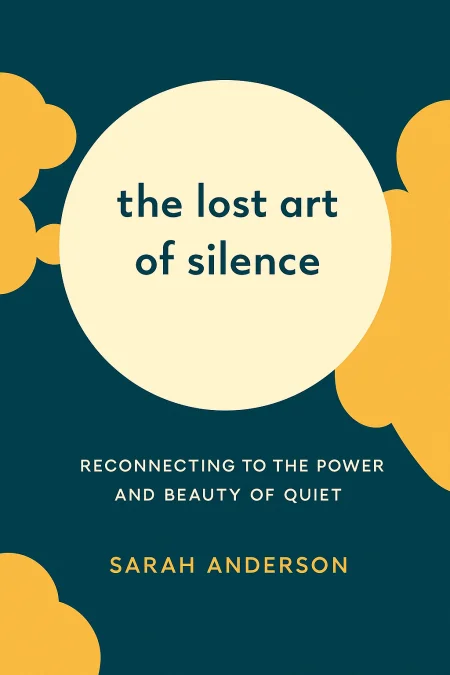
The Lost Art of Silence
Reconnecting to the Power and Beauty of Quiet
Book Edition Details
Summary
In a world overwhelmed by relentless noise, Sarah Anderson offers a luminous ode to the serenity of silence. "The Lost Art of Silence" beckons you to wander into the quiet corners of existence—where inspiration, introspection, and peace patiently await discovery. Anderson draws from the profound insights of illustrious artists, philosophers, and spiritual thinkers, weaving together a tapestry of reflections that highlight the transformative essence of stillness. This book isn't merely a guide; it's an invitation to rediscover the profound beauty that thrives in the absence of sound. Let silence be your muse, your sanctuary, and your guide through the clamor of contemporary life.
Introduction
Contemporary civilization has engineered an unprecedented assault on human consciousness through relentless noise pollution, digital connectivity, and sensory bombardment that treats silence as empty space requiring immediate filling. This investigation challenges the fundamental assumption that constant stimulation represents progress, revealing instead how the systematic elimination of quietude undermines essential human capacities for creativity, spiritual development, and authentic self-knowledge. The analysis employs a multifaceted approach that weaves together insights from neuroscience, contemplative traditions, artistic expression, and historical examination of silence's darker applications as a tool of oppression and control. The central argument emerges through careful observation of how different cultures and individuals have understood silence throughout history, demonstrating that true quietude functions not as mere absence of sound but as an active force that shapes consciousness and enables profound transformation. The methodology combines experiential research with scholarly investigation, drawing connections between ancient wisdom practices and contemporary psychological findings while maintaining critical awareness of silence's potential for both liberation and harm. Readers will encounter a systematic dismantling of noise-centric assumptions about modern life, discovering practical pathways for reclaiming silence as both personal practice and cultural necessity in an increasingly cacophonous world that threatens to sever humanity from its deepest sources of wisdom and renewal.
Silence as Biological Necessity: The Neurological Case for Quietude
Scientific research reveals that prolonged exposure to noise pollution creates chronic stress responses that compromise immune function, elevate cortisol levels, and impair cognitive performance across multiple domains. The human nervous system requires regular periods of auditory rest to process information effectively, consolidate memories, and maintain psychological equilibrium. Neurological studies demonstrate that silence actively promotes brain health by stimulating neurogenesis in the hippocampus, the region responsible for learning and memory formation, while activating the default mode network that facilitates creative problem-solving and emotional regulation. The biological imperative for silence conflicts dramatically with contemporary urban environments that rarely provide respite from constant stimulation. Modern lifestyle patterns prioritize immediate responsiveness to digital communications and continuous engagement with entertainment media, creating a state of chronic neural overstimulation that undermines both individual well-being and collective social harmony. The absence of regular quiet periods correlates with rising rates of anxiety disorders, attention deficits, and depression, suggesting that civilization's noise addiction may be systematically eroding its own psychological foundations. Economic and social structures actively eliminate opportunities for contemplative quiet through open office designs, urban density, transportation systems, and entertainment industries that treat silence as lost productivity rather than essential restoration. This systematic assault on quietude represents more than mere inconvenience but constitutes a fundamental threat to human cognitive development and emotional maturity. The evidence suggests that societies failing to protect spaces for silence inadvertently undermine the conditions necessary for deep thinking, artistic creation, and spiritual development that have historically driven cultural evolution. The neurological case for silence extends beyond individual health concerns to encompass broader questions about human flourishing and social organization. Brain imaging studies reveal that contemplative practices utilizing silence produce measurable changes in neural structure and function, enhancing emotional regulation, empathy, and cognitive flexibility. These findings provide scientific validation for what contemplative traditions have long understood: silence serves as essential technology for accessing and developing human consciousness rather than representing empty time requiring immediate occupation with activity or stimulation.
Sacred Traditions and Creative Expression: Silence as Transformative Force
Religious and contemplative traditions across cultures have consistently recognized silence as a pathway to transcendent experience and profound self-understanding, developing sophisticated methodologies for cultivating quietude as both means and end of spiritual practice. From Christian Desert Fathers to Buddhist meditation masters, from Quaker worship to Islamic contemplation, silence emerges as universal human technology for accessing deeper layers of consciousness and connecting with ultimate reality. These traditions treat silence not as emptiness requiring filling but as fertile ground for spiritual insight and transformation that transcends ordinary self-consciousness. Cross-cultural analysis reveals remarkable consistency in how different traditions understand silence's transformative potential, whether described as encountering divine presence, achieving enlightenment, or realizing authentic nature. Contemplative practices such as centering prayer, mindfulness meditation, and contemplative reading all utilize silence as active rather than passive state, requiring discipline, intention, and skilled guidance to master effectively. The wisdom accumulated through centuries of practice emphasizes gradual development, community support, and integration with daily life rather than dramatic retreats from ordinary existence. Artistic creation requires silence as both inspiration and medium, with creators across disciplines recognizing quietude as essential foundation for authentic expression. Literature employs silence as structural element through gaps, pauses, and unspoken implications that convey meaning beyond words, while visual arts capture contemplative stillness through composition, space, and form. Music reveals the paradoxical relationship between sound and silence most clearly, with composers understanding that quiet gives meaning and structure to musical expression through pauses between notes, spaces within compositions, and moments of stillness that frame performance. The creative applications of silence demonstrate its function as active principle rather than mere absence, enabling new possibilities to manifest through receptive awareness and concentrated attention. Poetry particularly illustrates how silence shapes meaning through line breaks, stanzas, and rhythmic pauses that create emotional resonance impossible through words alone. Contemporary artists have explored silence as compositional material itself, challenging conventional boundaries between sound and quiet while highlighting the active nature of listening and attention in both artistic creation and appreciation.
The Weaponization of Silence: Oppression Through Enforced Quietude
Silence possesses dual nature that enables both liberation and domination, with authoritarian systems throughout history weaponizing quietude through censorship, enforced muteness, and social ostracism to maintain power and suppress dissent. The distinction between chosen silence and imposed silence reveals crucial differences in psychological impact and moral significance, demonstrating how identical external conditions can produce vastly different internal experiences depending on agency and context. Solitary confinement represents perhaps the most extreme application of silence as punishment, with prolonged isolation causing systematic psychological deterioration and mental breakdown. Historical accounts from political prisoners, religious dissidents, and ordinary criminals reveal both the devastating effects of enforced silence and the remarkable capacity of some individuals to find meaning and transcendence within extreme isolation. These experiences illuminate the complex relationship between external circumstances and internal freedom, showing how silence can simultaneously destroy and strengthen human consciousness depending on the individual's capacity for inner resistance and spiritual practice. Military applications of sonic weapons and acoustic torture further demonstrate how sound and silence can be weaponized against human consciousness. The analysis of oppressive silence extends beyond dramatic examples of imprisonment to encompass subtler forms of silencing that pervade everyday social interactions through gender-based suppression, racial marginalization, and class-based exclusion. The historical suppression of women's voices, the silencing of minority perspectives, and the exclusion of working-class experiences from cultural discourse demonstrate how silence operates as political force that shapes social reality. Censorship and suppression represent forms of imposed silence that stifle expression and limit human development, creating psychological pressure and social dysfunction. Understanding silence's oppressive potential requires examining conditions that determine whether quiet becomes healing or harmful, including the presence or absence of community support, availability of alternative expression forms, and underlying intentions of those enforcing silence. Examples of resistance to oppressive silence demonstrate human spirit's resilience and creativity in maintaining inner freedom despite external constraints, with prisoners developing mental practices to preserve sanity and censored individuals finding covert ways to maintain expression and connection. These examples reveal that even in silence's darkest applications, human capacity for inner quiet and spiritual resistance can provide sources of strength and hope.
Reclaiming Silence: Practical Pathways to Contemplative Living
The contemporary challenge involves developing practical approaches to silence that honor both its transformative potential and capacity for harm while providing accessible methods for incorporating quietude into modern life without requiring retreat from technological civilization. True silence emerges not from absence of sound but from quality of attention that can be developed even within noisy environments, opening possibilities for urban dwellers, busy professionals, and others unable to access traditional retreat settings. Simple practices such as mindful breathing, walking meditation, and brief contemplative pauses can introduce silence into ordinary routines without dramatic lifestyle changes. Practical silence cultivation begins with recognizing the difference between external quiet and internal stillness, understanding that beneficial silence requires intention and skill rather than merely removing auditory stimulation. The development of contemplative capacity involves gradual training that builds tolerance for quiet while learning to work with mental chatter and emotional turbulence that often arise when external distractions diminish. This process requires patience, consistency, and often guidance from experienced practitioners who understand the subtle dynamics of consciousness transformation. The social dimensions of silence cultivation involve creating communities and institutions that support contemplative practice while remaining engaged with contemporary challenges through establishing quiet spaces in urban environments, incorporating silence into educational curricula, and developing workplace practices that honor human needs for reflection and restoration. The objective involves weaving silence into modern life's fabric rather than treating it as exotic luxury available only to spiritual specialists, recognizing that collective well-being depends on protecting opportunities for individual contemplation and renewal. The ultimate vision recognizes silence as fundamental human right and social necessity comparable to clean air or safe water, reframing quietude not as withdrawal from life but as essential infrastructure for human flourishing, creativity, and wisdom that benefits both individuals and society. This perspective suggests that cultural movements toward silence protection could address the psychological and spiritual costs of constant noise and stimulation, creating sustainable balance between technological progress and human consciousness development that preserves essential capacities for deep thinking, authentic connection, and meaningful existence.
Summary
The investigation reveals silence as fundamental dimension of human experience operating simultaneously as biological necessity, spiritual pathway, and social force capable of both liberation and oppression, demonstrating that contemporary civilization's systematic elimination of quiet spaces represents a threat to essential human capacities for creativity, wisdom, and authentic connection. The evidence shows that reclaiming silence requires neither romantic retreat from modernity nor uncritical embrace of technological progress, but conscious cultivation of quietude as counterbalance to contemporary culture's overwhelming emphasis on stimulation and connectivity. This understanding offers practical hope for individuals and communities seeking to restore silence's transformative power while remaining fully engaged with modern life's challenges and opportunities, ultimately revealing that the path to meaningful existence in a noisy world depends on rediscovering the profound wisdom and renewal that emerge only through sustained encounter with the depths of quietude.
Related Books
Download PDF & EPUB
To save this Black List summary for later, download the free PDF and EPUB. You can print it out, or read offline at your convenience.
By Sarah Anderson
