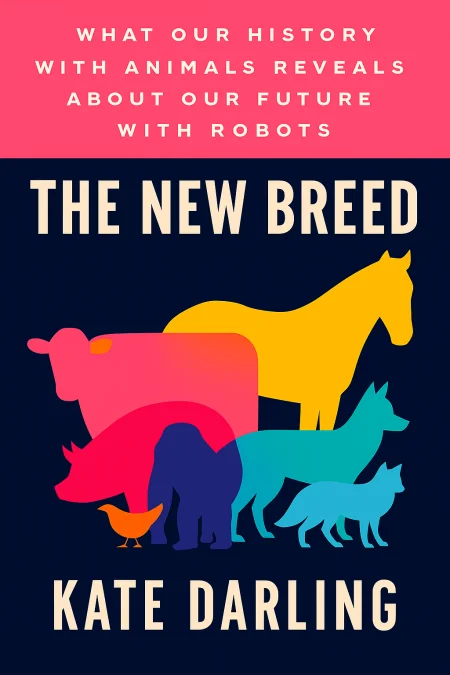
The New Breed
What Our History with Animals Reveals about Our Future with Robots
Book Edition Details
Summary
In a future where technology intertwines with the fabric of daily life, "The New Breed" by Kate Darling challenges the notion of robots as mere job usurpers. This groundbreaking exploration draws parallels between our historic bond with animals and the potential of machines to become trusted allies rather than threats. With insight drawn from social, legal, and ethical perspectives, Darling suggests that robots may enhance our lives, echoing the roles animals have played in work and companionship throughout history. As we stand on the cusp of this new era, her analysis reveals how these mechanical companions might reshape our understanding of interaction—not only with nonhumans but with each other—offering a thought-provoking glimpse into a more harmonious coexistence.
Introduction
Contemporary discourse surrounding robotics and artificial intelligence suffers from a fundamental conceptual flaw that distorts both public understanding and policy decisions. The prevailing narrative frames robots as inevitable human substitutes, generating widespread anxiety about technological unemployment while simultaneously creating unrealistic expectations about machine capabilities. This binary thinking—robots as either threatening replacements or disappointing failures—obscures more productive pathways for technological integration that could genuinely enhance human potential. A more illuminating framework emerges from examining humanity's millennia-long partnerships with animals. Throughout history, humans have successfully collaborated with autonomous, intelligent creatures that possess distinct capabilities, behavioral patterns, and forms of agency. These relationships succeeded not because animals replicated human abilities, but precisely because their different strengths complemented human limitations. Oxen revolutionized agriculture through superior physical power, dogs enhanced hunting through specialized senses, and carrier pigeons enabled long-distance communication through natural navigation abilities. This animal analogy reveals robots as representing a new category of autonomous agents that can extend human capabilities in unprecedented ways. Rather than viewing artificial intelligence through the lens of human replacement, we can understand these technologies as potential partners with unique strengths that, when properly integrated, create possibilities neither humans nor machines could achieve independently. This reframing transforms questions about technological development from defensive concerns about job displacement toward proactive exploration of human-machine collaboration that amplifies rather than diminishes human agency and creativity.
Complementary Capabilities: Robots as Augmentation, Not Substitution
The persistent myth of inevitable human replacement by robots stems from fundamental misunderstandings about both artificial intelligence capabilities and the nature of human cognition. Current AI systems excel within narrow, well-defined parameters but demonstrate brittle performance when confronted with novel situations or contextual complexity. Machine learning algorithms trained to recognize specific objects may focus on irrelevant background details rather than the intended targets, revealing processing patterns that differ fundamentally from human perception and reasoning. These differences represent opportunities for complementary partnership rather than competitive replacement. Human intelligence excels at contextual understanding, creative problem-solving, and adaptive reasoning across diverse domains, while artificial systems demonstrate superior performance in data processing, pattern recognition within defined parameters, and consistent execution of repetitive tasks. Successful technological implementations leverage these respective strengths rather than attempting to replicate human cognitive processes in silicon. Industrial applications demonstrate this complementary potential across multiple sectors. Autonomous mining equipment handles dangerous extraction and transport operations while human operators manage complex decision-making and system coordination from safe locations. Medical diagnostic systems process vast databases of imaging data to identify potential anomalies, enabling physicians to focus analytical attention on cases requiring nuanced clinical judgment. Patent examination offices explore AI tools for prior art searches, freeing human examiners to concentrate on complex legal and technical analyses that require contextual expertise. The animal kingdom provides numerous examples of such mutually beneficial partnerships. Honeyguide birds lead humans to beehives not by replicating human capabilities, but by contributing superior location skills that combine with human tool use for mutual advantage. Similarly, robotic systems can serve as extensions of human capability rather than substitutes for human workers, creating new forms of productivity that neither humans nor machines could achieve independently.
Historical Precedents: Animal Partnerships as Robotic Integration Models
Human civilization has been fundamentally shaped by partnerships with autonomous biological agents, offering crucial insights for navigating robotic integration. The domestication of large mammals transformed agricultural societies not by replacing human farmers but by enabling entirely new scales of cultivation and land use. These partnerships succeeded because animals contributed capabilities that humans lacked—superior strength, specialized sensory abilities, or unique physical adaptations—rather than simply mimicking human behaviors. The diversity of historical animal partnerships demonstrates the potential breadth of robotic applications. Military forces have employed dolphins for underwater mine detection, leveraging echolocation capabilities that surpass human-designed sonar systems. Carrier pigeons created communication networks across vast distances through natural homing abilities that remained unmatched by technological alternatives for centuries. Even today, many biological systems outperform artificial counterparts, with naval forces maintaining marine mammal programs because technological substitutes cannot match animal performance in complex underwater environments. These precedents reveal patterns directly applicable to robotic development. Successful animal partnerships typically involved recognizing and utilizing the distinctive capabilities of different species rather than forcing them into anthropomorphic roles. Ferrets proved invaluable for threading cables through narrow spaces not because they could think like humans, but because their physical form and instinctive behaviors suited tasks that humans found difficult or impossible. Robotic systems similarly excel when designed around their specific capabilities rather than constrained by human-centric expectations. The broader economic and social transformations accompanying animal domestication also illuminate potential robotic impacts. Horse integration into transportation systems didn't merely replace human walking but enabled new forms of trade, warfare, and cultural exchange that reshaped entire civilizations. Robotic integration will likely follow similar patterns, creating novel types of work and social organization rather than simply automating existing human activities, suggesting that historical precedents can help anticipate and guide the systemic changes that advanced robotics will bring.
Social Bonds and Moral Consideration: From Empathy to Ethics
The emergence of social robotics challenges fundamental assumptions about the nature of relationships and emotional connection by revealing how readily humans form bonds with artificial agents. Research consistently demonstrates that people anthropomorphize moving machines, projecting agency and emotion onto devices they intellectually recognize as non-sentient. This response appears rooted in evolutionary mechanisms that developed to detect and interpret autonomous movement as indicators of life, suggesting that human-robot emotional bonds represent natural extensions of existing psychological processes. Historical precedents in animal companionship illuminate potential trajectories for human-robot relationships. Dogs evolved from working animals to family members, demonstrating how utilitarian partnerships can develop into emotional bonds without replacing human relationships. Pet ownership has expanded dramatically in recent decades, yet this growth in interspecies companionship has not diminished human social connections but rather created distinct relational niches that offer unique forms of non-judgmental support and companionship. Therapeutic applications of social robots show particular promise in contexts where human interaction proves challenging or insufficient. Robot-assisted therapy for autism spectrum disorders has demonstrated remarkable success, with children showing improved social skills that transfer to human interactions. These robots provide safe spaces for practicing social behaviors without the anxiety that human interaction can trigger. Similarly, robotic companions in elder care facilities have produced measurable benefits for mood and social engagement, supplementing rather than replacing human caregivers through consistent, patient interaction. The history of animal rights movements provides insights into how societies might approach moral consideration for robots. Despite centuries of philosophical debate about animal consciousness, actual progress in animal protection has been driven primarily by emotional connection and anthropomorphism rather than rational ethical frameworks. This pattern suggests that robot rights, if they emerge, will likely follow emotional rather than philosophical logic, with robots that trigger human empathy through appearance or behavior potentially receiving moral consideration regardless of their actual cognitive capabilities.
Reframing Robot Relations: Beyond Replacement Toward Partnership
The fundamental insight emerging from animal-robot comparisons is that successful integration depends less on technological sophistication than on designing relationships that enhance human capabilities while respecting the distinct characteristics of artificial agents. This partnership model dissolves many contemporary anxieties about robot replacement while highlighting genuine challenges around exploitation, bias, and the commodification of emotional relationships that require thoughtful consideration as these technologies advance. The path forward requires abandoning human-robot comparisons that constrain imagination and instead embracing the complex, often contradictory relationships that have characterized human-animal partnerships throughout history. Animals have never simply replaced human capabilities but have instead created new possibilities for work, companionship, and moral development that enriched human experience. Robotic integration can follow similar patterns, augmenting human potential rather than diminishing it. This reframing has practical implications for technology development, workplace design, and social policy. Rather than pursuing the impossible goal of general human-level intelligence, robotics can focus on developing specialized capabilities that genuinely complement human abilities. Workplace integration can emphasize human-robot collaboration that creates new roles and opportunities rather than simply automating existing jobs. Social policies can address legitimate concerns about technological displacement while fostering innovation that serves human flourishing. The animal analogy also reveals the importance of maintaining human agency in technological relationships. Successful animal partnerships have always involved humans as active partners who direct and benefit from animal capabilities rather than being replaced by them. Similarly, robotic systems should be designed to amplify human decision-making and creativity rather than substituting artificial judgment for human wisdom. This approach ensures that technological advancement serves human values and goals rather than pursuing efficiency or capability as ends in themselves.
Summary
The animal-robot analogy offers a transformative framework for understanding our technological future that transcends both utopian fantasies and dystopian fears about artificial intelligence. By recognizing robots as a new category of autonomous agent with distinct capabilities that can complement rather than replace human abilities, we can develop integration strategies that maximize benefits while addressing legitimate concerns about technological displacement and social disruption. This perspective reveals that our robotic future will be shaped less by machine capabilities than by human wisdom in designing relationships that enhance flourishing, reflect our deepest values about partnership and empathy, and create new possibilities for meaningful work and genuine companionship that neither humans nor machines could achieve alone.
Related Books
Download PDF & EPUB
To save this Black List summary for later, download the free PDF and EPUB. You can print it out, or read offline at your convenience.
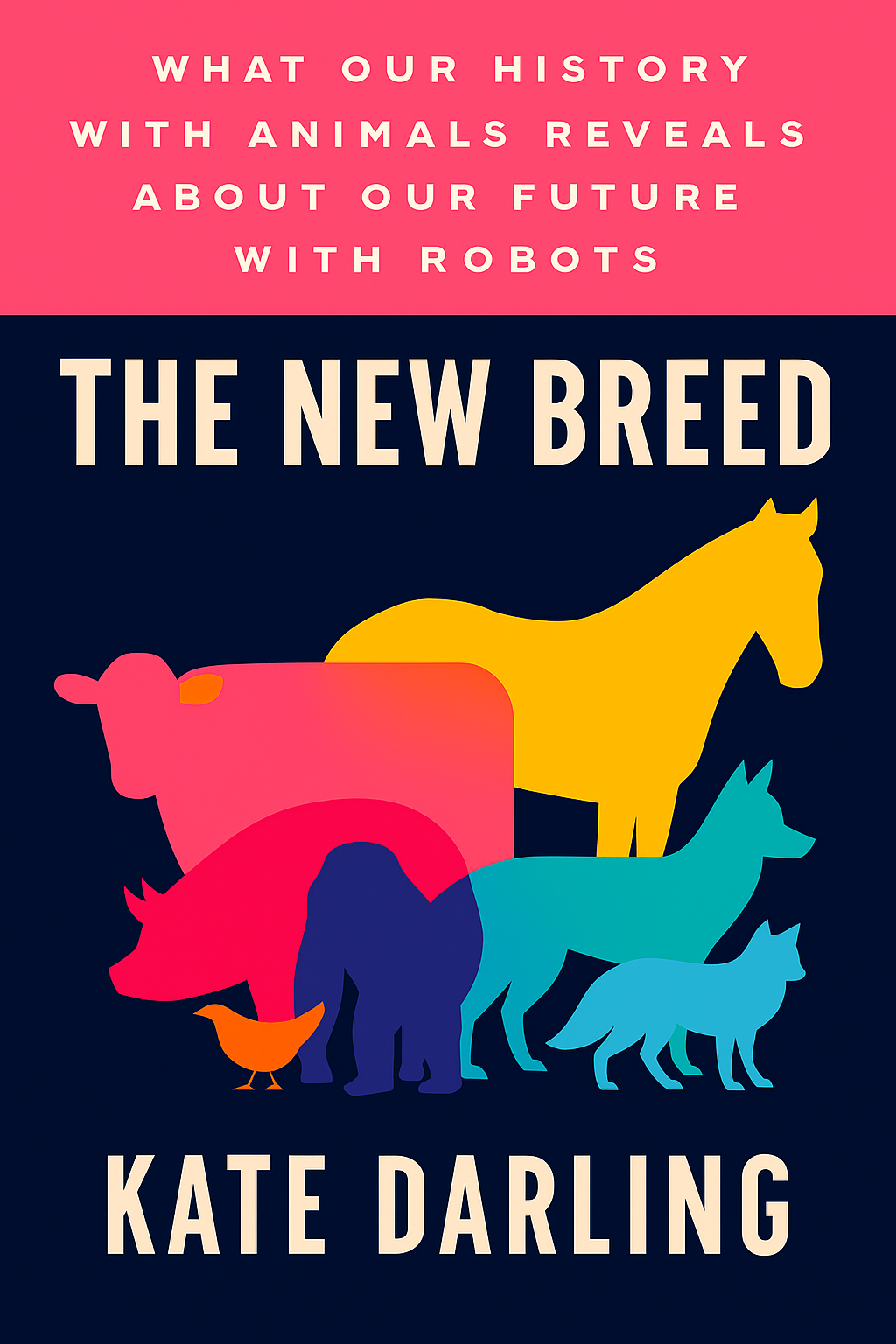
By Kate Darling
