
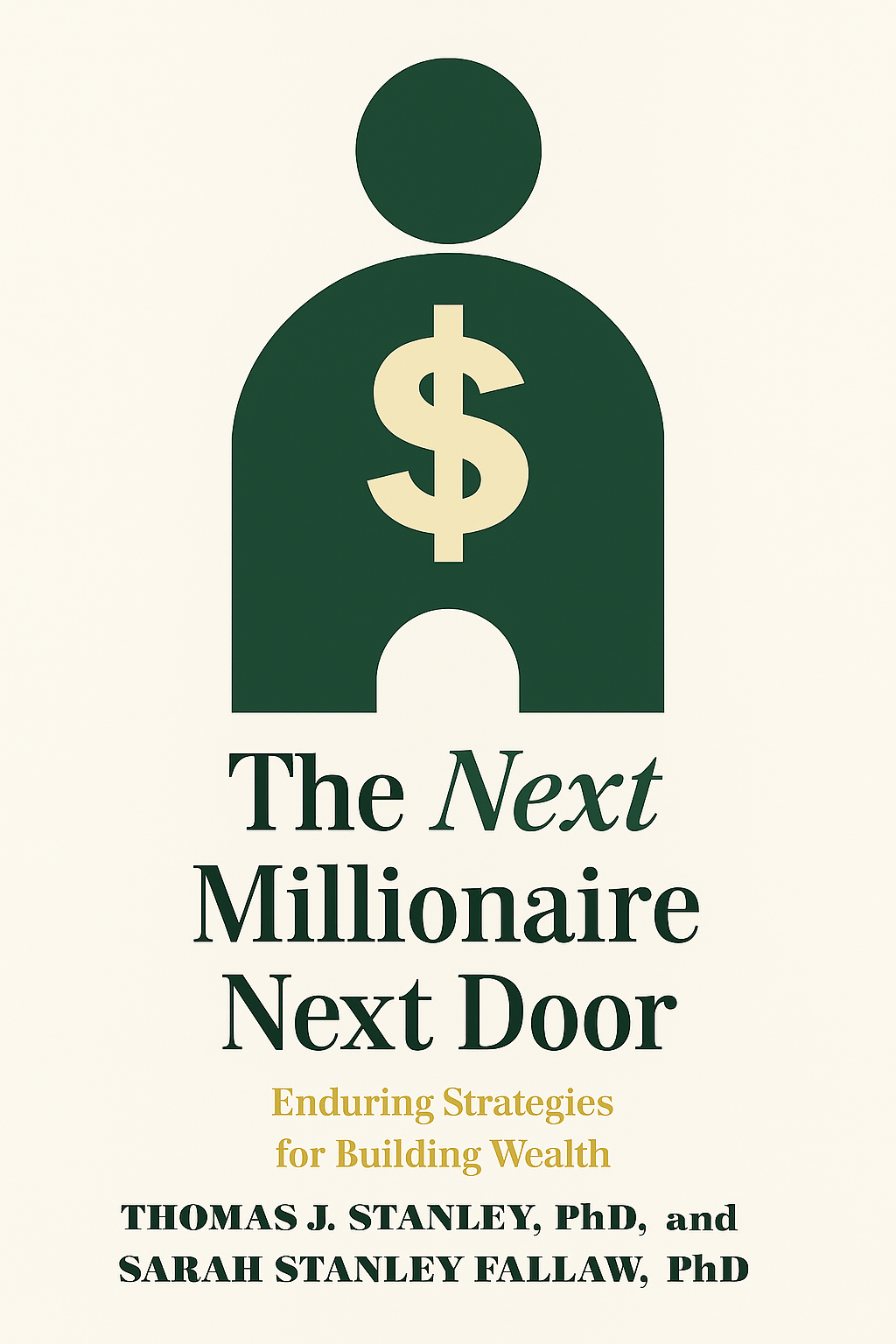
The Next Millionaire Next Door
Enduring Strategies for Building Wealth
byThomas J. Stanley, Sarah Stanley Fallaw
Book Edition Details
Summary
In a world awash with financial myths and misguided notions of wealth, Tom Stanley and Sarah Stanley Fallaw return with a revelatory examination of America's true financial architects. "The Next Millionaire Next Door" peels back the curtain on how ordinary individuals, through savvy choices and disciplined habits, transform into the quietly affluent. This groundbreaking exploration dives into the real stories of contemporary millionaires, revealing the profound impact of frugality and strategic investment. As the authors dissect the myths perpetuated by uninformed pundits and the noise of financial media, they illuminate a path to prosperity accessible to anyone willing to embrace a mindset of thoughtful consumption and long-term planning. Rich with data-driven insights and engaging personal stories, this book is an essential guide for anyone yearning to forge their own path to enduring wealth, regardless of their starting point.
Introduction
Conventional wisdom about wealth accumulation often misleads Americans into believing that becoming financially independent requires extraordinary circumstances, exceptional intelligence, or inherited advantages. This examination challenges such misconceptions by presenting evidence-based research spanning decades, revealing that ordinary individuals with discipline and strategic thinking can still build substantial wealth in contemporary America. The analysis employs rigorous empirical methodology, drawing from comprehensive surveys and real-world case studies to demonstrate consistent patterns among self-made millionaires across different economic periods. Rather than relying on theoretical frameworks or inspirational anecdotes, this investigation applies scientific scrutiny to wealth-building behaviors, distinguishing between those who successfully transform income into lasting financial independence and those who merely appear prosperous. The exploration systematically dismantles popular myths while constructing a practical framework based on observable patterns, inviting readers to examine their own assumptions about money, success, and the pathways to genuine financial security in modern society.
The Millionaire Next Door Thesis Remains Valid Today
Despite significant economic shifts, technological disruptions, and changing social dynamics since the 1990s, the fundamental characteristics that distinguish genuine wealth builders from high-income spenders remain remarkably consistent. Contemporary research validates that approximately 80% of millionaires continue to be self-made, achieving financial independence through disciplined behaviors rather than windfalls or inheritance. The median millionaire today lives modestly, drives reliable rather than luxurious vehicles, and prioritizes substance over appearance, contradicting popular media portrayals of wealth. The emergence of the Financial Independence/Retire Early movement provides compelling contemporary evidence of these enduring principles. Thousands of ordinary professionals document their journeys toward early retirement through aggressive saving, strategic spending, and long-term thinking. Their success stories mirror the patterns identified decades earlier: living below their means, ignoring social pressure to consume, and focusing on building assets rather than displaying status symbols. Modern millionaires demonstrate that economic opportunity persists for those willing to adopt contrarian approaches to money management. While critics suggested that earlier research merely captured a favorable economic moment, current data reveals identical behavioral patterns among successful wealth builders across different market cycles. The mathematics of wealth accumulation transcend temporary economic conditions, requiring only the discipline to spend less than one earns and invest the difference wisely. Technology has actually enhanced rather than diminished opportunities for disciplined wealth building. Lower investment costs, improved access to financial information, and new business creation tools provide unprecedented advantages for those who understand fundamental wealth-building principles. The challenge lies not in external barriers but in maintaining focus amid increasing distractions and consumption pressures.
Seven Wealth-Building Behaviors That Transcend Economic Conditions
Seven core behavioral patterns consistently separate successful wealth accumulators from their peers, regardless of income level, profession, or economic environment. These competencies function as reliable predictors of financial success, validated across diverse populations and time periods through rigorous analysis. First, discipline emerges as the paramount factor, encompassing not merely frugality but systematic adherence to long-term financial goals despite short-term temptations or social pressures. Confidence in financial decision-making represents the second critical competency, enabling individuals to make investment choices and career moves without requiring external validation or perfect certainty. This confidence must be balanced with humility, as overconfidence can lead to costly mistakes. Third, accepting personal responsibility for financial outcomes prevents the blame-shifting that keeps many individuals trapped in cycles of financial mediocrity. Fourth, social indifference to consumption trends provides immunity against the competitive spending that destroys wealth accumulation. This involves developing internal standards of satisfaction rather than constantly comparing oneself to others' apparent success. Fifth, focus and goal orientation enable sustained effort toward financial objectives despite numerous distractions and competing demands on time and resources. Sixth, frugality represents far more than mere penny-pinching, encompassing a systematic approach to extracting maximum value from expenditures while avoiding waste. Finally, planning and future orientation drive the long-term thinking necessary for wealth accumulation, as building substantial assets requires years or decades of consistent behavior. These behavioral patterns can be developed and strengthened over time, offering hope for anyone willing to commit to genuine change in their relationship with money and consumption.
Debunking Income-Equals-Wealth and Other Financial Myths
The persistent confusion between income and wealth represents perhaps the most damaging misconception in personal finance, leading countless high-earners into lifestyles that prevent genuine wealth accumulation. Income represents a flow of money over time, while wealth measures the accumulated stock of assets minus liabilities at any given moment. Many professionals earning substantial salaries live paycheck to paycheck, maintaining impressive lifestyles while building no meaningful financial reserves or investment portfolios. This confusion manifests in the widespread assumption that expensive consumption signals financial success. Research consistently demonstrates that luxury car ownership, designer clothing purchases, and prestigious neighborhood residence correlate poorly with actual net worth. Many individuals displaying these status symbols are actually financing their appearance of wealth through debt, while genuine millionaires often choose modest alternatives that preserve capital for investment. The myth that wealth requires exceptional intelligence or prestigious education credentials crumbles under empirical scrutiny. Successful wealth builders demonstrate average academic performance and often attend public institutions, succeeding through persistence, discipline, and practical intelligence rather than standardized test scores. Their achievements stem from behavioral competencies rather than cognitive superiority, suggesting that wealth-building skills can be learned and applied by individuals across the intelligence spectrum. Geographic and demographic myths also prove unfounded, as wealth builders emerge from diverse backgrounds, locations, and family circumstances. While certain advantages may accelerate wealth accumulation, they are neither necessary nor sufficient for financial success. The most persistent myth suggests that current economic conditions make wealth building impossible for ordinary individuals, yet contemporary examples demonstrate that disciplined savers and strategic thinkers continue building substantial assets despite various economic challenges.
Why Critics' Survivorship Bias Arguments Miss the Mark
Skeptics often dismiss wealth-building research by claiming survivorship bias, arguing that studying successful individuals provides no insight into why others fail to achieve similar results. This criticism fundamentally misunderstands the methodological approach and comparative analysis employed in rigorous wealth research. Rather than examining only successful outcomes, comprehensive studies consistently compare high-performing wealth accumulators with underperforming individuals of similar age and income levels. The research methodology specifically addresses survivorship bias by analyzing behavioral differences between prodigious accumulators of wealth and under-accumulators of wealth within identical demographic categories. This approach reveals statistically significant behavioral patterns that distinguish successful wealth builders from their less successful peers, controlling for factors like inheritance, luck, or unique circumstances that might otherwise explain the differences. Furthermore, the same behavioral competencies that predict wealth accumulation among millionaires also correlate with superior financial performance among middle-income populations who have not yet achieved millionaire status. This consistency across wealth levels demonstrates that the identified behaviors genuinely drive financial success rather than merely describing the fortunate few who happened to succeed through other means. The persistence of these behavioral patterns across different economic cycles, geographic regions, and demographic groups provides additional evidence against survivorship bias explanations. If success depended primarily on luck, timing, or unique circumstances, the behavioral patterns would vary significantly across different samples and time periods. Instead, the remarkable consistency of findings across decades of research suggests that specific behaviors reliably produce superior financial outcomes for those willing to adopt them consistently over time.
Summary
Genuine wealth building operates according to mathematical principles that remain constant across changing economic landscapes, technological disruptions, and social trends. The fundamental equation of spending less than one earns while investing the difference wisely transcends temporary market conditions or cultural fashions, offering a reliable pathway to financial independence for those possessing sufficient discipline and long-term perspective. Contemporary research validates that ordinary individuals continue building extraordinary wealth through systematic application of proven behavioral principles, regardless of their starting circumstances, educational backgrounds, or professional achievements. The real barriers to wealth accumulation lie not in external economic conditions but in the internal discipline required to resist consumption pressures, maintain focus on long-term goals, and consistently apply strategic thinking to financial decisions across many years of patient wealth building.
Related Books
Download PDF & EPUB
To save this Black List summary for later, download the free PDF and EPUB. You can print it out, or read offline at your convenience.
By Thomas J. Stanley
