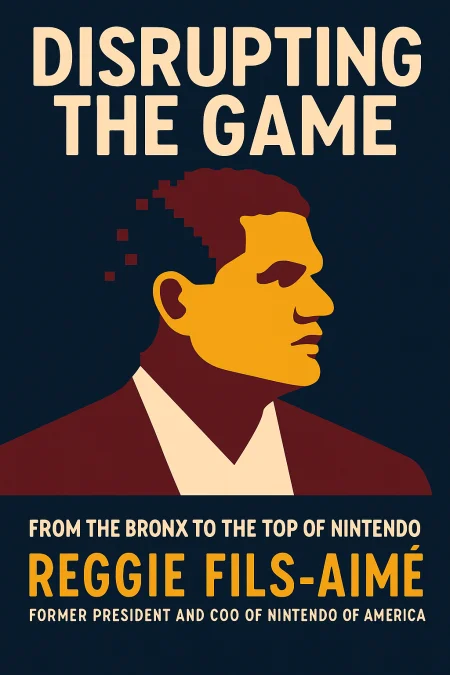
Disrupting the Game
From the Bronx to the Top of Nintendo
Book Edition Details
Summary
In the vibrant world of gaming legends, Reggie Fils-Aimé stands as a testament to the power of breaking the mold. From his roots in the Bronx to his tenure as the charismatic President of Nintendo of America, Reggie’s journey is a masterclass in defying expectations. His book, "Disrupting the Game," is more than a memoir; it's an electrifying blueprint for success against all odds. With unflinching honesty and dynamic storytelling, Reggie shares the secrets behind his innovative leadership style and his relentless pursuit of happiness and fulfillment. Readers are invited to harness the same disruptive spirit that fueled Reggie's ascent, learning to conquer doubt and skepticism with the grit and resilience necessary to chart their own extraordinary paths. This is not just a story of games; it’s a game-changer for anyone daring to dream big.
Introduction
In the high-stakes world of corporate leadership, few figures have commanded attention quite like the executive who boldly declared "My name is Reggie. I'm about kicking ass and taking names. And we're about making games." This wasn't just corporate bravado—it was the battle cry of a leader who would help transform one of the world's most beloved entertainment companies during its most challenging period. Born in the Bronx to Haitian immigrant parents, this remarkable individual would rise from humble beginnings to become one of the most recognizable faces in the gaming industry, breathing new life into Nintendo of America when the company desperately needed fresh vision and bold leadership. His journey represents more than just corporate success—it embodies the quintessential American dream realized through determination, strategic thinking, and an unwavering commitment to authentic leadership. From navigating the complexities of Japanese business culture to revolutionizing how companies communicate with their audiences, his story offers profound insights into modern leadership challenges. Readers will discover how authentic leadership can bridge cultural divides, how strategic risk-taking can revitalize entire industries, and how staying true to one's principles while adapting to change can create lasting impact. This is the story of a leader who didn't just disrupt the game—he redefined what it means to lead with courage, authenticity, and vision in an increasingly complex business world.
From the Bronx to Corporate America: Building Leadership Foundation
Growing up in a fifth-floor tenement in the Bronx, life taught early lessons about resilience and determination that would later prove invaluable in corporate boardrooms. The cramped one-bedroom apartment shared with parents and brother was a world away from executive suites, yet it provided the foundation for understanding that success requires relentless effort and unwavering focus. When violence literally reached their doorstep—blood trailing down the stairway from a stabbing victim—his parents made the courageous decision to relocate to Long Island, demonstrating that sometimes the most important leadership decision is knowing when to change course entirely. The transition to suburban Brentwood opened doors to academic excellence and athletic competition that shaped a competitive spirit destined for business warfare. Navigating the college application process without parental guidance taught self-reliance and resourcefulness, while earning an Air Force ROTC scholarship to Cornell University demonstrated the power of preparation meeting opportunity. These formative experiences instilled a fundamental belief that became a lifelong mantra: what happens to you is ultimately up to you. At Cornell, exposure to diverse ideas and rigorous academic standards expanded intellectual horizons while reinforcing the importance of asking penetrating questions and challenging conventional wisdom. The decision to leave the ROTC program despite its financial benefits revealed an early willingness to take calculated risks when personal conviction demanded it. Working as a teaching assistant provided first glimpses into the power of mentorship and the satisfaction of helping others grow and succeed. The recruitment by Procter & Gamble represented a pivotal moment where academic excellence intersected with corporate opportunity. Being selected as one of only a handful of undergraduates nationwide for their prestigious brand management program validated years of hard work while opening the door to learning from some of the world's best business minds. These early experiences created a leadership foundation built on authenticity, intellectual curiosity, and an unshakeable belief that with enough determination and strategic thinking, any obstacle could be overcome.
Nintendo's Transformation: Innovation, Risk-Taking, and Global Vision
When Nintendo called in 2003, the legendary gaming company was facing its darkest hour since the video game crash of the 1980s. The GameCube console was struggling against Sony's PlayStation 2 and Microsoft's new Xbox, while longtime fans questioned whether Nintendo had lost its innovative edge. Most executives would have seen joining a declining gaming company as career suicide, but this represented exactly the kind of challenge that demanded disruption. The opportunity to apply decades of marketing expertise to revitalize beloved franchises like Mario and Zelda proved irresistible, despite widespread advice from mentors to avoid the risk. The transformation began with understanding Nintendo's unique culture of craftsmanship and innovation, deeply rooted in Kyoto's centuries-old tradition of precision and artistry. Rather than simply importing American business practices, success required blending Western marketing sophistication with Japanese attention to detail and long-term thinking. This cultural bridge-building became essential when advocating for bold strategies like including Wii Sports as a pack-in game, requiring months of patient negotiation to convince Japanese executives that giving away premium content could actually drive hardware sales. Innovation flourished through embracing the company's contrarian philosophy of competing not on raw technological power but on entirely new forms of gameplay. While competitors focused on more realistic graphics and faster processors, Nintendo's team pursued motion controls, dual screens, and 3D visuals without glasses. The Nintendo DS launch demonstrated how proper positioning and messaging could turn skeptical media coverage into consumer enthusiasm, transforming a initially ridiculed "gimmick" into the best-selling handheld gaming system in history. Perhaps most significantly, the Wii console's development and launch proved that mature industries could still be completely reimagined through user-centric thinking. By designing controllers simple enough for grandparents yet sophisticated enough for hardcore gamers, Nintendo expanded the entire gaming market rather than simply competing for existing customers. This blue ocean strategy generated unprecedented success while teaching valuable lessons about how authentic innovation requires courage to pursue paths others consider impossible or impractical.
Leading Through Crisis: Courage, Authenticity, and Strategic Pivots
True leadership reveals itself during moments of crisis, and few tests were more challenging than navigating Nintendo through multiple setbacks while maintaining team morale and stakeholder confidence. The Nintendo 3DS launch exemplified how even well-intentioned strategies could falter when market conditions shifted unexpectedly. Despite incorporating innovative glasses-free 3D technology, the system's high launch price and limited software catalog resulted in disappointing sales, requiring swift and decisive action to prevent long-term damage to the company's reputation. The decision to implement a massive $80 price reduction just four months after launch represented a calculated risk that prioritized long-term success over short-term profits. This strategic pivot required convincing Japanese executives to accept significant financial losses while simultaneously managing retailer relationships and customer expectations. The introduction of the Ambassador Program, providing free games to early adopters, demonstrated how authentic leadership acknowledges mistakes while taking concrete steps to maintain customer trust and loyalty. Personal authenticity became crucial when cultural differences created tension between Nintendo's Japanese headquarters and Western markets. Rather than simply implementing directives from Kyoto, effective leadership required respectful but firm advocacy for regional market needs. This sometimes meant standing firm on controversial decisions, like maintaining focus on traditional franchises during retailer presentations rather than following the latest corporate messaging priorities, because understanding local market dynamics was essential for achieving global objectives. The Wii U's commercial struggles provided perhaps the most valuable learning experience about resilience and adaptation. When the innovative dual-screen concept failed to resonate with consumers, the leadership challenge became extracting lessons from failure while maintaining team confidence and investor support. This period demanded honest assessment of what went wrong—inadequate software launch lineup, confusing messaging, and development tool limitations—while simultaneously laying groundwork for the next generation console that would eventually become the record-breaking Nintendo Switch.
Legacy of Disruption: Empowering the Next Generation
After fifteen transformative years at Nintendo, the decision to retire at the peak of success reflected a fundamental leadership principle: knowing when to step aside to allow others to flourish. The Nintendo Switch had become the fastest-selling gaming console in history, software sales were breaking records, and the organization had developed deep bench strength across all key functions. This represented the ultimate leadership achievement—creating sustainable success that would continue long after the leader's departure. The transition to retirement revealed new opportunities for impact through mentoring and education. Accepting the role as Cornell University's first Leader in Residence provided a platform for sharing hard-won insights about courage, authenticity, and strategic thinking with the next generation of business leaders. Similarly, board positions with emerging companies like Spin Master offered chances to apply decades of experience helping organizations navigate growth challenges and cultural transformation. Perhaps most meaningfully, involvement with educational nonprofits in underserved communities created opportunities to give back to environments similar to childhood origins in the Bronx. Working with students facing economic and social challenges provided reminders that leadership principles transcend corporate boundaries—authenticity, perseverance, and strategic thinking prove equally valuable whether navigating boardroom negotiations or overcoming personal adversity. The establishment of core Life Principles distilled decades of experience into actionable guidance for aspiring leaders: taking personal responsibility for outcomes, developing resilience for inevitable setbacks, remaining open to alternative paths, embracing rather than avoiding fears, and maintaining perspective through life's inevitable ups and downs. These principles, tested through corporate battles and personal challenges, offer timeless wisdom for anyone seeking to create meaningful impact while staying true to their authentic self. The legacy lies not just in business achievements but in empowering others to pursue their own paths of positive disruption and authentic leadership.
Summary
The journey from a Bronx tenement to the pinnacle of corporate leadership illustrates that authentic success comes from staying true to core principles while remaining adaptable enough to thrive in changing circumstances. This remarkable career demonstrates that effective leadership transcends cultural boundaries, industry knowledge, and even traditional business training—it requires courage to challenge conventional wisdom, authenticity to build genuine relationships, and resilience to transform setbacks into opportunities for growth and innovation. Two key lessons emerge from this extraordinary story: first, that preparation combined with opportunity creates the foundation for success, but seizing those moments requires courage to take calculated risks and challenge the status quo; and second, that the most meaningful leadership legacy comes not from personal achievements but from empowering others to realize their own potential. These insights prove valuable for anyone seeking to create positive change in their organization or community, whether they're navigating corporate hierarchies, launching entrepreneurial ventures, or simply striving to live with greater authenticity and purpose in an increasingly complex world.
Related Books
Download PDF & EPUB
To save this Black List summary for later, download the free PDF and EPUB. You can print it out, or read offline at your convenience.
By Reggie Fils-Aimé
