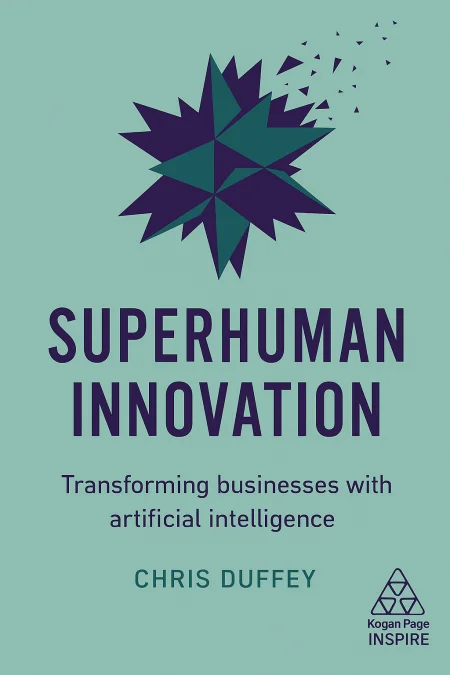
Superhuman Innovation
Transforming Business with Artificial Intelligence
Book Edition Details
Summary
Amidst the digital revolution, *Superhuman Innovation* emerges as a beacon of transformation, capturing the essence of how artificial intelligence is reshaping the very fabric of industries. AI isn't just a tool; it's the catalyst propelling businesses to transcend traditional boundaries. This guide illuminates the symbiosis between human creativity and machine precision, unlocking a new era of innovation. Through a compelling blend of real-world case studies, the book reveals a quintet of AI-driven pathways: accelerating workflows, unveiling profound insights, tailoring experiences, fostering relentless experimentation, and delivering measurable success. As industries evolve from healthcare to fashion, the narrative champions the power of human-machine collaboration, promising not just survival in a competitive market, but unprecedented growth and achievement. Prepare to be enthralled by the possibilities when cutting-edge technology meets visionary ambition.
Introduction
Imagine a world where your smartphone can instantly translate any language, where farmers can predict crop yields with stunning accuracy, and where doctors can diagnose diseases before symptoms even appear. This isn't science fiction—it's happening right now through artificial intelligence. Just as electricity transformed civilization over a century ago, AI is ushering in what experts call the Fourth Industrial Revolution, fundamentally changing how we work, create, and solve problems. This book reveals how AI isn't just about building smarter machines, but about amplifying human capabilities to superhuman levels. You'll discover how businesses are using AI to create personalized experiences at unprecedented scale, how the technology is solving complex challenges from traffic congestion to climate change, and most importantly, how the partnership between human creativity and machine intelligence is opening possibilities we never thought imaginable. The future isn't about humans versus machines—it's about humans with machines, and that future is already here.
The AI Foundation: Data, Infrastructure and Digital Transformation
The modern AI revolution didn't emerge in a vacuum—it was built on decades of technological groundwork that finally converged into something extraordinary. Think of it like a perfect storm of innovation: we had accumulated vast amounts of data from our digital lives, developed powerful cloud computing infrastructure, and created algorithms capable of learning from patterns. This foundation represents a fundamental shift from the computer age to the intelligence age. Data serves as the fuel for AI systems, much like gasoline powers a car engine. Every time you search online, make a purchase, or even walk past a security camera, you're contributing to massive datasets that AI systems use to learn and improve. But raw data alone isn't enough—it needs to be structured, cleaned, and made accessible. Companies like Amazon process billions of data points daily, from customer preferences to supply chain logistics, creating a digital nervous system that enables personalized recommendations and efficient delivery. The infrastructure supporting this transformation includes cloud computing platforms that can scale computing power instantly, networks fast enough to transmit massive amounts of information in real-time, and security systems protecting sensitive data. This digital backbone allows a startup in Silicon Valley to access the same computational resources as a Fortune 500 company, democratizing innovation in unprecedented ways. Digital transformation goes beyond just adopting new technologies—it's about reimagining entire business models around data-driven insights and automated processes. Companies that successfully navigate this transformation don't just add AI on top of existing operations; they redesign their organizations to leverage human creativity alongside machine intelligence, creating new forms of competitive advantage that were impossible just a decade ago.
The SUPER Framework: Speed, Understanding, Performance and Results
The SUPER framework provides a strategic roadmap for implementing AI successfully across any organization or industry. This acronym—Speed, Understanding, Performance, Experimentation, and Results—captures the five essential capabilities that AI brings to human endeavors, transforming ordinary operations into superhuman achievements. Speed represents AI's ability to accelerate processes that once took hours, days, or weeks. Manufacturing robots can now adapt to new tasks in minutes rather than months, content creators can produce personalized materials for millions of customers simultaneously, and medical diagnoses that required extensive testing can happen in real-time. This isn't just about doing things faster—it's about enabling entirely new possibilities when time constraints disappear. Understanding refers to AI's capacity to extract insights from vast amounts of information that would overwhelm human analysts. Netflix's recommendation engine doesn't just track what you watch; it analyzes viewing patterns, time of day, device usage, and even when you pause or rewind to understand your preferences better than you might understand them yourself. This deep comprehension allows businesses to anticipate needs and create experiences that feel almost telepathic. Performance encompasses AI's role in measuring, optimizing, and continuously improving outcomes. Formula One racing teams use hundreds of sensors to optimize car performance in real-time, while farmers employ AI to monitor soil conditions and weather patterns for maximum crop yields. The key insight is that AI doesn't just perform tasks—it learns from each interaction to perform them better next time. Experimentation and Results complete the framework by emphasizing AI's ability to test hypotheses rapidly and deliver measurable business value. Companies can now run thousands of A/B tests simultaneously, explore solutions to complex problems through simulation, and quantify the impact of AI investments with unprecedented precision.
AI Applications: From Smart Cities to Autonomous Systems
AI applications span virtually every sector of human activity, creating smart systems that learn, adapt, and optimize automatically. Smart cities represent one of the most ambitious implementations, where AI coordinates traffic lights to reduce congestion, manages energy grids to minimize waste, and even predicts crime patterns to improve public safety. Singapore uses AI-powered sensors throughout the city to monitor everything from air quality to pedestrian flow, creating a living laboratory for urban optimization. Autonomous systems extend far beyond self-driving cars to include ships that navigate oceans without crews, drones that deliver medical supplies to remote areas, and factories that manufacture products with minimal human oversight. These systems don't just follow pre-programmed instructions—they learn from their environment and adapt to unexpected situations. A self-driving car doesn't just recognize stop signs; it learns to navigate around construction zones, adjust for weather conditions, and even predict the behavior of other drivers. Healthcare applications demonstrate AI's life-saving potential through early disease detection, personalized treatment plans, and surgical assistance that enhances human precision. AI systems can now analyze medical images faster and more accurately than radiologists, identify drug interactions that might escape notice, and even predict patient deterioration hours before symptoms appear. The technology isn't replacing doctors but augmenting their capabilities with superhuman pattern recognition and data processing. In agriculture, AI is revolutionizing food production through precision farming that optimizes every aspect of crop growth. Sensors monitor soil moisture, drones identify pest infestations, and machine learning algorithms predict optimal harvest timing. This technology is particularly crucial as the global population grows and climate change creates new agricultural challenges. Some AI-powered farms now achieve yields 30-40% higher than traditional methods while using less water and fewer chemicals, pointing toward a more sustainable future for food production.
The Future of Human-AI Collaboration and Ethics
The future of AI isn't about artificial minds replacing human intelligence—it's about creating unprecedented partnerships between human creativity and machine capabilities. This collaboration takes three primary forms: AI as an assistant that handles routine tasks, as a peer that contributes unique perspectives, and occasionally as a manager that coordinates complex systems. The most successful implementations recognize that humans excel at creativity, empathy, and strategic thinking, while AI excels at pattern recognition, data processing, and consistent execution. Ethical considerations become paramount as AI systems gain more influence over important decisions. Questions of bias, privacy, and fairness aren't theoretical—they're practical challenges that organizations must address today. When AI systems learn from historical data, they can perpetuate past inequalities unless carefully designed to promote fairness. Companies are developing new approaches to "explainable AI" that can describe their decision-making processes, ensuring accountability and trust. The transformation of work represents both challenge and opportunity. While AI will automate certain jobs, history suggests it will create new categories of employment that we can barely imagine today. The key is ensuring that workers have time and resources to adapt, much like how the industrial revolution ultimately created more jobs than it eliminated, albeit in entirely different sectors. Education systems are beginning to emphasize skills that complement AI: critical thinking, emotional intelligence, and creative problem-solving. Looking ahead, the convergence of AI with other emerging technologies like quantum computing, biotechnology, and nanotechnology promises breakthroughs that could address humanity's greatest challenges. Climate change, disease, poverty, and resource scarcity all represent complex problems that might yield to the combined power of human insight and artificial intelligence. The goal isn't to create a world run by machines, but to augment human capabilities so dramatically that we can finally tackle challenges that have persisted throughout history.
Summary
Artificial intelligence represents the most significant technological shift since the invention of electricity, not because it replaces human intelligence, but because it amplifies our capabilities to superhuman levels. The SUPER framework—Speed, Understanding, Performance, Experimentation, and Results—provides a practical roadmap for harnessing AI's transformative power across any industry or application. From smart cities that optimize urban life to precision agriculture that could feed a growing planet, AI applications are already solving real-world problems and creating new possibilities for human flourishing. The future belongs to those who embrace the partnership between human creativity and machine intelligence, recognizing that our greatest achievements will come not from competing with AI, but from collaborating with it. As we stand at the threshold of this new era, the question isn't whether AI will change everything—it's whether we'll have the wisdom and courage to guide that transformation toward outcomes that benefit all of humanity. How might you apply these insights to your own work or community, and what role will you play in shaping this AI-augmented future?
Related Books
Download PDF & EPUB
To save this Black List summary for later, download the free PDF and EPUB. You can print it out, or read offline at your convenience.
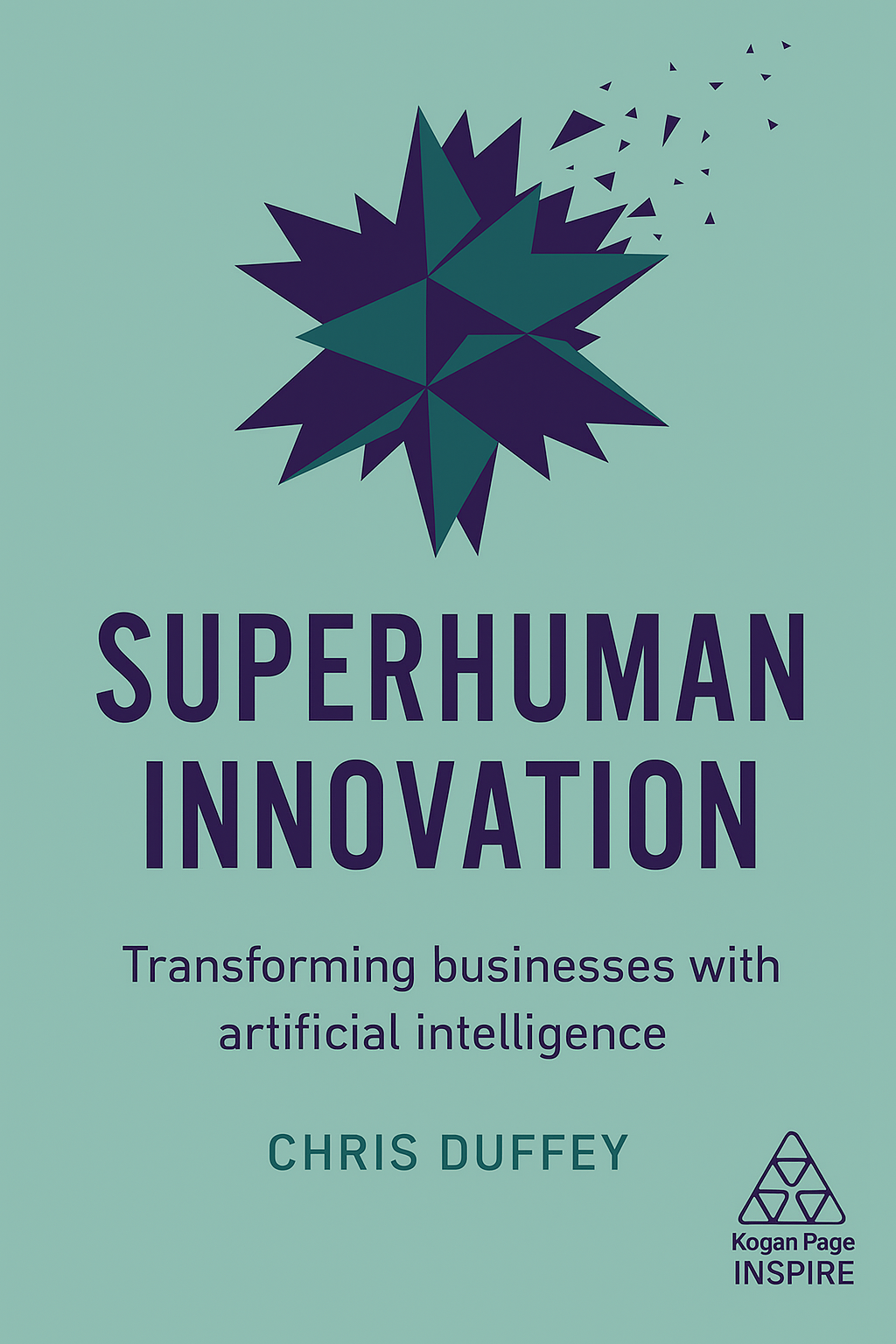
By Chris Duffey
