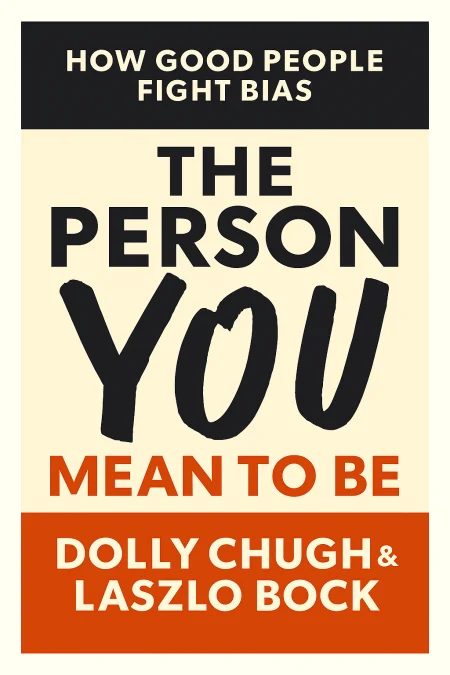
The Person You Mean to Be
How Good People Fight Bias
Book Edition Details
Summary
Everyday moments can become powerful acts of change if you dare to look within. In "The Person You Mean to Be," Dolly Chugh, a lauded social psychologist, offers a stirring roadmap for those yearning to bridge the gap between intent and action in the realm of equality. With sharp insights and a compassionate approach, Chugh dismantles the façade of the "good person" and champions the journey of becoming "good-ish"—a dynamic state of perpetual growth and awareness. Drawing from extensive research across multiple disciplines, she uncovers the hidden biases lurking in the shadows of our minds and provides pragmatic tools to transform them. Whether you're engaging in tough conversations or advocating for equity in your circles, this guide lights the path to mindful allyship, urging each of us to step beyond the comfortable confines of privilege and redefine what it truly means to stand on the right side of history.
Introduction
The gap between moral aspirations and actual behavior represents one of humanity's most persistent challenges. While most individuals genuinely embrace values of equality, fairness, and inclusion, their daily actions frequently contradict these principles through unconscious biases and unexamined privileges. This contradiction creates what psychologists term "bounded ethicality" - a state where well-meaning people alternately embody and betray their stated values, often without conscious awareness of the discrepancy. Traditional approaches to addressing bias have proven insufficient because they focus primarily on changing explicit attitudes rather than examining the deeper psychological and systemic forces that shape behavior. The framework presented here challenges this surface-level approach by demonstrating that meaningful progress requires a fundamental shift in self-concept - from viewing oneself as an inherently good person to embracing the identity of someone continuously learning and growing. This transformation demands developing a growth mindset about moral development, recognizing the reality of ordinary privilege, choosing difficult awareness over comfortable ignorance, and learning to engage constructively across difference. The analysis provides both psychological insight into why good intentions often fail to produce positive outcomes and practical strategies for becoming more effective advocates for equity and inclusion in everyday life.
The Psychology of Good People: Understanding Our Biases and Blind Spots
Human cognition operates through predictable patterns that systematically undermine efforts to create inclusive environments, despite sincere intentions to do otherwise. The brain processes millions of pieces of information every second, relying on unconscious shortcuts and categorical thinking to manage this overwhelming input. These mental shortcuts, while evolutionarily adaptive, create systematic biases that influence perception and behavior in ways that contradict conscious values about fairness and equality. Research consistently demonstrates that individuals who explicitly reject prejudice nonetheless harbor implicit biases that shape their actions. These unconscious associations form through cultural exposure and repeated messaging, creating automatic responses that bypass deliberate intention. When presented with evidence of their own biased behavior, most people experience psychological threat, triggering defensive mechanisms designed to protect self-image rather than promote accurate self-assessment. The phenomenon of bounded awareness compounds these challenges by literally preventing people from seeing information that contradicts their existing beliefs or threatens their moral identity. This selective attention operates like a mental filter, highlighting only evidence that confirms preexisting assumptions while rendering contradictory information invisible. The result creates a self-reinforcing cycle where individuals maintain their self-perception as fair and unbiased while continuing to engage in exclusionary behavior. Understanding these psychological realities requires abandoning the comfortable assumption that good intentions naturally translate into positive outcomes. Awareness of bias represents merely the starting point for a more complex process of behavioral change that must account for the mind's natural resistance to information that challenges cherished beliefs about personal character and societal fairness.
From Believer to Builder: Developing Growth Mindset and Willful Awareness
The fundamental distinction between those who merely believe in equality and those who actively build inclusive environments lies in their psychological approach to moral identity and personal development. Believers operate from a fixed mindset, treating their values and character as established traits that define their essential goodness. This perspective creates vulnerability to defensive reactions when their behavior is questioned, as challenges to specific actions feel like attacks on their fundamental identity. Builders embrace a growth mindset about moral development, understanding that becoming a good person represents an ongoing process rather than a fixed state. This perspective allows them to receive feedback about potentially harmful behavior without experiencing existential threat to their self-concept. When builders make mistakes - which they inevitably do - they can acknowledge the impact of their actions, learn from the experience, and adjust their behavior accordingly. The transition from believer to builder requires developing what researchers call willful awareness - the deliberate choice to seek out information and perspectives that challenge comfortable assumptions. While human psychology naturally gravitates toward confirmation bias and selective attention, willful awareness involves consciously exposing oneself to experiences that reveal previously invisible aspects of privilege and disadvantage. This process often feels uncomfortable because it disrupts cherished narratives about meritocracy and individual achievement. Willful awareness also demands creating psychological safety for oneself and others during the difficult process of recognizing and addressing bias. This involves extending grace - both to oneself when confronting personal shortcomings and to others who are engaged in similar learning processes. The goal becomes continuous improvement rather than perfect performance, allowing for the vulnerability and mistakes that inevitably accompany genuine growth and learning.
The Four Dangerous Modes: How Good Intentions Can Cause Harm
Well-intentioned individuals often operate in psychological modes that, despite sincere motivations, actually reinforce exclusion and marginalization. These patterns emerge from the human need to maintain positive self-image while engaging with uncomfortable realities about difference and inequality. Understanding these modes reveals why diversity and inclusion efforts frequently produce disappointing results despite widespread support for their goals. Savior mode positions the helper as the primary agent of change, centering their own needs for validation and heroic identity over the actual needs of those they claim to support. This approach treats symptoms rather than addressing systemic causes and often creates dependency relationships that ultimately disempower marginalized communities. Individuals operating in savior mode seek recognition for their good deeds and become frustrated when their efforts are not appreciated in the ways they expect. Sympathy mode maintains emotional distance by feeling sorry for others rather than developing genuine empathy and understanding. This perspective preserves the helper's sense of superiority while failing to create authentic connection or meaningful support. Sympathy focuses on the helper's emotional response rather than the actual experiences and needs of those facing challenges, often leading to misguided interventions that miss the mark entirely. Tolerance and difference-blindness modes attempt to minimize discomfort by either grudgingly accepting difference or pretending it does not exist. Both approaches fail to recognize that ignoring or merely tolerating difference prevents the deeper work of understanding how various identities shape lived experiences. These modes often manifest in claims of color-blindness or assertions that "we're all the same," which effectively silence discussions about systemic barriers and their differential impacts on different groups.
Engaging as Builders: Practical Strategies for Inclusion and Confronting Bias
Moving from passive belief to active building requires specific strategies that translate good intentions into measurable impact on creating inclusive environments. Effective inclusion work operates simultaneously at interpersonal and systemic levels, addressing both individual behavior patterns and structural barriers that perpetuate inequality. The most successful approaches combine personal behavior change with environmental modifications that make inclusive outcomes more likely to occur naturally. Inclusive leadership begins with creating psychological safety that allows all participants to contribute authentically without fear of judgment or retaliation. This involves examining meeting dynamics to ensure equitable speaking time, actively soliciting perspectives from typically marginalized voices, and paying careful attention to credit attribution patterns. Research demonstrates systematic tendencies for contributions from women and people of color to receive less recognition than identical contributions from white men, making deliberate credit redirection a crucial leadership skill. Confronting bias effectively requires strategic thinking about when, how, and with whom to engage in difficult conversations. The most impactful interventions target the "movable middle" rather than attempting to convert committed opponents or preaching to existing allies. This approach recognizes that social norms powerfully influence behavior, making it possible to change actions even when underlying attitudes remain unchanged. Successful confrontation focuses on behavior rather than character, uses questions rather than accusations, and maintains relationships while challenging problematic statements or actions. Meaningful allyship involves listening more than speaking, following rather than leading, and using privilege to amplify rather than replace marginalized voices. This work requires sustained commitment that extends beyond moments of crisis or high visibility, focusing on consistent daily actions that create conditions where others can succeed. Effective allies measure their success not by their own comfort or recognition, but by the increased inclusion and advancement of those who have historically faced barriers to full participation.
Summary
The transformation from well-intentioned believer to effective builder requires confronting uncomfortable truths about how human psychology operates in diverse environments and developing specific skills for translating values into action. Despite sincere commitments to equality, unconscious biases and defensive psychological mechanisms consistently undermine efforts to create inclusive communities unless deliberately counteracted through systematic behavior change. The path forward demands embracing growth mindset thinking about moral development, choosing willful awareness over comfortable ignorance, avoiding the four dangerous modes that center helper needs over actual impact, and developing practical strategies for inclusive leadership and constructive confrontation. Effective inclusion work operates through sustained daily practice rather than episodic efforts, focusing on structural changes that make equitable outcomes more likely while simultaneously building individual capacity for authentic cross-difference relationships that advance justice and belonging for all community members.
Related Books
Download PDF & EPUB
To save this Black List summary for later, download the free PDF and EPUB. You can print it out, or read offline at your convenience.
By Laszlo Bock
