
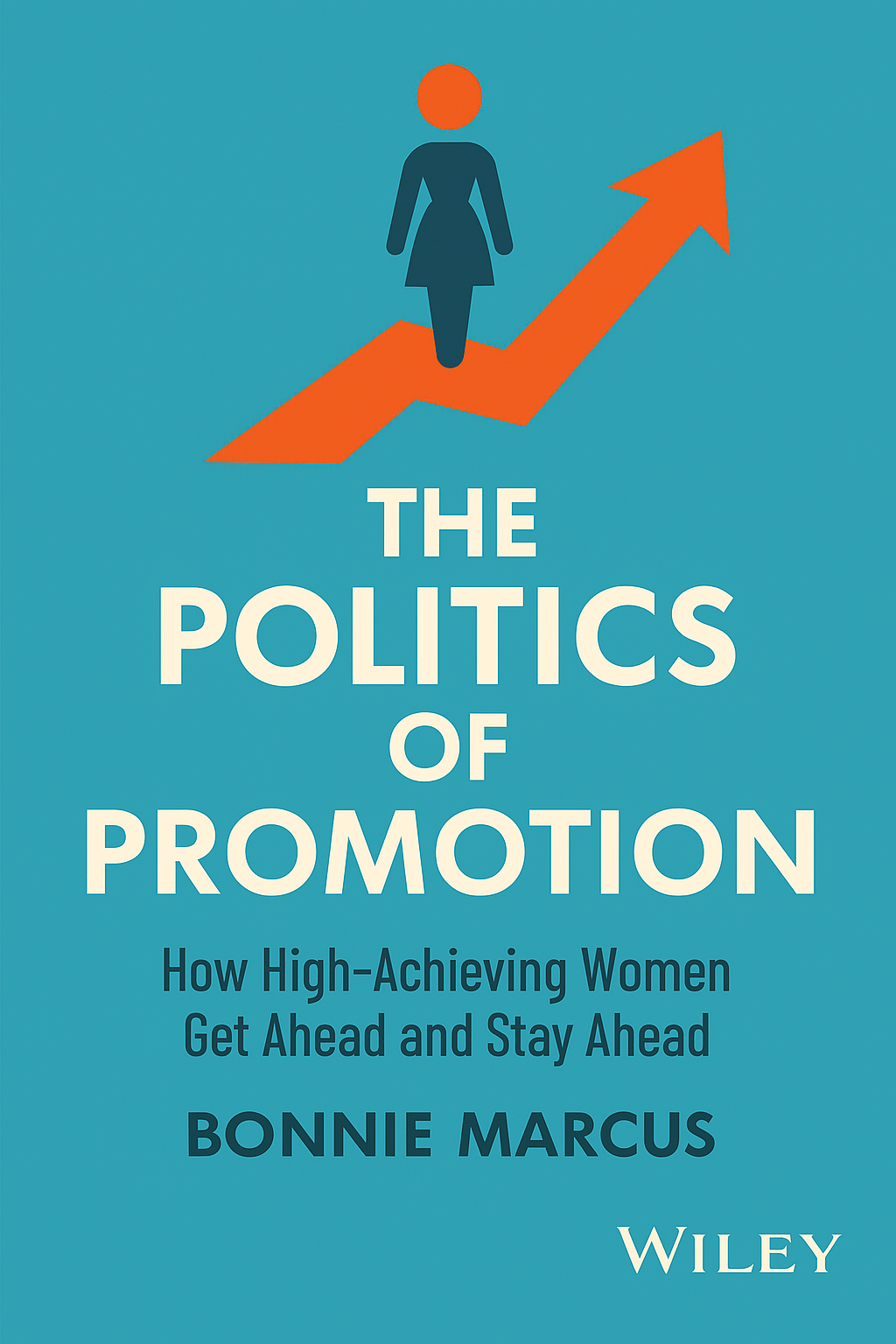
The Politics of Promotion
How High-Achieving Women Get Ahead and Stay Ahead
Book Edition Details
Summary
Crack the code of corporate influence and take charge of your career destiny with Bonnie Marcus's illuminating guide, "The Politics of Promotion." Geared toward women aiming to break through the glass ceiling, this book dismantles the myth that hard work alone guarantees advancement. Marcus, a seasoned career coach, reveals the hidden dynamics of workplace politics and the strategic networking essential for climbing the ladder. Through her proven methods, readers discover how to cultivate powerful relationships and secure the recognition they truly deserve. Embrace the reality that navigating office politics is not just a necessity but a skill that can be mastered. Equip yourself with the tools to defy stereotypes and bias, transforming the workplace into a realm where you wield influence and forge your path to success.
Introduction
You work incredibly hard, possess the skills and education needed for success, and pour your passion into every project. You believe your excellent performance will naturally lead to promotions and recognition. Then the unthinkable happens: someone less qualified gets the position you deserved, leaving you shocked and questioning everything you thought you knew about career advancement. This scenario plays out in workplaces everywhere, every day, as talented women discover that performance alone isn't enough to climb the corporate ladder. The truth is that workplaces are highly political environments where decisions about advancement, compensation, and opportunities aren't based solely on merit. While your technical competence and work ethic are essential foundations, they represent only part of the equation. The missing piece is political savvy: the ability to understand workplace dynamics, build influential relationships, and strategically position yourself for success. This isn't about manipulation or compromise your integrity; it's about developing the relationship-building skills necessary to thrive in any organization.
Build Your Political Toolkit for Success
Political savvy is fundamentally about understanding how decisions are made in your organization and positioning yourself accordingly. It's the combination of social awareness and interpersonal influence that allows you to build trust, gain credibility, and create opportunities for advancement. Rather than viewing politics as something distasteful, successful women learn to see it as essential relationship-building that benefits everyone involved. Consider Katherine, a talented managing director at a global bank who felt stuck despite her exceptional performance. She realized she had been managing her technical expertise and skill development but had never strategically managed her career advancement or political connectivity within the firm. Katherine understood that she needed to shift from simply doing great work to actively building relationships with decision-makers and influencers who could impact her future. Once Katherine began using political tools strategically, her career trajectory changed dramatically. She started meeting regularly with key stakeholders, offering her expertise to help them solve business challenges, and building visibility across different departments. Within six months of adopting this approach, she received her first promotion to managing director, followed by another promotion to co-head of the Financial Institutions Group within eighteen months. The key to Katherine's success was learning to observe workplace dynamics systematically, identify who held real power and influence, and build authentic relationships based on mutual value. Start by mapping out the decision-makers in your organization, understanding what motivates them, and finding ways to contribute to their success while advancing your own goals. Remember that political skill is learnable, not an innate talent. Begin by dedicating time each week to step back from your daily tasks and observe the bigger picture of how your organization really operates.
Master Strategic Self-Promotion and Networking
Self-promotion isn't about bragging or tooting your own horn; it's a crucial leadership skill that involves communicating your value proposition and helping others understand how you contribute to business success. Your value proposition is the unique way you deliver work that leads to positive outcomes. Without this visibility, even the most talented professionals remain invisible and miss opportunities for advancement. Linda Descano, a managing director at Citi, exemplifies effective self-promotion as a leadership tool. When she received the Changing the Game Award from Advertising Women of New York, she immediately informed her manager, framing it not as personal glory but as a team victory. She explained how the recognition reflected the entire team's efforts and connected it directly to business value, showing how their social media initiatives were driving measurable results for the company. Linda's approach demonstrates how authentic self-promotion creates win-win scenarios. By highlighting her team's accomplishments alongside her own recognition, she built credibility as a leader while giving her team members visibility they deserved. This strategic communication led to increased opportunities, including being invited by the global chief marketing officer to present at high-level town hall meetings, which she often delegated to deserving team members to further develop their careers. To master strategic self-promotion, start by identifying your unique value proposition through self-reflection. Ask yourself what specific contributions you make that lead to business success, then practice articulating this in terms of outcomes rather than activities. Create a weekly status report highlighting your achievements and their business impact, and share it strategically with key stakeholders who need to understand your contributions. Build your network intentionally by reaching out to one new person each week, focusing on how you can help them achieve their goals rather than what you need from them. Remember that effective networking is about building mutually beneficial relationships over time, not collecting business cards at events.
Leverage Sponsorship and Coaching for Advancement
Sponsorship represents the fastest track to career advancement, yet many women remain overmentored and undersponsored. While mentors provide advice and guidance, sponsors actively advocate for your advancement, using their political capital to create opportunities and open doors. The difference is profound: mentors talk to you about your career, while sponsors talk to others about your potential and actively work to advance your position. Research shows that men are 46 percent more likely than women to have sponsors, creating a significant disadvantage for female professionals. Consider the experience of Katherine, who developed a relationship with a senior executive over ten years. Initially serving as a mentor providing guidance, he became her strongest sponsor when he moved to a position where he could directly impact her career trajectory. He engineered opportunities specifically designed to include her in high-visibility projects and actively promoted her for leadership roles. The transformation was remarkable. Katherine's sponsor didn't just advise her; he created pathways for advancement that she couldn't have accessed alone. When a senior position opened in his division, he structured the opportunity to showcase her strengths and advocated for her selection. This sponsorship relationship, combined with executive coaching support, resulted in two promotions within eighteen months and positioned her for continued advancement. To secure sponsorship, focus on building relationships with senior executives who have real power to influence decisions about your career. Look for leaders two levels above you with line of sight to your role, and remember that the only thing that matters when choosing a sponsor is power, not whether you admire their leadership style. Make yourself sponsor-ready by consistently delivering exceptional results and communicating your career aspirations clearly. Consider working with an executive coach who can help you navigate the complexities of building these relationships while developing the political skills necessary for senior leadership roles. The combination of sponsorship and coaching provides both advocacy and skill development, accelerating your path to leadership positions.
Stay Ahead in Leadership Positions
Reaching a leadership position is just the beginning; staying ahead requires even greater political sophistication. At senior levels, political skill becomes more important than technical competence, as success depends on your ability to inspire others, build consensus, and navigate increasingly complex organizational dynamics. The competition intensifies, and the stakes get higher with every promotion. Many promising executives fail not because they lack talent, but because they lack social effectiveness. Research from the Center for Creative Leadership shows that "executive derailment" is primarily caused by insufficient political and social skills. Consider the cautionary tale of high-profile executives like Sallie Krawcheck, who despite her exceptional qualifications and track record, found herself unable to navigate the complex cultural dynamics at Bank of America after it acquired Merrill Lynch. Sallie's challenge illustrates the danger of becoming an outsider even within your own organization. Despite her expertise and previous success, she struggled to build the relationships necessary to be effective in the new environment. She was excluded from informal meetings where real decisions were made and lacked access to the inner circles of power and influence. Even her strong business results couldn't compensate for her outsider status. The key to staying ahead is maintaining your political toolkit usage with renewed focus and sophistication. Continue using self-reflection to understand your authentic leadership style and leverage your strengths while building diverse teams that complement your capabilities. Keep your magnifying glass focused on ever-changing workplace dynamics, as power structures shift frequently in senior roles. Expand your strategic network to include peers, senior leaders, and external contacts who can provide different perspectives and opportunities. Consider working with multiple sponsors and maintaining relationships with executive coaches who can provide ongoing guidance as you navigate increasingly complex leadership challenges. Remember that at senior levels, your success depends entirely on your ability to achieve results through others, making relationship-building and political skill absolutely essential for sustained success.
Summary
Career advancement requires more than exceptional performance and technical expertise; it demands the political savvy to build relationships, create visibility, and strategically position yourself for opportunities. As one executive learned through experience, "You can't just operate; you can't just do your work. There's a bigger picture, and you have to stay conscious of what's going on around you." The most successful professionals understand that workplace politics isn't about manipulation or compromise; it's about building authentic relationships that create value for everyone involved. The path forward requires commitment to developing your political toolkit systematically. Start by identifying your unique value proposition and learning to communicate it effectively. Observe workplace dynamics to understand who holds real power and influence. Build strategic networks that support your career goals while helping others achieve theirs. Seek out sponsors who can actively advocate for your advancement, and consider working with executive coaches who can accelerate your development. Take action today by scheduling time this week to step back from your daily tasks and assess the political landscape around you. Identify one key relationship you need to build or strengthen, and reach out to that person with an offer to help them achieve their goals. Your career advancement depends not just on what you know or how hard you work, but on your willingness to engage authentically in the relationship-building that drives organizational success.
Related Books
Download PDF & EPUB
To save this Black List summary for later, download the free PDF and EPUB. You can print it out, or read offline at your convenience.
By Bonnie Marcus
