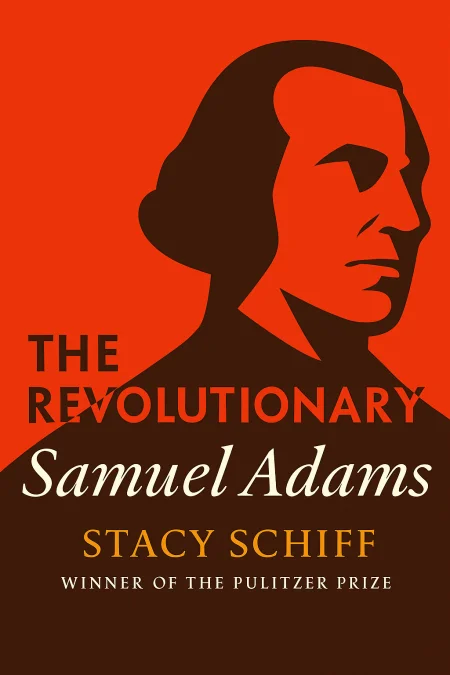
The Revolutionary
Samuel Adams
Book Edition Details
Summary
In the vibrant tapestry of America’s birth, one figure stands as its ardent heartbeat: Samuel Adams. With the brilliance of Stacy Schiff’s storytelling, "The Revolutionary: Samuel Adams" pulls back the curtain on a man who wove ideals and cunning into the very fabric of revolution. Here is Adams, not merely a name in history books, but a shrewd tactician whose voice thundered through colonial streets, from the uproar of the Boston Massacre to the defiant brew of the Boston Tea Party. As the mastermind who united a fledgling nation’s dreams, he became the face of treason, the man Paul Revere rode to warn. Schiff’s narrative resurrects a restless spirit, a fervent architect of liberty whose unyielding drive reshaped destiny. This is not just a history lesson; it’s an electrifying saga of rebellion and relentless vision, capturing the essence of a man who dared to imagine freedom.
Introduction
In the smoky back rooms of colonial Boston, where candlelight flickered against weathered faces and the scent of rum mingled with revolutionary fervor, one man quietly orchestrated what would become the most consequential political transformation in modern history. This is not the story of dramatic battlefield heroics or stirring speeches from marble steps, but rather the tale of how a failed tax collector and bankrupt businessman became the master architect of American independence through the patient art of political organization, propaganda, and popular mobilization. The story reveals how revolutions truly unfold—not through sudden eruptions of violence, but through years of careful preparation, strategic communication, and the gradual awakening of ordinary citizens to their own power. It illuminates three crucial questions that resonate far beyond the eighteenth century: How does a small group of dedicated individuals challenge an empire? What role does information warfare play in political transformation? And how do seemingly powerless people discover they can reshape their world? This narrative will captivate anyone seeking to understand the mechanics of political change, the power of grassroots organizing, and the delicate balance between order and revolution that defines democratic societies.
From Failed Tax Collector to Political Awakening (1722-1765)
Samuel Adams entered middle age as one of Boston's most spectacular failures. Born into a prosperous malting family in 1722, he had squandered every opportunity that privilege could provide. Harvard-educated and well-connected, he had abandoned the ministry, failed at law, and run his inherited business into the ground. By his forties, he was known primarily for his inability to collect taxes from his fellow Bostonians, accumulating debts that would have bankrupted lesser men and earning the contempt of the colonial establishment. Yet this very failure contained the seeds of revolutionary genius. Adams's financial struggles had brought him into intimate contact with ordinary working people—the artisans, shopkeepers, and laborers who formed the backbone of colonial society but rarely had their voices heard in political circles. His years of humiliation at the hands of Crown officials and wealthy merchants had given him a visceral understanding of how power operated in colonial America, and more importantly, how it might be challenged. The transformation began with the Land Bank controversy of the 1740s, when Adams's father had joined other middle-class colonists in creating an alternative currency backed by land rather than scarce gold and silver. When Parliament destroyed the bank and held its directors personally liable for massive debts, young Adams witnessed firsthand how distant authorities could devastate colonial lives with the stroke of a pen. This early lesson in imperial overreach would shape his entire political philosophy: that power, once concentrated, inevitably corrupts, and that ordinary people must remain eternally vigilant against those who would govern them. The Stamp Act crisis of 1765 provided Adams with his moment of destiny. When Parliament imposed the first direct tax on the American colonies, requiring stamps on everything from newspapers to playing cards, Adams emerged from obscurity to craft the intellectual framework for resistance. His writings transformed what might have been mere economic complaints into a profound constitutional argument about the rights of English subjects and the limits of parliamentary authority. The failed tax collector had discovered his true calling as a revolutionary theorist and organizer.
Master of Resistance: Building Revolutionary Networks (1765-1773)
The decade following the Stamp Act crisis revealed Adams at his most innovative, as he transformed scattered colonial complaints into a systematic challenge to British rule. When Parliament passed the Townshend Acts in 1767, imposing duties on glass, paint, paper, and tea, Adams recognized an opportunity to expand the resistance beyond Massachusetts. His creation of committees of correspondence in 1772 represented a revolutionary breakthrough in political organization, establishing the first continental network for coordinating opposition to British policy. These committees served multiple functions that extended far beyond simple communication. They educated rural communities about their rights, provided early warning systems for British actions, and most crucially, created a sense of shared identity among colonists who had previously thought of themselves primarily as Virginians, New Yorkers, or Pennsylvanians. As Adams explained to his correspondents, the committees would "establish a union which is formidable to our adversaries." The arrival of British troops in Boston in 1768 marked another crucial phase in Adams's revolutionary apprenticeship. While other colonial leaders worried about armed confrontation, Adams saw the occupation as a propaganda gift that would demonstrate to all America the logical endpoint of imperial policy. Through the "Journal of Occurrences," a carefully crafted news service that circulated throughout the colonies, he documented every abuse, insult, and confrontation between soldiers and civilians. When the Boston Massacre occurred in March 1770, Adams was perfectly positioned to transform a tragic street fight into a continental cause célèbre. Adams's mastery of political theater reached its peak during these years. The famous effigy hanging from the Liberty Tree, the ritualistic destruction of property, and the massive funeral processions were not spontaneous outbursts of mob violence, but precisely planned political performances designed to communicate colonial grievances to both local and international audiences. He understood that successful resistance required more than angry crowds—it demanded what British officials described with grudging admiration as a "trained mob" capable of disciplined political action.
From Tea Party to Continental Revolution (1773-1776)
The Tea Act of 1773 provided Adams with the perfect opportunity to escalate colonial resistance into open rebellion. While the act actually lowered tea prices for most colonists, Adams recognized its deeper threat to colonial self-governance and the precedent it would set for future British policies. The Boston Tea Party, which he helped orchestrate while maintaining plausible deniability, represented the culmination of his strategy of controlled escalation and demonstrated his mastery of symbolic violence. The destruction of the tea showcased Adams's understanding of political theater on a continental scale. By disguising the participants as Mohawk Indians, he created a powerful symbol of American resistance while deflecting responsibility from identifiable individuals. The careful choreography of the event, from the preliminary meetings to the actual destruction, showed how Adams could channel popular anger into effective political action while maintaining the appearance of spontaneous uprising. Parliament's response with the Coercive Acts in 1774 played directly into Adams's hands, providing the external threat that could unite the colonies in common cause. By punishing all of Boston for the actions of a few, the British government validated his argument that colonial liberties were under systematic attack. Adams's committees of correspondence ensured that every colony understood the implications: if Massachusetts could be stripped of its rights today, any colony could face the same fate tomorrow. At the First Continental Congress, Adams found himself among kindred spirits who shared his vision of American independence, even if they could not yet speak its name openly. His role shifted from agitator to statesman, but his methods remained consistent: patient coalition building, careful attention to public opinion, and an unwavering focus on the ultimate goal of separation from Britain. When fighting finally broke out at Lexington and Concord in April 1775, Adams greeted it not as a tragedy but as the inevitable and necessary next step in the colonial journey toward independence. The Declaration of Independence in 1776 represented the culmination of more than a decade of Adams's patient work, transforming his revolutionary vision into the founding document of a new nation.
Legacy of America's Prime Revolutionary Strategist (1776-1803)
The transition from revolutionary to statesman proved more challenging for Adams than the overthrow of British rule. His talents for opposition and resistance were less well-suited to the compromises and accommodations required for building new institutions. During his later years in Congress, Adams often found himself isolated, defending principles that his colleagues viewed as impractical or outdated in the rapidly changing post-revolutionary world. His suspicion of concentrated power, which had served the revolutionary cause so well, made him skeptical of the strong federal government proposed by the Constitution. Adams worried that Americans might simply exchange British tyranny for domestic despotism, and he insisted on a Bill of Rights to protect individual liberties. His concerns reflected deeper anxieties about whether republican virtue could survive in a large, diverse nation increasingly focused on commercial success rather than civic duty. As Governor of Massachusetts in his final years, Adams struggled to remain relevant in a political culture that had moved beyond the revolutionary generation's preoccupations. His opposition to aristocratic societies, his continued warnings about luxury and corruption, and his insistence on the importance of public education all reflected his belief that eternal vigilance was the price of liberty. Yet many of his contemporaries viewed these concerns as the obsessions of an old man unable to adapt to changing times. Adams's death in 1803 marked the end of an era, but his influence extended far beyond his lifetime. The networks of correspondence he had created provided a template for political organization that would be copied by movements throughout American history. His understanding of how ideas spread through society, how grievances could be transformed into principled opposition, and how local concerns could be connected to universal principles established patterns that would define American political culture. Perhaps most importantly, his career demonstrated that ordinary citizens, working together and guided by clear principles, could challenge and ultimately overthrow even the most powerful institutions when those institutions lost their legitimacy.
Summary
The story of Samuel Adams reveals the American Revolution as fundamentally a revolution in political consciousness, orchestrated by a master strategist who understood that lasting change required transforming how people thought about authority, rights, and their relationship to government. The central tension that drove this transformation was the conflict between an imperial system based on hierarchy and deference, and emerging American ideas about popular sovereignty and individual rights. Adams's genius lay in his ability to connect abstract political theories to concrete grievances that ordinary colonists could understand and act upon. He demonstrated that successful political movements require both principled arguments and practical organization, both moral authority and strategic thinking. His creation of networks for communication and coordination showed how local communities could be connected to larger causes, transforming isolated complaints into systematic resistance. The lessons from this revolutionary era remain remarkably relevant for contemporary political action. First, lasting change requires patient work to shift public opinion and build institutional capacity, not just dramatic gestures or charismatic leadership. Second, successful movements must connect their specific grievances to universal principles that can inspire broader coalitions. Finally, the most effective political organizing happens at the grassroots level, where abstract ideas are translated into concrete actions that ordinary people can take in their own communities. Adams's career reminds us that in democratic societies, the most powerful force for change is not wealth or official position, but the organized commitment of citizens who refuse to accept injustice as inevitable.
Related Books
Download PDF & EPUB
To save this Black List summary for later, download the free PDF and EPUB. You can print it out, or read offline at your convenience.
By Stacy Schiff
