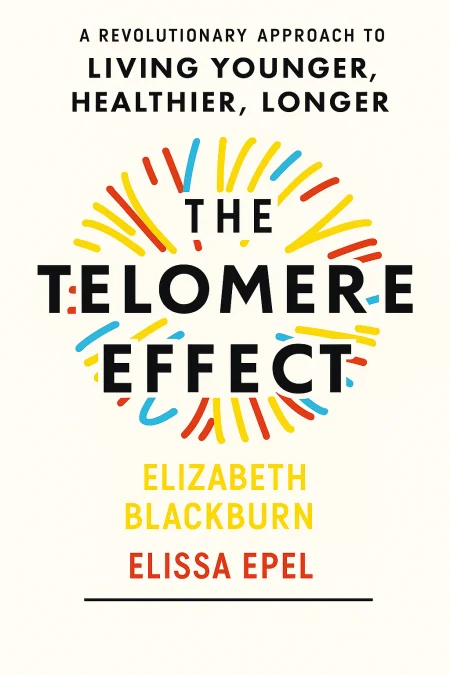
The Telomere Effect
A Revolutionary Approach to Living Younger, Healthier, Longer
byElizabeth Blackburn, Elissa Epel
Book Edition Details
Summary
Why do some individuals seem to defy the very essence of time, their vitality and youthful aura belying their years, while others succumb to the weight of age prematurely? At the heart of this mystery lies telomerase, a groundbreaking enzyme that Nobel laureate Dr. Elizabeth Blackburn identified as the guardian of our genetic legacy. Alongside health psychologist Dr. Elissa Epel, she unveils the intricate dance of lifestyle, psychology, and biology that influences our cellular destiny. "The Telomere Effect" distills years of pioneering research into a captivating guide, revealing how our daily choices—be it diet, exercise, or mental resilience—profoundly shape our telomeres and, consequently, our lifespan. This book challenges us to rethink our lives, offering practical wisdom to enhance not just longevity, but the quality of our years, ensuring they are lived with vigor and purpose.
Introduction
Picture this: two identical twins celebrate their 50th birthday together, yet one looks vibrant and energetic while the other appears tired and worn down. What could explain such a dramatic difference when they share the same genes? The answer lies hidden within every cell of their bodies, in tiny protective structures called telomeres that act like biological clocks, ticking away at different speeds depending on how each twin has lived their life. These microscopic caps at the ends of our chromosomes don't just passively count the years—they actively respond to our daily choices, from how we handle stress to what we eat for breakfast. Recent groundbreaking research has revealed that these cellular timekeepers hold the key to understanding why some people age gracefully while others deteriorate prematurely, and most remarkably, that we have far more control over this process than anyone previously imagined. You'll discover how your thoughts can literally change your cells, why certain foods act like cellular poison while others provide protection, and how the communities we live in can either accelerate or slow down our biological aging. This isn't just about living longer—it's about understanding how every moment of our lives writes itself into our cellular story, and how we can learn to write a better ending.
Understanding Telomeres: The Cellular Clocks of Aging
Imagine your chromosomes as shoelaces, and telomeres as the plastic tips that prevent them from fraying. These protective DNA sequences, made up of repeating genetic letters, sit at the end of every chromosome in your body like tiny shields guarding your most precious genetic information. Each time a cell divides to repair tissue or replace worn-out parts, these telomeres get slightly shorter, like a candle burning down with each use. This shortening process serves as a built-in cellular counting system, tracking how many times each cell has divided throughout your lifetime. When telomeres become critically short, something fascinating happens: the cell can no longer divide safely and enters a state called senescence, essentially retiring from active duty. But these retired cells don't simply disappear quietly—they become troublemakers, sending out inflammatory signals that damage nearby healthy tissue. It's like having cranky neighbors who constantly complain and make life difficult for everyone around them. This cellular inflammation contributes to many age-related diseases, from heart problems to cognitive decline. The revolutionary discovery that changed everything was realizing that telomere length varies dramatically between people of the same age, and this variation predicts health outcomes with startling accuracy. Some 60-year-olds have telomeres as long as typical 40-year-olds, while others show cellular aging equivalent to 80-year-olds. People with longer telomeres consistently show lower rates of heart disease, diabetes, and cancer, along with better immune function and cognitive performance as they age. What makes this discovery truly empowering is that telomere length isn't simply determined by genetics. While we inherit a starting length from our parents, our lifestyle choices continuously influence whether our cellular clocks tick rapidly or maintain their protective length. Scientists have even discovered an enzyme called telomerase that can actually rebuild these protective caps, suggesting that cellular aging isn't a one-way street but a dynamic process we can influence through how we choose to live our lives.
Stress and Lifestyle: How Mind and Body Affect Telomeres
The connection between our mental state and cellular aging was first discovered through studying mothers caring for chronically ill children. These devoted caregivers, living under enormous psychological pressure, showed dramatically accelerated cellular aging—with the most stressed mothers having telomeres that appeared decades older than their actual age. This groundbreaking finding revealed that stress doesn't just affect our mood or energy levels; it literally gets under our skin and rewrites our cellular story at the most fundamental level. The key insight is that not all stress damages our cells equally. When we perceive situations as overwhelming threats that we can't handle, our bodies respond with a cascade of stress hormones, chronic inflammation, and cellular damage that directly attacks our telomeres. However, when we view the same challenging situation as an opportunity for growth—feeling energized and confident rather than defeated—our physiological response actually supports cellular health. It's the same stressful event, but our interpretation determines whether it ages us rapidly or helps us grow stronger. The most destructive thought patterns for cellular health include rumination, where we endlessly replay problems without finding solutions, and cynical hostility, characterized by chronic mistrust and anger toward others. These mental habits keep stress hormones elevated long after stressful events have passed, creating a toxic internal environment that accelerates telomere shortening. Even trying to suppress unwanted thoughts backfires, making them more intrusive and stressful, like trying not to think of a pink elephant. Fortunately, we can protect our cellular health by developing more resilient thinking patterns. Mindfulness meditation, which teaches us to observe our thoughts without being controlled by them, has been shown to increase telomerase activity by up to 30 percent in just a few months. Self-compassion—treating ourselves with the same kindness we'd show a good friend—reduces inflammation and supports cellular repair. Even simple techniques like reframing stressful situations as challenges rather than threats can shift our biology from cellular damage to cellular protection, demonstrating the remarkable power of perspective in determining our biological destiny.
Protecting Your Cells: Nutrition, Exercise and Environmental Factors
The foods we eat create the cellular environment where our telomeres must survive and thrive, either providing the nutrients needed for optimal cellular health or feeding the enemies that attack our protective DNA caps. Three primary villains threaten telomere health: chronic inflammation, oxidative stress, and insulin resistance. Highly processed foods, sugary drinks, and refined carbohydrates fuel all three enemies simultaneously, while whole foods rich in antioxidants and healthy fats actively combat them like cellular superheroes. Sugary beverages represent perhaps the most dramatic dietary threat to our cellular clocks. People who consume just one 20-ounce soda daily show telomere shortening equivalent to 4.6 years of additional aging—remarkably similar to the cellular damage caused by smoking cigarettes. The rapid glucose spike from liquid sugar overwhelms our cellular defenses, triggering inflammation and oxidative damage that directly attacks telomere DNA. This effect is so powerful that even children as young as three show measurable telomere damage when consuming multiple sodas per week. Physical activity emerges as one of our most powerful cellular protectors, but the relationship isn't what most people expect. While extreme exercise might seem beneficial, research reveals that moderate, consistent activity provides optimal telomere protection. The sweet spot appears to be activities that challenge your cardiovascular system without overwhelming it—think brisk walking, swimming, or cycling for 45 minutes several times per week rather than punishing ultra-marathons. Exercise protects telomeres by boosting our natural antioxidant production, improving cellular repair mechanisms, and activating autophagy, the cellular housekeeping process that cleans up damaged molecules. Environmental factors also profoundly impact our cellular aging, often in ways beyond our individual control. Exposure to air pollution, pesticides, and heavy metals accelerates telomere shortening, while living in neighborhoods with strong social connections and green spaces appears protective. Even our earliest nutrition matters—babies who are exclusively breastfed show longer telomeres, possibly because premature introduction of other foods creates inflammation in developing digestive systems. These findings highlight how cellular aging reflects not just personal choices but the cumulative impact of our entire environment, from the air we breathe to the communities that surround us.
Building Healthier Communities for Cellular Wellbeing
The health of our telomeres extends far beyond individual lifestyle choices, reaching into the very fabric of the communities where we live, work, and raise our families. Research reveals that people living in neighborhoods with high levels of social trust, safety, and community connection have significantly longer telomeres than those in more fragmented or stressful environments. This isn't simply about having more money or education—even after controlling for socioeconomic factors, the social cohesion of a community appears to directly influence cellular aging at the biological level. Environmental justice takes on new meaning when viewed through the lens of cellular health. Chronic exposure to air pollution, toxic chemicals, and persistent noise doesn't just affect our immediate comfort—it literally accelerates the aging process in our cells. Children growing up near busy highways or industrial areas show measurable telomere shortening, while those with access to parks and green spaces maintain longer protective caps on their chromosomes. These findings reveal how environmental inequalities create biological disadvantages that compound over generations, as stressed parents can pass shortened telomeres to their children. The workplace environment also plays a crucial role in cellular aging, with job stress, lack of control, and poor work-life balance all contributing to accelerated telomere shortening. However, organizations that prioritize employee wellbeing, provide stress management resources, and create supportive social environments can actually buffer their workers from cellular damage. Some forward-thinking companies have begun measuring employee telomere health as a metric of organizational wellness, recognizing that cellular aging reflects the cumulative impact of workplace culture on human biology. Perhaps most encouragingly, communities hold tremendous power to support cellular health through collective action. Social programs that reduce isolation among elderly residents, community gardens that improve both nutrition and social connection, policies that reduce environmental toxins, and urban planning that promotes physical activity can all contribute to better telomere health at the population level. When we understand that our cellular clocks are influenced by everything from neighborhood safety to air quality, investing in community wellbeing becomes a form of preventive medicine that operates at the most fundamental biological level, potentially helping entire populations age more successfully and maintain vitality throughout their extended lifespans.
Summary
The science of telomeres fundamentally transforms our understanding of aging from an inevitable decline into a dynamic process we can actively influence through our daily choices and the environments we create together. This research reveals that our cells are constantly listening to signals from our thoughts, activities, relationships, and surroundings, adjusting their aging trajectory accordingly based on the quality of life we provide them. The most profound insight is that cellular health isn't just about individual willpower or genetic luck—it's about the complex interplay between personal choices and community conditions, from stress management and nutrition to neighborhood safety and environmental quality. As we continue to uncover the mechanisms linking our experiences to our biology, we face important questions about how we might redesign our communities, workplaces, and social systems to better support cellular health across all populations. What would our world look like if we prioritized the conditions that protect our cellular clocks as much as we focus on treating the diseases that result when those protective systems fail? For anyone fascinated by the cutting-edge intersection of psychology, biology, and public health, this field offers profound insights into how we might not just live longer, but maintain vitality and health throughout our extended lifespans, creating a future where aging becomes a more graceful and empowered process for everyone.
Related Books
Download PDF & EPUB
To save this Black List summary for later, download the free PDF and EPUB. You can print it out, or read offline at your convenience.
By Elizabeth Blackburn
