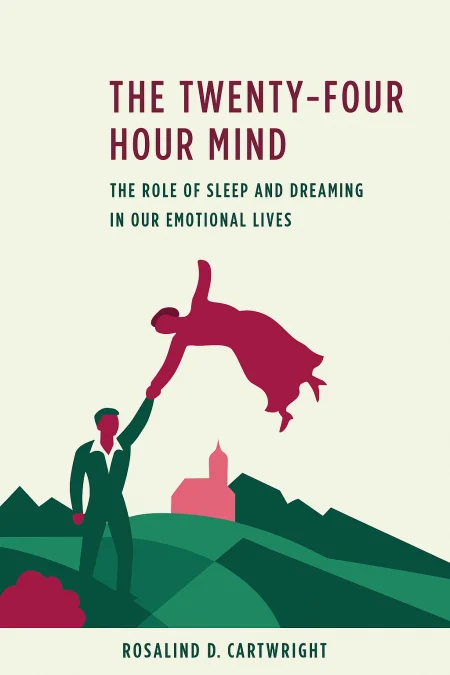
The Twenty-four Hour Mind
The Role of Sleep and Dreaming in our Emotional Lives
Book Edition Details
Summary
When darkness falls, what truly unfolds within our sleeping minds? In "The Twenty-Four Hour Mind," Rosalind Cartwright, a pioneering voice in sleep science, unravels the enigma of parasomnias—those eerie sleep disorders that blur the line between dreams and reality. Imagine a man, seemingly ordinary, who commits an unthinkable act while sleepwalking, his mind a mystery even to himself. Through groundbreaking EEG and brain imaging research, Cartwright reveals that our minds remain astonishingly active during sleep, tirelessly processing emotions and experiences from our waking hours. This exploration into the seamless dance between conscious and unconscious thought not only delves into the intricacies of sleep disorders but also sheds light on the profound emotional and cognitive roles sleep plays in our lives. Whether you're a sleep enthusiast or simply intrigued by the hidden workings of the brain, this book promises a captivating journey into the night.
Introduction
Every night when you close your eyes and drift off to sleep, you might think your mind is simply shutting down for the night, like powering off a computer after a long day. But what if I told you that your brain is actually embarking on one of its most important and fascinating work shifts? Far from being a period of mental inactivity, sleep represents a sophisticated biological process that literally shapes who you are when you wake up each morning. Modern neuroscience has revealed that our minds operate as integrated twenty-four hour systems, where the quality of our sleep directly determines our emotional stability, creative thinking, and even our ability to form lasting memories. While you sleep, your brain engages in a complex series of maintenance activities that are just as crucial as anything you accomplish during your waking hours. Your dreams aren't random mental noise or simple wish fulfillment fantasies, but rather sophisticated emotional processing systems that help you navigate life's challenges and maintain psychological balance. Perhaps most remarkably, disruptions to this nighttime mental work can fundamentally alter personality, decision-making ability, and behavior in ways that extend far beyond simply feeling tired. Understanding how your sleeping and waking minds work together offers profound insights into mental health, personal growth, and the very nature of human consciousness itself.
The Science Behind Sleep Cycles and REM Dreams
Sleep unfolds in a remarkably organized pattern that repeats throughout the night in roughly ninety-minute cycles, much like a complex symphony with distinct movements. Your brain doesn't simply dim its activity when you fall asleep. Instead, it transitions through fundamentally different states, each serving specific biological and psychological functions. The deepest stage, called slow-wave sleep, is characterized by large, synchronized brain waves that resemble the steady rhythm of ocean swells. During this phase, your body engages in intensive repair work, releasing growth hormones, strengthening your immune system, and consolidating the factual information you learned during the day. But the most intriguing discovery in sleep research came with the identification of REM sleep, named for the rapid eye movements that occur beneath closed lids. During REM periods, your brain becomes almost as electrically active as when you're awake, yet your body becomes completely paralyzed except for breathing and heart function. This is when you experience your most vivid and emotionally rich dreams. Rather than being random neural firing, REM sleep appears to serve as your brain's emotional processing center, weaving together recent experiences with older memories to create new understanding and psychological balance. The architecture of your sleep changes predictably throughout the night in ways that reveal the brain's sophisticated prioritization system. Early sleep is dominated by the deeper, more physically restorative stages, while REM periods become longer and more frequent toward morning. This natural progression suggests that your sleeping mind has evolved to tackle different types of mental maintenance work in a specific sequence. Physical restoration comes first, followed by increasingly complex emotional and creative processing as the night progresses. Modern brain imaging technology has revealed that different neural networks activate during various sleep stages, creating distinct types of mental activity. The sleeping brain doesn't simply replay the day's events randomly. Instead, it selectively reactivates memories with emotional significance, connecting them in novel ways that can lead to creative insights and problem-solving breakthroughs. This explains why you might wake up with a fresh perspective on a challenge that seemed impossible the night before, or why artists and scientists throughout history have reported receiving inspiration from their dreams.
Sleep Disorders and Their Impact on Mental Health
When sleep goes wrong, the consequences extend far beyond feeling tired or groggy. Sleep disorders can fundamentally alter personality, emotional regulation, and cognitive function in ways that ripple through every aspect of life. Consider chronic insomnia, which affects millions of people worldwide. Those who consistently sleep less than six hours per night don't just experience daytime drowsiness. They show measurable changes in brain structure and function, including reduced activity in areas responsible for decision-making and emotional control, while stress-response systems become hyperactive. The relationship between sleep and depression illustrates this mind-body connection most dramatically. People with major depression exhibit characteristic disruptions in their sleep architecture that go far beyond simply having trouble falling asleep. Their REM sleep begins much earlier than normal, sometimes within thirty to forty-five minutes of sleep onset rather than the typical ninety-minute delay. This premature dreaming appears to short-circuit the brain's natural emotional processing system, preventing the normal sequence of restorative sleep stages from occurring. Instead of waking up refreshed and emotionally balanced, depressed individuals often feel worse in the morning, trapped in cycles of negative rumination. Sleep apnea demonstrates how physical sleep disruption creates profound psychological consequences. People with this condition may stop breathing hundreds of times per night, causing brief awakenings that fragment their sleep even though they may not remember waking up. The resulting chronic sleep deprivation manifests as irritability, difficulty concentrating, memory problems, and increased risk of accidents. Family members often report that their loved ones seem to become entirely different people, losing their patience, sense of humor, and emotional stability. Perhaps most encouragingly, treating sleep disorders often resolves psychological symptoms that had been attributed to other causes. Patients who receive effective treatment for sleep apnea frequently report dramatic improvements in mood, energy, and cognitive function within weeks. Similarly, cognitive behavioral therapy for insomnia can be as effective as antidepressant medication for treating depression in some individuals. This research suggests that what we often interpret as separate mental health conditions may actually be symptoms of disrupted sleep, highlighting the fundamental importance of healthy rest for psychological well-being.
Sleepwalking Violence: When Consciousness Goes Wrong
Sleepwalking violence represents one of the most puzzling and legally challenging phenomena in sleep medicine, forcing us to confront fundamental questions about consciousness, free will, and criminal responsibility. These cases aren't simply matters of people claiming they were asleep to avoid consequences. Modern sleep research can now identify specific neurological markers that distinguish genuine sleepwalking from conscious behavior, revealing a bizarre hybrid state of consciousness that challenges our basic assumptions about human agency. Sleepwalking occurs during the deepest stages of non-REM sleep, typically within the first few hours after falling asleep. During these episodes, brain imaging reveals a remarkable pattern: motor control centers and basic behavioral systems become active, while higher cognitive functions responsible for rational thought, memory formation, and moral reasoning remain essentially offline. This creates a zombie-like state where individuals can perform surprisingly complex actions like getting dressed, preparing food, or even driving cars, all while genuinely unconscious and forming no lasting memories of their behavior. The triggers for violent sleepwalking episodes often involve a perfect storm of factors including chronic sleep deprivation, high levels of emotional stress, and sometimes the use of sleep medications that paradoxically fragment deep sleep. Many adult sleepwalkers share certain personality characteristics, including tendencies toward perfectionism and emotional over-control during waking hours. When their carefully maintained psychological balance becomes disrupted, their sleeping brains may attempt to resolve internal conflicts through physical action rather than the normal dream processing that occurs during REM sleep. These cases have created fascinating legal precedents and ongoing debates about the nature of criminal responsibility. Traditional law requires mens rea, or guilty mind, meaning defendants must be consciously aware that their actions constitute crimes. Sleepwalking violence forces courts to grapple with situations where the physical act clearly occurred, but the mental state necessary for criminal culpability may have been genuinely absent. Some defendants have been acquitted based on sleepwalking defenses, while others have been convicted, creating an inconsistent legal landscape that reflects our still-evolving understanding of consciousness itself. These insights have implications extending far beyond criminal law, potentially reshaping how we think about free will, moral responsibility, and the complex relationship between brain states and behavior.
Dreams as Emotional Processors and Self-Regulation Systems
Dreams function as sophisticated emotional processing centers that work through feelings and experiences in ways conscious thought often cannot achieve. Rather than being random neural activity or simple wish fulfillment, dreams appear to serve as overnight therapy sessions that help maintain psychological balance and emotional resilience. This process works by connecting current emotional experiences with related memories stored throughout the brain, allowing the sleeping mind to integrate new challenges into existing frameworks of understanding and coping strategies. The emotional content of dreams follows predictable patterns that reveal this regulatory function in action. Early in the night, dreams tend to feature more negative emotions, often incorporating anxiety, conflict, or unresolved tensions from waking life. As the night progresses and REM periods become longer, dream content typically becomes more positive and resolution-oriented. This systematic progression suggests that the dreaming mind works methodically to process difficult emotions, gradually transforming them into more manageable forms through creative narrative construction and symbolic representation. Research on people navigating major life transitions provides compelling evidence for dreams' emotional processing function. Studies of individuals going through divorce reveal fascinating patterns in their dream content. Those who successfully adapt to their new circumstances show dreams that actively engage with their emotional challenges, featuring their ex-spouses in various contexts that help process feelings of loss, anger, and eventual acceptance. Their dreams evolve throughout both individual nights and over weeks and months, showing clear progression toward emotional resolution. In contrast, individuals who remain stuck in depression or anxiety often report dreams that are emotionally flat, repetitive, or completely avoid the challenging situation altogether. This emotional regulation system can malfunction in various ways, leading to persistent psychological difficulties. People with post-traumatic stress disorder often experience dreams that become trapped in repetitive cycles, unable to progress through the normal emotional processing sequence that would lead to healing. Their dreams may replay traumatic events without the creative transformation that typically helps integrate difficult experiences. Understanding these patterns offers new insights into mental health treatment, suggesting that interventions targeting sleep quality and dream function might be as important as traditional therapy approaches that focus solely on waking consciousness. The implications extend to everyday emotional health, highlighting how protecting and optimizing our sleep may be one of the most powerful tools we have for maintaining psychological resilience and well-being.
Summary
The revolutionary insight emerging from decades of sleep research is that human consciousness operates as a seamless twenty-four hour system, with our sleeping and waking minds performing complementary but equally essential functions for psychological health, emotional regulation, and cognitive performance. Your dreams aren't mysterious or meaningless experiences, but rather sophisticated neural processes that literally reshape your personality overnight, help you solve problems, and maintain the emotional balance necessary for healthy relationships and effective decision-making. This understanding fundamentally challenges the traditional view that only waking consciousness matters for mental health, personal development, and human potential. The practical implications extend far beyond academic curiosity into real-world applications for treating mental illness, understanding criminal behavior, optimizing learning and creativity, and preventing psychological problems before they develop. As we continue to unravel the mysteries of the sleeping mind, we're discovering that many conditions previously attributed solely to waking consciousness, from depression to violent behavior, may actually originate in disrupted sleep processes. This knowledge opens entirely new avenues for intervention and prevention, suggesting that protecting and optimizing our sleep may be one of the most powerful and underutilized tools we have for improving virtually every aspect of human life. How might your own potential change if you began treating your nightly eight hours not as downtime, but as an active period of mental maintenance and growth? What creative breakthroughs or emotional healing might be waiting in the sophisticated neural processes that unfold while you sleep?
Related Books
Download PDF & EPUB
To save this Black List summary for later, download the free PDF and EPUB. You can print it out, or read offline at your convenience.
By Rosalind D. Cartwright
