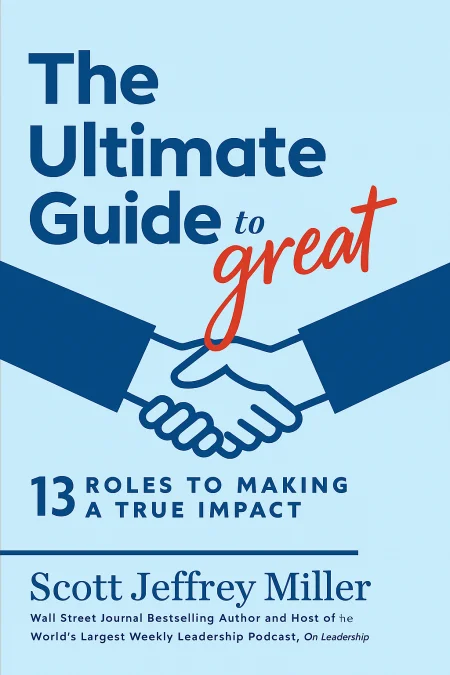
The Ultimate Guide to Great Mentorship
13 Roles to Making a True Impact
Book Edition Details
Summary
In the dynamic landscape of leadership, mentorship emerges as a beacon of transformation and growth. "The Ultimate Guide to Great Mentorship" distills the essence of powerful mentor-mentee relationships, transcending mere guidance to ignite mutual evolution and purpose. For leaders ready to embrace this pivotal role, this book offers a roadmap from inception to fulfillment—crafting goals, nurturing progress, and recognizing the right moment to explore new horizons. Practical templates and insightful strategies replace uncertainty with clarity, ensuring each interaction is both meaningful and measurable. This guide isn't just about fostering others; it's about catalyzing personal reinvention. Discover how mentorship can redefine leadership and unlock latent potential in both mentor and mentee.
Introduction
Every meaningful professional relationship begins with a choice: to simply coexist or to truly invest in another person's growth. In today's rapidly evolving workplace, the art of mentorship has never been more crucial, yet many well-intentioned leaders find themselves unprepared for the nuanced demands of guiding others. Whether you're stepping into your first formal mentoring role or seeking to refine years of experience, the journey ahead requires more than good intentions and occasional coffee meetings. Great mentorship demands a sophisticated understanding of when to listen deeply, when to challenge assumptions, and when to offer the precise guidance that transforms potential into achievement. The most impactful mentors don't rely on a single approach; instead, they masterfully navigate between different roles, adapting their style to meet each unique mentee where they are in their journey. This dynamic approach creates the conditions for breakthrough moments, sustainable growth, and the kind of transformational relationships that shape careers and lives.
Foundation Roles: Reveal, Set Boundaries, and Listen
The foundation of exceptional mentorship rests on three cornerstone roles that establish trust, clarity, and deep understanding. Like a skilled paleontologist, the Revealer works with deliberate precision to uncover what lies beneath the surface of their mentee's aspirations and fears. This role requires extraordinary patience and self-awareness, recognizing that your own personality and experiences can either illuminate or overshadow what needs to be discovered. Scott Miller recounts his own journey of learning to calibrate his naturally high energy and commanding presence. During a session in Alabama, a participant looked him directly in the eye and said, "It's way too early for this. You are too close and in my space, and you need to back yourself up." This moment of brutal honesty became a catalyst for Miller's understanding of how a mentor's "footprints" can either create safe space for discovery or inadvertently intimidate mentees into silence. The most effective mentors learn to meet their mentees exactly where they are, adjusting their approach to match the other person's communication style and emotional needs. The Boundary Setter works in tandem with the Revealer, establishing clear parameters that protect both parties and create a productive framework for growth. This isn't about rigid rules but about creating safety through clarity. Miller emphasizes the importance of addressing expectations upfront, particularly around network access and the scope of support a mentor will provide. One of his key principles involves making it clear that "bad news is acceptable, wrong news is unacceptable," creating an environment where mentees feel safe sharing challenges while maintaining accountability for accuracy and honesty. The Absorber completes this foundational trilogy by mastering the art of active listening. This role requires mentors to resist their natural inclination to solve problems immediately and instead invest in truly understanding their mentee's perspective. Miller shares Dr. Stephen Covey's insight that "most people do not listen with the intent to understand; they listen with the intent to reply." The most transformative mentoring relationships are built on the mentee feeling genuinely heard and understood, which requires mentors to practice the 20-80 formula: speaking 20 percent of the time while listening intently for 80 percent. To strengthen these foundational skills, practice entering conversations with genuine curiosity, establish clear expectations early, and discipline yourself to listen until your mentee has completely finished their thoughts before responding.
Discovery Roles: Question, Challenge, and Validate
The discovery phase of mentorship involves three dynamic roles that work together to uncover truth, test assumptions, and build confidence. The Questioner operates like a skilled defense attorney, using strategic inquiry to help mentees identify root causes and clarify their thinking without feeling interrogated or judged. This role requires tremendous finesse, as the wrong question at the wrong time can shut down openness and trust. Miller describes the delicate balance required when asking penetrating questions, sharing how his natural ability to get to the bottom line in four questions or fewer serves him well in business but can overwhelm mentees if not carefully calibrated. He learned to differentiate between early-phase questions that build rapport and later-phase questions that can challenge deeper assumptions. Early questions might explore a mentee's definition of success or their personal values, while later-phase questions can address patterns in their language or recurring themes that may be limiting their growth. The Challenger steps into the conversation when assumptions need to be tested or when a mentee's perspective seems disconnected from reality. Miller illustrates this through his concept of the "Challenger Continuum," ranging from gentle questioning to firm intervention. He recalls telling one mentee, "I feel on this topic that you're unconsciously incompetent," meaning they didn't know what they didn't know. While the observation was accurate, the timing and delivery in their first conversation was inappropriate and ended the relationship prematurely. This experience taught him that challenging others effectively requires both courage and wisdom about timing. The Validator provides the essential counterbalance to challenging by affirming the mentee's thoughts, feelings, and experiences without necessarily agreeing with their conclusions. Miller draws on Dr. Gary Chapman's concept of love languages to emphasize that effective validation requires understanding how each individual best receives affirmation. Some mentees need verbal recognition, others respond to quality time and focused attention, while still others are moved by acts of service or thoughtful gestures. The key insight is practicing the Platinum Rule: treat others how they want to be treated, not how you would want to be treated. Develop your questioning skills by preparing both exploratory and probing questions in advance, practice challenging ideas rather than people, and learn to validate effort and growth even when you don't agree with every decision.
Action Roles: Navigate, Envision, and Activate
The action-oriented roles of great mentorship focus on providing direction, inspiring possibilities, and catalyzing momentum. The Navigator draws on the mentor's wisdom and experience to help chart a path forward while staying "one day ahead" of their mentee's journey. This role involves sharing hard-won insights about potential pitfalls and opportunities without imposing the mentor's exact path on the mentee's unique circumstances. Miller learned this lesson through his transition from corporate executive to entrepreneur, drawing on resources like Melinda Emerson's "Become Your Own Boss in 12 Months." He realized that his three decades in a large organization with vast resources hadn't fully prepared him for the realities of going solo. The Navigator role involves connecting mentees to governing principles, understanding situational rules, and minimizing unconscious incompetence by sharing relevant knowledge and experience. This might involve helping a mentee understand organizational dynamics, financial fundamentals, or the natural consequences of different career choices. The Visionary paints a picture of expanded possibilities while remaining grounded in what's realistically achievable. Miller shares entrepreneur Patrick Bet-David's concept of "Future Truth" - speaking about desired outcomes as if they're already reality because what we say impacts what we believe, and what we believe impacts how we behave. However, he's also learned through painful experience that unbridled visioning can overwhelm mentees who can't live up to overly ambitious expectations. The key is finding new summits on existing mountains rather than pointing to entirely new peaks to climb. The Activator provides the spark that ignites a mentee's passion and momentum at precisely the right moment. Miller's own career transformation illustrates this beautifully when consultant Leigh Stevens looked at him during a book planning session and asked, "Scott, why are you not writing this book?" That single question, delivered with conviction at the right moment, launched Miller's successful authoring career. Leigh could sense his readiness for change before he could, and her activation helped him transition from behind-the-scenes producer to front-and-center thought leader. To excel in these action roles, focus on sharing wisdom rather than dictating solutions, help mentees envision expanded but achievable possibilities, and develop your intuition for recognizing when someone is ready for encouragement to take bigger steps. Remember that your role is to create the spark, not the entire candle.
Summary
Exceptional mentorship transcends the simple exchange of advice and evolves into a sophisticated dance between thirteen distinct roles, each calibrated to meet mentees exactly where they are in their journey. The most transformative mentors understand that their greatest gift isn't their accumulated knowledge or impressive network, but their ability to adapt their approach to unlock each mentee's unique potential. As Miller powerfully reminds us throughout his framework, "Your potential for positively influencing your mentee is incalculable. In fact, you will never know the full extent of your impact, because your mentee doesn't always fully appreciate or even understand it themselves. That's OK. Just trust that your investment is likely changing a life. Maybe even your own." The path forward is clear: begin with awareness of these roles, practice them with intention, and trust that your commitment to another person's growth will create ripple effects far beyond what you can imagine. Start by identifying which three roles feel most natural to your style, then deliberately practice one role you find challenging in your very next mentoring conversation.
Related Books
Download PDF & EPUB
To save this Black List summary for later, download the free PDF and EPUB. You can print it out, or read offline at your convenience.
By Scott Jeffrey Miller
