
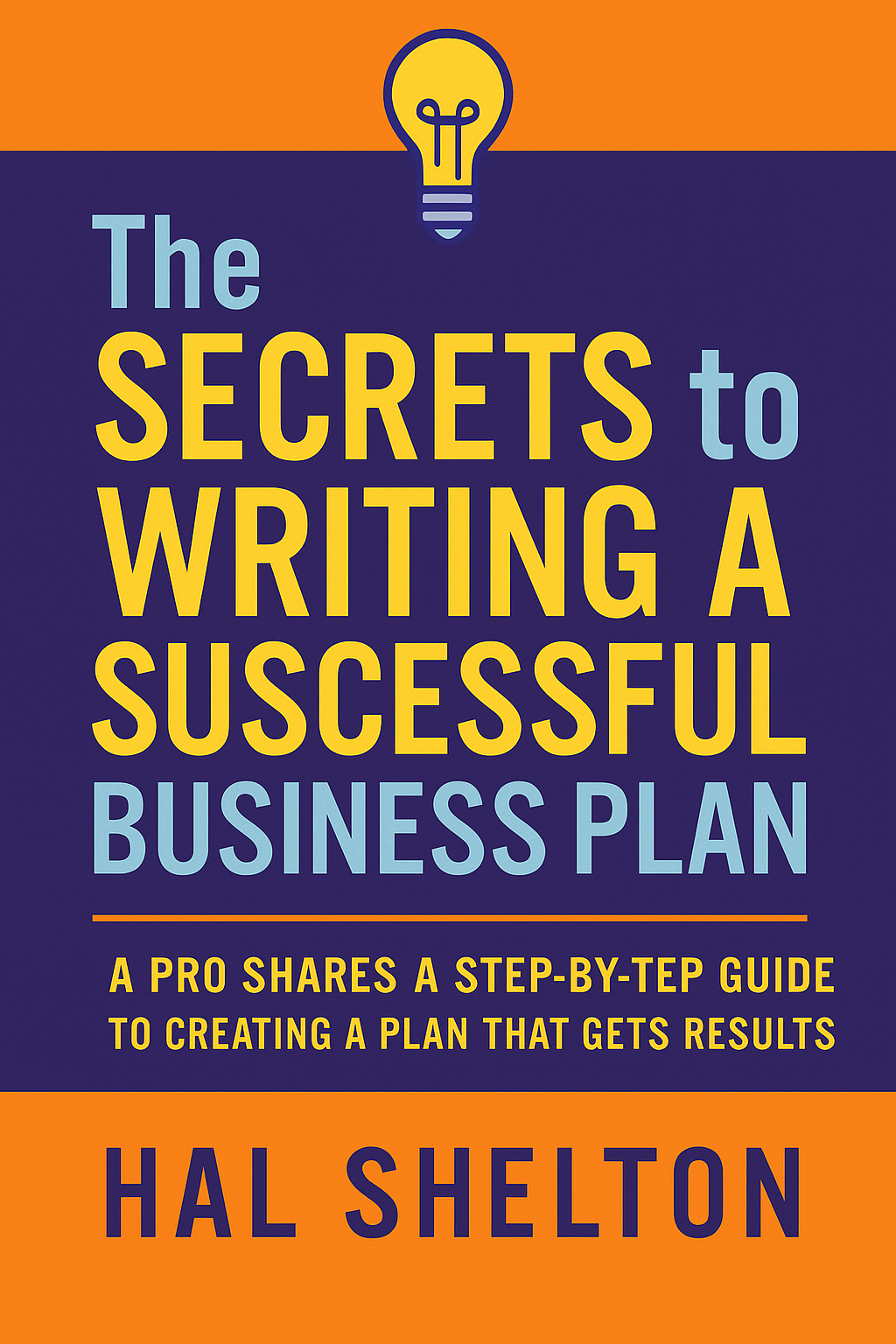
The Secrets to Writing a Successful Business Plan
A Pro Shares a Step-by-Step Guide to Creating a Plan That Gets Results
Book Edition Details
Summary
Unleash the power of strategic foresight with "Secrets to Writing a Successful Business Plan" by Hal Shelton, an indispensable toolkit for aspiring entrepreneurs and seasoned business owners alike. This dynamic guide demystifies the art of crafting a business blueprint that not only secures funding but also propels ventures into thriving success stories. With a fresh lens on crowdfunding and the challenges of nascent companies, Shelton’s updated edition offers a treasure trove of insider insights and practical strategies. Navigate the labyrinth of planning with ease, as you uncover the secrets to investor magnetism, efficient loan acquisition, and impactful nonprofit planning. Rich with actionable wisdom and real-world examples, this book is your beacon in the competitive business landscape, ensuring that your vision not only survives but flourishes. Let Shelton’s expert mentorship guide you to a future where your business dreams become reality.
Introduction
Every entrepreneur reaches that pivotal moment when a brilliant idea begins to crystallize, yet the path forward seems shrouded in uncertainty. You might have the perfect solution to a pressing problem, deep industry knowledge, or an innovative approach that could transform a market. However, the gap between vision and reality often feels insurmountable without a clear roadmap. This is where the power of strategic business planning reveals itself, not as a bureaucratic exercise, but as your most valuable tool for turning dreams into profitable ventures. Whether you're contemplating your first entrepreneurial leap or seeking to scale an existing business, the principles and frameworks ahead will transform how you approach planning, funding, and execution. The journey from concept to successful enterprise begins with understanding your audience, building compelling strategies, creating realistic projections, and securing the resources needed to thrive.
Know Your Audience and Plan Your Approach
Understanding your audience represents the foundation upon which every successful business plan rests. Your plan serves multiple masters, each requiring different information presented in formats they can readily understand and act upon. The document you present to yourself for decision-making differs significantly from what you would show a banker, angel investor, or potential partner. Consider Fred, an experienced accountant who approached a SCORE mentor with ambitious plans to purchase a bed and breakfast. His eyes sparkled with enthusiasm as he described his vision of earning a million dollars while being his own boss. When asked about his business plan, Fred's confidence revealed a critical blind spot. He hadn't yet considered that as a B&B proprietor, he would actually serve many masters - guests with specific expectations, employees requiring management, vendors demanding payment, and weather patterns affecting seasonal operations. The mentor's simple question about his business plan opened Fred's eyes to the reality that successful entrepreneurship requires more than enthusiasm. Through the planning process, Fred discovered that his role would involve far more complexity than he initially imagined. He learned to articulate his value proposition clearly, understand his target market's demographics, and develop realistic financial projections. Most importantly, he began to see his business plan not as a static document, but as a living tool for communicating with different stakeholders. Start by identifying your primary audience and their specific needs. If approaching banks, emphasize stability, collateral, and repayment capacity. For angel investors, highlight scalability, market opportunity, and exit strategies. For internal use, focus on operational metrics and milestone tracking. Tailor your language, depth of detail, and presentation format accordingly. Remember that busy decision-makers often judge entire proposals based solely on executive summaries, making your opening pages critically important. Always craft your business plan as a marketing document that demonstrates serious intent, thorough preparation, and realistic expectations. Your audience should finish reading with complete confidence in both your business concept and your ability to execute it successfully.
Build Your Marketing Strategy and Operations
Marketing strategy extends far beyond advertising and promotion into the very heart of how you will create, deliver, and capture value in the marketplace. Your marketing plan must demonstrate deep understanding of customer needs, competitive positioning, and scalable systems for attracting and retaining profitable relationships. Ann ran a marketing company for twenty years before facing the harsh realities of market disruption. Traditional clients were reducing spending and finding alternatives through online platforms and offshore providers. Rather than panic, Ann recognized this challenge as an opportunity to redefine her business model. She began developing a comprehensive strategic plan that would bridge her current position with future opportunities. Her first step involved conducting thorough market research to understand changing client needs and emerging service delivery methods. Ann's transformation journey led her to identify new market segments, develop digital service offerings, and create more efficient operational processes. She engaged her key staff in strategic planning sessions, leveraging their collective expertise to identify competitive advantages and potential growth areas. The process revealed untapped opportunities in current marketing trends and helped her team develop new capabilities that aligned with market demands. Begin your marketing strategy by clearly defining your ideal customer through detailed demographic and psychographic analysis. Understand where these customers gather information, make purchasing decisions, and seek solutions to their problems. Map out the complete customer journey from awareness through advocacy, identifying touchpoints where you can add value and differentiate your offering. Develop your operational framework around customer needs rather than internal convenience. Design processes that consistently deliver superior value while maintaining cost efficiency. Consider how you will scale operations as demand grows, ensuring quality standards remain high throughout expansion phases. Create measurement systems that track both marketing effectiveness and operational efficiency, allowing you to optimize performance continuously and demonstrate clear return on investment to stakeholders and funders.
Create Compelling Financial Projections
Financial projections serve as the mathematical validation of your business model, translating strategic vision into quantifiable outcomes that stakeholders can evaluate and fund. These numbers tell the story of how you will generate revenue, manage costs, and create sustainable profitability while maintaining adequate cash flow for operations and growth. The specialty food manufacturer faced a common challenge when using cash-based accounting methods that recorded inventory and packaging costs quarterly rather than monthly. This approach created wildly inconsistent financial reporting, showing gross margins of sixty-five percent for two months, then plummeting to five percent in the third month. The dramatic fluctuations had nothing to do with actual business performance and everything to do with accounting methodology. Leadership recognized that these distorted reports prevented accurate performance assessment and strategic decision-making. After switching to accrual-based accounting, the company gained clear visibility into actual operational performance. Monthly reports now accurately reflected business activities, enabling better inventory management, pricing decisions, and resource allocation. The consistent reporting framework allowed management to identify trends, anticipate challenges, and communicate progress effectively to lenders and investors. Structure your financial projections using accrual accounting principles that match revenues with associated costs in appropriate time periods. Begin with detailed assumptions about sales volumes, pricing strategies, cost structures, and operational requirements. Build these assumptions from bottom-up analysis rather than top-down market share fantasies. Develop three core financial statements covering at least three years with monthly detail for the first year. Include income statements showing profitability, cash flow statements demonstrating liquidity management, and balance sheets reflecting asset utilization and financial position. Ensure all three statements interconnect properly and reconcile with your operational plans. Test your projections through sensitivity analysis, examining how changes in key variables affect overall performance. This exercise prepares you for investor questions while identifying critical success factors requiring careful monitoring and management throughout implementation.
Secure Funding from Banks and Investors
Securing appropriate funding requires matching your capital needs with the right sources while presenting compelling evidence that you represent a worthy investment risk. Banks and investors evaluate opportunities through different lenses, making it essential to understand their perspectives and structure your approach accordingly. A banquet hall and catering entrepreneur submitted a comprehensive business plan that included purchasing a venue and hosting diverse events. While the core concept showed promise, the presentation included twenty financial ratios on the final page that the entrepreneur neither understood nor could relate to industry benchmarks. Rather than demonstrating financial sophistication, these meaningless metrics revealed a fundamental misunderstanding of what lenders actually evaluate. The excessive detail obscured rather than illuminated the business opportunity. After working with mentors to refine the approach, the entrepreneur learned to focus on key metrics that banks actually use for lending decisions. The revised presentation emphasized cash flow projections, debt service coverage ratios, collateral availability, and management experience relevant to the hospitality industry. By demonstrating clear understanding of the business fundamentals and realistic assessment of market opportunities, the entrepreneur positioned himself as a credible borrower worthy of bank partnership. Prepare for funding discussions by understanding what each source requires for decision-making. Banks focus on repayment capacity, collateral protection, and borrower character, typically requiring twenty to twenty-five percent owner investment and debt service coverage ratios above 1.2. Angel investors seek scalable opportunities with experienced management teams and clear exit strategies within three to seven years. Develop relationships with potential funders before you need capital, establishing credibility through consistent communication and demonstrated progress. Research their investment criteria, portfolio companies, and decision-making processes to ensure alignment between your opportunity and their interests. Present funding requests with specific amounts supported by detailed financial analysis, clear use of proceeds focused on revenue-generating activities, and realistic timelines for achieving key milestones. Remember that funding is a partnership requiring ongoing communication and shared commitment to success.
Summary
The journey from business concept to successful enterprise requires more than passion and good intentions. It demands systematic planning, rigorous analysis, and strategic execution guided by a comprehensive business plan that serves as both roadmap and communication tool. As demonstrated throughout these principles, success comes from understanding your audience deeply, developing customer-focused strategies, creating realistic financial projections, and securing appropriate funding partnerships. Remember that "a business plan is never perfect and never finished, so do not procrastinate writing it or obsess about creating the ideal plan." The key lies in beginning with thorough preparation, then adapting and improving as you gain market experience and stakeholder feedback. Your next step should be immediate: identify your primary audience, define your customer value proposition clearly, and begin drafting your executive summary today, knowing that perfect plans matter less than taking action with well-informed preparation.
Related Books
Download PDF & EPUB
To save this Black List summary for later, download the free PDF and EPUB. You can print it out, or read offline at your convenience.
By Hal Shelton
