
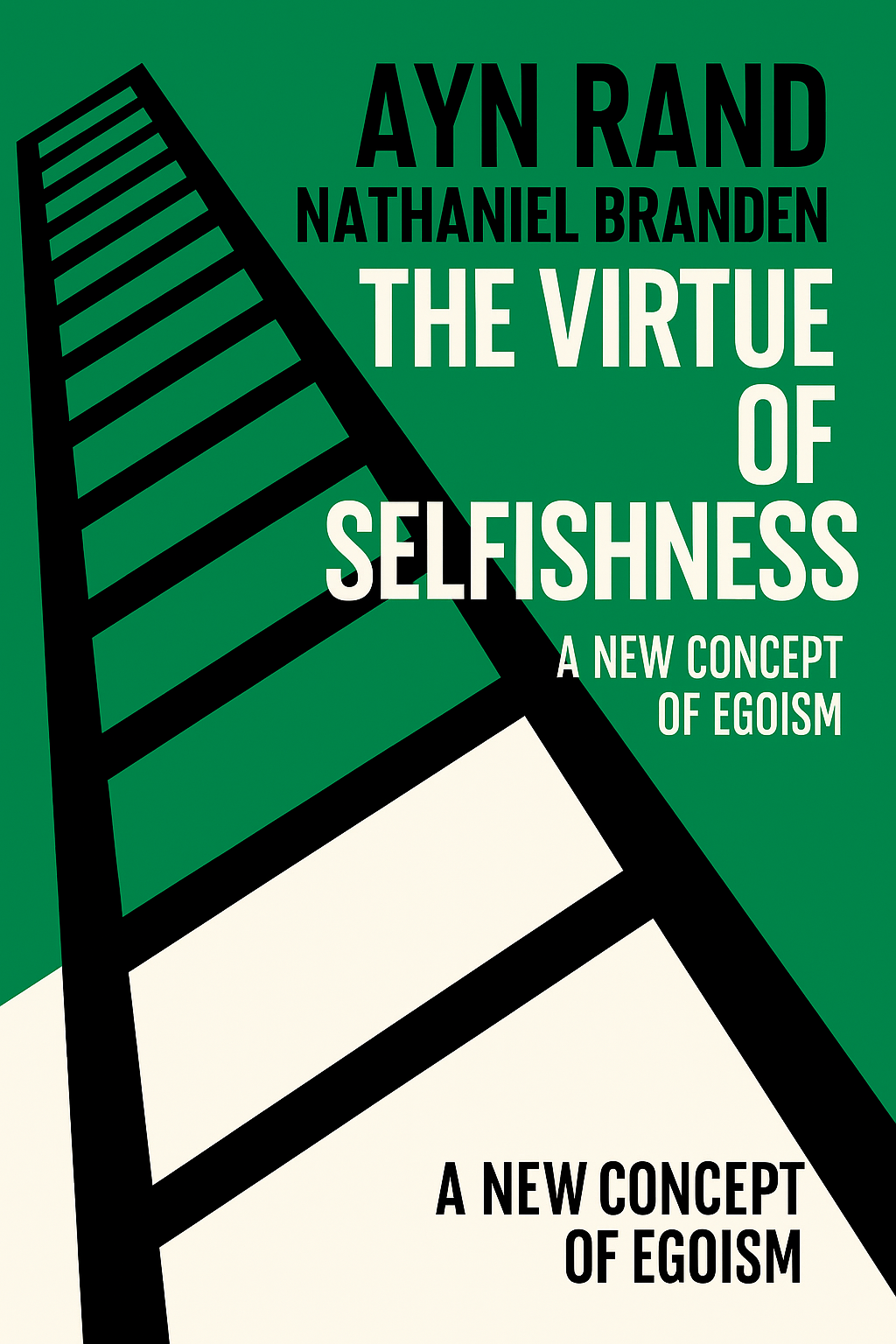
The Virtue of Selfishness
A New Concept of Egoism
Book Edition Details
Summary
An audacious manifesto of a philosophical revolution, "The Virtue of Selfishness" confronts the conventions of morality with an unflinching gaze. Ayn Rand dismantles the familiar edifices of altruism, positing that the true essence of ethical living lies in enlightened self-interest and the relentless pursuit of one's rational needs. In this seminal work, Rand boldly champions a capitalist ethos as the cradle of a liberated society, where individual creativity flourishes unbound. Provocative and thought-stirring, this book challenges entrenched beliefs, inviting readers to re-evaluate the very foundations of what it means to lead a moral life. A gripping exploration that defies norms, it beckons the curious and the contemplative alike to ponder the virtues of a self-directed existence.
Introduction
The fundamental premise challenged here strikes at the heart of conventional moral thinking: that selfishness is inherently evil and self-sacrifice is the highest virtue. This revolutionary ethical framework argues that rational self-interest, properly understood, forms the only viable foundation for human flourishing and moral behavior. The conventional dichotomy between selfishness and virtue represents a false choice that has plagued moral philosophy for centuries, leading to psychological damage and social dysfunction. The philosophical method employed combines rigorous logical analysis with psychological insights, demonstrating how traditional altruistic morality creates internal conflicts that undermine both individual well-being and genuine benevolence toward others. Through systematic examination of concrete ethical dilemmas and careful definition of key concepts, the analysis reveals how rational egoism actually supports rather than threatens human cooperation and mutual respect. The argumentation proceeds by dismantling common misconceptions about selfishness while building a positive case for enlightened self-interest as the path to authentic virtue and social harmony.
The Rational Foundation of Ethical Egoism
The cornerstone argument establishes that ethics must be grounded in the requirements of human survival and flourishing, not in arbitrary commands or social conventions. Human life serves as the fundamental standard of value because life represents the root of all values—only living beings can pursue goals, experience benefits, or face genuine alternatives between good and evil. This biological foundation provides objective criteria for moral judgment, eliminating the relativism that plagues other ethical systems. The reasoning proceeds from the observation that humans possess a specific nature requiring particular conditions for survival and success. Unlike other animals guided by instinct, humans must think and choose deliberately, making reason the primary tool of survival. This creates a moral imperative to use one's mind fully and honestly, pursuing values that genuinely support life and well-being rather than following feelings, traditions, or group pressures that may lead to destruction. Rational selfishness emerges as the recognition that each person must take responsibility for achieving their own happiness through productive thought and action. This differs fundamentally from the popular conception of selfishness as mindless hedonism or exploitation of others. True self-interest requires long-term thinking, principled behavior, and respect for the rational interests of others, since social cooperation enhances rather than diminishes individual flourishing. The argument demonstrates that this approach resolves the artificial conflict between personal fulfillment and moral behavior that torments conventional ethics. When self-interest is properly rational, pursuing one's authentic good necessarily involves developing virtuous character traits and maintaining just relationships with others.
Individual Rights and the Proper Role of Government
The political implications flow directly from the ethical foundation, establishing individual rights as the bridge between personal morality and social organization. Rights represent moral principles that define proper relationships between rational beings, protecting the freedom each person needs to think, produce, and pursue happiness. These rights are not granted by society or government but derive from human nature itself and the requirements of human survival. The analysis reveals that rights fundamentally concern freedom of action rather than guaranteed outcomes. The right to life means freedom to take life-sustaining actions, not a claim on others' effort to sustain one's existence. The right to property means freedom to produce and trade, not entitlement to others' wealth. This distinction proves crucial for understanding why genuine rights never conflict with each other, while false "rights" to material goods necessarily create contradictions and social warfare. Government's sole legitimate function becomes the protection of individual rights through objective law enforcement. This involves three essential services: police protection against criminals, military defense against foreign aggressors, and courts to settle disputes according to objective legal principles. All other governmental activities represent violations of individual rights, regardless of their supposed benefits or popular support. The framework explains how expanding government beyond these functions inevitably transforms it from protector of rights into their primary violator. Economic regulation, welfare programs, and social engineering all require forcing some individuals to serve others against their will, contradicting the basic principle that each person is an end in himself. The argument shows that only limited government consistent with individual rights can maintain the social conditions necessary for human flourishing and voluntary cooperation.
Addressing Common Objections to Rational Selfishness
The systematic refutation of standard objections reveals how deeply altruistic assumptions have corrupted common thinking about ethics and human nature. The charge that rational egoism promotes antisocial behavior collapses when one examines what genuine self-interest actually requires. Productive, honest, principled conduct serves one's authentic interests far better than fraud, force, or parasitism, which ultimately undermine the social cooperation that makes prosperity possible. The objection that selfishness means ignoring others' welfare demonstrates confusion about the nature of rational self-interest. A person pursuing genuine happiness will value relationships with worthy individuals, take pride in achievements that benefit society, and feel benevolent toward those who share similar values. These attitudes arise naturally from rational self-love rather than self-sacrifice, making them psychologically sustainable and authentically motivated. Critics who claim that rational egoism leads to conflicts of interest fail to distinguish between rational and irrational desires. When people pursue values that genuinely support their lives and well-being, their interests align rather than clash. Competition for specific opportunities or relationships may exist, but this differs from fundamental conflicts between rational people's basic interests in freedom, prosperity, and social cooperation. The fear that egoistic ethics provides no basis for helping others in emergencies reflects misunderstanding of both rational self-interest and moral context. Emergency situations represent temporary breakdowns of normal conditions where mutual aid serves everyone's long-term interest in living in a benevolent society. However, treating emergencies as the norm for ethical relationships destroys the productivity and voluntary cooperation that make flourishing possible. The analysis shows how proper emergency ethics supports rather than contradicts the general principle of rational selfishness.
The Moral Crisis of Collectivism and Altruism
The critique exposes how altruistic morality creates the psychological and social problems it claims to solve, generating resentment, guilt, and conflict while undermining authentic virtue and benevolence. Altruism demands that individuals sacrifice their values and happiness for others, but this requirement proves both impractical and destructive. People cannot consistently act against their own interests without becoming bitter, dishonest, or psychologically damaged. The psychological analysis reveals how altruistic ethics sabotages self-esteem and mental health by condemning the very attitudes and actions necessary for successful living. Pride in achievement, confidence in one's judgment, and commitment to one's values all become suspect under altruistic standards. This creates internal conflict between the requirements of survival and happiness on one hand, and moral approval on the other, leading to neurosis and moral paralysis. Politically, altruistic collectivism provides the ideological foundation for totalitarian systems that sacrifice individuals to allegedly collective interests. Whether implemented through democratic socialism or outright dictatorship, collectivist policies require force to override individual choices and redirect productive effort toward goals chosen by political authorities rather than free individuals. The historical record demonstrates that such systems consistently produce poverty, oppression, and cultural decay regardless of their noble intentions. The argument demonstrates that only an ethics based on rational self-interest can provide a stable foundation for both individual flourishing and social cooperation. When people pursue their authentic interests through reason and voluntary exchange, they create prosperity and benevolence naturally, without coercion or self-sacrifice. This represents not mere selfishness, but enlightened selfishness that recognizes how individual success depends on living in a rational, free, and productive society.
Summary
The revolutionary insight transforms our understanding of virtue by demonstrating that rational self-interest, far from opposing morality, provides its only solid foundation and that the ancient conflict between personal happiness and ethical behavior dissolves when both are properly understood through reason rather than tradition or emotion. This framework offers liberation from the guilt, conflict, and social dysfunction that plague altruistic societies, providing instead a path to authentic virtue, sustainable benevolence, and human flourishing based on each person's commitment to using their mind fully and pursuing their genuine good through productive work and voluntary relationships with others.
Related Books
Download PDF & EPUB
To save this Black List summary for later, download the free PDF and EPUB. You can print it out, or read offline at your convenience.
By Ayn Rand
