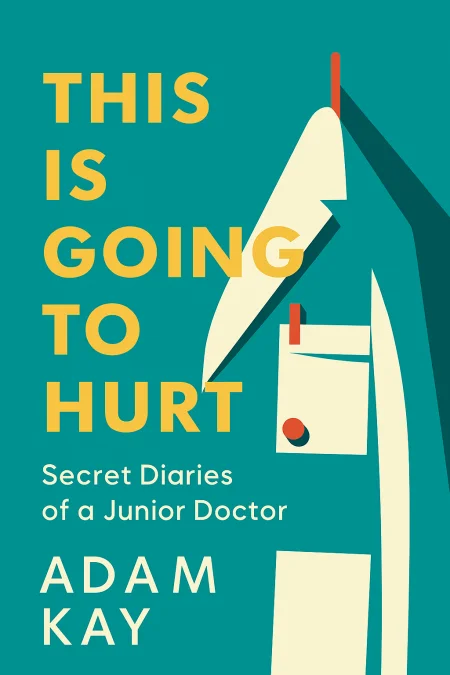
This is Going to Hurt
Secret Diaries of a Junior Doctor
byAdam Kay
Book Edition Details
Summary
In the relentless corridors of the NHS, where time is measured in heartbeats and humor becomes a lifeline, Adam Kay's "This is Going to Hurt" offers an unvarnished peek behind the curtain of a junior doctor's chaotic world. Through diary entries scribbled between life-or-death decisions and unscheduled encounters with bodily fluids, Kay crafts a narrative that's as side-splittingly funny as it is starkly sobering. This isn't just a book—it's an experience, capturing the raw and unfiltered essence of medical life with wit and poignancy. With new diary entries and a reflective afterword, this edition invites readers to laugh, cringe, and ultimately, empathize with the unsung heroes of the hospital ward. Prepare for a rollercoaster of emotions, where every page reveals more than you ever expected about the life-saving, soul-testing journey of a doctor.
Introduction
Adam Kay's transition from medical student to junior doctor represents one of the most intense and transformative journeys in professional life. Beginning his career in the late 1990s, Kay entered the NHS at a time when the health service was already showing signs of strain, yet his initial enthusiasm and dedication drove him through six grueling years of medical school and into the demanding world of obstetrics and gynecology. His story unfolds against the backdrop of a healthcare system under increasing pressure, where junior doctors work impossibly long hours while navigating life-and-death decisions with minimal support. What makes Kay's account particularly compelling is his unflinching honesty about both the profound rewards and devastating costs of practicing medicine. Through his daily experiences, readers witness the extraordinary dedication required to save lives, the dark humor that sustains healthcare workers through their darkest moments, and the personal sacrifices demanded by a profession that never truly allows you to switch off. His journey reveals the complex reality behind the hospital doors, where moments of miraculous triumph exist alongside heartbreaking tragedy. From Kay's experiences, readers will discover the true nature of medical training and the relentless pressure faced by those who dedicate their lives to healing others. They will gain insight into the systemic challenges plaguing modern healthcare and understand the human cost of a profession that demands everything while offering little in return. Most importantly, they will come to appreciate the extraordinary courage and resilience of those who choose to stand on the front lines of human suffering, fighting to preserve life even when the personal toll becomes unbearable.
The Making of a Doctor: From Medical School to House Officer
Adam Kay's journey into medicine began with the kind of arbitrary decision many sixteen-year-olds make when choosing their A-levels, setting him on a trajectory that would consume the next decade of his life. Medical school, he discovered, was designed more like an endurance test than an educational experience, requiring students to memorize vast amounts of information about every possible way the human body could malfunction. Despite the overwhelming scope of knowledge required, Kay threw himself into his studies with determination, sustained by the prospect of one day becoming a real doctor with the power to save lives. The transition from medical student to house officer proved to be a brutal awakening. Despite six years of intensive study, Kay found himself woefully unprepared for the reality of hospital life, where theoretical knowledge meant little when faced with actual patients bleeding, dying, or giving birth in the middle of the night. The day shifts were manageable if mind-numbing, consisting mainly of administrative tasks that made him feel like an overqualified personal assistant. But the night shifts revealed the true nature of his new role, transforming him into a one-man emergency department responsible for every patient in the hospital. During those terrifying early months, Kay learned to make life-and-death decisions with minimal guidance, often relying on nothing but his wits and whatever half-remembered facts he could summon from his medical school training. The learning curve was steep and unforgiving, with no room for error when dealing with emergencies that could escalate from routine to catastrophic in minutes. Each shift brought new challenges that tested not only his medical knowledge but his ability to remain calm under pressure while projecting confidence he rarely felt. The most striking aspect of Kay's early career was his gradual realization that becoming a doctor meant accepting a fundamental transformation of his entire existence. The job didn't end when he left the hospital; it followed him home, invaded his dreams, and colored every interaction with the outside world. Yet despite the overwhelming stress and responsibility, he found himself oddly exhilarated by the knowledge that he was finally doing what he had trained so long to do, saving lives and making a tangible difference in the world, even if the cost to his personal well-being was becoming increasingly apparent.
Rising Through the Ranks: Senior House Officer to Registrar Years
The progression through the various levels of medical training brought new responsibilities and deeper specialization, as Kay chose to focus on obstetrics and gynecology, drawn by the unique combination of medicine and surgery, and the profound joy of bringing new life into the world. His decision to specialize came after systematically ruling out other fields as too depressing, difficult, boring, or revolting, leaving obs and gynae as the one area that genuinely excited him. The field offered the rare opportunity to end procedures with more patients than he started with, a refreshing contrast to other specialties where the outcomes were often less optimistic. As Kay advanced through his training, the complexity of cases increased dramatically, requiring him to master everything from routine deliveries to emergency cesarean sections performed under life-threatening conditions. The learning process was relentless and often terrifying, with senior colleagues frequently employing the sink-or-swim approach of medical education. He found himself performing procedures he had only read about in textbooks, guided by little more than printed instructions and the desperate hope that his patients would survive his inexperience. The emotional toll of the work became increasingly apparent as Kay accumulated experiences that would haunt him for years to come. Each shift brought encounters with human suffering that ranged from the merely distressing to the absolutely devastating, from routine complications to tragedies that defied explanation or comfort. He learned to compartmentalize these experiences, developing the kind of dark humor and emotional detachment that allows medical professionals to function in environments that would traumatize most people. Perhaps most challenging was the gradual erosion of his personal life, as the demands of medical training consumed not only his time but his emotional energy. Relationships suffered under the strain of constant call schedules and the impossibility of making plans that couldn't be canceled at a moment's notice. The job transformed him into someone who was always on edge, always ready to respond to the next emergency, always carrying the weight of decisions that could mean the difference between life and death. Yet through it all, he remained committed to his patients and his profession, driven by the knowledge that despite all the challenges and sacrifices, he was doing work that truly mattered.
Senior Registrar: The Weight of Ultimate Responsibility
Reaching the level of senior registrar marked a crucial turning point in Kay's career, as he found himself bearing ultimate responsibility for entire departments during night shifts and weekends. No longer could he rely on more experienced colleagues to make the final decisions; when his bleep went off, it meant that both the SHO and registrar had failed to resolve the problem, leaving him as the last line of defense between his patients and potential disaster. The psychological pressure was immense, knowing that a single wrong decision could result in the death of a mother, a baby, or both. The isolation of senior responsibility became particularly acute during the long, dark hours of night shifts, when Kay would prowl the labor wards like a anxious sentinel, checking and double-checking on cases that seemed stable, haunted by the knowledge that obstetric emergencies could develop and resolve in a matter of minutes. The weight of this responsibility began to manifest physically, with his blood pressure spiking to dangerous levels whenever he was at work, only to return to normal within hours of arriving home. This quantifiable measure of occupational stress served as a stark reminder of the toll his profession was taking on his body and mind. The cases that haunted Kay most were not necessarily the most dramatic, but rather those that highlighted the arbitrary nature of medical outcomes and the limits of even the most skilled intervention. He learned that experience and expertise could only go so far in preventing the unpreventable, and that sometimes despite making all the right decisions and following all the proper protocols, tragedies would still occur. The randomness of these outcomes was perhaps the most difficult aspect to accept, as it challenged the fundamental belief that good medicine could always overcome bad circumstances. As Kay's technical skills improved and his confidence grew, he began to understand why senior consultants often seemed overly cautious or pessimistic in their decision-making. Each had their own collection of cases that had gone wrong despite their best efforts, their own "bus full of dead kids" that would follow them throughout their careers. The realization that such tragedies were not just possible but inevitable in a career spanning decades was sobering, forcing him to confront the question of whether he possessed the psychological fortitude necessary to sustain a lifelong career in such a demanding and emotionally brutal profession.
The Breaking Point: When Medicine Becomes Too Much
The final entry in Kay's medical diary marked not just the end of his documentation but the beginning of the end of his career in medicine. The case that broke him was, in many ways, routine by obstetric standards: a caesarean section that should have been straightforward but instead became a nightmare of massive hemorrhage, emergency interventions, and ultimately the loss of a baby's life despite twelve hours of desperate attempts at resuscitation. While officially no one was at fault and his colleagues assured him he had done everything correctly, Kay could not escape the crushing weight of the "might have" scenarios that haunted his thoughts. The aftermath of this tragedy revealed the inadequacy of the support systems supposedly in place for healthcare workers who experience traumatic events. Despite the magnitude of what had occurred, Kay was expected to return to work the next day as if nothing had happened, with no counseling offered and no acknowledgment of the psychological impact such events could have on even the most experienced professionals. The institutional response seemed to be that these things simply came with the territory, and that doctors should be able to compartmentalize and move on without missing a beat. Kay's response to the trauma was to become hypervigilant in his practice, performing unnecessary cesarean sections to eliminate even the smallest risk of adverse outcomes. While this approach might have prevented some complications, it also represented a fundamental shift in his relationship with medicine, from one of calculated confidence to one of defensive fear. He found himself unable to laugh, unable to take pleasure in the successes, and unable to maintain the emotional equilibrium necessary for effective medical practice. The decision to leave medicine was not made lightly or quickly, but rather evolved gradually as Kay realized that he could not sustain the psychological burden of a profession where tragedy was not just possible but inevitable. He had lost the ability to accept that sometimes, despite doing everything right, patients would still die, and that this was simply the price of practicing medicine. His departure represented not just a personal loss but a systemic failure, as the NHS lost a dedicated and skilled physician who had been broken not by any single mistake but by the accumulated weight of a system that demanded everything while offering little in return for those who served it.
Summary
Adam Kay's journey through the medical profession ultimately reveals the profound human cost of a healthcare system that treats its most dedicated servants as expendable resources rather than human beings with limits, needs, and breaking points. His experience demonstrates that the path to becoming a doctor requires not just intellectual capability and technical skill, but an almost superhuman capacity to absorb emotional trauma while maintaining the composure necessary to make life-and-death decisions under extreme pressure. The tragedy of his story lies not in any single failure or mistake, but in the gradual erosion of a brilliant and compassionate physician by a system that demands sacrifice without acknowledgment and dedication without support. From Kay's experiences, we can learn the importance of recognizing and supporting those who dedicate their lives to caring for others, understanding that behind every medical professional lies a human being struggling to maintain their humanity while confronting the darkest aspects of existence. His story serves as a powerful reminder that true healthcare reform must address not only funding and efficiency but the psychological well-being of those who work within the system, ensuring that the pursuit of medical excellence does not come at the cost of destroying those who practice it. For anyone who has ever benefited from medical care, Kay's account offers a sobering glimpse into the sacrifices made by those who choose to dedicate their lives to healing, and a call to ensure that such dedication is met with the support and respect it deserves.
Related Books
Download PDF & EPUB
To save this Black List summary for later, download the free PDF and EPUB. You can print it out, or read offline at your convenience.
By Adam Kay
