
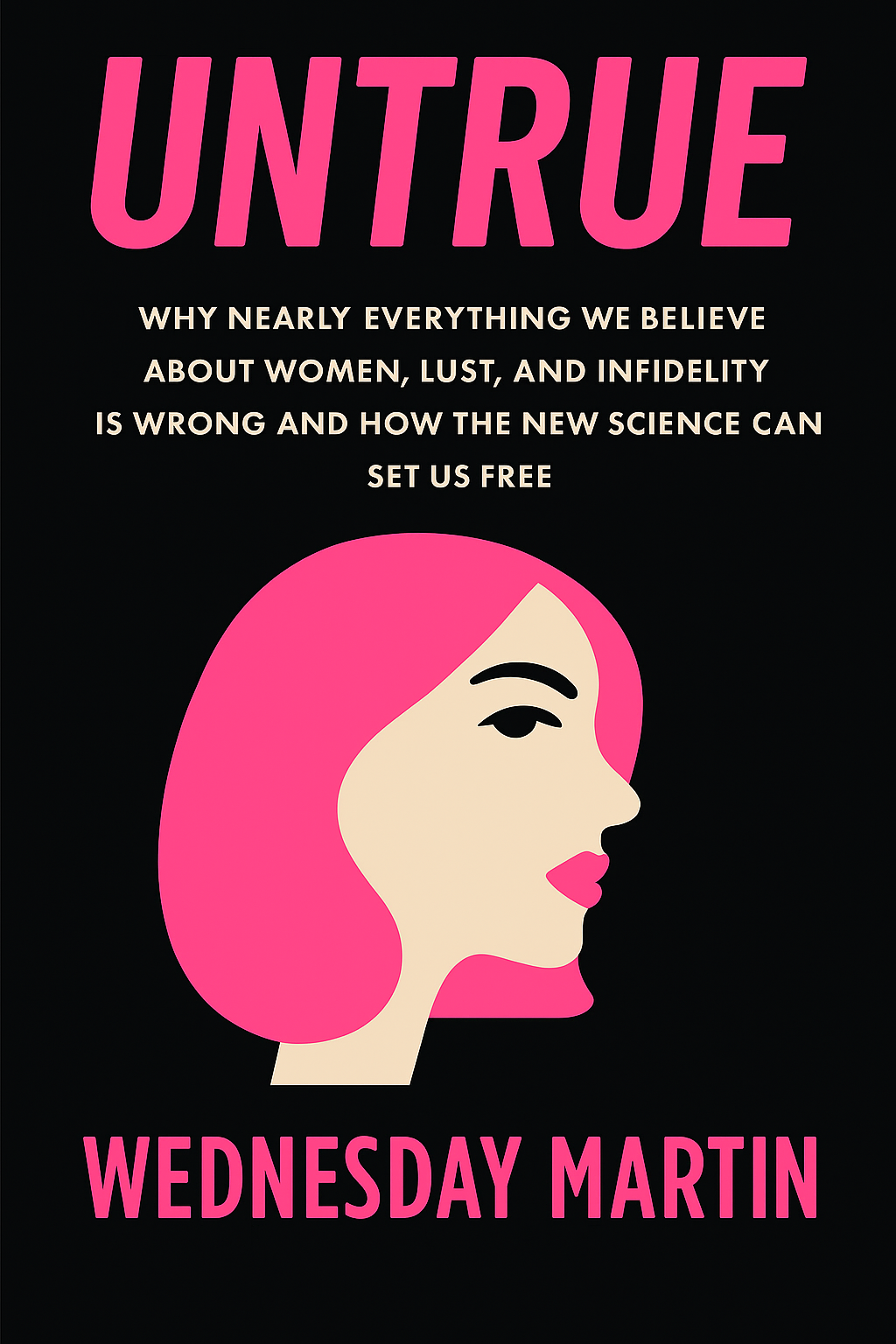
Untrue
Why Nearly Everything We Believe About Women, Lust, and Infidelity Is Wrong and How the New Science Can Set Us Free
Book Edition Details
Summary
A tapestry of truth and taboo, "Untrue" by Wednesday Martin boldly unravels the myths surrounding female desire. With the finesse of a seasoned storyteller, Martin weaves her personal experiences with provocative insights from the realms of social science, anthropology, and the vivid narratives of real women. This book challenges the archaic narrative that women are inherently less sexual than men, offering a revelatory perspective on the complex tapestry of female sexuality. Uncover the evolutionary drive and cultural currents that pulse beneath the surface, painting a picture of women as vibrant, multifaceted beings with potent desires. Prepare to question everything you thought you knew about fidelity, lust, and the irresistible allure of the forbidden.
Introduction
The foundational assumptions about female sexuality that have shaped scientific discourse, cultural norms, and relationship structures for centuries may be fundamentally incorrect. Contemporary research across multiple disciplines reveals that the widely accepted belief in women's natural monogamous tendencies reflects cultural conditioning rather than biological reality. This investigation challenges the deeply embedded notion that female infidelity represents aberrant behavior, instead positioning women's sexual autonomy within broader contexts of evolutionary adaptation and natural human variation. The examination draws upon converging evidence from primatology, anthropology, evolutionary biology, and contemporary sexology to construct a comprehensive argument against traditional assumptions about female sexual nature. Through systematic analysis of cross-cultural practices, historical patterns, and modern scientific findings, a compelling case emerges that female sexual strategies are far more diverse, autonomous, and pleasure-seeking than conventional wisdom suggests. The methodology combines rigorous scientific data with ethnographic observation, creating a framework that reveals how cultural biases have distorted understanding of women's authentic sexual behavior. The implications extend far beyond academic theory into practical questions of relationship structures, social organization, and gender equality. Recognition that female sexuality may naturally tend toward variety and autonomy rather than monogamy and commitment requires fundamental reconsideration of how societies support intimate relationships and structure social institutions. The evidence suggests that increasing numbers of women questioning traditional relationship models may be expressing natural tendencies that have been suppressed rather than developing new forms of deviant behavior.
Scientific Evidence Dismantling Female Monogamy Assumptions
The scientific foundation supporting female monogamy rests primarily on Angus Bateman's influential 1948 fruit fly study, which established the principle that males benefit from multiple mating while females do not. This research became the cornerstone of evolutionary psychology, suggesting that women's higher reproductive investment naturally leads to selectivity and monogamous preferences. The theory positioned female promiscuity as evolutionarily disadvantageous, creating a scientific framework that supported cultural assumptions about women's natural fidelity and emotional dependence in relationships. Recent attempts to replicate Bateman's foundational experiment have consistently failed to reproduce his results, fundamentally undermining the scientific basis for female monogamy theories. Modern studies using DNA analysis and sophisticated methodologies reveal that female promiscuity occurs widely across species, including among humans' closest primate relatives. Female primates regularly engage in sexual behavior with multiple partners, often showing clear preferences for novelty and variety rather than commitment to single mates. These findings suggest that previous conclusions about natural female behavior were based on incomplete data and methodological limitations. Contemporary research in human sexuality further challenges traditional assumptions about women's sexual nature. Studies of female arousal patterns, sexual fantasies, and actual behavior reveal complex motivations that contradict the emotional-connection-focused model of female sexuality. Women demonstrate significant capacity for sexual desire independent of emotional attachment, experience arousal to diverse stimuli, and report motivations for sexual behavior that closely parallel those traditionally attributed to men. Physiological research shows that women's sexual response systems appear designed for variety and pleasure rather than exclusively reproductive purposes. The convergence of evidence from multiple scientific disciplines creates a compelling case that female sexual strategies are far more flexible and autonomous than previously recognized. Recognition of women's natural capacity for sexual variety challenges therapeutic approaches, legal frameworks, and social expectations built upon assumptions of female monogamy. This paradigm shift requires fundamental reconsideration of what constitutes healthy and natural female sexual expression in contemporary society.
Historical Analysis: How Patriarchal Systems Constrained Female Sexuality
The transition from hunter-gatherer societies to agricultural civilizations approximately 10,000 years ago fundamentally altered the landscape of female sexual autonomy. Archaeological evidence reveals that pre-agricultural societies typically featured more egalitarian gender relations, with women maintaining significant control over their sexual choices and reproductive decisions. The development of agriculture, particularly plough-based farming, created economic systems that concentrated wealth and power in male hands while relegating women to dependent domestic roles. This shift established the foundation for systematic control of female sexuality that persists in modified forms today. The introduction of property ownership and inheritance systems created powerful incentives for men to control female reproduction to ensure paternity certainty. Legal codes from ancient civilizations consistently reflect this concern, imposing severe penalties for female adultery while treating male extramarital behavior with relative tolerance. Religious and cultural institutions evolved sophisticated mechanisms for monitoring and constraining women's sexual behavior, developing concepts of female chastity as valuable commodities within property-based marriage systems. These historical developments reveal that contemporary assumptions about natural female monogamy actually reflect thousands of years of social conditioning rather than biological imperatives. Cross-cultural analysis demonstrates clear correlations between historical agricultural practices and current attitudes toward female sexuality. Societies with stronger traditions of plough agriculture consistently show more restrictive attitudes toward women's sexual autonomy and greater acceptance of double standards regarding infidelity. Countries where women historically maintained greater economic independence through different agricultural systems or trading activities typically feature more flexible sexual arrangements and less punitive responses to female non-monogamy. These patterns persist despite technological and social changes, suggesting deep cultural programming around female sexual control. The legacy of agricultural patriarchy continues to influence modern relationship expectations through cultural norms, legal structures, and psychological frameworks that assume female monogamy as natural and desirable. Understanding this historical context reveals that contemporary movements toward greater female sexual autonomy represent a return to more ancient patterns of human behavior rather than modern innovations or moral decline. The constraints imposed by agricultural societies created artificial selection pressures that favored women who appeared to conform to monogamous ideals while penalizing those who expressed autonomous sexuality.
Cross-Cultural and Evolutionary Evidence for Female Sexual Autonomy
Comprehensive examination of human societies across different ecological and cultural contexts reveals remarkable diversity in female sexual strategies and social acceptance of non-monogamous arrangements. The Himba people of Namibia exemplify how different environmental conditions can produce entirely different norms around female sexuality, where married women commonly have children with men other than their husbands in socially accepted arrangements that improve women's economic security. Similar patterns appear in numerous cultures worldwide, suggesting that female multiple mating strategies serve important adaptive functions when ecological and social conditions permit their expression. Evolutionary analysis of human female anatomy provides compelling evidence for adaptation to multiple mating rather than monogamy. The human clitoris, with its extensive nerve network and capacity for multiple orgasms, appears designed primarily for sexual pleasure rather than reproductive function. The concealed ovulation pattern unique to humans creates extended periods of sexual receptivity that would serve no purpose in strictly monogamous systems but provides significant advantages for females engaging with multiple partners. These physiological features suggest that human females evolved in contexts where sexual variety was not only possible but advantageous for reproductive success and resource acquisition. Primatological research reveals that female sexual autonomy and mate choice are widespread throughout the evolutionary lineage leading to humans. Female primates consistently demonstrate active sexual agency, often initiating encounters and showing clear preferences for variety over commitment. Studies of species ranging from bonobos to macaques document females engaging in sexual behavior with multiple partners in ways that maximize their reproductive success and social standing. The concept of partible paternity, found in numerous human cultures, demonstrates how some societies organize around the assumption that children benefit from having multiple fathers who share responsibility for their welfare. Modern research techniques, including DNA analysis and long-term behavioral studies, have revealed the extent to which previous scientific conclusions were biased by cultural assumptions about appropriate female behavior. The reexamination of foundational studies in evolutionary biology shows that many theories about natural female monogamy were based on incomplete data and methodological flaws that reflected researchers' cultural biases rather than objective observation. Current evidence suggests that female sexual strategies are highly flexible and responsive to environmental conditions, challenging the notion that monogamy represents the default or natural state for human females.
Contemporary Realities: Women Reclaiming Sexual Agency and Choice
Contemporary Western societies are experiencing significant shifts in female sexual behavior and relationship choices that reflect changing social conditions and increased opportunities for women to express autonomous sexuality. The rise of consensual non-monogamy, polyamory, and other alternative relationship models demonstrates growing recognition that traditional monogamous arrangements may not serve all individuals equally well. Online platforms and social networks have created new opportunities for women to explore sexual variety while maintaining existing relationships, leading to increased rates of female infidelity and more open discussions about women's sexual needs and desires. Research on modern female infidelity reveals motivations that closely parallel those traditionally attributed to men, including desire for sexual variety, physical pleasure, and emotional excitement independent of relationship dissatisfaction. Studies of women who engage in extramarital relationships show that many are seeking sexual fulfillment rather than emotional connection or escape from unhappy marriages. These findings challenge fundamental assumptions about differences between male and female motivations for non-monogamous behavior, suggesting that previous disparities in reported infidelity rates reflected social constraints and reporting biases rather than genuine differences in desire or capacity. The emergence of female-centered sexual communities and practices demonstrates how women create autonomous sexual spaces when social conditions permit such expression. From online networks facilitating discreet encounters to social clubs prioritizing female pleasure and agency, women are developing systems that challenge traditional relationship structures while maintaining social connections and support networks. These developments represent not deviance from natural patterns but rather the expression of female sexuality under conditions of reduced constraint and increased opportunity, providing insight into what female sexual behavior might look like in truly egalitarian societies. Professional and economic independence increasingly allows contemporary women to make relationship decisions based on personal satisfaction rather than financial necessity or social pressure. As women achieve greater career success and financial security, they become less willing to compromise their sexual fulfillment for relationship stability or social approval. This trend represents a fundamental shift in female relationship priorities and expectations, with implications that extend beyond individual choices to challenge institutional arrangements built upon assumptions of female economic dependence and sexual compliance.
Summary
The systematic examination of evidence from evolutionary biology, anthropology, and contemporary research reveals that female sexual autonomy and non-monogamous behavior represent natural expressions of human sexuality rather than aberrations requiring correction or control. The convergence of scientific findings demonstrates how cultural biases have distorted understanding of female nature for millennia, creating artificial constraints that work against rather than with women's biological inclinations. Recognition of women's capacity for sexual variety, autonomous desire, and strategic multiple mating challenges not only academic theories but also the practical organization of intimate relationships, legal frameworks, and social support systems. This paradigm shift suggests that creating conditions for authentic female sexual expression requires fundamental changes in how societies understand and structure intimate relationships, moving beyond restrictive models inherited from agricultural patriarchy toward more flexible arrangements that acknowledge the full spectrum of human sexual diversity and support genuine equality between the sexes.
Related Books
Download PDF & EPUB
To save this Black List summary for later, download the free PDF and EPUB. You can print it out, or read offline at your convenience.
By Wednesday Martin
