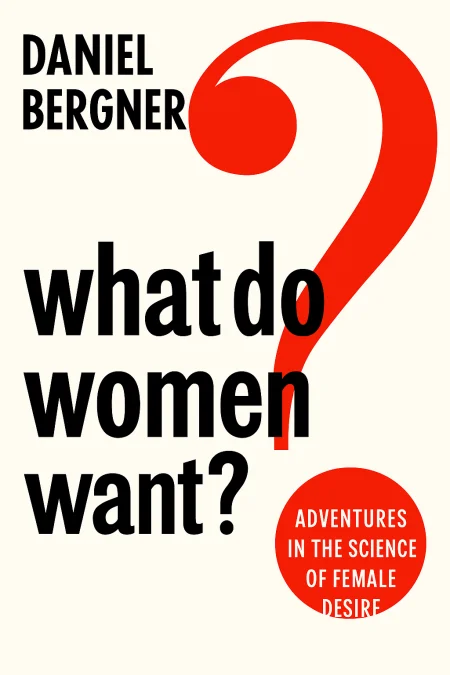
What Do Women Want?
Adventures in the Science of Female Desire
Book Edition Details
Summary
Desire doesn’t always follow the rules, and in "What Do Women Want? Adventures in the Science of Female Desire," Daniel Bergner pulls back the curtain on the enigmatic world of female sexuality. Are women truly the monogamous, emotionally driven creatures that society insists they are? Bergner challenges this narrative by diving into groundbreaking research that paints a provocative portrait of women’s lust—one that includes unexpected cravings, unspoken fantasies, and the complex interplay of mind and body. This book dares to ask: What if everything we thought we knew about women’s desires is wrong? It’s a daring exploration that defies stereotypes and invites readers to reimagine the possibilities of female passion.
Introduction
Imagine walking through history and discovering that nearly everything we thought we knew about women's sexuality was backwards. From ancient civilizations that celebrated female desire as divine fire to Victorian societies that denied its very existence, the story of how cultures have understood and controlled women's sexual nature reveals one of humanity's most persistent and revealing contradictions. This journey through time uncovers three profound historical puzzles that have shaped civilization itself. First, why did societies that once honored female sexuality as sacred eventually work so hard to suppress it? Second, how did evolutionary science, meant to illuminate our nature, instead create new myths about women's supposedly tame desires? And third, what happens when modern research finally begins to challenge thousands of years of assumption and control? These questions matter because they illuminate not just the past, but the present moment when cutting-edge neuroscience is revolutionizing our understanding of desire itself. This exploration suits anyone curious about how history's deepest taboos have shaped modern relationships, anyone questioning long-held beliefs about gender and sexuality, and anyone wondering why some of our most fundamental assumptions about human nature might be fundamentally wrong. The answers emerging from laboratories and historical archives alike suggest we're living through a quiet revolution in understanding one of the most powerful forces in human experience.
From Ancient Acknowledgment to Victorian Denial: The Historical Suppression
The ancient world held a strikingly different view of female desire than our own era might expect. From the biblical Song of Songs, where a woman trembles with sacred passion, to Roman physician Galen's medical doctrine that female orgasm was necessary for conception, early civilizations recognized women's sexuality as both powerful and essential. Greek mythology gave us Tiresias, who experienced life as both man and woman and declared that women felt nine times more pleasure in sex than men. This acknowledgment wasn't merely poetic or mythological. For over a millennium, medical texts across cultures insisted that women's sexual satisfaction was crucial for reproduction. Persian scholars worried that inadequate male anatomy might prevent women from reaching the ecstasy needed for conception. European midwifery manuals described the female role in reproduction as accompanied by "much delight" and the "breaking forth of swelling spirit." Yet even as these societies celebrated female sexuality, they harbored deep fears about its power. Eve as humanity's first seductress, Pandora as "beautiful evil," and medieval witches who could rob men of their virility all testified to an underlying terror of uncontrolled female desire. These dual impulses, celebration and fear, created a precarious balance that would eventually tip decisively toward suppression. The transformation began in the seventeenth century as reproductive science advanced. When scholars finally understood the ovum's role in conception, they dismantled Galen's ancient wisdom and separated women's ability to conceive from their capacity for pleasure. The haunting female libido, no longer medically necessary, became expendable. This scientific shift laid the groundwork for Victorian society's systematic attempt to extinguish what earlier ages had deemed essential to human creation itself.
Scientific Awakening and Cultural Constraints: 20th Century Discoveries
The twentieth century witnessed an unprecedented collision between scientific discovery and cultural resistance. Freud's investigations, despite their flaws, brought female sexuality into serious academic discourse for the first time in centuries. The Jazz Age and sexual revolution that followed seemed to herald a new era of openness, yet beneath the surface, powerful forces worked to maintain familiar hierarchies of desire. Early sexologists like Alfred Kinsey faced fierce opposition when they turned their research from men to women. Kinsey's funding was revoked when he published "Sexual Behavior in the Human Female," and popular advice continued to insist that women needed emotional connection before physical desire could emerge. Even as the birth control pill promised to separate sex from reproduction, mainstream culture clung to the notion that women were naturally less lustful than men. The emerging field of evolutionary psychology provided scientific cover for these cultural biases. Parental investment theory suggested that because women bear the biological costs of pregnancy and childbearing, they evolved to be naturally choosy and restrained while men were programmed to spread their seed widely. This seemingly logical framework gained widespread acceptance despite its shaky empirical foundation. Meanwhile, feminist movements created their own complications. In fighting for equality, many activists embraced the idea that women were morally superior to men, naturally more pure and civilized. This strategic choice may have advanced political goals, but it inadvertently reinforced the very Victorian ideals that portrayed female sexuality as inherently modest and relationship-focused. The century ended with scientific methodology advanced but fundamental assumptions about women's desires largely unchanged.
Breaking Boundaries: Contemporary Research and Evolutionary Insights
The late twentieth and early twenty-first centuries have brought revolutionary tools and unprecedented insights that challenge millennia of assumptions. Modern neuroscience, brain imaging, and sophisticated measurement techniques began revealing a startling disconnect between what women reported feeling and what their bodies actually experienced during sexual arousal. Laboratory studies using plethysmographs and eye-tracking technology discovered that women's physiological responses to sexual stimuli were far more varied and intense than anyone had suspected. Female subjects showed strong arousal to scenarios involving strangers rather than intimate partners, contradicting the widespread belief that emotional connection was paramount for women's desire. Even more surprisingly, their bodies responded to sexual content regardless of whether it matched their stated orientation or preferences. Primatological research added another layer of revelation. Scientists studying humanity's closest relatives discovered that in many species, females were the sexual aggressors, actively pursuing and initiating encounters with multiple partners. These findings suggested that female promiscuity might serve important evolutionary functions, from genetic diversity to protection against infanticide, overturning assumptions about natural monogamy. Perhaps most significantly, researchers began to understand desire itself as a complex neurochemical system involving dopamine, serotonin, and other neurotransmitters. This biological foundation revealed that arousal and wanting operate largely below the level of conscious control, shaped by everything from genetic variations to cultural conditioning. The implications were profound: if female desire was this complex and powerful at the physiological level, what did that say about centuries of cultural attempts to constrain and redirect it?
The Future of Understanding: Pharmaceutical Pursuits and Social Liberation
The quest for pharmaceutical solutions to women's sexual problems has become a multi-billion dollar enterprise, driven partly by genuine medical need and partly by the recognition that female desire represents one of the most poorly understood aspects of human biology. Companies have poured hundreds of millions into developing drugs that might restore lost libido, with mixed results that reveal as much about cultural expectations as medical possibilities. The repeated failures of these pharmaceutical attempts highlight a crucial insight: female sexuality cannot be reduced to simple hormonal or mechanical fixes. Testosterone patches, serotonin modulators, and even compounds that dramatically increase arousal in laboratory animals have proven disappointing in human trials. The disconnect between physiological arousal and subjective desire, combined with the complex interplay of social conditioning and biological systems, makes women's sexual experience uniquely resistant to pharmaceutical intervention. Yet these very failures are advancing understanding in unexpected ways. Researchers are developing more sophisticated models that account for genetic variations, neurochemical individuality, and learned responses. Some companies are creating algorithms that attempt to match specific drugs to individual women's biological and psychological profiles, representing a new frontier in personalized sexual medicine. Beyond the pharmaceutical realm, this research is fostering broader conversations about the nature of human sexuality itself. Speed-dating studies that reverse traditional gender roles reveal how quickly behavioral changes can alter sexual selection patterns. Neuroscientists studying orgasm are mapping the complex brain networks involved in female pleasure. Cultural historians are reexamining how societies have constructed and constrained female desire across different eras. These converging insights suggest we may be approaching a fundamental shift in how humanity understands one of its most essential drives.
Summary
The central paradox threading through this history reveals how societies have simultaneously celebrated and feared female desire, creating elaborate systems of control precisely because they recognized its power. From ancient medical texts requiring female ecstasy for conception to modern laboratory discoveries of women's complex arousal patterns, the evidence consistently points to a sexuality far more intense and multifaceted than cultural narratives have typically acknowledged. This historical journey illuminates three crucial insights for our contemporary moment. First, much of what we consider natural or inevitable about gender and sexuality reflects cultural construction rather than biological destiny. Second, the suppression of female desire has required enormous social effort precisely because it contradicts rather than aligns with women's actual sexual nature. Third, emerging scientific tools are finally providing objective measures that can separate biological reality from cultural mythology. Looking forward, this understanding suggests several actionable approaches. We might question therapeutic and relationship advice that assumes women naturally desire less or differently than men. We can examine how cultural messages about appropriate female sexuality might be constraining individual experience and satisfaction. Most importantly, we can approach discussions of desire, relationships, and sexual health with genuine curiosity rather than predetermined assumptions about how women should feel or behave. The story of female desire is ultimately a story about human potential either constrained or liberated by the beliefs we choose to embrace.
Related Books
Download PDF & EPUB
To save this Black List summary for later, download the free PDF and EPUB. You can print it out, or read offline at your convenience.
By Daniel Bergner
